How Often Should You Change Your Underwear? Essential Guide
You should change your underwear every single day. The American Academy of Dermatology and leading gynecologists universally agree that wearing the same pair for more than 24 hours creates a warm, moist environment where bacteria and yeast multiply rapidly. This guide covers exactly how often to change underwear across different situations, what happens when you do not, and the specific signs that tell you a pair needs to go in the wash immediately.
How Often Should You Change Your Underwear Each Day
The standard recommendation from dermatologists and gynecologists is one fresh pair per day, changed every 24 hours at minimum. The vaginal area naturally produces discharge, sweat, and dead skin cells throughout the day, all of which accumulate in the fabric of your underwear.
Dr. Sherry Ross, OB-GYN and author of “She-ology,” states that wearing the same underwear for more than one day significantly increases the risk of bacterial overgrowth and skin irritation. A single pair of cotton underwear worn for 24 hours can harbor up to 10,000 bacteria per square centimeter of fabric, according to research published in the journal Dermato-Endocrinology.
Most women need one change per day under normal, low-activity conditions. High-sweat days, menstruation, exercise, and humid climates all create conditions that require changing underwear more frequently.
One change per day is the baseline, but your activity level and health conditions determine whether you need more.
When You Need to Change Underwear More Than Once a Day
Changing underwear more than once per day is necessary in several specific situations. The Centers for Disease Control and Prevention (CDC) notes that moisture against skin for extended periods is a primary driver of fungal and bacterial skin infections.
Change immediately after any of these situations: completing a workout, swimming, heavy sweating from heat or humidity, menstrual flow that has saturated the fabric, and any urinary leakage. Wearing sweat-soaked underwear for more than 30 to 60 minutes after exercise creates conditions that strongly favor yeast overgrowth, according to a study published in the Journal of Women’s Health.
Women with recurrent yeast infections or bacterial vaginosis are advised by the American College of Obstetricians and Gynecologists (ACOG) to change underwear at the first sign of moisture rather than waiting until the end of the day.
What Happens If You Do Not Change Your Underwear Daily
Not changing underwear daily leads to bacterial and fungal overgrowth on both the skin and fabric. The genital area maintains a temperature of approximately 98.6 degrees Fahrenheit and produces sweat from the apocrine and eccrine glands, creating an ideal incubation environment for pathogens.
Dr. Melissa Piliang, dermatologist at Cleveland Clinic, explains that bacteria from fecal matter, vaginal discharge, and sweat begin to multiply within hours on unwashed fabric. Wearing the same pair for 48 hours or longer can cause folliculitis (inflammation of hair follicles), contact dermatitis, and urinary tract infections (UTIs) from bacterial migration.
Wearing the same pair for more than one day is not just unhygienic; it is a documented risk factor for recurring vaginal and skin infections that require medical treatment.
Specific Health Risks Linked to Infrequent Underwear Changes
The three most common health problems linked to not changing underwear daily are yeast infections, bacterial vaginosis (BV), and UTIs. According to the National Institutes of Health (NIH), 75% of women will experience at least one yeast infection in their lifetime, and the risk increases significantly with prolonged moisture and warmth against vulvar tissue.
Bacterial vaginosis, caused by an imbalance in vaginal flora, affects approximately 21 million American women annually according to CDC data. Consistent daily underwear changes reduce one of the controllable environmental risk factors for BV recurrence. UTIs, which affect 50 to 60% of women at least once in their lives according to the National Kidney Foundation, can be triggered by E. coli migration from the perineal area, a process accelerated by wearing bacteria-laden fabric for extended periods.
How Often to Change Underwear During Your Period
During menstruation, underwear should be changed every 4 to 8 hours, or immediately if flow has saturated the fabric. Menstrual blood creates a protein-rich environment that supports rapid bacterial growth at room and body temperature.
The American College of Obstetricians and Gynecologists recommends changing period products every 4 to 8 hours and changing underwear at the same intervals when managing heavy flow days. Women using period underwear as a primary protection method should follow manufacturer guidance, which typically recommends changing every 4 to 12 hours depending on absorbency level and flow volume.
On light flow days, once-daily changes may suffice, but on moderate to heavy days, two to three underwear changes per day protects both skin integrity and hygiene.
Period Underwear and How Often to Change It
Period underwear is designed with absorbent, moisture-wicking layers that hold 1 to 4 teaspoons of fluid depending on the product. Brands such as Thinx, Knix, and Saalt provide absorbency ratings on their products, ranging from light (1 teaspoon) to super (4 teaspoons), which directly informs how long a pair can safely be worn.
Even high-absorbency period underwear should not be worn beyond 12 hours, and most gynecologists recommend 8 hours as the safe maximum for moderate absorbency levels. Wearing period underwear beyond its rated absorbency allows blood to reach the outer layers and skin, recreating the same bacterial environment as wearing a saturated regular pair.
Key Specifications for typical period underwear: Absorbency: 1 to 4 teaspoons depending on style. Layers: 3 to 4 moisture-wicking and absorbent layers. Recommended wear time: 4 to 12 hours. Machine washable: cold water, air dry recommended. Size range: XS to 3X (brand dependent).
How Often to Change Underwear When Exercising
Change underwear immediately after every workout, regardless of how long the session lasted. A 20-minute walk and a 90-minute spin class both produce sweat that saturates the crotch panel, and that moisture should not remain against skin longer than necessary.
Research published in the Journal of Sports Science and Medicine found that synthetic fabrics, which are common in athletic underwear, retain significantly more moisture per square inch than cotton under exercise conditions. The combination of synthetic fabric, elevated body temperature, and sweat creates the highest-risk environment for vaginal yeast infections and skin chafing.
Packing a fresh pair of moisture-wicking underwear in your gym bag is one of the most practical hygiene steps you can take for post-workout freshness and skin health.
Best Underwear Fabrics for Exercise and Sweat Management
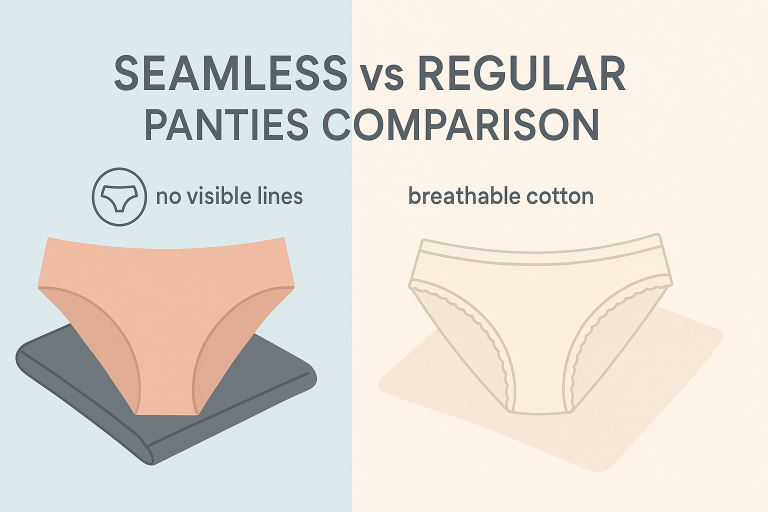
Cotton is breathable but retains moisture after sweating, making it a poor choice for workouts. Moisture-wicking synthetic blends (polyester and nylon) move sweat away from the skin surface, but must be changed promptly after exercise because they do not breathe as well as cotton at rest.
Merino wool underwear, such as options from Icebreaker and Smartwool, provides natural odor resistance and moisture management, making it the top fabric choice for high-activity situations according to dermatology reviews. Seamless sport underwear with a cotton or bamboo crotch lining offers a practical compromise between performance fabric and skin-friendly materials.
Use the table below to match your activity level to the recommended fabric and change frequency.
| Activity Level | Recommended Fabric | Change Frequency | Best Style |
|---|---|---|---|
| Sedentary (desk work, low movement) | 100% cotton or bamboo | Once daily | Cotton brief or bikini |
| Light activity (walking, yoga) | Cotton or cotton-modal blend | Once daily or after activity | Seamless panty or hipster |
| Moderate exercise (running, cycling) | Moisture-wicking nylon blend | Immediately after workout | Moisture-wicking brief |
| High-intensity training (HIIT, hot yoga) | Merino wool or nylon with cotton gusset | Immediately after workout | Sport brief with cotton gusset |
| Outdoor or hot-weather activity | Bamboo or merino wool | Every 4 to 6 hours | Breathable boyshort or brief |
The key takeaway from the table above is that the higher your sweat output, the faster you need to change, and natural fibers or technical fabrics with a natural gusset handle sweat best across all activity levels.
How Often to Change Underwear During Pregnancy and Postpartum
Pregnant women typically need to change underwear more frequently than their pre-pregnancy baseline because of increased vaginal discharge, higher body temperature, and greater sweat production. The American Pregnancy Association notes that increased leukorrhea (normal vaginal discharge) begins as early as the first trimester and continues through delivery.
Gynecologists recommend changing underwear twice daily during the second and third trimesters when discharge volume is highest, and immediately after any bladder leakage episodes, which affect up to 50% of pregnant women according to the Urology Care Foundation.
In the postpartum period, the first 6 weeks require the most frequent changes due to lochia (postpartum discharge), wound healing for perineal tears or cesarean incisions, and adult bladder leakage from pelvic floor trauma.
Postpartum Underwear Recommendations by Recovery Stage
During the first 1 to 2 weeks postpartum, most doctors recommend postpartum disposable underwear changed every 3 to 4 hours due to heavy lochia flow. Weeks 3 through 6 typically allow transition to high-waisted recovery underwear changed once to twice daily as lochia lightens.
After 6 weeks and medical clearance, most women return to normal daily underwear change frequency. Women with cesarean incisions should choose high-waisted styles that sit above the incision line to prevent fabric friction against healing tissue, as recommended by the American College of Surgeons.
Key Specifications for postpartum disposable underwear: Absorbency: heavy (equivalent to a maxi pad). Waistband: full-coverage, sits at or above navel. Material: soft, breathable non-woven fabric. Size range: S/M, L/XL, XXL. Recommended change interval: every 3 to 4 hours during first 2 weeks.
Postpartum underwear change frequency should follow your lochia flow, not a fixed schedule, and any increase in flow after it had lightened warrants immediate contact with your healthcare provider.
Here is a rotation care schedule to help you track when to act on your underwear hygiene throughout the year based on seasonal factors that affect how often you need to change.
Care Schedule
Underwear Change Frequency by Season and Condition
What to watch for each month to know when daily changes are not enough
Once daily is sufficient
How Often Should You Replace Your Underwear Entirely
Replacing underwear entirely is separate from how often you change it daily. Most underwear should be replaced every 6 to 12 months, depending on how many pairs are in your rotation, how frequently each pair is worn, and how the fabric holds up after repeated washing.
A study conducted by textile researchers at the University of Arizona found that even after washing, underwear retains an average of 0.1 grams of fecal matter per pair, which is concentrated on elastic fibers that trap debris. High-cycle washing at low temperatures does not fully sanitize underwear; hot water above 140 degrees Fahrenheit or a tumble dry on high heat are needed to kill pathogens effectively, according to microbiologist Dr. Charles Gerba.
Replacing underwear regularly is a hygiene decision, not just a comfort one, and 6 to 12 months per pair is the dermatologist-recommended replacement window.
Signs Your Underwear Needs to Be Replaced Now
Six specific signs indicate a pair of underwear should be replaced immediately, regardless of age. Visible signs include stretched-out elastic that no longer holds shape, thinning or pilling fabric in the crotch panel, permanent staining that washing does not remove, holes or fraying at seams or leg openings, and elastic waistband that rolls or folds over during wear.
The less visible sign is persistent odor after washing, which indicates bacterial colonization in the fabric fibers that standard laundering no longer eliminates. The American Academy of Dermatology recommends discarding any underwear with persistent odor post-wash because rewearing it reintroduces bacteria to the skin regardless of hygiene habits.
Use the table below to identify whether a specific sign means repair, wash again, or replace immediately.
| Sign Observed | Severity | Action Required | Timeline |
|---|---|---|---|
| Elastic feels loose but fabric intact | Low | Monitor for further stretch | Replace within 1 to 2 months |
| Elastic completely relaxed, does not hold | High | Replace immediately | Now |
| Thinning or pilling at crotch panel | Moderate to High | Replace immediately | Now |
| Permanent staining despite washing | Moderate | Replace if stain is in crotch panel | Now |
| Odor persists after washing | High | Replace immediately | Now |
| Holes or fraying at seams | High | Replace immediately | Now |
| Waistband folds or rolls during wear | Moderate | Replace within current month | Within 30 days |
Any pair showing a “High” severity sign should be removed from your rotation the same day you notice it, not at your next laundry cycle.
How Many Pairs of Underwear Should You Own
Owning 10 to 14 pairs of underwear provides enough rotation for daily changes, a standard 7-day wash cycle, and backup pairs for high-activity days or period days. This is the practical minimum recommended by wardrobe organization experts and aligns with a 14-day rotation that spreads wear evenly across all pairs.
Spreading wear across more pairs extends the lifespan of each individual pair by reducing per-pair laundry cycles. A pair worn once per week (rotating through 14 pairs) undergoes approximately 26 wash cycles per year versus 52 cycles for a pair worn twice weekly, which directly affects elastic degradation and fabric longevity.
The table below shows how pair count affects the lifespan and annual cost of your underwear rotation.
Use the table below to determine the most cost-effective rotation size based on how often you do laundry and how long you want each pair to last.
| Pairs Owned | Wash Cycles Per Pair Per Year | Estimated Pair Lifespan | Annual Replacement Cost (at $12/pair avg) |
|---|---|---|---|
| 7 pairs | 52 cycles | 6 to 9 months | $84 to $168/year |
| 10 pairs | 36 cycles | 9 to 14 months | $72 to $120/year |
| 14 pairs | 26 cycles | 12 to 18 months | $56 to $84/year |
| 20 pairs | 18 cycles | 18 to 24 months | $48 to $60/year |
The 14-pair rotation offers the best balance of cost, lifespan, and practical laundry frequency for most women, making it the most economical choice in the long term.
How to Wash Underwear to Maintain Hygiene Between Changes
Washing underwear correctly is as important as how often you change it. Inadequately washed underwear reintroduces bacteria to clean skin regardless of how frequently pairs are changed. The washing temperature, detergent type, and drying method all affect how many pathogens survive a laundry cycle.
Dr. Charles Gerba’s research at the University of Arizona found that washing underwear in a mixed laundry load at warm water temperatures (80 to 100 degrees Fahrenheit) leaves approximately 100 million E. coli bacteria per load in the washing machine water. Washing underwear separately or as the final cycle, using hot water above 140 degrees Fahrenheit, and tumble drying on high heat for at least 28 minutes eliminates this cross-contamination risk.
Proper washing is the hygiene step that makes daily underwear changes fully effective, since a new pair of clean underwear put on dirty skin or washed inadequately still carries contamination.
Hand Washing Delicate Underwear Correctly
Delicate fabrics such as lace, silk, and mesh require hand washing to preserve their structure and elasticity. Machine washing these fabrics even on a gentle cycle causes fiber breakage and elastic degradation that shortens the lifespan by 40 to 60% according to fabric care studies from the Textile Research Journal.
Hand wash delicate underwear using lingerie-specific detergent in cool to lukewarm water (below 85 degrees Fahrenheit), gently squeezing fabric without twisting or wringing, rinsing thoroughly until water runs clear, and laying flat or hanging to air dry. Never wring silk or lace underwear, as this distorts the fiber alignment and permanently weakens the weave.
For machine-washable delicates, place them inside a mesh lingerie bag before every wash cycle to protect seams, elastics, and decorative elements from agitation damage.
Does Fabric Softener Help or Harm Underwear Hygiene
Fabric softener should not be used on underwear, especially cotton and moisture-wicking styles. Fabric softener coats fibers with a waxy residue that reduces breathability by up to 30% according to testing by Consumer Reports, trapping heat and moisture against the skin.
The coating also degrades the elastic fibers in waistbands and leg openings, accelerating stretch and loss of shape. Skip fabric softener entirely on underwear and use a pH-neutral, fragrance-free delicate laundry detergent instead.
How Fabric Type Affects How Often You Should Change Your Underwear
The fabric your underwear is made from directly determines how quickly moisture, bacteria, and odor accumulate, and therefore how often a change is needed. Cotton, bamboo, synthetic blends, and silk all behave differently under the same body conditions.
Cotton absorbs up to 27 times its weight in moisture, making it the most absorbent common underwear fabric, according to data from the American Textile Manufacturers Institute. This absorption capacity is a benefit for light daily use but becomes a liability during exercise or heavy discharge days, when the retained moisture creates a prolonged warm, wet environment.
Your fabric choice should match your daily activity level, because the same pair that is appropriate for a desk job may require a mid-day change on a high-activity day.
Cotton vs Synthetic vs Bamboo: Change Frequency Comparison
Cotton underwear worn during low-activity days can safely be worn for a full 24 hours before changing. Synthetic fabrics (polyester, nylon) wick moisture away from the surface more effectively during exercise but trap heat at rest, generally requiring a change every 4 to 8 hours during active periods.
Bamboo fabric combines the softness and breathability of cotton with natural antimicrobial properties attributed to bamboo kun (a bio-agent in bamboo fibers), which reduces bacterial growth rates by approximately 70% compared to conventional cotton according to research published in the Journal of Natural Fibers. Bamboo underwear can extend comfortable wear time by 2 to 4 hours beyond cotton under equivalent activity conditions.
Use the table below to match fabric type to expected change frequency by activity level.
| Fabric Type | Moisture Absorption | Antimicrobial Properties | Recommended Change Frequency (Low Activity) | Recommended Change Frequency (Exercise) |
|---|---|---|---|---|
| 100% Cotton | High (absorbs and retains) | None | Every 24 hours | Immediately post-workout |
| Bamboo | Moderate (absorbs then dries) | Moderate (bamboo kun) | Every 24 to 28 hours | Within 1 hour post-workout |
| Microfiber/Polyester | Low (wicks to surface) | None | Every 20 to 24 hours | Immediately post-workout |
| Nylon | Low to moderate | None without treatment | Every 20 to 24 hours | Immediately post-workout |
| Merino Wool | High (absorbs without feeling wet) | High (natural lanolin) | Every 24 to 48 hours | Within 2 hours post-workout |
Merino wool is the only fabric where extending beyond 24 hours is a reasonable option in low-activity, low-sweat conditions, due to its natural odor resistance and moisture regulation properties.
Frequently Asked Questions About How Often to Change Your Underwear
Is it okay to wear the same underwear two days in a row?
Wearing the same pair of underwear two days in a row is not recommended by dermatologists or gynecologists. A single pair worn for 24 hours already contains accumulated bacteria, discharge, sweat, and dead skin cells. Wearing it a second day doubles exposure time and significantly increases the risk of skin irritation, yeast infections, and bacterial vaginosis. The American Academy of Dermatology recommends one fresh pair daily as the minimum standard for genital skin hygiene.
How often should you change underwear if you barely sweat?
Even with minimal sweating, underwear should still be changed every 24 hours. Sweat is only one source of buildup in the crotch panel. Vaginal discharge, which is a normal bodily function for all women, dead skin cells, and microscopic fecal matter accumulate throughout the day regardless of sweat levels. Dr. Sherry Ross, OB-GYN, confirms that discharge alone, even normal clear or white discharge, provides sufficient bacterial growth medium to warrant a daily change.
Should you change underwear after sleeping?
Yes, underwear should be changed every morning after sleeping. Eight hours of wear overnight still accumulates discharge, skin cells, and sweat, particularly in warmer sleep environments. If you sleep in underwear (rather than without), the pair worn at night should be treated as one full wear and replaced with a fresh pair in the morning. The National Sleep Foundation notes that body temperature rises during REM sleep cycles, which accelerates the moisture and bacterial accumulation process even during rest.
How often should you change underwear when sick?
During illness, especially fever, change underwear every 8 to 12 hours or after any significant sweating episode. Fever causes elevated perspiration that saturates fabric faster than normal body sweat. Additionally, immune function is compromised during illness, making skin infections more likely from prolonged fabric contact. The CDC recommends more frequent laundering of all clothing, including underwear, during illness to reduce pathogen spread within the household.
How often should elderly women change their underwear?
Elderly women should change underwear at least once daily and more frequently if urinary incontinence is present. Urinary incontinence affects 30 to 40% of women over age 65 according to the National Institute on Aging. Prolonged contact with urine on skin causes ammonia burns, pressure ulcers, and fungal infections in elderly individuals with reduced skin elasticity. Incontinence underwear designed with absorbent inner layers should still be changed every 3 to 4 hours or when saturated, not worn as a full-day solution.
Can you make underwear last longer by changing less often?
Changing less frequently does not meaningfully extend underwear lifespan. Fabric degradation in underwear is caused primarily by laundering, not by body contact time. The friction of washing cycles, exposure to detergent, and heat from drying break down elastic and fiber structures over time. Wearing a pair for 2 days between washes versus 1 day cuts wash cycles in half, which theoretically extends the pair’s lifespan, but the hygiene cost of that tradeoff creates skin and infection risks that far outweigh the marginal savings on fabric wear. Owning a larger rotation of 14 or more pairs achieves the same goal of reducing per-pair wash frequency without any compromise to daily hygiene.
Is it better to go without underwear than to wear a dirty pair?
Going without underwear is preferable to rewearing a pair that is already saturated with sweat, discharge, or menstrual blood. The Cleveland Clinic notes that going commando under loose, breathable clothing is a medically acceptable choice that allows skin to breathe and reduces moisture accumulation. However, clothing worn without underwear should also be laundered after a single wear to prevent the fabric from becoming the bacterial contact surface that underwear would normally be. Never rewear saturated underwear as a hygiene compromise.
Conclusion
Changing underwear every 24 hours is the non-negotiable daily minimum, with twice-daily changes required after exercise, on heavy period days, during pregnancy, and in hot or humid conditions. Your fabric choice, activity level, and life stage all determine how quickly that minimum is reached on any given day. Start with a rotation of 10 to 14 pairs of breathable cotton or bamboo underwear, replace each pair every 6 to 12 months, and treat any pair with persistent odor, stretched elastic, or thinning fabric as already past its useful life.