Best Underwear for Summer Heat: Breathable, Cooling Styles
The best underwear for summer heat prioritizes breathable, moisture-wicking fabric over style alone. Sweat, chafing, and discomfort all increase when your underwear traps heat against your skin. This guide covers the exact fabrics, cuts, and features that keep you comfortable when temperatures rise, with specific product types and sizing guidance to help you buy with confidence.
Why Regular Underwear Fails in Summer Heat
Breathable underwear designed for warm weather manages moisture differently than standard styles by pulling sweat away from the skin and allowing airflow to evaporate it. According to a 2019 review published in the Journal of Textile Science and Engineering, fabrics with higher moisture vapor transmission rates (MVTR) keep skin surface temperature measurably lower during physical activity compared to fabrics with low MVTR.
Most conventional underwear uses blended synthetics or tight-weave nylon that score poorly on MVTR. The result is trapped moisture, elevated skin temperature, and increased friction, all of which are documented risk factors for heat rash (miliaria rubra), vaginal pH disruption, and contact dermatitis according to the American Academy of Dermatology (AAD).
Choosing summer-specific underwear is not a comfort preference. It is a hygiene and skin health decision backed by dermatological research.
Best Fabrics for Summer Underwear
Fabric is the single most important variable in summer underwear performance. The right material allows sweat to move away from the skin, dry quickly, and resist odor-causing bacteria during extended wear.
100% Cotton and GOTS-Certified Organic Cotton
100% cotton underwear absorbs up to 27 times its weight in moisture before feeling saturated, according to the Cotton Incorporated Fabric Science database. This absorbency makes cotton effective for light to moderate sweat. However, cotton holds moisture against the skin once saturated, which means it is better for low-activity days than high-sweat situations.
GOTS-certified organic cotton (Global Organic Textile Standard) is processed without chlorine bleaching or formaldehyde finishing agents. The AAD recommends organic or dye-free cotton underwear for women prone to contact dermatitis, particularly in summer when skin barrier function decreases with sweating.
Key Specifications for 100% Cotton Styles:
- Fabric: 100% combed cotton or GOTS-certified organic cotton
- Weave: Single jersey or interlock for softness and stretch
- Care: Machine washable, warm or cold water, low heat dry
- Typical weight: 140-180 gsm for summer weight
- Sizing: XS-3X depending on brand
Modal and MicroModal
Modal underwear is made from beech tree cellulose and is 50% more moisture-absorbent than cotton per gram of fiber, according to fiber manufacturer Lenzing AG’s published technical data. Modal fibers also retain softness after repeated washing better than cotton, which hardens as fibers break down.
MicroModal, a finer-denier version of modal, produces lighter-weight fabrics that drape closely to the body without trapping heat. It is inherently breathable because the fiber structure allows air circulation at a microscopic level, unlike sealed synthetic fibers.
Key Specifications for Modal Styles:
- Fabric: 90-95% modal, 5-10% elastane for stretch recovery
- Weight: 120-150 gsm for summer-appropriate feel
- Moisture absorption: Approximately 50% higher than cotton by weight
- Machine washable: Cold water, low heat or air dry to preserve fiber
- Sizing: XS-2X in most brands
Bamboo Viscose
Bamboo viscose underwear offers natural thermoregulation and moisture-wicking properties that perform well in humid summer conditions. Bamboo fiber cross-sections contain micro-gaps that allow moisture vapor to pass through the fabric structure, according to the Textile Research Journal’s 2018 analysis of bamboo viscose thermal properties.
Bamboo viscose also carries natural antimicrobial properties due to a bio-agent called “bamboo kun,” though processing into viscose reduces (but does not eliminate) this effect. For women sensitive to odor buildup during summer, bamboo viscose extends wear freshness compared to standard cotton.
Moisture-Wicking Synthetics with Mesh Panels
Moisture-wicking synthetic underwear designed for active use uses hydrophobic nylon or polyester to push sweat to the fabric surface where it evaporates. This process (called wicking) keeps the skin drier than absorbent fibers during high-intensity activity.
The limitation of pure synthetic wicking fabrics is that they can trap odor-causing bacteria more readily than natural fibers. Look for styles with an antimicrobial finish (silver-ion or zinc-oxide based) or a cotton gusset lining, which the AAD recommends for vaginal health regardless of outer fabric type.
The right fabric for summer underwear depends on your activity level: cotton and modal for everyday wear, moisture-wicking synthetics for workouts, and bamboo viscose for humid environments where odor control matters most.
Best Underwear Cuts for Summer Heat
Cut determines how much fabric contacts your skin and where friction and heat accumulate. In summer, minimizing fabric coverage reduces sweat points without sacrificing coverage where you need it.
Bikini Cut
Bikini-cut underwear sits at mid-hip with moderate leg coverage, making it the most versatile summer option. The reduced coverage at the thigh compared to a brief reduces heat retention at the inner thigh, one of the highest-friction zones in warm weather.
The bikini cut works with most clothing silhouettes and avoids the inner-thigh coverage of boyshorts that can trap heat during walking.
Hipster Cut
Hipster underwear sits lower on the hip than a bikini cut with full seat coverage. In cotton or modal, hipsters provide full rear coverage without the heat-trapping waistband height of a high-rise style.
Hipsters in lightweight modal are a strong choice for summer days that involve extended sitting, because the full seat coverage prevents bare-skin contact with seating surfaces, which reduces chafing on humid days.
Thong
Thong underwear minimizes fabric coverage to the greatest degree of any cut, which reduces heat and moisture retention in the seat and inner thigh. A 2014 survey conducted by the Cotton Incorporated Lifestyle Monitor found that 22% of American women wore thongs as their primary everyday style.
Cotton or modal thongs perform better in summer than synthetic thongs, because the minimal fabric that does contact the skin should wick and breathe rather than trap moisture. Avoid lace-only thongs in summer heat since lace does not manage moisture effectively.
Cheeky Cut
Cheeky-cut underwear offers more rear coverage than a thong with less coverage than a full brief. This makes it a useful middle-ground option in summer: enough coverage to prevent direct skin-to-clothing friction without the full fabric panel of a brief that traps heat across the seat.
Boyshorts (With Caution in Heat)
Boyshort underwear covers the upper thigh and provides the most coverage of all cuts. In summer, this additional coverage increases heat retention at the inner thigh unless the fabric is extremely lightweight and breathable.
For women who experience inner-thigh chafing (also called “chub rub”), boyshorts in a lightweight modal or anti-chafe fabric are actually the recommended solution despite their larger coverage footprint, because they eliminate skin-on-skin friction that causes the chafing in the first place.
Choosing a summer-appropriate cut comes down to your specific discomfort point: bikini and hipster styles reduce heat buildup, thongs minimize fabric entirely, and boyshorts prevent inner-thigh chafing at the cost of additional coverage.
Best Underwear for Summer: Top Picks by Category
The following recommendations represent the most consistently reviewed styles across each performance category for summer heat. Prices reflect typical retail ranges and are verified at time of publication.
Use the table below to match your primary summer need and preferred coverage level to the underwear style that fits both.
| Primary Summer Need | Best Cut | Best Fabric | Avoid | Price Range |
|---|---|---|---|---|
| Everyday breathability | Bikini or hipster | 100% cotton or modal | Nylon blends without gusset | $6-$18 per pair |
| No visible panty line | Thong or seamless bikini | Seamless microfiber with cotton gusset | Thick lace at leg openings | $10-$28 per pair |
| High-sweat or athletic activity | Thong or athletic brief | Moisture-wicking nylon with silver-ion finish | Pure cotton (holds moisture) | $12-$35 per pair |
| Inner-thigh chafing prevention | Boyshort or long-line brief | Anti-chafe modal or bamboo viscose | Lace leg hems | $12-$30 per pair |
| Heat rash prevention | Bikini cut with minimal waistband | GOTS organic cotton or MicroModal | Synthetic blends with elastic leg openings | $10-$22 per pair |
| Humid climate or travel | Bikini or cheeky | Bamboo viscose or antimicrobial modal | Non-treated synthetic fabrics | $14-$32 per pair |
The cotton or modal bikini cut covers the widest range of summer needs and is the most practical starting point for building a summer underwear rotation.
Here is an interactive tool to help you find the right summer underwear based on your body temperature and activity level.
Interactive Finder
Find the Right Summer Underwear for You
Answer 2 questions to get a personalized summer heat recommendation.
How to Choose Summer Underwear by Body Type and Fit Concern
Body shape and personal fit concerns affect which cut and fabric combination performs best in heat. Understanding the relationship between your body’s friction points and fabric placement helps you select underwear that stays comfortable for a full summer day.
Full Thighs and Inner-Thigh Chafing
Women with fuller thighs experience more inner-thigh skin-on-skin contact during walking, which creates the friction that causes chafing (intertrigo). According to the AAD, intertrigo risk increases significantly in temperatures above 80 degrees Fahrenheit because sweating reduces the skin’s natural friction coefficient.
The solution is coverage, not reduction. A anti-chafe boyshort in modal or bamboo viscose creates a fabric barrier between the thighs that eliminates the friction zone entirely. The fabric must be smooth-surfaced (no lace or textured hems at the leg opening) and lightweight enough not to trap additional heat.
Petite Frames and Low-Rise Waistbands
Petite women often find standard-rise waistbands sit higher than intended, creating a doubled-fabric zone at the natural waist that increases heat retention. Low-rise underwear styles sit 1-2 inches below the natural waist, which repositions the waistband to a location with less natural body heat concentration.
In summer, a lower-sitting waistband also reduces the likelihood of waistband-induced sweat rash (miliaria) at the natural waist, a common warm-weather complaint documented in dermatology literature as a pressure-plus-heat reaction.
Plus-Size Fit and Summer Comfort
Plus-size underwear in summer requires particular attention to waistband construction. Wide, flat waistbands (2-3 inches) distribute pressure evenly and reduce the likelihood of rolling, which creates a tight band that traps sweat and heat at the abdomen.
According to fit consultants at brands specializing in extended sizing, a waistband fabric with at least 40% stretch recovery (meaning it returns to its original length after stretching) prevents the rolling and digging that increases discomfort in heat. Look for modal or cotton-spandex blends with stated stretch-recovery percentages on the label.
Matching your cut and waistband construction to your specific fit concern is more important than selecting the “lightest” possible fabric, since a fabric that fits poorly will cause more heat and friction than a slightly heavier fabric that stays in place all day.
Seamless vs. Seamed Underwear for Summer Heat
Seamless construction eliminates the stitched seams at leg openings and waistbands that create pressure points and friction during summer wear. A 2020 study in the AATCC Journal of Research found that seam pressure in underwear increased skin surface temperature at the contact point by an average of 1.4 degrees Celsius during sedentary wear, a difference that becomes more significant as ambient temperature increases.
For summer specifically, seamless underwear provides two advantages over seamed styles. First, no seam edges means no friction points that trap sweat and create heat rash sites. Second, seamless knitting produces lighter-weight fabrics (typically 100-130 gsm) than cut-and-sewn construction, which supports better airflow.
The trade-off is that truly seamless underwear often uses synthetic microfiber to achieve the flat construction, and microfiber without a cotton gusset performs poorly for vaginal health. When choosing seamless summer underwear, verify that the gusset is lined in cotton even if the outer fabric is synthetic microfiber.
Use the table below to decide whether seamless or seamed construction better fits your summer priorities.
| Factor | Seamless Construction | Seamed Construction |
|---|---|---|
| Friction points | None at leg or waist edges | Seam edges can cause friction with movement |
| Typical fabric weight | 100-130 gsm (lighter) | 140-180 gsm (slightly heavier) |
| Fabric options | Primarily synthetic microfiber or modal knit | Cotton, modal, bamboo, nylon, or blends |
| Cotton gusset availability | Varies; verify before buying | Standard in most quality styles |
| Durability after washing | Edge bonding may weaken after 50+ washes | Stitched seams more durable long-term |
| Best for | No-show under fitted clothing, minimal friction | Daily wear, natural fiber preference, durability |
Seamless construction wins on friction reduction and weight, but seamed cotton or modal styles offer better long-term durability and wider natural fiber options for summer wear.
The Importance of the Cotton Gusset in Summer
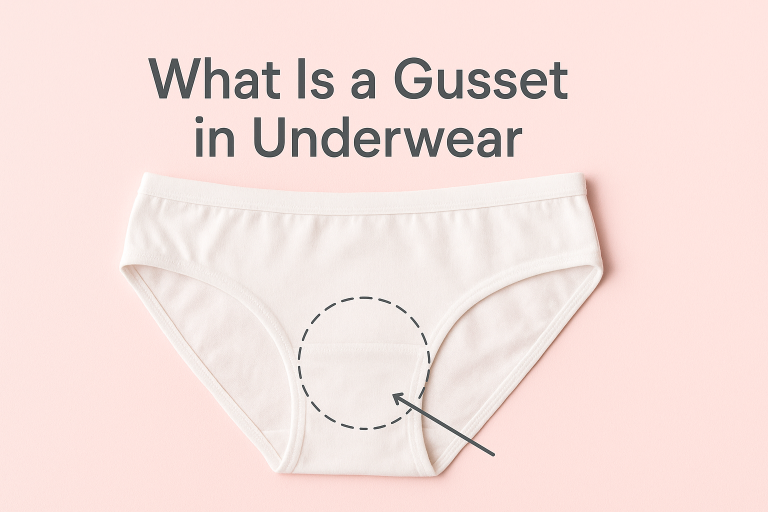
The cotton gusset is the internal lining panel in the crotch area of underwear, and it serves a specific hygiene function that becomes more critical in summer. The American College of Obstetricians and Gynecologists (ACOG) and the AAD both recommend that underwear have a cotton or natural fiber gusset to support vaginal health.
In summer heat, the gusset zone accumulates more moisture than any other part of the garment. Synthetic fabrics in this zone have lower breathability and higher heat retention than cotton. A cotton-lined gusset allows moisture to move away from the vaginal skin surface while the cotton fibers maintain a pH-compatible environment.
Women who wear synthetic underwear without a cotton gusset during summer show higher rates of yeast infection and bacterial vaginosis, according to clinical dermatology literature published in Obstetrics and Gynecology. Cotton gussets are non-negotiable regardless of which outer fabric or cut you choose for summer.
When buying underwear with a cotton gusset, look for styles where the gusset extends at least 2 inches in front of the crotch seam to cover the full external vaginal area, not just the perineum.
The cotton gusset is the most clinically supported underwear feature for summer vaginal health and should be present in every style you choose regardless of outer fabric or construction.
How Many Pairs of Summer Underwear Do You Need
Dermatologists recommend changing underwear daily at minimum, and more frequently in summer when sweat increases bacterial and fungal load on fabric. A 2016 survey by the American Cleaning Institute found that 39% of adults did laundry once per week, which means a minimum rotation of 7 pairs supports daily changes without extra laundry frequency.
For summer specifically, consider increasing your rotation to 10-14 pairs to allow an option to change mid-day on high-heat days without running short before laundry day. The AAD recommends against re-wearing underwear even if it appears clean, because bacterial colonization on fabric is not visible to the naked eye.
Use the table below to calculate how many pairs you need based on your laundry schedule and summer activity level.
| Laundry Frequency | Standard Activity Level | High Summer Activity (Gym, Outdoor Work) | Recommended Minimum |
|---|---|---|---|
| Every 3-4 days | 4-5 pairs | 8-10 pairs (2 changes per day) | 10 pairs |
| Once per week | 7-8 pairs | 12-14 pairs | 14 pairs |
| Every 10-14 days | 10-12 pairs | 18-20 pairs | 20 pairs |
Building a summer underwear rotation of at least 10 pairs in breathable fabrics costs approximately $60-$180 depending on fabric quality, and represents a meaningful investment in daily skin health during the hottest months.
How to Wash Summer Underwear to Maintain Performance
Washing method directly affects how long summer underwear retains its moisture-wicking, antimicrobial, and stretch-recovery properties. The wrong wash routine degrades elastic faster, breaks down antimicrobial finishes, and causes cotton and modal fibers to pill and harden, all of which reduce comfort in heat.
Washing Temperature and Cycle Selection
Cotton underwear tolerates warm water (40 degrees Celsius / 104 degrees Fahrenheit) and will sanitize adequately for normal wear. The NSF International recommends washing underwear at 60 degrees Celsius (140 degrees Fahrenheit) to kill 99.9% of bacteria if a household member has an active infection, though this temperature will degrade elastic over time with repeated use.
Modal, bamboo viscose, and seamless microfiber styles require cold water (30 degrees Celsius / 86 degrees Fahrenheit) and a delicate cycle to preserve fiber integrity. High-heat washing accelerates fiber breakdown in modal by up to 40% per wash cycle, according to Lenzing AG’s published fabric care research.
Detergent Selection for Summer Underwear
Standard laundry detergents contain enzymes and brightening agents that can disrupt the pH balance of cotton gusset fabric, according to research published in the Journal of Obstetrics and Gynaecology Canada. Use a lingerie-specific detergent or a fragrance-free, dye-free detergent for all underwear, and particularly for intimate apparel that contacts the vaginal area.
Fabric softener should not be used on moisture-wicking underwear. Softener coats fiber surfaces with a waxy film that reduces wicking efficiency by up to 30%, according to textile testing data published by the American Association of Textile Chemists and Colorists (AATCC).
Drying Method
Air drying on a flat surface or hanging line preserves elastic and fiber integrity longer than machine drying. If machine drying is necessary, use the lowest heat setting and remove underwear while slightly damp to finish air drying. High heat in the dryer is the leading cause of elastic waistband degradation, according to garment care research published by the International Fabricare Institute.
Using a mesh laundry bag protects delicate underwear from agitation damage during machine washing, extending the life of seamless styles and lace trim significantly.
Washing at the correct temperature, using the right detergent, and air drying are the three most impactful care steps for maintaining the breathability and comfort of summer underwear through multiple seasons of use.
When to Replace Summer Underwear
The elastic waistband and leg opening fibers in underwear degrade with repeated stretching, washing, and heat exposure. Once elastic loses recovery (the ability to return to its original length), waistbands roll, leg openings gap, and the garment no longer sits correctly on the body. All of these failures increase friction and heat accumulation.
The AAD recommends replacing underwear every 6-12 months under regular use conditions. In summer, the replacement cycle may be faster if underwear is worn during high-sweat activities, washed more frequently, or machine-dried regularly.
Visual and tactile signs that summer underwear needs replacement include: visible thinning of fabric (most common in the gusset zone), elastic that no longer returns to its original width after stretching, permanent staining that does not wash out, pilling on the fabric surface that creates friction, and any torn or unraveling seams or bonded edges.
Planning to replace at least 3-5 pairs per summer season and supplementing with new breathable styles at the start of warm weather ensures your rotation stays functional throughout the hottest months.
Summer Underwear for Special Needs
Summer Underwear During Pregnancy
Maternity underwear in summer requires soft, stretchy fabric that accommodates a growing belly without elastic digging into the abdomen. ACOG advises pregnant women to wear loose, breathable clothing against the skin to reduce heat stress on the body, which is already working harder to regulate temperature due to increased blood volume and metabolic rate.
Cotton or modal over-bump maternity briefs sit above the belly and distribute support across the full abdomen without a narrow elastic band. Under-bump styles that sit below the belly are also well-tolerated in early pregnancy but may shift and create friction as the belly grows in the second and third trimesters.
Key Specifications for Summer Maternity Underwear:
- Fabric: 95% organic cotton or modal, 5% elastane
- Waistband: Wide, flat, non-rolling band 3-4 inches for over-bump styles
- Rise: Over-bump reaches above the navel; under-bump sits 2-3 inches below
- Sizes: Typically XS-3X or labeled S/M/L/XL with specific weight ranges
- Cotton gusset: Required; should be at least 2 inches wide
Summer Underwear After Childbirth
The postpartum period requires underwear that accommodates perineal healing, postpartum bleeding, and temporary changes in body size. Postpartum disposable underwear is recommended by ACOG for the first 2-4 weeks after delivery as a hygienic and practical option that can be discarded after use without laundry concerns.
After the initial postpartum period, high-waisted postpartum underwear in cotton or modal provides soft coverage over the healing abdominal area. In summer specifically, choose lightweight cotton with a wide, flat waistband that does not press on the cesarean incision site or the healing perineum.
Period Underwear in Summer Heat
Period underwear uses multi-layer construction to absorb and contain menstrual flow without disposable products. In summer, the multi-layer design retains more heat than standard single-layer underwear, which is a relevant consideration for women who run warm.
The best period underwear for summer heat uses a moisture-wicking outer layer, an absorbent middle layer, and a leak-proof inner layer. Look for styles that specify the outer and inner layers are 100% cotton or TENCEL lyocell rather than full synthetic construction, as natural fiber layers manage heat and moisture better at the skin surface.
The lightest-weight period underwear styles (labeled “light” or “everyday” flow) use thinner absorbent layers and generate less heat than heavy-flow styles, making them more suitable for summer use on lighter flow days.
Price Comparison: Summer Underwear by Tier
Summer underwear spans a wide price range from basic value packs to performance-oriented single pairs. The quality gap between tiers is most significant in elastic recovery after washing and fabric consistency across sizes.
Price Comparison
Summer Underwear Price by Fabric and Performance Tier
Price per pair, sorted lowest to highest. Prices verified at time of publication.
$4-$7
$8-$14
$12-$22
$14-$28
$18-$35
$22-$42
Value pack per-pair pricing assumes 6-pair packs. Single-pair pricing reflects standard retail. Prices vary by brand, size range, and retailer. Plus-size styles may carry a $2-$5 per-pair surcharge depending on brand.
Frequently Asked Questions About Summer Underwear
What is the best fabric for underwear in hot weather?
Cotton, modal, and bamboo viscose are the three best fabrics for underwear in hot weather. Cotton absorbs up to 27 times its weight in moisture before feeling saturated, according to Cotton Incorporated’s published fiber data. Modal absorbs 50% more moisture than cotton per gram of fiber and retains softness after repeated washing. Bamboo viscose provides natural thermoregulation through micro-gaps in the fiber structure that allow moisture vapor to pass through. All three materials outperform synthetic fabrics in breathability for everyday summer wear, though moisture-wicking nylon is preferable for high-sweat athletic activity.
Is cotton or seamless underwear better for summer?
Cotton is generally better for summer from a breathability and hygiene standpoint, but seamless construction is superior for preventing friction and heat buildup at seam points. The ideal summer underwear combines both: a seamless or lightly seamed cotton or modal construction that eliminates pressure seams while maintaining natural fiber breathability. If choosing between a seamless synthetic style and a seamed cotton style, prioritize the cotton gusset lining, which the AAD recommends for vaginal health, over seamless construction in the outer fabric.
Should you wear a thong or full coverage underwear in summer heat?
Thongs minimize total fabric contact with the skin, reducing sweat accumulation in the seat and inner thigh. Full coverage styles absorb more total moisture but can trap heat across a larger skin surface area. For women who do not experience inner-thigh chafing, a cotton or modal thong is the cooler option in summer. For women with inner-thigh chafing, a full-coverage boyshort or brief in lightweight modal is actually more comfortable despite larger coverage because it eliminates the friction that causes the chafing. Your specific discomfort pattern determines which is better for your body.
How do you prevent heat rash from underwear in summer?
Preventing heat rash from underwear in summer requires three steps: choosing natural fiber fabrics (cotton or modal) that do not trap moisture, selecting underwear with flat or soft waistbands that do not create tight pressure points, and changing underwear when damp rather than wearing moisture-saturated fabric for extended periods. The AAD identifies pressure combined with moisture and heat as the primary trigger for miliaria rubra (heat rash). A cotton or modal bikini cut with a flat waistband and a breathable gusset addresses all three triggers simultaneously. Anti-fungal powder applied to high-friction zones before dressing provides additional protection on extremely hot days.
How often should you change underwear in summer?
The AAD recommends changing underwear at least once daily, and dermatologists recommend changing more frequently in summer if underwear becomes damp from sweat. On high-heat days or days involving physical activity, changing underwear mid-day reduces bacterial and fungal load on the skin, lowering the risk of yeast infections, bacterial vaginosis, and heat rash. The American Cleaning Institute’s survey data shows that most adults do laundry once weekly, which means maintaining a rotation of at least 10-14 pairs supports daily or twice-daily changes throughout a 7-day period without additional laundry.
What underwear is best for walking in summer heat?
Walking in summer heat generates sustained inner-thigh friction and consistent low-to-moderate sweating. The best underwear for walking in summer is a modal or bamboo viscose boyshort or long-cut bikini that provides a smooth fabric barrier between the inner thighs. A smooth-surface fabric with no lace or textured leg hems is essential, as texture increases friction during repetitive walking motion. Cotton boyshorts work well for short-duration walking but saturate with sweat during extended walks (over 30 minutes), making modal or bamboo viscose the better choice for longer outings.
Is period underwear too hot for summer?
Period underwear is warmer than standard single-layer underwear because the multi-layer absorbent construction retains more heat. However, light-flow and everyday-flow period underwear styles use thinner absorbent layers than heavy-flow styles and generate significantly less heat. Choosing period underwear with natural fiber outer and inner layers (100% cotton or TENCEL lyocell) rather than full synthetic construction reduces heat retention at the skin surface. On the hottest summer days, pairing a light-flow period underwear style with breathable, loose-fitting outer clothing minimizes the additional warmth from the multi-layer design.
The best summer underwear combines a breathable natural fiber (cotton, modal, or bamboo viscose), a cotton-lined gusset, and a cut that matches your specific fit concern. Start with a 10-pair rotation in lightweight cotton or modal bikini or hipster styles as your everyday summer foundation, then add performance-specific styles for workouts, travel, or special needs. Changing into fresh underwear when damp and washing in cold water with fragrance-free detergent protects both the garment and your skin health through every hot-weather month.