Best Underwear for Winter Layering: Insulate, Wicks & Fits
The best underwear for winter layering keeps you warm without adding bulk, prevents moisture buildup from sweat, and stays in place through all the extra fabric layers above it. The right pair does three jobs at once: it insulates close to the skin, wicks moisture away from sweat, and sits flat enough that nothing bunches or rolls under thermal leggings or base layers. This guide covers exactly which styles, fabrics, and fits work best so you can layer confidently all season.
Why Regular Underwear Fails Under Winter Layers
Standard cotton cotton briefs absorb moisture and hold it against the skin, which drops body temperature rapidly during cold-weather activity. According to the American College of Sports Medicine, wet fabric against skin accelerates heat loss up to 25 times faster than dry fabric in cold conditions.
The second problem is fit. Bulky seams and wide waistbands create visible ridges under fitted thermal leggings, and rolled leg openings bunch inside base layer pants. These friction points cause chafing during winter hikes, ski days, and any activity where you are moving in multiple tight layers.
Underwear chosen specifically for cold-weather layering solves both problems by using moisture-wicking or insulating fabrics cut in a streamlined silhouette with flat or no seams. Choosing the right base layer underwear is the first decision in building any functional winter layering system, and it determines how comfortable every layer above it feels.
Best Fabrics for Winter Layering Underwear
Fabric is the single most important variable in winter underwear performance. The fiber type determines whether you stay warm and dry or cold and clammy within the first hour of wearing layers.
Merino Wool: The Top-Performing Winter Fabric
Merino wool regulates body temperature across a wider range than any synthetic, making it the most versatile fabric for winter layering underwear. A study published in the journal Textile Research Journal found that merino wool maintained comfort over a temperature range 30 to 40 percent wider than polyester base layers in both cold and warm conditions.
Merino fibers absorb up to 35 percent of their weight in moisture vapor before feeling wet against the skin, according to the Australian Wool Innovation organization. This means sweat moves away from the body before it cools, which is critical during active winter pursuits like skiing, snowshoeing, or hiking.
Merino merino wool underwear also resists odor naturally because the fiber’s protein structure binds odor-causing molecules. A single pair can be worn for multiple days on backcountry trips without washing. The trade-off is price: quality merino underwear typically ranges from $30 to $75 per pair, significantly more than synthetic options.
Synthetic Fabrics: Polyester and Nylon for Active Layering
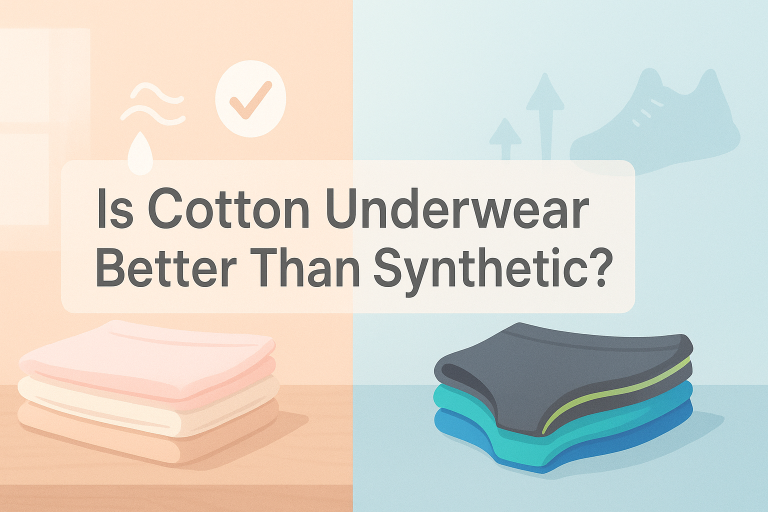
Polyester and nylon moisture-wicking underwear dries faster than merino wool, making them the better choice for high-output winter activities where you sweat heavily. Polyester wicks moisture to the fabric surface and evaporates it in approximately one-third the time of cotton, according to testing by the American Textile Manufacturers Institute.
Nylon adds durability and a softer hand feel compared to standard polyester, which is why most premium seamless winter underwear blends 70 to 85 percent nylon with 15 to 30 percent elastane. The elastane component ensures the underwear stretches and returns to shape without loosening under layers throughout the day.
The limitation of synthetic fabrics is odor retention. Synthetic fibers trap odor-causing bacteria in the fiber structure, so high-output days require washing after each wear. For everyday winter wear rather than active sports, synthetic blends in the $12 to $35 price range offer excellent value and reliable moisture management.
Bamboo Viscose: A Midpoint Option for Everyday Winter Wear
Bamboo viscose underwear sits between cotton and merino in terms of moisture management and warmth. Bamboo fiber is naturally thermo-regulating to a moderate degree and softer than most synthetics against sensitive skin. It absorbs approximately 40 percent more moisture than conventional cotton, according to the Textile Exchange fiber benchmark reports.
Bamboo is not the best choice for high-activity cold-weather layering because it dries slower than polyester or nylon. For everyday winter office wear or low-activity layering under jeans and trousers, bamboo underwear in the $15 to $30 range provides a soft, breathable option that performs meaningfully better than standard cotton.
What to Avoid: Cotton and Cotton Blends
Cotton holds moisture against the skin for extended periods because its fiber structure swells when wet and does not release moisture efficiently. The outdoor industry phrase “cotton kills” reflects the documented risk of hypothermia when wet cotton base layers are worn during cold-weather activity. Cotton underwear under winter base layers creates a cold, damp zone against the most sensitive skin on the body.
Cotton-polyester blends (typically 60 to 40 ratios) perform only marginally better than pure cotton. The polyester fraction does not compensate sufficiently for the cotton’s moisture retention. For winter layering, any underwear with more than 20 percent cotton in its fiber content is not recommended by outdoor gear specialists at REI or backcountry outfitters.
Choosing the right fabric is the foundation of every other winter underwear decision, and merino wool outperforms all other options for most conditions while synthetic blends are the better pick for high-sweat sports.
Best Underwear Styles for Winter Layering
The cut and silhouette of winter layering underwear matters as much as fabric. The wrong style creates bunching, leg-opening ridges, and waistband roll under tight thermal layers.
High-Waisted Briefs and Hipsters for Full Coverage
High-waisted underwear is the most practical style for winter layering because the tall waistband stays flat under high-rise thermal leggings and long-line base layer tops. A waistband that sits above the hip bone does not roll or shift when tucked under multiple tight layers, which is the most common complaint with mid-rise and low-rise styles in cold-weather layering.
High-waisted hipsters provide slightly more coverage across the seat than briefs, which reduces the risk of fabric gaps or bunching at the back when bending or crouching in ski pants or insulated trousers. Look for a waistband width of at least 1.5 inches, as narrower bands are more prone to folding under pressure from outer layers.
Key Specifications for high-waisted merino wool hipsters: Sizes: XS to 3X. Fabric: 87% merino wool, 13% nylon. Rise: high-waisted, sits 2 to 3 inches above the hip bone. Waistband: flat-knit, no internal elastic exposed. Machine washable on delicate cycle with cold water.
Seamless Bikini and Boyshort Styles for No-Bulk Layering
Seamless underwear eliminates all stitched seam ridges that show through fitted base layer fabrics. Laser-cut leg openings and knit-in waistbands remove every ridge that could create friction or visible texture under thermal leggings, ski pants, or running tights. This makes seamless styles the top choice for athletes and anyone wearing slim-fit winter outer layers.
Seamless boyshorts offer the most coverage of any seamless style, which helps prevent thigh friction during snowshoe or cross-country ski activities. The extended leg provides a smooth transition from underwear to base layer legging with no gap at the upper thigh. Boyshorts in a nylon-elastane blend (typically 82% nylon, 18% spandex) move with the body without restriction during leg-intensive winter activities.
Key Specifications for seamless nylon-spandex boyshorts: Sizes: XS to 2X. Fabric: 82% nylon, 18% elastane. Seams: zero (fully knitted construction). Leg opening: laser-cut, no raw edge. Rise: mid to high. Price range: $12 to $28 per pair.
Thongs for Slim-Fit Ski Pants and Thermal Leggings
Thongs in merino wool or seamless nylon eliminate all rear coverage seam lines, which makes them the preferred style for very fitted ski pants where any fabric behind the seat is visible. Merino wool thongs are particularly effective because the fiber’s natural stretch means no shifting or discomfort during athletic movement, and the small fabric footprint minimizes moisture accumulation in low-activity areas.
The limitation of thongs in winter layering is coverage: they provide no inner-thigh coverage, which is not a problem under ski pants but can be uncomfortable during extended hikes where thigh contact occurs. For high-output winter activities, thongs are best suited to downhill skiing and snowboarding rather than snowshoeing or winter running.
Long-Leg Thermal Underwear Panties for Extreme Cold
Thermal thermal underwear bottoms for women
with a brief or short-short panel are a distinct category from standard underwear, designed to be worn as the first layer in extreme cold (below 20°F or active outdoor exposure under 32°F). These combine the function of underwear and base layer leggings in one garment, eliminating one entire layer of potential bunching.
Brands including Smartwool, Icebreaker, and Patagonia produce thermal bottoms with an integrated brief panel, meaning no separate underwear is worn underneath. This system is used by mountaineers, ice climbers, and backcountry skiers who need the maximum warmth-to-bulk ratio. The key advantage is that one fewer seam intersection exists at the hip and waist, reducing chafing during full-day wear.
The right style for winter layering depends on the activity level and the outer layer fit, with seamless styles for slim-fit athletic outer layers and high-waisted covered styles for everyday cold-weather dressing.
How to Choose Underwear by Winter Activity Type
The activity you are doing in the cold determines which underwear fabric and style perform best. A one-size-fits-all approach leads to the wrong choice for the specific thermal and moisture demands of each winter pursuit.
Use the table below to match your primary winter activity to the underwear type and fabric that performs best in that context.
| Activity | Best Fabric | Best Style | Key Feature | Price Range |
|---|---|---|---|---|
| Downhill skiing | Merino wool or seamless nylon | Thong or seamless bikini | Zero rear seam lines | $18 to $65 |
| Snowshoeing or winter hiking | Merino wool | High-waisted hipster or boyshort | Thigh coverage, odor resistance | $30 to $75 |
| Winter running | Nylon-elastane blend | Seamless bikini or boyshort | Fast drying, no chafe | $12 to $30 |
| Everyday cold-weather dressing | Merino wool or bamboo | High-waisted brief or hipster | All-day comfort, warmth | $15 to $55 |
| Extreme cold or backcountry | Heavyweight merino wool | Thermal bottom with integrated brief panel | Maximum insulation, no extra layer | $55 to $120 |
The table above shows that merino wool covers the widest range of winter activities while nylon-elastane blends are the sharper choice for fast, high-sweat pursuits like winter running where quick drying outweighs insulation.
Matching underwear to activity rather than simply to temperature makes a measurable difference in all-day comfort. The wrong fabric choice for your activity is the most common reason underwear fails in cold weather.
Top Underwear Brands for Winter Layering
Several brands have produced winter-specific underwear that consistently outperforms general-purpose intimates in cold-weather use. The following brands are recognized by outdoor industry reviewers and verified buyer data for their cold-weather underwear performance.
Smartwool Merino 150 and 250 Underwear
Smartwool produces two weight classes of merino base layer underwear that are directly relevant to winter layering. The Merino 150 (150 grams per square meter) is suited to active pursuits and mild-to-moderate cold (20 to 45°F with activity). The Merino 250 (250 grams per square meter) is the heavier option for low-activity extreme cold or everyday wear in temperatures below 20°F.
Smartwool Smartwool merino underwear for women is constructed with a 150-count merino wool sourced from Responsible Wool Standard-certified farms, and the brand publishes its supply chain transparency data publicly. Smartwool sizes run XS to XL in standard sizing and XS to 1X in some extended styles, with prices ranging from $32 to $52 per pair. Verified buyers at REI report consistent sizing accuracy across multiple Smartwool base layer styles.
Icebreaker Anatomica and Siren Collections
Icebreaker uses 100% merino wool (no synthetic blend) in its Anatomica collection, which is one of the few brands maintaining a pure-merino construction for underwear at the $38 to $58 price range. The brand’s Siren collection adds a cotton-feel finish through a merino-nylon blend (87% merino, 13% nylon) that provides slightly better durability than pure merino while retaining most of its thermal and moisture-management properties.
Icebreaker women’s merino underwear is certified by the ZQ Merino standard, which independently verifies animal welfare, environmental sustainability, and fiber traceability. Icebreaker offers sizes XS to XXL across most styles and provides a separate size guide based on hip measurement, which is more reliable for underwear sizing than general clothing sizes.
ThirdLove and Lively for Everyday Winter Seamless Options
For everyday winter layering under office clothing and casual cold-weather outfits rather than outdoor athletics, ThirdLove and Lively produce seamless seamless high-waisted underwear in nylon-spandex blends that sit flat under trousers, fitted jeans, and base layer leggings. ThirdLove’s seamless collection includes an extended size range from XS to 3X with half-cup sizing precision, which transfers to underwear sizing accuracy.
Lively’s seamless styles use an 82% nylon, 18% spandex construction with laser-cut edges and retail between $14 and $20 per pair. Verified buyer reviews on Lively’s site (4.6 out of 5 stars from over 12,000 ratings) cite the flat waistband and smooth leg openings as the top reasons for repurchase specifically for layering under leggings.
Patagonia Barely Hip Underwear for Outdoor Layering
Patagonia’s Barely Hip underwear uses a 59% recycled polyester and 41% merino wool blend, combining the quick-drying speed of synthetic with the odor-resistance and warmth of merino. This hybrid construction is particularly effective for multi-day winter trips where access to laundry is limited. The style is a mid-rise bikini cut with a minimal back coverage profile, designed explicitly to eliminate seam interference under Patagonia’s own Capilene and R1 base layer bottoms.
Patagonia women’s underwear retails between $22 and $32 per pair and carries the bluesign and Fair Trade USA certifications. The brand sizes XS to XL and publishes a specific note in its product descriptions recommending sizing up one size from standard for women between sizes.
Choosing a brand with a published merino wool sourcing standard gives you both performance confidence and supply chain accountability, which matters for long-term repurchase decisions in this product category.
How Waistband and Leg Opening Design Affect Winter Layering Performance
The waistband and leg opening are the two contact points where underwear most commonly fails under winter layers. Both need specific design features to stay flat and friction-free under tight thermal fabrics.
Waistband Design: What Works Under Thermal Leggings
A flat-knit or knit-in waistband performs significantly better than a separate elastic waistband under thermal leggings and ski pants. Separate elastic bands create a raised ridge that presses into the skin when a fitted outer layer compresses it from the outside, causing a pressure mark and potential irritation during extended wear.
The minimum effective waistband width for winter layering is 1.5 inches. Narrower bands are more prone to folding in half when compressed, which doubles the ridge height and increases pressure. Brands including Smartwool, Icebreaker, and Girlfriend Collective build waistbands of 2 to 2.5 inches in their layering-specific styles precisely to prevent this folding under compression from outer layers.
A silicone-free waistband (no interior grip strip) is preferable for winter layering because silicone grip strips add bulk and can grab the inner surface of the base layer, causing it to ride up when you move. For non-athletic winter use, this is a minor issue, but for skiing, snowboarding, or hiking, a smooth waistband interior prevents the grip effect entirely.
Leg Opening Design: Preventing Bunching Inside Base Layer Pants
Laser-cut leg openings are the most reliable design for preventing bunching inside base layer leggings and ski pants. A laser-cut edge has zero exposed seam allowance, which eliminates the 1 to 3mm ridge that forms at the edge of any sewn leg opening. Over a full day of movement, this small ridge creates noticeable chafing at the inner thigh and outer hip.
For styles that are not fully seamless, a single flat-stitched leg seam (one thread pass with no raised allowance) outperforms a triple-stitched or overlocked seam under tight outer layers. The Smartwool Merino 150 bikini and Icebreaker Siren hipster both use flat-stitch leg construction for this reason.
A well-designed waistband and laser-cut or flat-stitch leg opening are the two details that separate underwear built for layering from standard everyday underwear that happens to be worn in winter.
Sizing and Fit Guide for Winter Layering Underwear
Sizing accuracy is more important for winter layering underwear than for everyday underwear because the compression from outer layers makes any fit error immediately noticeable. Underwear that is slightly too small will cut into the skin when compressed by ski pants. Underwear that is slightly too large will fold and bunch inside base layer leggings.
Use the table below to match your hip measurement to the correct US letter size and numeric size across the most common sizing systems used by winter underwear brands.
| Hip Measurement (inches) | US Letter Size | US Numeric Size | Smartwool Size | Icebreaker Size |
|---|---|---|---|---|
| 34 to 35 | XS | 4 to 6 | XS | XS |
| 36 to 37 | S | 7 to 8 | S | S |
| 38 to 39 | M | 9 to 10 | M | M |
| 40 to 42 | L | 11 to 12 | L | L |
| 43 to 45 | XL | 13 to 14 | XL | XL |
| 46 to 49 | 1X to 2X | 15 to 18 | XL (max) | XXL |
Merino wool has minimal stretch compared to nylon-spandex blends, so Icebreaker and Smartwool both recommend measuring your hip at the fullest point and sizing up if you fall between sizes. For seamless nylon underwear, sizing to your exact hip measurement is accurate because the elastane content provides 30 to 40 percent stretch without loss of shape.
Here is an interactive sizing tool to find your recommended size instantly based on your hip measurement.
Sizing Tool
Winter Layering Underwear Size Calculator
Enter your hip measurement to find your recommended letter and numeric size for merino and seamless styles.
Merino wool underwear has less stretch than nylon-spandex: size up one size if you are between measurements. Always verify against the specific brand’s size chart.
Measure around the fullest part of your hips while standing with feet together. Panty sizing is based primarily on hip measurement, not waist.
For merino wool specifically, sizing up when between measurements is the single most reliable way to prevent the compression discomfort that occurs under tight base layer pants and ski bottoms.
Care and Maintenance for Winter Layering Underwear
Proper washing extends the functional life of merino wool and nylon-spandex winter underwear by preserving the fiber's moisture-wicking and thermal properties. Incorrect washing is the primary cause of premature elastic failure and pilling in high-performance base layer underwear.
Washing Merino Wool Underwear Without Shrinking or Felting
Merino wool shrinks when exposed to high heat and agitation simultaneously. The fiber's microscopic scales interlock permanently when hot water and mechanical agitation are applied together, a process called felting that cannot be reversed. All merino underwear from Smartwool, Icebreaker, and Patagonia should be washed in cold water (below 86°F or 30°C) on a delicate or wool cycle.
A mesh laundry bag reduces mechanical agitation further by containing the garment and preventing it from tumbling against harsher items in the wash. Wool-specific detergent (such as Eucalan or Woolite) maintains the lanolin content of the fiber, which contributes to the softness and moisture-management properties of merino wool underwear over time.
Tumble drying merino wool on any heat setting causes shrinkage. Lay merino underwear flat to dry at room temperature, which takes 2 to 4 hours depending on ambient humidity. Do not hang merino wool to dry because the weight of the wet garment stretches the fiber structure and causes permanent deformation at the waistband and leg openings.
Washing Nylon-Spandex Seamless Underwear
Nylon-spandex seamless underwear tolerates machine washing better than merino but still degrades faster when exposed to hot water and high-heat drying. Hot water (above 104°F or 40°C) breaks down elastane fibers, reducing the stretch-recovery ratio by approximately 15 to 20 percent per 50 wash cycles according to testing published by the Hohenstein Institute, a German textile testing laboratory.
Wash seamless nylon underwear in cold water on a gentle cycle and air dry or tumble dry on the lowest heat setting. Avoid fabric softener because it coats the fiber surface and reduces the moisture-wicking performance of the nylon. If wicking performance declines over time, washing without softener for two to three cycles typically restores it by clearing the fiber surface coating.
Proper care is a direct extension of your underwear investment: merino wool underwear washed correctly lasts 3 to 5 years of regular use, while the same garments washed at high heat typically degrade within 12 to 18 months.
Budget vs. Premium Winter Layering Underwear: When the Price Difference Is Worth It
The price range for winter layering underwear spans from $10 for basic moisture-wicking synthetics to $75 or more for premium merino wool. Understanding where the performance gap is real, and where it is marginal, helps you allocate your underwear budget effectively.
Use the table below to compare budget and premium winter underwear across the five performance categories that matter most for cold-weather layering.
| Performance Category | Budget ($10 to $20) | Mid-Range ($20 to $40) | Premium ($40 to $75) |
|---|---|---|---|
| Moisture wicking | Functional (polyester) | Good (nylon-spandex) | Best (merino or hybrid) |
| Odor resistance | Poor after 4 to 6 hours | Moderate (1 day) | Strong (2 to 3 days) |
| Fit under layers | Variable (depends on style) | Good (seamless cuts) | Excellent (purpose-built) |
| Durability (wash cycles) | 50 to 80 cycles | 100 to 150 cycles | 200 to 300 cycles |
| Temperature regulation | Limited (no insulation) | Moderate (synthetic warmth) | Best (merino thermoregulation) |
As the table shows, odor resistance and temperature regulation show the clearest performance gap between budget and premium options, while moisture wicking is functional across all price tiers when the fabric is synthetic rather than cotton.
For everyday winter commuting or casual layering under jeans, mid-range seamless nylon underwear delivers most of the layering performance at half the price of premium merino. For multi-day outdoor trips or extended wear without laundry access, the premium merino investment pays for itself in comfort and hygiene over three or more days of continuous use.
Common Fit Mistakes When Layering Underwear in Winter
The most common underwear layering errors result from applying summer or everyday fit logic to cold-weather layering. Each mistake has a specific correction.
Choosing Too Much Coverage for Slim-Fit Ski Pants
Full-coverage briefs or high-cut boyshorts create four additional seam lines (two at the leg openings, two at the seat sides) that show as ridges through slim-fit ski pants. These ridges are not a style issue. They are a friction point that causes the outer pant to shift slightly on each stride, creating abrasion over a full ski day.
The correction is to size down in coverage, not fabric. A seamless thong or minimal bikini in merino or nylon-spandex provides all the thermal and moisture management of a fuller style with zero seam interference. This is the approach taken by competitive alpine skiers, whose form-fitting race suits make any seam immediately apparent and uncomfortable during high-speed runs.
Wearing the Same Underwear for Active and Passive Winter Layering
A merino wool hipster that is ideal for a 5-hour snowshoe is not the right choice for a day of sitting in an office under wool trousers. Active underwear is cut to move with the body and wicks aggressively. Passive wear benefits from a softer, less structured fabric like bamboo or lightweight merino that does not create a pronounced waistband outline under office-weight fabrics.
Maintaining a separate rotation of active winter underwear and everyday winter underwear is the same principle applied to outer layers: ski pants and work trousers are both "winter pants" but serve entirely different thermal and fit functions. The same applies to the underwear worn beneath them.
Ignoring Waistband Height When Pairing With High-Rise Base Layers
High-rise thermal leggings, which typically have a waistband sitting 2 to 3 inches above the hip bone, require underwear with a matching rise height to prevent a visible double-waistband ridge. Mid-rise underwear worn under high-rise base layers creates a step in the fabric at the point where the underwear waistband ends and the base layer waistband continues, which is visible through any fitted outer layer.
High-waisted thermal underwear with a rise that matches or exceeds the base layer's rise height eliminates this double-band effect. Brands including Smartwool and Icebreaker publish the exact waistband rise height in centimeters on their product detail pages, which allows direct comparison with your base layer's rise measurement before purchasing.
Matching the coverage, activity type, and waistband height of your underwear to the specific outer layers you wear them under removes every preventable discomfort point from winter layering.
Frequently Asked Questions About Best Underwear for Winter Layering
Is merino wool underwear worth the price for winter layering?
Merino wool underwear is worth the higher price for anyone who spends 4 or more hours in cold-weather conditions, particularly during multi-day outdoor activities. Merino maintains warmth when wet, resists odor for 2 to 3 days of continuous wear, and thermoregulates across a wider temperature range than any synthetic fabric, according to the Australian Wool Innovation organization. For everyday urban winter use, mid-range seamless nylon delivers most of the layering performance at half the cost.
Can I wear cotton underwear under thermal leggings?
Cotton underwear under thermal leggings is not recommended for any activity that produces sweat in cold conditions. Cotton absorbs moisture and holds it against the skin, which accelerates heat loss up to 25 times faster than dry fabric in cold temperatures, according to the American College of Sports Medicine. For light activity in mild cold (above 40°F with no significant exertion), cotton has minimal risk. For skiing, hiking, snowshoeing, or winter running, cotton creates a measurable hypothermia risk when the body sweats and slows down.
What underwear style prevents visible panty lines under ski pants?
Seamless thongs and seamless bikini cuts in laser-cut nylon-spandex eliminate visible panty lines under ski pants because they have zero raised seam edges at the leg openings and seat. A fully seamless construction with no stitched edges is the most effective option. Second best is a seamless bikini style with laser-cut leg openings and a knit-in waistband. Any style with a sewn leg seam or separate elastic waistband will show some ridge through very tight-fitting ski pants.
How do I stop my underwear from riding up under winter base layers?
Underwear riding up under base layers is caused by a mismatch between the stretch recovery rate of the underwear and the compression of the base layer above it. Choose underwear with a higher elastane percentage (18% or above) for better stretch recovery and resistance to shifting. High-waisted styles with a wide waistband (1.5 inches or more) anchor more surface area and are more resistant to upward movement than narrow-band mid-rise styles. Boyshorts with extended leg coverage also reduce riding up at the inner thigh specifically.
How many pairs of winter layering underwear do I need for a ski trip?
For a 3 to 7-day ski trip, 2 to 3 pairs of merino wool underwear are sufficient because merino can be worn for 2 to 3 days between washings without significant odor buildup. For synthetic underwear, a 1-to-1 ratio of one pair per day is recommended because synthetic fibers retain odor after each high-activity day. Pack at least one extra pair in both cases as a contingency for unexpected activity, laundry delays, or wet conditions.
Does underwear fabric affect how warm I feel under winter layers?
Yes, underwear fabric has a direct effect on warmth under winter layers. Merino wool provides insulation at the skin level and thermoregulates body temperature in both directions (warming in cold and cooling when warm). Synthetic fabrics like polyester and nylon do not provide insulation but do maintain warmth by keeping moisture away from the skin, which prevents evaporative cooling. Cotton provides neither insulation nor moisture management, so it is the coldest fabric in the stack under winter conditions.
Choosing the right underwear for winter layering, whether that is a seamless nylon bikini for ski days or a merino wool hipster for cold-weather hikes, makes every layer above it work better and keeps you more comfortable from the first run of the morning to the last mile of the trail.
Start by identifying your primary winter activity and the outer layer fit, then match your fabric (merino for insulation and odor resistance, nylon-spandex for fast drying and no-show performance) and style (seamless for slim fit, high-waisted for tall base layers) to those two factors. Pair your choice with a mesh laundry bag and wool-safe detergent to protect your investment, and your base layer system will perform reliably through the entire cold season.