Can Underwear Cause UTIs? Preventive Fabric & Fit Tips
Underwear can contribute to urinary tract infections, but it is rarely the sole cause. The fabric, fit, and hygiene practices associated with the underwear you choose create conditions that either discourage or encourage bacterial overgrowth near the urethra, which is the primary entry point for UTI-causing bacteria like Escherichia coli. Understanding exactly how underwear influences UTI risk gives you practical, evidence-based choices you can make today.
How Underwear Creates Conditions That Raise UTI Risk
Underwear affects UTI risk primarily by influencing moisture levels, heat, and bacterial transfer in the perineal area. The urethra in women is approximately 1.5 inches long, significantly shorter than in men, which means bacteria require very little travel distance to reach the bladder, according to the National Institute of Diabetes and Digestive and Kidney Diseases (NIDDK).
Moisture trapped against the skin by non-breathable fabrics creates a warm, damp environment where E. coli and other pathogens multiply rapidly. A study published in the American Journal of Obstetrics and Gynecology found that perineal moisture levels directly correlate with bacterial colonization rates in the vaginal and urethral area.
Tight-fitting styles physically press fabric against the urethra and the anal region simultaneously. This proximity increases the likelihood of fecal bacteria transferring toward the urethral opening, a mechanism the Centers for Disease Control and Prevention (CDC) identifies as the leading cause of UTIs in women.
The right underwear does not guarantee UTI prevention, but the wrong underwear consistently creates the biological conditions that make infection more likely.
Which Underwear Fabrics Are Most Linked to UTI Risk
Fabric composition is the single most important underwear variable for UTI risk. Synthetic fabrics including nylon, polyester, and spandex trap heat and moisture against the skin because they do not absorb or wick moisture away from the body efficiently.
Cotton, by contrast, absorbs up to 27 times its weight in moisture, according to data from the Cotton Incorporated fiber research program. This absorption capacity keeps the perineal area drier and reduces the bacterial growth conditions that precede UTIs.
Cotton Underwear and UTI Prevention
Cotton underwear with a full cotton gusset is consistently recommended by urologists and gynecologists as the lowest-risk fabric choice for women prone to UTIs. The American Urological Association’s patient education resources specifically identify breathable, natural-fiber underwear as a preventive measure for recurrent UTIs.
100% cotton underwear absorbs moisture, allows airflow, and does not create the acidic or anaerobic microenvironment that supports pathogen growth. A cotton gusset is the minimum standard, as many marketed “cotton” underwear styles use cotton only in the outer shell while the gusset uses synthetic fabric.
Key Specifications for cotton underwear relevant to UTI prevention:
- Gusset fabric: 100% cotton (verify label, not just outer fabric)
- Fabric weight: 150-180 gsm for adequate moisture absorption without bulk
- Fit: moderate coverage with no tight leg elastic pressing on the perineum
- Wash temperature: 60°C (140°F) kills 99.9% of common pathogens per NHS laundering guidelines
- Replace every 6-12 months as cotton loses absorbency after approximately 50-60 wash cycles
100% cotton underwear with a verified cotton gusset is the most straightforward fabric switch for women managing recurrent UTIs.
Synthetic Fabrics and Moisture Trapping
Nylon and polyester underwear retain moisture against the skin for 3 to 5 times longer than cotton equivalents, according to textile testing data from the American Association of Textile Chemists and Colorists (AATCC). This prolonged moisture contact creates the exact warm, damp environment where uropathogens thrive.
Moisture-wicking athletic synthetics perform better than standard nylon or polyester because their fiber structure moves moisture away from the skin toward the outer surface of the fabric. However, even high-performance moisture-wicking synthetics do not match cotton’s overall breathability for prolonged daily wear.
If synthetic underwear is preferred for aesthetic or structural reasons, limiting wear duration to under 8 hours and changing promptly after sweating reduces the associated risk meaningfully.
Bamboo and Modal Fabric Options
Bamboo viscose and modal fabrics offer an intermediate option between cotton and synthetic materials. Bamboo viscose absorbs approximately 40% more moisture than cotton by weight, according to fiber analysis published in the Journal of Natural Fibers. Modal, a semi-synthetic fiber derived from beech wood pulp, is softer than cotton and retains comparable breathability.
Neither bamboo nor modal has been studied in controlled clinical trials specifically for UTI prevention, but their moisture-management properties suggest a similar low-risk profile to cotton. Women who find 100% cotton uncomfortable for texture reasons often find bamboo underwear or modal underwear a compatible alternative.
Fabric choice directly controls how long moisture remains against the urethra, making it the most actionable single variable in underwear-related UTI prevention.
Underwear Styles and Their Impact on UTI Risk
The cut and coverage of underwear determine how much fabric contacts the perineal area and how much pressure it applies against the urethra. Not all styles carry equal risk.
Thong Underwear and UTI Risk
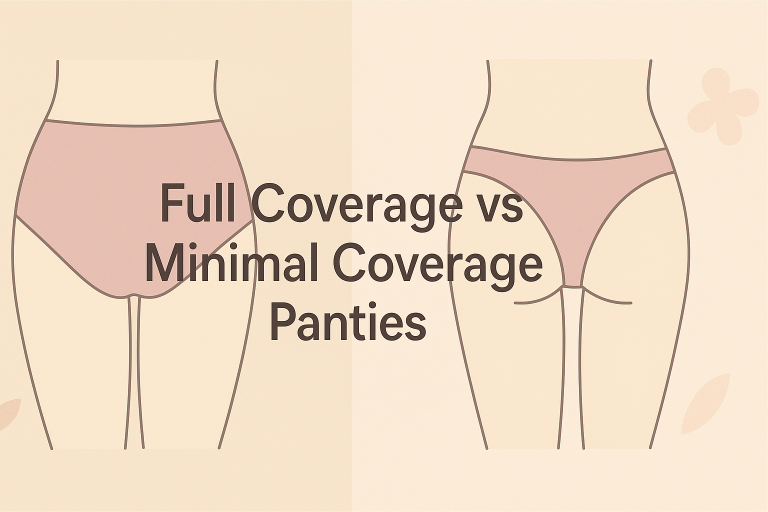
Thong underwear is the style most frequently discussed in relation to UTIs because of its narrow back strip, which sits in direct contact with the anal region. The concern is anatomically grounded: the narrow fabric bridge can act as a mechanical transfer route for E. coli from the rectal area toward the urethra, particularly with movement.
A study published in the Journal of Women’s Health found that women who wore thongs daily had higher rates of vaginal and perineal bacterial colonization compared to women who wore full-coverage styles, though the study noted individual hygiene practices also influenced outcomes significantly.
Thong risk is highest when the fabric is synthetic, when the underwear fits tightly, and when it is worn for extended periods without changing. Cotton thongs worn for limited durations present lower risk than synthetic thongs worn all day, though full-coverage styles remain the lower-risk choice overall.
Cotton thong underwear reduces but does not eliminate the mechanical transfer risk inherent to the thong design.
Tight Underwear, Compression, and Restricted Airflow
Underwear that fits too tightly compresses fabric against the urethra and creates continuous friction in the perineal area. This friction can cause minor irritation of the urethral opening, which lowers the local tissue barrier against bacterial entry, according to urogynecology research published in the International Urogynecology Journal.
Compression styles, including shapewear briefs and high-compression boyshorts worn for extended periods, generate both heat and sustained pressure. Sustained heat in the perineal area raises local skin temperature by 1 to 2 degrees Celsius, enough to accelerate bacterial doubling rates from roughly 20 minutes to 15 minutes per generation.
Well-fitted underwear with no digging leg elastic, no rolling waistband, and adequate coverage without compression represents the safest style category for women with a history of UTIs.
Full-Coverage Briefs and Lower UTI Risk
Full-coverage cotton briefs consistently rank as the lowest-risk underwear style in clinical recommendations from urologists. Their design keeps the gusset fabric in contact with the perineal area without applying concentrated pressure on the urethra, and their wider coverage reduces the potential for fabric-to-anal-region contact that characterizes thong designs.
High-waisted brief styles add the additional benefit of keeping the waistband away from the lower abdomen without adding compression, making them comfortable for full-day wear without generating heat buildup. High-waisted cotton briefs are frequently recommended by urologists for women managing recurrent UTIs.
Style choice works in combination with fabric, and the lowest-risk combination for UTI-prone women is a full-coverage cotton brief with a verified 100% cotton gusset worn in a well-fitted, non-compressive size.
Use the table below to compare underwear styles by their UTI-related risk profile and the key contributing factors.
| Style | Bacterial Transfer Risk | Moisture Trapping Risk | Best Fabric for This Style | Best For |
|---|---|---|---|---|
| Full-coverage brief | Low | Low (with cotton) | 100% cotton | Daily wear, UTI-prone women |
| Hipster / bikini | Low to moderate | Low (with cotton) | 100% cotton or modal | Everyday comfort with low-rise clothing |
| Boyshort | Low | Moderate (more fabric surface) | 100% cotton | Coverage and warmth in cooler months |
| Thong | High (proximity to anal region) | Low (minimal fabric) | Cotton only, limit wear duration | No-show under fitted clothing only |
| Shapewear brief | Moderate | High (compression, heat) | Avoid synthetic compression fabrics | Occasional short-wear events only |
The table above confirms that full-coverage cotton briefs present the lowest combined risk across both bacterial transfer and moisture trapping, the two primary underwear-related mechanisms for UTI development.
Underwear Hygiene Practices That Directly Affect UTI Risk
Fabric and style create the baseline risk environment, but hygiene practices determine whether that environment actually triggers an infection. Proper care of both the underwear itself and the body reduces UTI risk substantially, even for women who cannot always wear the lowest-risk styles.
How Often to Change Underwear to Reduce UTI Risk
Changing underwear once every 24 hours is the standard recommendation from the NHS and the Cleveland Clinic for general hygiene. For women with recurrent UTIs, changing underwear after any activity that causes significant sweating, including exercise, manual labor, or prolonged heat exposure, provides an additional risk reduction measure.
Wearing the same underwear for more than 24 hours allows bacterial counts on the gusset fabric to increase substantially. Research published in the Journal of Applied Microbiology found that unwashed cotton underwear carries an average of 10,000 live bacteria per 10 square centimeters after one day of wear, with some samples reaching 100 million organisms.
Changing into fresh cotton underwear after exercise or any high-sweat activity is one of the most effective single hygiene actions for UTI prevention.
Washing Underwear Correctly to Kill Bacteria
Standard cold-water machine washing does not kill uropathogens including E. coli and Staphylococcus saprophyticus. NHS laundering guidelines recommend washing underwear at 60°C (140°F) to achieve 99.9% pathogen elimination.
For delicate fabrics that cannot tolerate high-temperature washing, adding a laundry sanitizer containing benzalkonium chloride or activated oxygen to a cool-water cycle achieves comparable disinfection without fabric damage. Products like laundry sanitizer for underwear are specifically formulated for this purpose.
Washing underwear in a mesh lingerie wash bag protects delicate fabrics during hot-water cycles, allowing effective disinfection without damaging elastic or lace detailing.
Drying Underwear and Residual Bacteria
Drying underwear in a tumble dryer at medium or high heat eliminates remaining bacteria that survive washing. Air-drying in direct sunlight is an effective alternative, as ultraviolet radiation kills surface bacteria within 30 to 60 minutes of direct exposure, according to research published in the Journal of Hospital Infection.
Air-drying indoors in low-light or humid conditions does not eliminate bacteria effectively and can actually allow residual moisture in the fabric to support bacterial regrowth between uses. If indoor drying is the only option, using a dehumidifier in the drying area reduces this risk.
Correct washing and drying practices can reduce underwear-related bacterial exposure by over 99%, making laundry habits one of the most impactful controllable factors in UTI prevention.
The Role of Underwear Fit in UTI Risk
Underwear that fits incorrectly creates physical irritation and microenvironments that independently raise infection risk, even when the fabric and style are otherwise appropriate. Fit is a frequently overlooked variable in UTI prevention discussions.
Signs Your Underwear Fits Too Tight
Underwear that fits too tightly leaves visible elastic marks on the skin after removal, causes the gusset to ride up or shift during normal movement, and creates sustained pressure on the perineal area throughout the day. These are physical signs of improper fit that the American College of Obstetricians and Gynecologists (ACOG) associates with increased perineal irritation and secondary infection risk.
Tight leg openings are particularly problematic because they create a seal that traps moisture inside the underwear rather than allowing it to dissipate. This sealed moisture environment is biologically identical to the conditions that make petri dishes effective for bacterial culture.
Sizing Up for Better UTI Risk Management
Women who are between sizes should size up rather than down when purchasing underwear for daily wear. A correctly fitting underwear gusset lies flat against the perineum without bunching, shifting, or applying directional pressure toward the urethra.
Underwear sizing in the US is based primarily on hip measurement, with most brands using the following standard ranges:
- XS: hip 34 to 35 inches
- S: hip 36 to 37 inches
- M: hip 38 to 39 inches
- L: hip 40 to 42 inches
- XL: hip 43 to 45 inches
- 1X: hip 46 to 47 inches
- 2X: hip 48 inches and above
Measuring hip circumference at the fullest point while standing with feet together gives the most accurate sizing reference. Brands vary in their cut, so always consult the specific brand’s size chart before purchasing.
Correct fit is the foundation of every other underwear choice, because even the best fabric and style cannot function as intended if the garment does not sit correctly on the body.
Other Underwear-Related Habits That Compound UTI Risk
Several common behaviors related to underwear use amplify UTI risk beyond fabric and fit alone. Addressing these behaviors alongside fabric and style choices produces a substantially stronger preventive effect.
Sleeping in Underwear and UTI Risk
Sleeping without underwear allows the perineal area to air out during the 7 to 9 hours of the sleep cycle, reducing cumulative daily moisture exposure. The National Sleep Foundation notes that air circulation during sleep reduces localized skin temperature and moisture levels, which directly reduces the bacterial growth conditions linked to UTIs.
Women who prefer to sleep in underwear should choose loose-fitting cotton sleep underwear rather than their daytime fitted styles, as reduced compression during sleep improves nighttime airflow meaningfully.
Wearing Underwear During Exercise
Exercise generates significant perineal moisture from sweat, and wearing synthetic underwear during workouts concentrates this moisture against the urethra for the duration of the activity. The American Council on Exercise notes that perineal sweat production during moderate-intensity exercise can reach 0.5 to 1 liter per hour.
Moisture-wicking moisture-wicking underwear designed specifically for athletic use moves sweat away from the skin surface faster than standard cotton, making it a better choice during exercise than everyday cotton. Changing into fresh cotton underwear immediately after exercise then returns the fabric benefit for post-workout daily wear.
Wearing Panty Liners and Their Effect on UTI Risk
Daily panty liner use is associated with increased perineal moisture retention because most liners are made from plastic-backed absorbent materials that trap heat and block airflow from below. A study published in the European Journal of Obstetrics and Gynecology and Reproductive Biology found that daily liner use increased perineal skin temperature by an average of 1.5 degrees Celsius and raised moisture levels by 23% compared to days without liner use.
Women who use breathable panty liners made with cotton or perforated top sheets show reduced heat and moisture accumulation compared to those using standard plastic-backed liners. Limiting liner use to days with genuine discharge management needs, rather than daily prophylactic use, reduces this cumulative moisture risk.
Changing behavioral habits around underwear use during exercise, sleep, and liner use multiplies the protective effect of better fabric and style choices, particularly for women experiencing recurrent UTIs.
When Underwear Is Not the Cause of Recurrent UTIs
Underwear choices influence UTI risk, but recurrent UTIs, defined as three or more infections within 12 months by the Infectious Diseases Society of America (IDSA), are often driven by factors that underwear changes alone cannot address.
Anatomical and Hormonal Factors
The length of the urethra varies among women, and women with a shorter urethral length have a structurally higher baseline UTI risk regardless of underwear choices. Post-menopausal women experience a decrease in estrogen that thins the urethral and vaginal lining, reducing the natural bacterial defense of the genitourinary tract, according to research published in Menopause: The Journal of the North American Menopause Society.
Hormonal changes during pregnancy also alter the urinary tract, increasing the risk of UTIs substantially. The ACOG estimates that 2 to 10% of pregnant women develop a UTI at some point during pregnancy, a rate driven primarily by hormonal and anatomical changes rather than underwear choices.
Sexual Activity and UTI Risk
Sexual intercourse is one of the strongest independent risk factors for UTIs in women. The physical mechanics of intercourse can introduce bacteria from the perineal area into the urethra, regardless of underwear fabric worn at other times. A study in the New England Journal of Medicine found that women who had intercourse three or more times per week had 3.5 times the UTI risk of women who had intercourse less than once per week.
Post-coital voiding, the practice of urinating within 30 minutes after intercourse, is recommended by the IDSA as a first-line behavioral prevention measure for sexually active women with recurrent UTIs. Underwear choices do not modify the risk introduced during intercourse itself.
When to See a Doctor
Women experiencing more than two UTIs within six months or three within twelve months should consult a urologist or urogynecologist for evaluation. Recurrent UTIs may indicate underlying structural issues, bacterial antibiotic resistance, or conditions including interstitial cystitis that require clinical diagnosis and management beyond lifestyle changes.
A healthcare provider may recommend low-dose prophylactic antibiotics, post-coital antibiotic dosing, or vaginal estrogen therapy for post-menopausal women based on individual risk profile, according to the IDSA’s clinical practice guidelines for recurrent UTIs in women.
Underwear is one modifiable risk factor within a broader picture, and persistent UTIs despite fabric and hygiene improvements signal the need for clinical evaluation rather than continued self-management alone.
Frequently Asked Questions About Can Underwear Cause UTIs
Can wearing a thong every day cause a UTI?
Daily thong wear increases bacterial transfer risk because the narrow back strip sits between the anal region and the urethra, creating a physical pathway for E. coli to migrate forward with movement. Research published in the Journal of Women’s Health found higher rates of perineal bacterial colonization in daily thong wearers compared to women in full-coverage styles. Daily thong wear does not guarantee a UTI, but it consistently creates conditions that raise risk, particularly when the fabric is synthetic. Switching to cotton thongs and alternating with full-coverage styles on most days meaningfully reduces this risk.
Is cotton underwear actually better for preventing UTIs?
Cotton underwear with a full cotton gusset is the fabric consistently recommended by urologists and gynecologists for women prone to UTIs. Cotton absorbs up to 27 times its weight in moisture, according to Cotton Incorporated fiber data, keeping the perineal area drier and reducing the warm, damp conditions that support bacterial growth. Synthetic fabrics retain moisture 3 to 5 times longer than cotton equivalents, according to the American Association of Textile Chemists and Colorists, making the difference functionally significant for daily wear. The cotton benefit depends on washing at 60°C (140°F) to kill bacteria between uses.
Can tight underwear cause a UTI?
Tight underwear raises UTI risk through two mechanisms. First, compression against the perineal area increases local skin temperature, accelerating bacterial doubling rates in the area surrounding the urethra. Second, tight leg openings seal moisture inside the underwear rather than allowing it to dissipate, creating a sustained moist environment. Research published in the International Urogynecology Journal links sustained perineal compression to minor urethral irritation that reduces the local tissue barrier against bacterial entry. Sizing up to a non-compressive fit and choosing styles with no digging leg elastic are the two most effective adjustments for women affected by this factor.
Should I sleep without underwear to prevent UTIs?
Sleeping without underwear allows 7 to 9 hours of uninterrupted airflow to the perineal area, reducing the cumulative daily moisture exposure that supports bacterial growth. The National Sleep Foundation notes that air circulation during sleep reduces localized skin temperature and moisture levels. Women who prefer to sleep in underwear should choose loose-fitting cotton styles rather than their daytime fitted underwear, as reduced compression during sleep improves nighttime airflow. Either choice is healthier than sleeping in tight synthetic underwear, which maintains moisture and heat through the full sleep cycle.
Can wearing wet underwear after swimming cause a UTI?
Wearing wet underwear, whether from swimming, sweating, or washing, for more than 30 to 60 minutes after the activity creates the sustained moisture environment that supports uropathogen growth. The CDC identifies prolonged moisture contact in the perineal area as a modifiable UTI risk factor. Changing into dry cotton underwear promptly after swimming, exercise, or any activity that wets the fabric is one of the most effective single prevention actions for women with recurrent UTIs. This applies equally to wet swimwear, which should not be worn for extended periods after leaving the water.
Do panty liners increase UTI risk?
Daily panty liner use increases perineal skin temperature by an average of 1.5 degrees Celsius and raises moisture levels by 23% compared to days without liner use, according to research published in the European Journal of Obstetrics and Gynecology and Reproductive Biology. Standard panty liners use plastic-backed absorbent materials that trap heat and block airflow from below. Breathable cotton-top or perforated liners reduce but do not eliminate this effect. Limiting liner use to days with genuine need, rather than daily prophylactic use, and choosing breathable liner materials reduces the associated UTI risk meaningfully.
How often should I wash underwear to prevent UTIs?
Washing underwear after every single wear is the standard recommendation from the NHS and Cleveland Clinic for UTI prevention. Unwashed cotton underwear carries an average of 10,000 live bacteria per 10 square centimeters after one day of wear, rising to 100 million in some samples, according to research published in the Journal of Applied Microbiology. Effective washing requires a temperature of 60°C (140°F) to kill uropathogens including E. coli. For delicate fabrics, adding a laundry sanitizer containing activated oxygen or benzalkonium chloride to a cool-water cycle achieves comparable bacterial elimination without heat damage.
Practical Steps to Reduce Underwear-Related UTI Risk
Reducing underwear-related UTI risk does not require eliminating all synthetic or non-brief styles. It requires making consistent, layered choices across fabric, fit, style, and hygiene practices that reduce the cumulative daily bacterial and moisture exposure in the perineal area.
The following step-by-step guide provides a complete daily and laundry protocol for women managing recurrent UTIs or seeking to lower their baseline risk.
Step-by-Step Guide
How to Reduce Underwear-Related UTI Risk Daily
7 steps covering fabric choice, daily habits, and laundry protocol. Based on NIDDK, NHS, and IDSA prevention guidelines.
Choose underwear with a verified 100% cotton gusset
Check the label for gusset fabric specifically, not just outer fabric. A cotton shell with a synthetic gusset provides none of the moisture-absorption benefit of true cotton underwear.
Size correctly, erring on the larger side if between sizes
Measure hip circumference at the fullest point. Underwear that leaves elastic marks on the skin after removal is too tight and should be replaced with the next size up.
Change underwear every 24 hours, and immediately after exercise
Bacterial counts on worn gusset fabric rise substantially after 24 hours. Post-exercise moisture from perineal sweat creates the highest single-event bacterial growth opportunity of the day.
Wash underwear at 60°C (140°F) after every single wear
Cold-water washing does not kill E. coli or other uropathogens. Use a mesh laundry bag to protect fabric integrity during hot-water cycles.
Dry in a tumble dryer or in direct sunlight
Medium or high dryer heat eliminates bacteria surviving the wash cycle. Direct sunlight achieves the same result in 30 to 60 minutes via ultraviolet radiation. Avoid indoor air-drying in low-light conditions, which does not disinfect effectively.
Sleep without underwear or in loose cotton sleep styles
7 to 9 hours of nighttime airflow reduces the total daily moisture exposure in the perineal area, which is the cumulative factor that supports bacterial colonization over time.
Consult a urologist if UTIs continue despite all lifestyle changes
Three or more UTIs in 12 months meets the IDSA’s clinical threshold for recurrent UTI evaluation. Underwear changes address one modifiable risk factor, but structural, hormonal, or bacterial resistance factors require clinical assessment and management.
Following this seven-step protocol addresses every underwear-related UTI risk factor simultaneously, from fabric choice through laundry disinfection, and provides the strongest combined protective effect available through behavioral changes alone.
Underwear fabric, fit, style, and hygiene practices each contribute independently to UTI risk, and addressing all four together produces substantially better outcomes than changing any single variable in isolation. Start with fabric, specifically switching to 100% cotton underwear with a verified cotton gusset, as this single change addresses the moisture and heat conditions that underlie the majority of underwear-related UTI risk. If UTIs persist after consistent changes across all four variables, a urologist can evaluate whether anatomical, hormonal, or resistance factors are driving infection beyond what lifestyle modification can reach.