
Signs You Are Wearing the Wrong Panty Size: Ultimate Fit Guide
Wearing the wrong panty size is far more common than most people realize. According to a fit study cited by the Intimate Apparel Association, an estimated 80% of women wear the wrong size in at least one category of underwear. This guide covers every sign that your current size is wrong and gives you the exact steps to fix it.
Why Panty Sizing Gets So Complicated
Panty sizing lacks a universal standard across brands and countries. A size medium in one brand can measure 2 to 3 inches wider in the hip than a size medium from another, according to fit data published by the American Apparel and Footwear Association.
Most women choose their underwear size based on habit rather than measurement. Body weight fluctuations of as little as 5 to 7 pounds can shift panty sizing by a full size in most standard cut underwear styles, yet most women do not re-measure between purchases.
Panty sizing is a type of intimate apparel sizing system that combines hip circumference with waistband stretch to determine fit. It differs from bra sizing in that panty sizes are expressed in S/M/L/XL or numerical values (5 through 9 in the US system), not in a band-plus-cup format.
Understanding why sizing varies is the first step to identifying whether your current size is wrong, and every sign covered below connects directly back to this fundamental inconsistency between brands.
Signs Your Panties Are Too Small
A panty that is too small creates consistent, predictable signs across the body. Recognizing these signs early prevents skin irritation, discomfort, and visible fit problems under clothing.
The Waistband Rolls or Digs In
A waistband that rolls down or folds over itself during wear is a reliable sign that the panty is too small in the waist measurement. The elastic is being stretched beyond its designed range, which causes it to contract and roll rather than lie flat.
A properly fitted waistband should lie flat against the skin without pulling or rolling. It should allow one finger to slip underneath without resistance, according to fit guidelines from Wacoal’s professional fitting program.
Fabric Cuts Into Your Skin
When the leg openings or hip panels press into your skin and leave red marks or indentations after removal, the panty is too small. This type of constriction occurs when the hip circumference of the garment is smaller than your body’s actual hip measurement.
Red marks that remain visible for more than 10 minutes after removing the underwear indicate sustained pressure that exceeds normal elastic contact. This is distinct from normal fit pressure, which fades within 2 to 3 minutes.
The Back Panel Rides Up Constantly
A back panel that requires repeated readjustment throughout the day is being pulled upward because the horizontal distance across the seat is insufficient for the wearer’s measurements. This is especially common in brief and boyshort styles when the hip size selected is too small.
Styles designed to have full seat coverage (briefs, full-coverage bikini panties) should not require readjustment during normal activity. If you are pulling your underwear back into position more than twice per day, the size is wrong.
You Can See the Panty Line Through Clothing
Visible panty lines caused by tight elastic are different from those caused by fabric thickness. When a panty is too small, the leg and waist elastic press firmly into the skin, creating a raised ridge that shows through fitted clothing even when the fabric itself is thin.
Switching to a seamless or laser-cut style will not eliminate this problem if the underlying cause is a size that is too small. The correct fix is a larger size, not a different style.
The Crotch Panel Pulls Forward or Sits Too High
A crotch panel that pulls forward, sits too high, or fails to fully cover the intended area is a sign that the rise measurement (front waist to back waist through the crotch) is too short for the wearer’s body. This fit issue is most common in low-rise and bikini styles worn by women with longer torsos.
The gusset should lie flat and fully contact the body throughout its length without pulling. A gusset that lifts at either end indicates the overall panty size, including rise length, is insufficient.
Every one of these signs points to the same solution: move up one full size and re-evaluate fit using the waistband, seat, and gusset checks described above.
Signs Your Panties Are Too Large
Underwear that is too large creates a different set of fit problems. Rather than constriction, the primary signs involve excess fabric, poor coverage, and inadequate position stability during movement.
The Fabric Bunches or Folds Under Clothing
Excess fabric in the seat, front panel, or sides that folds or bunches against the body creates visible lumps under fitted clothing. This happens when the panty’s horizontal measurements exceed the wearer’s hip and waist circumference by more than the garment’s designed ease allowance (typically 1 to 2 inches in standard cut styles).
Excess ease in excess of 3 inches produces fabric that cannot conform to the body’s contour and instead collapses into folds. No amount of repositioning eliminates this problem without a size reduction.
The Underwear Twists During Wear
Panties that rotate or twist so that the front panel migrates to the side are too large in the hip or waist opening. The body is not providing enough surface tension to hold the garment in its designed position.
Twisting is particularly common in high-waisted styles and full-coverage briefs when the waist circumference of the garment exceeds the wearer’s measurement by more than 2 inches. A correctly fitted panty stays oriented front-to-back throughout all normal daily movement.
The Leg Openings Gape Away From the Skin
Leg openings that gap away from the inner thigh rather than lying smoothly against the skin indicate that the thigh circumference allowance built into the style is larger than needed. This gaping creates hygiene and comfort issues and is most noticeable in brief and full-coverage styles.
The leg elastic should provide consistent, gentle contact with the skin at all points of the opening. Any point where the elastic lifts away from the body by more than half an inch indicates a size that is too large.
The Waistband Falls Down Without Constant Adjustment
A waistband that slides down from its intended position within minutes of dressing, without any external force, is not generating enough friction against the waist to hold its position. This is almost always a sizing issue rather than a style issue.
Waistbands are engineered to hold position within a specific circumference range. When the waist measurement is below the garment’s minimum intended range, no elastic tension is generated to keep it in place.
Underwear that is too large is just as problematic as underwear that is too small, and the fix is always the same: measure your waist and hips accurately and select the size that places both measurements within the brand’s specified range for that size.
Here is a reference table to help you identify which signs point to which sizing direction.
| Sign You Notice | Too Small | Too Large |
|---|---|---|
| Waistband rolls or digs in | Yes | No |
| Waistband slides down | No | Yes |
| Red marks after removal | Yes | No |
| Back panel rides up | Yes | No |
| Fabric bunches under clothing | No | Yes |
| Panty twists during wear | No | Yes |
| Leg openings gap from skin | No | Yes |
| Visible panty lines from elastic | Yes | No |
| Crotch panel pulls forward | Yes | No |
How Different Panty Styles Affect Fit and Sizing
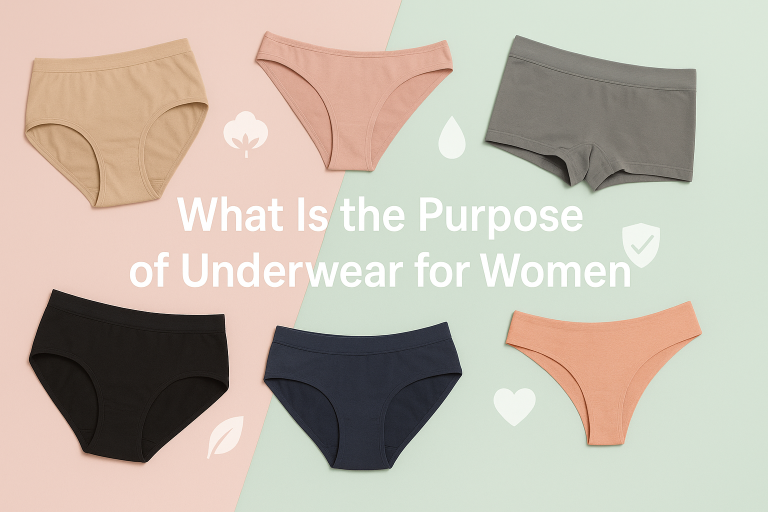
Panty style is a component of fit that interacts directly with size. The same body measurements produce different fit experiences across brief, bikini, thong, boyshort, and hipster styles because each style distributes fabric differently across the hip and waist.
Briefs and Full-Coverage Styles
Full-coverage briefs are a type of panty that covers the full seat and extends to or above the natural waist. They have the widest hip panel of any common style and generally run true to size when measured against the brand’s hip circumference chart.
Women who experience consistent back-panel ride-up in briefs are almost always wearing a size too small in the hip measurement, even if the waist feels comfortable. Hip circumference, not waist circumference, is the controlling measurement for brief fit.
Bikini and Hipster Styles
Bikini panties sit at or slightly below the natural hip bone and provide moderate seat coverage. They are the most common style worn in the US market and tend to produce the most complaints about ride-up when sized incorrectly, according to fit feedback data aggregated by Nordstrom’s fit services team.
Hipster styles sit lower than bikini styles and have a wider waistband. They require accurate low-hip measurement (approximately 7 to 9 inches below the natural waist) rather than the full hip measurement used for briefs.
Thongs and G-Strings
Thongs are the style most sensitive to small size errors because minimal fabric means any excess or deficit in the waist or hip measurement is immediately noticeable. A thong that is one size too small creates waistband pressure at the front and back simultaneously, with no fabric slack to absorb the tension.
A thong that is one size too large generates no waistband tension and shifts position freely during movement. Thong fit is a functional relationship between waistband tension and body circumference, and the tolerance for size error is narrower than in fuller-coverage styles.
Boyshorts
Boyshort panties have the longest leg inseam of any common style, extending 2 to 4 inches down the upper thigh. They require an accurate thigh circumference measurement in addition to waist and hip measurements to achieve a correct fit.
The most common fit complaint in boyshorts is leg band roll-up caused by thigh circumference that exceeds the garment’s designed opening. This is consistently misidentified as a waist size problem when it is actually a hip-to-thigh proportion issue that requires either sizing up or selecting a brand with a wider leg opening.
Selecting the correct style for your body’s proportions and activity level is as important as selecting the correct numerical size, because style determines which body measurements control the fit.
Use the table below to match your body proportions and coverage preference to the panty style most likely to fit correctly.
| Body Proportion or Preference | Recommended Style | Key Fit Measurement | Common Size Error |
|---|---|---|---|
| Full seat, high waist | High-waisted brief | Full hip + waist | Too small in hip |
| Average proportions | Bikini or hipster | Low hip circumference | Waist too small |
| Narrow waist, full hip | Full-coverage brief | Full hip | Sized to waist, not hip |
| Fuller thighs | Brief over boyshort | Upper thigh circumference | Leg band too tight |
| Minimal visible lines | Thong or seamless bikini | Waist and low hip | One size too large |
How to Measure Yourself for the Correct Panty Size
Accurate self-measurement is the only reliable way to determine your correct panty size across brands. Guessing based on clothing size produces incorrect results because clothing sizes use different ease allowances and construction tolerances than intimate apparel.
Here is the step-by-step process for measuring yourself correctly at home.
Step-by-Step Guide
How to Measure for Panty Size at Home
6 steps. Takes approximately 5 minutes with a soft measuring tape.
Gather your tools
Use a soft cloth measuring tape and wear thin, form-fitting underwear or no underwear for accuracy. A flexible tape measure reads 0.25 inches more precisely than a rigid ruler.
Measure your natural waist
Wrap the tape around the narrowest part of your torso, typically 1 to 2 inches above your belly button. The tape should be snug but not compressing, and you should be able to exhale fully.
Measure your full hip circumference
Stand with your feet together and wrap the tape around the fullest part of your hips and seat, typically 7 to 9 inches below your natural waist. This is the controlling measurement for brief and full-coverage styles.
Measure your low hip for bikini and hipster styles
For bikini and hipster panties, measure around your hip bone, approximately 3 to 4 inches below your natural waist. This measurement is typically 1 to 3 inches smaller than your full hip measurement.
Compare both measurements to the brand’s size chart
Look up the specific brand’s panty size chart (not a generic chart). When your waist and hip measurements fall in different size columns, always size to the larger measurement. Elastic can accommodate a smaller waist; it cannot expand past its maximum stretch to accommodate larger hips.
Verify fit using the finger test and the movement test
After trying on the new size, check that one finger fits under the waistband without stretching it, that the seat panel covers fully when you bend forward, and that the leg openings stay in contact with the skin when you walk 10 steps.
Measuring once and recording your numbers removes the guesswork from every future purchase, especially when shopping new brands or styles online.
You can use our alternative measuring method if you do not have a tape measure.
How Body Changes Affect Your Panty Size Over Time
Body measurements change throughout a woman’s life due to weight fluctuation, hormonal shifts, pregnancy, postpartum recovery, and age-related tissue changes. According to research published in the Journal of Fashion Technology and Textile Engineering, hip circumference in adult women can change by 2 to 4 inches across a 12-month period without significant weight change due to hormonal fluid retention and fat redistribution.
Weight Fluctuation
A weight change of 10 to 15 pounds typically shifts panty size by one full size in most standard sizing systems. Weight loss and gain do not distribute evenly across the body, and the hip and waist do not always change proportionally, which means both measurements need to be re-checked rather than assuming a uniform size adjustment.
Women who fluctuate regularly between two weight ranges often need panties in two adjacent sizes for different points in their cycle or season. Keeping both sizes available is more practical than trying to find a single size that works across the full range.
Hormonal Changes and Menstrual Cycle
Progesterone-related bloating during the luteal phase of the menstrual cycle (days 15 to 28) can temporarily increase waist circumference by 1 to 3 inches, according to data cited by the Mayo Clinic’s women’s health division. This temporary increase causes panties that fit correctly during the follicular phase to feel tight and restrictive during the week before menstruation.
This cyclical size variation is normal. It does not mean your standard size is wrong; it means that choosing styles with wider elastic and more waist stretch accommodates the natural variation without requiring a separate size.
Pregnancy and Postpartum Changes
Hip circumference increases by an average of 2 to 3 inches during pregnancy due to pelvic widening, according to the American College of Obstetricians and Gynecologists. This change is partially permanent, as the pelvis does not fully return to its pre-pregnancy dimensions in most women after delivery.
Women who wore a size medium before pregnancy frequently require a size large or extra-large in standard panty sizing after their first full-term pregnancy, even after returning to their pre-pregnancy weight. Re-measuring after postpartum recovery is necessary rather than returning to the pre-pregnancy size by default.
Re-measuring once per year and after any body change greater than 10 pounds is the simplest way to ensure your panty size stays current with your actual measurements.
Common Reasons Women Continue Wearing the Wrong Size
Knowing the signs of wrong panty sizing is not sufficient if the habits that cause wrong sizing persist. Several specific habits lead women to consistently purchase or keep wearing panties that do not fit correctly.
Sizing to Clothing Size Rather Than Measurement
Clothing sizes are not calibrated to intimate apparel sizes. A woman who wears a size 8 in jeans may wear a size medium or a size large in panties from the same brand, depending on whether the jeans are cut for a slim or standard hip proportion. Using clothing size as a proxy for panty size produces wrong results in a significant percentage of purchases.
Every brand’s panty size chart is based on circumference measurements in inches or centimeters. Using those charts directly, starting from your measured dimensions, is the only method that produces reliable results.
Buying the Same Size Without Re-Measuring
Purchasing the same size repeatedly without re-measuring assumes that both the body and the brand’s sizing have remained constant. Neither assumption is reliably true. Brands resize their products periodically, and body measurements change over time.
The fit of a panty purchased three years ago at a size medium does not predict the fit of a new size medium from the same brand today, because manufacturing tolerances and size standard revisions vary between production runs.
Ignoring the Difference Between Brands
Intimate apparel brand sizing varies by 1 to 2 full sizes across the market. A size large from Victoria’s Secret measures differently from a size large from ThirdLove, Savage X Fenty, or Hanky Panky. The lack of standardization means that size loyalty to a number rather than to a measurement produces inconsistent fit results.
When switching brands, always look up the new brand’s specific size chart and re-check your measurements against it rather than ordering your standard size.
Choosing Style Over Fit
Selecting a panty style that is not well-suited to the wearer’s proportions, and then adjusting the size up or down to compensate, rarely produces a correct fit. A boyshort on a body with a fuller thigh circumference will not fit correctly in any size if the style’s leg opening is cut too narrow for that body type.
Style selection and size selection are both necessary decisions, and they need to be made together rather than sequentially, using both measurement data and style-specific fit guidance.
Breaking these habits by measuring first, checking brand-specific charts second, and applying the fit tests described earlier third produces correct sizing far more reliably than any shortcut approach.
Here is a quick reference showing which habits lead to which common sizing errors.
| Common Habit | Resulting Fit Problem | Correct Action |
|---|---|---|
| Sizing to clothing size | Wrong size in most brands | Measure hip and waist; use brand chart |
| Repeating last size without measuring | Gradual fit decline over time | Re-measure once per year |
| Using same size across brands | Inconsistent fit between brands | Check each brand’s individual chart |
| Choosing style before measuring | Structural fit problems by style | Measure first, then select style |
| Ignoring postpartum body changes | Pre-pregnancy size too small | Re-measure after full recovery |
How Fabric and Construction Affect Perceived Fit
Panty fabric composition directly affects how a garment fits, how it behaves during wear, and whether a technically correct size feels comfortable. Two panties in the same size from the same brand can produce different fit experiences depending on their fabric content and construction method.
Elastic Recovery and Band Durability
Waistband elastic loses its recovery tension after repeated washing and extended wear. According to testing data from Consumer Reports’ textile lab, waistbands in underwear made with less than 8% spandex content show measurable elastic degradation after 30 to 40 wash cycles. This degradation causes a panty that initially fit correctly to behave as if it is one size too large.
Replacing underwear that has lost elastic tension is more effective than sizing down to compensate for the reduced recovery. A deteriorated waistband in a smaller size will degrade to the same loose condition within a shorter period.
Spandex Content and Size Tolerance
Panties with higher spandex content (12% or above) accommodate a wider range of body measurements within each size. A size medium with 20% spandex content may fit comfortably across a hip range of 37 to 41 inches, while a size medium with 5% spandex content may only fit a hip range of 37 to 38.5 inches before the fabric stops conforming smoothly.
Key Specifications for a standard mid-range cotton bikini panty:
- Fabric composition: 95% cotton, 5% spandex (body); 90% nylon, 10% spandex (waistband)
- Size range: XS (waist 24-26 in, hip 34-36 in) through XL (waist 34-36 in, hip 44-46 in)
- Gusset: 100% cotton
- Care: Machine wash cold, tumble dry low
- Elastic type: Fold-over waistband with 1.5-inch coverage
Seamless vs Cut-and-Sewn Construction
Seamless panties are knitted in a single piece to the shape of the garment, which means there are no seam allowances or panel joins that can shift under tension. Cut-and-sewn panties are assembled from fabric panels with sewn seams, which can create pressure points at the join lines when the size is incorrect.
Seamless panties tend to have more size tolerance because the knit construction stretches uniformly in all directions. Cut-and-sewn construction produces a more structured fit with less tolerance for measurement variance, making precise sizing more critical.
If your measurements place you between two sizes, choosing a seamless construction in the smaller size often produces better results than choosing cut-and-sewn construction in the larger size, because the seamless fabric will conform rather than bunch.
Signs Your Panty Size Is Wrong for a Specific Activity
A panty that fits correctly for sedentary wear may show sizing problems during specific activities. Movement, temperature, and moisture all change how a garment behaves relative to the body, and a marginal fit at rest can become an uncomfortable fit during exercise or extended activity.
During Exercise
During physical activity, a panty that is too small will show increased ride-up, greater elastic digging, and potential chafing at the leg openings. A panty that is too large will shift position repeatedly and create friction from excess fabric movement against the skin.
Workout underwear specifically designed for exercise typically includes flatlock seams (seams that lie flat rather than ridge) and moisture-wicking fabric to minimize friction. However, these features do not correct a sizing problem; they reduce the symptom severity while the cause remains.
Key Specifications for a performance athletic panty:
- Fabric: 82% nylon, 18% spandex
- Construction: Seamless or flatlock-seam cut-and-sewn
- Waistband: Wide (1.5 to 2.5 inch) no-roll elastic
- Gusset: Moisture-wicking, antimicrobial treatment
- Size range: XS through 3X in extended-size options
During Extended Sitting or Travel
Extended sitting compresses the waistband and seat panel against the body for prolonged periods. A waistband that is only mildly tight during standing will produce significant discomfort and marks during 3 to 4 hours of continuous sitting.
For travel, work environments involving prolonged sitting, or any situation requiring extended wear, selecting a size with more waist ease (or choosing a style with a wider, softer waistband) prevents the progressive discomfort that builds with a too-small size over time.
Activity-specific fit testing, which means wearing the panty through the actual activity before deciding whether the size is correct, is more reliable than static fit assessment alone.
How to Fix the Wrong Panty Size Without Buying an Entirely New Wardrobe
Discovering that most of your current underwear is the wrong size does not require replacing everything immediately. A targeted approach based on which specific fit problems affect you most allows for prioritized replacement that improves daily comfort efficiently.
Start With Your Most-Worn Styles
Identify the two or three panty styles you wear most frequently and replace those in the correct size first. This addresses 70 to 80% of the daily discomfort caused by wrong sizing with 30 to 40% of a full replacement cost.
Buying 3 to 5 pairs in the correct size for your most-worn style gives you enough correct-fit options for daily rotation while you continue wearing existing inventory for lower-priority uses.
Use a Size Trial Before Bulk Buying
When switching brands or changing size, purchase one or two pairs in the potentially correct size before buying in bulk. Wear each trial pair for a full day including the specific activities (work, exercise, sitting) that previously caused fit problems.
A panty that passes the full-day wear test without ride-up, marking, twisting, or readjustment is the correct size in that style and brand. Only then is it worth purchasing multiple pairs.
Consider Bra and Panty Sizing Together
Bra sizing and panty sizing are related but separate systems. Correcting your panty size is an independent action from correcting your bra size, though many women discover both are wrong at the same time when they do a full intimate apparel fit assessment.
If you are re-evaluating your panty sizing, it is efficient to also measure your bra band and cup size at the same time using a measuring tape, since both require similar measurement steps and the information is useful for purchasing matching bra and panty sets with correct fit across both garments.
Replacing wrong-size underwear systematically by style priority and verifying each new size through a full wear test costs significantly less and produces better results than replacing everything at once based on a single measurement.
Frequently Asked Questions About Panty Sizing
How do I know if my panty size is wrong if I have been wearing the same size for years?
The most reliable indicator is the presence of any physical sign during or after wear. Red marks or indentations that remain visible for more than 10 minutes after removing the panty, a waistband that requires repositioning during the day, or a back panel that rides up more than once per hour are all confirmation that the current size is wrong, regardless of how long you have worn it. Body measurements change over time, and a size that was correct years ago may no longer correspond to current measurements. Taking a fresh measurement and comparing it to the brand’s current size chart is the only way to confirm whether the size is still accurate.
What is the difference between panty size and underwear size?
Panty size and underwear size refer to the same measurement system when the garment is a women’s intimate apparel item. In the US market, panty sizes are expressed either as S/M/L/XL letter sizes or as numerical sizes 5 through 9, where size 5 corresponds to a small and size 9 corresponds to a 2X or 3X in letter sizing. The numerical system (used by brands such as Jockey and Hanes) allows for finer size differentiation than the letter system, which can cover a 4-to-6-inch measurement range within a single size designation. Both systems are ultimately based on hip and waist circumference measurements.
Can I size up in panties to prevent visible panty lines?
Sizing up to reduce visible panty lines does not achieve the intended result and typically makes the problem worse. Visible panty lines caused by elastic edges pressing into the skin are a product of the elastic being too tight for the body, which is a sign the current size is too small. Sizing up in a standard cut style produces excess fabric that creates a different type of visible line from the bunched fabric rather than the elastic edge. The correct solution for eliminating visible panty lines is to select either a seamless laser-cut style or a no-show underwear style in the correct size for your measurements.
Why does the same size fit differently across brands?
Panty sizing is not standardized across the intimate apparel industry. Each brand sets its own size specifications based on its target fit model and intended ease allowances. According to research by the American Society for Testing and Materials (ASTM), the hip circumference range assigned to a size medium in women’s underwear varies by up to 3 inches across major US brands. This means a size medium from one brand may be equivalent to a size large from another. Always consult the specific brand’s size chart using your actual measurements rather than relying on your standard size number when purchasing from a new brand.
How often should I replace my underwear to maintain correct fit?
The Textile Care Alliance recommends replacing underwear every 6 to 12 months for garments worn in regular rotation, assuming a rotation of 7 to 10 pairs per style. Waistband elastic shows measurable degradation after 30 to 40 wash cycles at standard machine-wash temperatures. For a pair worn twice per week and washed after each wear, this represents approximately 4 to 5 months of use. Once elastic has lost its recovery tension, the garment will behave as if it is too large regardless of the labeled size. Replacing on a regular schedule prevents gradual fit decline that is easy to overlook until it has become significant.
Does wearing the wrong panty size affect health?
Wearing underwear that is too tight can contribute to several health concerns. According to the American College of Obstetricians and Gynecologists, tight underwear that restricts airflow to the vulvar area can increase the risk of bacterial and yeast infections by creating a warm, moist environment that promotes microbial growth. Constricting leg openings can also impede lymphatic circulation in the upper thigh over extended periods. Underwear that is too large does not carry the same health risks but can cause skin chafing from excess fabric movement, particularly during exercise. Cotton gusset fabric and appropriate sizing together represent the primary preventive measures for intimate area health, as confirmed by the American Academy of Dermatology’s guidance on vulvar skin care.
Wearing the correct panty size eliminates the daily discomfort, visible fit problems, and potential health issues that come from mismatched sizing. Measure your waist and hip circumference, use each brand’s specific size chart, and apply the physical fit tests (waistband finger test, seat coverage check, leg opening contact check) to confirm every new purchase. Start by re-measuring today and replacing your most-worn style in the correct size before addressing the rest of your underwear drawer.


One Comment