What Is a Boyshort Panty: Explore Fit, Coverage & Comfort
A boyshort panty is a style of women’s underwear that features a wide, low-rise waistband and short leg openings that extend horizontally across the upper thigh, mimicking the cut of men’s boxer briefs. The boyshort panty sits flat against the hip and provides full coverage from the waistband to the leg hem. This style is especially popular for everyday comfort, reducing visible panty lines under fitted clothing, and offering a secure fit during low to moderate activity.
What Is a Boyshort Panty: Definition and Key Characteristics
A boyshort panty is a full-coverage underwear style with a straight, horizontal leg opening that sits across the upper thigh rather than curving upward toward the hip. The waistband rests at or just below the natural hip bone, and the fabric covers the entire seat and lower abdomen.
The boyshort panty belongs to the full-coverage underwear category, which also includes briefs, hipsters, and high-waisted styles. What separates the boyshort from its full-coverage relatives is its straight leg cut, which lies flat against the thigh rather than riding up into the hip crease.
The leg band on a boyshort panty sits approximately 1 to 3 inches below the hip crease, depending on the inseam length. This design feature is the defining structural difference between a boyshort and a hipster panty, which has a curved, higher leg opening.
Boyshort panties are constructed from a front panel, a back panel, and a crotch gusset. The gusset, a separate piece of fabric sewn into the crotch area, is typically made from 100% cotton, even when the outer shell uses synthetic fabrics such as nylon or microfiber. This construction detail is confirmed by intimate apparel standards documentation published by the Hohenstein Institute, a German textile research body.
The full-coverage seat of a boyshort panty covers both cheeks completely. This distinguishes it from a cheeky panty, which exposes 20 to 30 percent of the lower seat, and from a thong, which provides minimal rear coverage.
Boyshort panties are a type of women’s intimate apparel and a subcategory of full-coverage underwear, sitting alongside briefs and hipsters within that group.
The defining attributes of a boyshort panty in order of importance are: the straight horizontal leg opening, the full rear coverage, the hip-level waistband placement, and the flat leg band that does not curve upward toward the waist.
Boyshort Panty vs Other Panty Styles: How It Compares
The boyshort panty differs from other underwear styles primarily in leg cut and coverage area. Understanding these differences helps you select the right style for specific outfits, activities, and comfort preferences.
Use the table below to compare the boyshort panty against four other common styles across the five features that matter most to buyers.
| Feature | Boyshort | Brief | Hipster | Cheeky | Thong |
|---|---|---|---|---|---|
| Leg Opening Shape | Straight, horizontal across upper thigh | Curved upward, high on hip | Curved, slightly lower than brief | Curved, scooped at seat | Minimal, V-shaped |
| Rear Coverage | Full (100%) | Full (100%) | Full to moderate (90-100%) | Partial (70-80%) | Minimal (string only) |
| Waistband Position | At or below hip bone | At waist or hip | At hip bone | At hip bone | Variable, low to mid-rise |
| Best For | Fitted pants, skirts, light activity | Everyday comfort, maximum coverage | Low-rise bottoms, everyday wear | Medium coverage with less bulk | Elimination of visible panty lines |
| Typical Price Range | $8 to $28 per pair | $6 to $22 per pair | $7 to $24 per pair | $8 to $26 per pair | $6 to $22 per pair |
The boyshort panty occupies a unique position between the full coverage of a brief and the moderate coverage of a cheeky style. Its straight leg opening is its most structurally distinctive feature, shared by no other common women’s underwear silhouette.
A hipster panty is the style most frequently confused with the boyshort. The core difference is leg line geometry: a hipster uses a curved leg opening that arcs upward toward the hip crease, while a boyshort maintains a flat, straight horizontal cut that stays lower on the thigh. Brands including Hanes, Calvin Klein, and Victoria’s Secret have used both terms, sometimes interchangeably, which increases shopper confusion.
Choosing the right style for your wardrobe comes down to outseam length and fabric coverage needs, not personal preference alone.
What Fabrics Are Boyshort Panties Made From
Boyshort panties are produced in five primary fabric categories, each with different stretch, breathability, moisture management, and durability characteristics. The fabric composition directly affects how the boyshort performs against the skin during daily wear and washing cycles.
Cotton Boyshort Panties
Cotton boyshort panties are made from woven or knit cotton, which is a natural fiber that absorbs moisture and allows air circulation. According to the American Academy of Dermatology, 100% cotton underwear is the most recommended fabric for women with sensitive skin or recurrent yeast infections because cotton does not trap heat or moisture against the vulvar area.
Most cotton boyshorts on the market use a cotton-spandex blend rather than pure cotton, typically 95% cotton and 5% spandex. The spandex component adds 4-way stretch to prevent sagging and maintain the waistband’s recovery after repeated washing.
Microfiber and Nylon Boyshort Panties
Microfiber boyshort panties use ultra-fine synthetic filaments, usually nylon or polyester, that are woven into a smooth, lightweight fabric. Microfiber fabric is typically 0.1 denier per filament or finer, which gives it a silky texture and makes it thinner than cotton at equivalent weights.
Nylon boyshorts sit flat against the body and produce minimal texture under tight clothing. These are the preferred choice for wearing under leggings, bodycon dresses, and fitted trousers where cotton’s slight bulk creates visible lines.
Modal Boyshort Panties
Modal is a semi-synthetic fiber derived from beech tree cellulose. Modal boyshort panties are approximately 50% softer than cotton by hand-feel testing, according to research published by Lenzing AG, the primary modal fiber manufacturer. Modal also retains its softness after repeated machine washing, whereas cotton can stiffen over time.
Modal boyshorts are a strong choice for extended wear periods because the fiber resists pilling and maintains consistent stretch without losing shape. Many brands that specialize in comfort-focused underwear, including MeUndies and Soma, use modal as their primary boyshort fabric.
Lace Boyshort Panties
Lace boyshort panties use stretch lace fabric, which is a knitted mesh with a decorative open-weave pattern, as either the full shell or as trim at the waistband and leg openings. Full-lace boyshorts are most commonly made from nylon lace with a spandex component of 10 to 20 percent for stretch recovery.
Lace boyshorts are typically worn as lingerie, sleepwear, or occasion wear rather than everyday underwear. The open mesh structure of lace provides less moisture management than cotton or modal and may cause irritation for women with sensitive skin, according to guidelines from the National Eczema Association.
Seamless Boyshort Panties
Seamless boyshort panties are cut from a single piece of knit fabric using a tubular knitting process that eliminates the stitched seams along the sides and leg openings. The absence of seams at the leg edge is the feature that makes seamless boyshorts nearly invisible under form-fitting clothing such as yoga pants and pencil skirts.
Seamless boyshorts are most commonly constructed from a nylon-spandex blend, with spandex content ranging from 15 to 30 percent to ensure the fabric conforms to body contours without external stitching for structure. Brands including Commando, Hanky Panky, and SPANX produce seamless boyshort styles as core items in their panty collections.
Key Specifications for a typical seamless microfiber boyshort: Fabric composition: 82% nylon, 18% spandex. Gusset lining: 100% cotton. Construction: seamless laser-cut edges. Sizes available: XS to 3X. Machine washable on delicate cycle.
The fabric you choose for a boyshort panty determines how it feels during all-day wear, how visible it is under clothing, and how long it lasts through repeated laundering.
How Boyshort Panties Fit: Sizing, Coverage, and Comfort
Boyshort panties fit correctly when the waistband sits flat without digging into the hip, the leg band lies smoothly across the upper thigh without rolling or cutting into the skin, and the seat fabric covers both cheeks fully without riding up. A properly fitted boyshort does not bunch at the crotch or gap at the leg openings.
How to Measure for Boyshort Panties
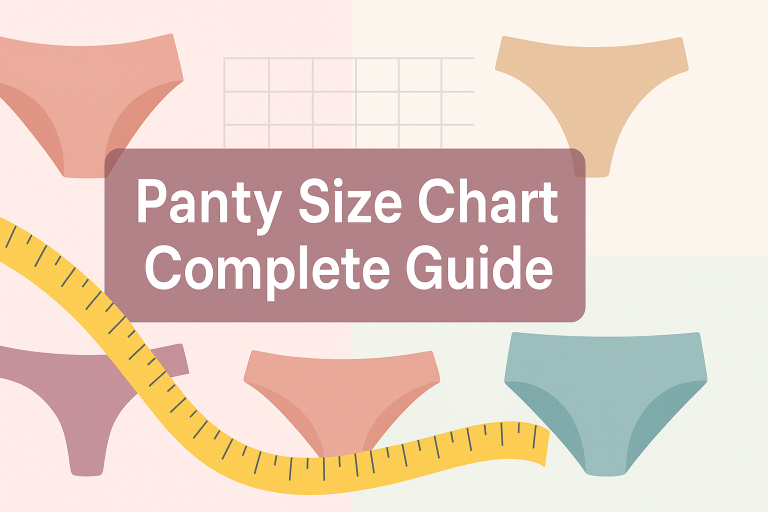
Boyshort panty sizing is based on hip measurement, not waist measurement. The hip is measured at the fullest point of the seat, typically 7 to 9 inches below the natural waist. The American Apparel and Footwear Association publishes standardized sizing guidelines that correlate hip measurements to letter and number sizes as follows: size S corresponds to 34 to 36 inches, size M to 36 to 38 inches, size L to 38 to 41 inches, and size XL to 41 to 44 inches.
If your measurement falls between two sizes, the general fit guidance from most manufacturers, including Fruit of the Loom and Hanes, is to size up. A boyshort cut from standard cotton-spandex fabric has limited stretch at the leg band, and sizing down increases the risk of the leg seam cutting into the upper thigh.
Why Boyshorts Can Roll at the Leg Opening
The most common fit complaint with boyshort panties is leg band rolling, where the fabric at the thigh curls inward or outward during wear. Rolling occurs when the leg opening circumference is smaller than the thigh measurement at that point, creating tension that causes the fabric edge to flip.
This problem is more common in cotton boyshorts without an elasticized leg band than in seamless styles where the edge is laser-cut. To prevent rolling, look for boyshorts with a flat-knit elasticized hem or a picot lace edge at the leg opening. Both constructions add structural support that keeps the hem flat against the skin.
Boyshort Sizing in Plus Sizes
Plus-size boyshort panties are available from size 1X through 4X from brands including Torrid, Lane Bryant, and Cacique. Extended sizing boyshorts typically have a wider gusset width (3.5 to 4 inches versus the standard 2.5 to 3 inches) and a longer inseam to maintain proportional thigh coverage across larger hip measurements.
The elastic recovery of the waistband is particularly important in plus-size boyshorts. A waistband with at least 2 inches of stretch recovery on each side prevents the band from rolling down or digging in during movement. Customers in this size range frequently report that microfiber and modal boyshorts outperform cotton in this area because synthetic and semi-synthetic fibers return to their original shape more reliably after stretching.
Getting the right boyshort fit requires measuring the hip at its fullest point and choosing a fabric with enough stretch and structure to keep the leg band flat during movement.
When to Wear Boyshort Panties: Best Use Cases by Outfit and Activity
Boyshort panties perform best under bottoms that meet or extend below the leg band, including high-rise jeans, midi skirts, tailored trousers, and fitted dresses with a hem at or below mid-thigh. The straight leg opening sits completely hidden beneath these garment lengths, eliminating any risk of the leg band showing through the outer layer.
Boyshorts Under Leggings and Fitted Pants
Seamless boyshort panties in microfiber or nylon are the optimal choice under leggings because the absence of seams and the smooth surface texture of the fabric prevent any visible panty line through the outer layer. A study published in the International Journal of Fashion Design, Technology and Education in 2019 found that garment visibility under stretch fabrics is primarily determined by the underwear’s edge thickness, with seamless edges producing less than 0.5 millimeters of surface elevation versus 1.5 to 2 millimeters for seamed styles.
Under fitted trousers, a boyshort in microfiber or seamless construction provides the same line-free appearance as a thong while maintaining full rear coverage. Women who find thong styles uncomfortable but need invisible underwear under workwear frequently choose seamless microfiber boyshorts as their primary alternative.
Boyshorts for Light Activity and Sleep
Boyshort panties are suitable for low to moderate activity including yoga, Pilates, walking, and stretching. The full-seat coverage prevents the underwear from shifting during forward bends and hip-opening movements. However, the straight leg band can roll up the thigh during high-impact activities such as running or jumping, which makes boyshorts a less optimal choice than athletic underwear with compression-style leg bands for vigorous exercise.
As sleepwear underwear, boyshorts are among the most commonly chosen styles. The full coverage and relaxed leg cut do not restrict movement during sleep. Cotton or modal boyshorts are the most breathable options for overnight use, which is consistent with dermatological recommendations for maintaining vulvar health during sleep, as noted by the American College of Obstetricians and Gynecologists.
Outfits Where Boyshorts Are Not Ideal
Boyshort panties are not the best choice under mini skirts, short shorts, or athletic shorts with a hemline at or above the mid-thigh. At these hemlines, the leg band of the boyshort sits at or below the garment hem, making the underwear visible.
Under sheer fabrics, standard cotton boyshorts create a visible shadow due to the double-layer construction at the seat and gusset. A seamless microfiber boyshort in a nude shade matched to the wearer’s skin tone minimizes this visibility under sheer layers, though a thong or no-show panty produces less visual texture in this specific context.
Matching the boyshort’s leg length to your outfit’s hemline is the single most important fit decision for avoiding visible underwear lines.
How to Care for Boyshort Panties to Make Them Last
Boyshort panties last an average of 6 to 12 months with daily wear and regular washing before elastic degradation and fabric thinning require replacement, according to the Hohenstein Institute’s guidelines on textile longevity for intimate apparel. Proper care extends the lifespan toward the top of this range and maintains the waistband’s recovery and the leg band’s shape.
The step-by-step guide below outlines the correct care process for extending boyshort panty longevity through proper washing and drying.
Step-by-Step Guide
How to Wash and Care for Boyshort Panties
6 steps to preserve elastic, fabric, and shape. Applies to cotton, microfiber, modal, lace, and seamless styles.
Sort by fabric type before washing
Separate cotton styles from microfiber, nylon, and lace. Cotton can withstand warmer water (up to 86 degrees F), while synthetic fabrics perform best in cold water (60 to 68 degrees F) to prevent fiber breakdown.
Place in a mesh laundry bag
A mesh lingerie wash bag prevents waistbands and leg bands from tangling around agitators, which is the primary mechanical cause of elastic degradation in machine-washed underwear.
Use a gentle detergent formulated for delicates
Lingerie-specific detergent with a neutral pH (6.5 to 7.5) cleans without degrading elastic fibers or stripping the moisture-wicking finish from microfiber fabrics. Standard laundry detergent contains enzymes that break down protein-based fabrics and can accelerate elastic fatigue.
Select the delicate or gentle machine cycle
The delicate cycle limits drum agitation to low speed (300 to 400 RPM) versus the 800 to 1000 RPM of a standard cycle. Reduced agitation is the single most important factor in preserving waistband elasticity over repeated wash cycles.
Remove promptly and reshape
Remove boyshorts from the wash immediately after the cycle ends. Leaving damp underwear in the machine for more than 30 minutes encourages mildew growth and allows the waistband to set in a distorted shape as it begins to dry.
Air dry flat or hang to dry
Machine drying at high heat degrades spandex fibers at temperatures above 140 degrees F, according to research from the Textile Research Journal published in 2018. Air drying at room temperature preserves elastic recovery and prevents the waistband from shrinking tighter than the original fit.
Following these six steps consistently can extend the functional lifespan of boyshort panties by 3 to 5 months beyond the average replacement timeline.
Boyshort Panty Styles: A Guide to the Variations Available
Boyshort panties are produced in several distinct structural variations that differ in rise height, waistband coverage, leg length, and decorative design. Each variation serves a different wardrobe need or aesthetic preference.
Low-Rise Boyshort Panties
Low-rise boyshort panties have a waistband that sits 1 to 2 inches below the hip bone, making them compatible with low-rise jeans, hip-skimming skirts, and low-cut bottoms. The lower waistband reduces the visible waistband line under fitted tops that hit at the hip. Brands including PINK by Victoria’s Secret and American Eagle Aerie produce low-rise boyshort styles as their entry-level panty option.
High-Rise Boyshort Panties
High-rise boyshort panties combine the straight leg cut of a boyshort with a taller front and back panel that rises to the natural waist. This variation provides abdominal coverage and mild smoothing without compression garment construction. High-rise boyshorts are particularly popular as postpartum underwear because the taller front panel covers a c-section incision site without placing pressure directly on the healing scar, a comfort consideration noted by maternal health practitioners at the Cleveland Clinic.
Longline Boyshort Panties
Longline boyshort panties have a deeper inseam than standard styles, with the leg band sitting 3 to 5 inches below the hip crease rather than the standard 1 to 3 inches. This creates a short-short silhouette that provides full upper-thigh coverage. Longline boyshorts are often used as sleep shorts or as lightweight coverage under short athletic skirts and tennis dresses.
Lace and Mesh Boyshort Panties
Lace boyshort panties use stretch lace as the primary shell fabric, offering a decorative appearance suited to lingerie and special occasion wear. Mesh boyshorts use a sheer, fine-knit nylon fabric that is semi-transparent. Both variations are sold primarily as lingerie items or sleepwear rather than functional everyday underwear, and both are more commonly available in limited size ranges (typically XS to 2X) compared to cotton and microfiber styles.
Seamless Boyshort Panties
Seamless boyshort panties are produced on circular knitting machines that create the garment as a single tube of fabric with no side seams. The leg opening edge is finished with a laser-cut process rather than an elasticized hem. Seamless styles are the most invisible option under tight clothing because there are no raised seam lines on either the outer or inner surface of the garment.
Understanding the structural variation within the boyshort category helps you match the right style to your specific wardrobe gaps and comfort priorities.
Boyshort Panties for Specific Body Types and Fit Goals
Boyshort panties fit a wide range of body types but perform differently depending on hip-to-thigh ratio, thigh circumference, and torso length. Matching the boyshort variation to your body proportions produces the best fit outcome.
The interactive finder below helps you match your primary comfort need and outfit context to the right boyshort variation.
Interactive Tool
Find the Right Boyshort Style for You
Answer 2 questions to get a personalized boyshort recommendation.
Boyshorts for Full Thighs
Women with fuller thighs relative to their hip measurement often experience rolling at the leg band of standard boyshort styles because the horizontal leg opening sits at the widest point of the thigh. The most effective solution is a seamless boyshort with a laser-cut leg edge, which has no structural band to roll. Alternatively, a boyshort with a wide, flat-knit elasticized leg band (rather than a narrow picot edge) distributes tension more evenly across the thigh and is less likely to flip or curl inward.
Boyshorts for Petite Frames
On a petite frame with a shorter torso, a standard boyshort’s leg band may hit at a higher point on the thigh than intended, reducing the visual separation between the waistband and leg band. A low-rise boyshort style compensates for this by lowering the waistband, which restores proportional spacing on a shorter torso. Many petite-specific underwear collections from brands including J.Crew and Uniqlo include low-rise boyshort options scaled to a shorter inseam measurement.
Boyshorts for Straight Hip Profiles
Women with minimal hip-to-waist ratio difference (less than 8 inches of difference) sometimes find that standard boyshort cuts create excess fabric at the seat because the pattern is drafted for a more curved hip. A boyshort in a firm microfiber fabric with 20 to 25 percent spandex content conforms more closely to a straighter hip profile and eliminates the loose-seat problem.
Selecting a boyshort style matched to your body proportions, rather than defaulting to the most common size on the label alone, produces a flat, comfortable fit that works across all your daily outfit choices.
How to Choose the Right Boyshort Panty: A Practical Buying Guide
Choosing the right boyshort panty comes down to four variables: fabric type, waistband height, leg band construction, and size accuracy. Evaluating all four before purchasing prevents the most common fit and comfort problems.
Use the table below to match your primary need and outfit context to the boyshort specification that fits both.
| If You Need | Choose This Specification | Because |
|---|---|---|
| No visible lines under leggings or yoga pants | Seamless nylon-spandex boyshort with laser-cut edges | Eliminates all raised seam profiles; edge is less than 0.5mm thick |
| Breathable everyday comfort for sensitive skin | Cotton or cotton-spandex boyshort (95% cotton, 5% spandex) | Natural fiber absorbs moisture; recommended by the American Academy of Dermatology for sensitive skin |
| Softness that holds up through 50 or more washes | Modal boyshort (any construction) | Modal retains softness and shape longer than cotton; resists pilling |
| Postpartum or post-surgical abdominal coverage | High-rise boyshort with wide flat-knit waistband (2 to 3 inch width) | Covers incision site without narrow elastic pressing on healing tissue |
| Lingerie or occasion wear | Stretch lace or mesh boyshort in nylon-spandex | Decorative open-weave construction; suited to intimate or sleepwear context |
| Full thigh without leg band rolling | Seamless boyshort with laser-cut edge, or wide flat-knit elasticized leg band | Distributes tension evenly across thigh circumference; prevents flip-and-curl at leg hem |
The three most important purchase decisions are fabric, rise height, and leg band finish. Getting these three right means the boyshort will fit comfortably, stay in place, and remain invisible under clothing.
When purchasing boyshort panties for everyday wear, prioritize measuring your hip at its fullest point and sizing up if you fall between sizes. A correctly sized boyshort lies flat across the seat and upper thigh with no pulling, bunching, or rolling during normal movement.
For women building a functional underwear wardrobe, a practical starting rotation includes 5 to 7 pairs of boyshorts in two fabric categories: cotton or modal for breathable daily wear, and seamless microfiber for fitted outfits. This combination covers the full range of everyday wardrobe needs without overstocking any single style.
Key Specifications for a standard everyday cotton-spandex boyshort: Fabric: 95% cotton, 5% spandex. Gusset: 100% cotton. Waistband type: flat-knit elasticized, 1 to 1.5 inches wide. Leg band: picot elasticized hem. Available sizes: XS to 3X. Machine washable on delicate cycle, air dry recommended.
Consider adding seamless boyshort panties to your rotation specifically for days when you wear leggings, fitted dresses, or any outfit where underwear lines are a concern.
Frequently Asked Questions About Boyshort Panties
What is the difference between a boyshort panty and a hipster panty?
A boyshort panty has a straight, horizontal leg opening that lies flat across the upper thigh, while a hipster panty has a curved leg opening that arcs upward toward the hip crease. The boyshort’s leg band sits lower on the thigh (1 to 3 inches below the hip crease), whereas a hipster’s leg band follows a curve that rides slightly higher at the side seam. Both styles share a similar hip-level waistband, but the leg line geometry is distinctly different. Many brands use the terms interchangeably, which causes shopper confusion, so checking the leg line silhouette in the product image is more reliable than relying on the label name.
Are boyshort panties good for reducing visible panty lines?
Seamless boyshort panties in microfiber or nylon-spandex are highly effective at reducing visible panty lines under fitted clothing, including leggings, trousers, and bodycon dresses. A 2019 study in the International Journal of Fashion Design, Technology and Education found that seamless underwear edges produce less than 0.5 millimeters of surface elevation, which is below the threshold visible through most stretch fabrics. Standard seamed cotton boyshorts produce 1.5 to 2 millimeters of edge elevation, which can create a faint line under very thin or stretchy outer layers. For complete line elimination, choose a seamless, laser-cut boyshort in a shade that matches your skin tone rather than the color of your outer garment.
Do boyshort panties ride up?
Boyshort panties ride up when the leg opening is too small for the wearer’s thigh circumference at that point, which causes the fabric to roll up and shift inward. This is more common in cotton boyshorts without an elasticized leg band and in styles where the buyer has sized down. Sizing up by one size, or choosing a seamless boyshort with a laser-cut leg edge, eliminates riding up for most wearers. Wide, flat-knit elasticized leg bands also prevent rolling by distributing the hemline tension evenly around the full circumference of the thigh rather than concentrating it at the seam points.
What fabrics are boyshort panties made from?
Boyshort panties are most commonly made from cotton-spandex blends (95% cotton, 5% spandex), microfiber nylon-spandex blends (82% nylon, 18% spandex), modal fiber, stretch lace in nylon-spandex, and seamless knits in nylon or polyester. Regardless of the outer shell fabric, the crotch gusset in quality boyshorts uses 100% cotton as a lining layer, which is the standard confirmed by intimate apparel textile guidelines from the Hohenstein Institute. Modal, a semi-synthetic fiber from beech tree cellulose, is approximately 50% softer than cotton by hand-feel testing and retains its softness through repeated machine washing, making it a popular choice for everyday boyshort styles.
How should boyshort panties fit?
A correctly fitted boyshort panty sits with the waistband flat against the hip without digging in or rolling down, the leg band lying flat across the upper thigh without cutting into the skin or rolling up, and the seat fabric covering both cheeks fully without bunching, riding up, or creating excess fabric folds. Boyshort sizing is based on hip circumference measured at the fullest point of the seat, not waist measurement. The American Apparel and Footwear Association’s standardized sizing guidelines recommend size S for a 34 to 36 inch hip, size M for 36 to 38 inches, size L for 38 to 41 inches, and size XL for 41 to 44 inches. If your measurement falls between sizes, size up.
Can boyshort panties be worn during pregnancy?
Standard low-rise and mid-rise boyshort panties can be worn during the first and early second trimesters before abdominal growth requires a higher waistband. As the belly grows, most women transition to high-rise boyshort panties or maternity-specific underwear that accommodates the expanding abdomen without a waistband pressing below the belly. The American College of Obstetricians and Gynecologists recommends 100% cotton gusset construction in all underwear worn during pregnancy for vulvar health. High-rise cotton boyshorts are one of the styles most commonly recommended by midwives and obstetric nurses for postpartum recovery because the taller front panel covers a c-section incision site without placing direct pressure on the healing wound.
How many boyshort panties should I own?
A functional everyday underwear rotation typically includes 7 to 14 pairs of underwear, enough to go through one full week without repeating a pair before laundry day, plus a buffer for unexpected delays. For a boyshort-primary wardrobe, a practical split is 5 to 7 cotton or modal boyshorts for breathable daily wear and 3 to 5 seamless microfiber boyshorts for fitted outfit days. The Hohenstein Institute’s textile longevity guidelines suggest replacing underwear after 6 to 12 months of daily wear and regular washing, as elastic degradation and fabric thinning become functionally significant within this window. Rotating through 7 or more pairs distributes wear evenly across the collection, extending the lifespan of each individual pair.
Boyshort panties provide full coverage, a smooth silhouette, and versatile compatibility with a wide range of everyday outfits. The right style for you depends on matching fabric, rise, and leg band construction to your specific comfort priorities and wardrobe needs. Start with a cotton or modal option for daily breathability, add a seamless microfiber style for fitted clothing, and size based on hip measurement rather than waist for the most accurate fit.