What Is a Microfiber Panty? Your Guide to Seamless Wear
A microfiber panty is an underwear style made from ultra-fine synthetic fibers, typically a blend of 80% to 90% polyester or nylon with 10% to 20% spandex or elastane. The fabric creates a smooth, lightweight barrier against skin that is thinner than one denier per filament, which is thinner than a strand of silk, making it virtually invisible under fitted clothing.
What Is Microfiber Fabric and Why Does It Matter in Underwear
Microfiber is a synthetic textile engineered from filaments less than one denier in diameter, which is finer than the finest natural silk fiber. In underwear construction, this ultra-fine fiber structure produces a fabric with exceptional softness, stretch recovery, and moisture-wicking capability that cotton cannot match at the same fabric weight.
The term “microfiber” refers specifically to fiber diameter, not fiber type. Most microfiber panties use polyester microfiber, nylon microfiber, or a combination of both, each paired with spandex for stretch. Polyester microfiber wicks moisture faster, while nylon microfiber offers a softer, silkier hand feel against skin.
The International Textile and Apparel Association defines microfibers as filaments with a linear density of 1 denier or less per filament. Standard cotton underwear fabric typically uses fibers measuring 15 to 20 microns in diameter, while microfiber filaments measure 2 to 5 microns, producing a fabric with a dramatically denser, smoother weave.
This fiber density is what gives microfiber its defining characteristic: a surface smooth enough to lie flat against skin with no texture ridges, which eliminates the visible panty line that woven or knit cotton creates under fitted pants or skirts.
Understanding the fiber composition is the foundation for evaluating every other property of a microfiber panty, from how it handles sweat to how long the elastic lasts after repeated washing.
Polyester vs. Nylon Microfiber: Key Differences
Polyester microfiber dries approximately 30% faster than nylon microfiber under identical conditions, according to fabric performance testing published by the Textile Research Journal. Nylon microfiber rates higher on softness scales and resists pilling more effectively over time.
Most mid-range and premium seamless microfiber panties use nylon-spandex blends because nylon’s natural sheen and silky texture feel more comfortable against sensitive skin areas. Budget microfiber panties more often use polyester-spandex blends to reduce manufacturing costs, with only a modest reduction in softness that most wearers consider acceptable.
How Microfiber Differs from Cotton Underwear Fabric
Cotton fiber absorbs moisture and holds it within the fiber structure, producing a damp, heavy feeling during activity. Microfiber fabric, by contrast, moves moisture along the fiber surface through capillary action and disperses it across a wider area for faster evaporation, a property textile engineers call moisture transport.
A 2019 study published in the journal Fibers and Polymers measured moisture transport rates in common underwear fabrics. Polyester microfiber moved sweat away from the skin surface 45% faster than 100% cotton at equivalent fabric weights. Cotton, however, maintains a naturally breathable fiber structure that allows air circulation, while tightly woven microfiber can restrict airflow when the fabric is not engineered with ventilation zones.
Key Features of a Microfiber Panty
A microfiber panty combines four structural features that distinguish it from other underwear categories: seamless or flat-seam construction, four-way stretch, a gusset lined with moisture-managing fabric, and a no-show silhouette under clothing. These features work together to produce the primary use case most buyers report seeking: an underwear style that disappears under fitted clothing while staying comfortable for 8 to 12 hours of continuous wear.
Use the table below to compare the core features of microfiber panties against cotton and lace underwear across the attributes that matter most to daily wearers.
| Feature | Microfiber Panty | Cotton Underwear | Lace Underwear |
|---|---|---|---|
| Fabric weight (gsm) | 80 to 130 gsm | 140 to 200 gsm | 60 to 100 gsm |
| Moisture wicking | High (capillary action) | Low (absorbent) | Low (minimal fabric) |
| Visible panty line risk | Very low to none | Moderate to high | Low (thong) to moderate |
| Stretch recovery | Excellent (spandex blend) | Fair to good | Poor to fair |
| Breathability | Moderate | High | High |
| Price range | $8 to $25 per pair | $5 to $20 per pair | $10 to $35 per pair |
| Best for | Fitted clothing, active days | Everyday comfort, sensitive skin | Special occasions |
As the table shows, microfiber delivers the best combination of low profile and stretch recovery, while cotton remains the stronger choice for breathability and skin sensitivity.
Seamless Construction and How It Reduces Panty Lines
Seamless microfiber panties are knitted in a circular loom process that forms the entire garment as a single continuous piece, eliminating the raised seam ridges that press through thin fabrics. Standard sewn underwear creates a seam allowance of 3 to 5 millimeters of stacked fabric that shows as a visible ridge under leggings, bodycon dresses, or fitted trousers.
True seamless construction removes this ridge entirely by bonding edges with heat or ultrasonic welding rather than stitching. Many products labeled “seamless” are actually flat-seam construction, where seams are stitched flat rather than overlocked, reducing (but not eliminating) the ridge to approximately 1 millimeter. Buyers seeking complete invisibility under clothing should look specifically for bonded-edge or heat-sealed construction descriptions on the product label.
The Four-Way Stretch System
Four-way stretch means the fabric extends and recovers both along the horizontal grain (across the body) and the vertical grain (up and down), due to spandex fibers woven in both directions. Standard two-way stretch fabric, common in some cotton blends, extends only horizontally, which can cause binding at the leg opening or waistband when bending or squatting.
Most quality four-way stretch microfiber panties contain 15% to 20% spandex for everyday wear. Higher-performance styles designed for activewear or medical needs contain 25% to 30% spandex for greater compression and recovery. The American Association of Textile Chemists and Colorists (AATCC) test method 160 measures elastic recovery after repeated stretch cycles, and quality microfiber panties should maintain 90% or more of their original shape after 50 wash and wear cycles.
Gusset Fabric: What It Is and Why It Matters
The gusset is the reinforced fabric panel sewn into the crotch section of underwear. In a microfiber panty, the gusset is almost always lined with a separate fabric layer, typically 100% cotton or a moisture-wicking performance knit, because synthetic microfiber fabric does not provide the breathability or pH-neutral environment that gynecologists recommend for the vulvar area.
The American College of Obstetricians and Gynecologists (ACOG) recommends cotton-lined underwear gussets to maintain vulvar health, reduce moisture buildup, and minimize the risk of yeast overgrowth and bacterial vaginosis. A cotton-lined gusset in a microfiber panty satisfies this clinical guidance while maintaining the smooth outer surface that makes microfiber desirable under clothing.
Key Specifications for a standard microfiber panty gusset:
- Gusset width: 2.5 to 4 inches (6 to 10 cm)
- Gusset lining: 100% cotton or moisture-wicking knit
- Gusset length: 3 to 5 inches (7.5 to 12.5 cm)
- Attachment method: flatlock stitch or bonded edge
- Layer count: 2 (outer microfiber, inner cotton liner)
A cotton-lined gusset is the single most important construction feature to verify before purchasing a microfiber panty, because a fully synthetic gusset can trap moisture and disrupt vaginal flora during extended wear.
Types of Microfiber Panties by Cut and Style
Microfiber panties are available in six primary cuts, each designed for a different combination of coverage, visibility under clothing, and comfort during specific activities. The cut determines how much of the hip, seat, and waist the fabric covers, which directly affects both panty line visibility and comfort for different body shapes and clothing styles.
Use the table below to match your primary clothing type and coverage preference to the microfiber panty cut that best fits both.
| Cut Style | Coverage Level | Best Clothing Match | Panty Line Risk | Price Range |
|---|---|---|---|---|
| Hipster | Low to mid rise, full seat | Jeans, casual pants | Low | $8 to $18 |
| Bikini | Mid rise, moderate seat | Everyday clothing | Moderate | $8 to $20 |
| Brief | High rise, full coverage | Skirts, dresses | Low to moderate | $10 to $22 |
| Boyshort | Low rise, extended leg | Leggings, fitted pants | Very low | $10 to $22 |
| Thong | Minimal, no seat coverage | Bodycon dresses, tight skirts | None | $8 to $18 |
| High-waist brief | Full torso, full seat | High-waist pants, postpartum | Very low | $12 to $25 |
The boyshort and hipster cuts consistently produce the lowest panty line visibility under fitted leggings because their extended leg and hip coverage eliminates the edge line that bikini cuts create at the upper thigh.
Hipster Cut Microfiber Panties
A microfiber hipster panty sits 1 to 2 inches below the natural waist with full seat coverage and leg openings that cut straight across the hip rather than at an angle. This placement avoids the waistband visibility above low-rise jeans while providing more coverage than a bikini cut across the hip and seat.
The hipster is the most versatile microfiber panty cut for everyday wear because it pairs with both low-rise and mid-rise clothing without creating a visible waistband line above the pant waistband or a leg edge line under fitted fabric.
Microfiber Thong: When Zero Panty Line Is the Priority
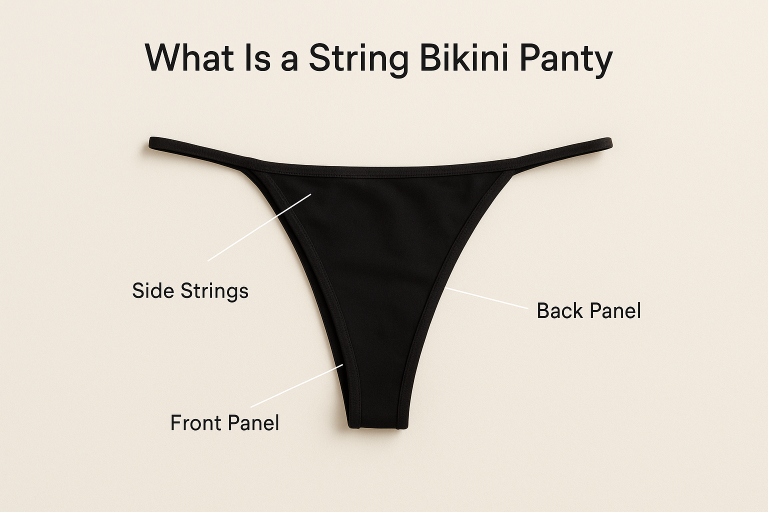
A microfiber thong eliminates all rear coverage with a narrow back strip 0.5 to 1.5 inches wide, making it the only underwear cut that produces zero panty line under any fitted garment. The microfiber construction in thong styles is concentrated in the front panel and waistband, where smooth fabric against the abdomen and hip prevents any visible edge under bodycon clothing.
Gynaecological guidance from the British Association of Dermatologists notes that thong styles worn daily by individuals prone to recurrent bacterial infections can increase risk of fecal bacteria transfer to the vaginal area. For this reason, cotton-gusset construction is especially important in thong styles, and alternating thong wear with fuller-coverage styles on non-fitted-clothing days is a common clinical recommendation.
High-Waist Microfiber Briefs for Postpartum and Everyday Smoothing
A high-waist microfiber brief extends from the natural waist to the upper thigh, providing a full coverage silhouette that smooths the abdominal area under fitted tops and dresses. The high-waist construction uses a wider waistband (typically 2 to 3 inches) with higher spandex content in the abdominal panel (20% to 30%) to provide gentle compression without restricting movement.
These styles are commonly recommended by postpartum care providers during the 6-week recovery period following vaginal birth, as the gentle compression supports abdominal muscles while the soft microfiber fabric avoids friction against cesarean incision sites. Key Specifications for a standard high-waist microfiber brief:
- Rise height: 10 to 13 inches (25 to 33 cm) front panel
- Spandex content: 20% to 30% in abdominal panel
- Fabric weight: 120 to 160 gsm
- Gusset lining: 100% cotton
- Waistband width: 2 to 3 inches
Benefits of Wearing Microfiber Panties
Microfiber panties deliver five measurable advantages over standard cotton underwear: superior moisture management, no-show smoothness under clothing, lightweight comfort during extended wear, faster drying time after washing, and shape retention over repeated wash cycles. These benefits are structural properties of the fiber and construction method, not marketing language, and they are most pronounced in nylon-spandex microfiber styles compared to polyester blends.
Moisture-Wicking Performance During Activity
The capillary action of microfiber’s ultra-fine filaments draws perspiration from the skin surface and disperses it laterally across a larger fabric area, increasing the evaporation surface without requiring additional fabric weight. This process is measurably faster than cotton absorption at equivalent temperatures, as documented in a 2021 performance fabric study published in the Journal of Engineered Fibers and Fabrics, which found nylon microfiber reduced skin surface moisture by 38% more than cotton at comparable physical exertion levels.
For wearers who experience discomfort from sweat accumulation during long workdays or moderate activity, moisture-wicking microfiber underwear can reduce the damp feeling that occurs with cotton when sweat cannot evaporate quickly enough. This benefit is most significant in warmer climates or for individuals who run warm.
No-Show Smoothness Under Fitted Clothing
The low fabric weight (80 to 130 gsm), seamless or bonded construction, and smooth fiber surface of microfiber panties combine to produce an underwear layer that does not create visible ridges, edges, or texture variations through thin or fitted outer fabrics. This is the feature that drives the majority of microfiber panty purchases, according to a consumer survey by the NPD Group, which found that “no visible panty line” was the top purchase motivator for synthetic underwear in the women’s intimate apparel category.
The smoothing effect is most pronounced under fabrics like ponte knit, matte jersey, sateen, and legging material. It is less effective under extremely thin fabrics like chiffon or bias-cut satin, where the waistband edge of any underwear style remains visible regardless of construction method.
Lightweight Feel and Shape Retention
Microfiber panties weigh 20 to 40 grams per pair compared to 40 to 70 grams for equivalent cotton styles, according to manufacturer specifications across major intimate apparel brands including Hanky Panky, Natori, and Calvin Klein. This weight difference translates to a “barely there” wearing sensation that many wearers describe as the closest thing to going without underwear while maintaining hygiene and coverage.
Shape retention after washing is significantly better in microfiber than in cotton due to the spandex content and fiber resilience. A quality microfiber panty with 15% to 20% spandex should maintain 90% of its original dimensions after 50 machine wash cycles when washed in cool water, according to AATCC test standards. Cotton underwear typically shows measurable distortion, particularly in the waistband elastic, after 30 to 40 wash cycles.
The combination of light weight and strong shape retention makes microfiber panties particularly well suited for travel packing, where compression space is limited and quick drying after hand washing is a practical requirement.
Potential Drawbacks of Microfiber Panties
Microfiber panties have three consistent limitations that buyers should evaluate against their personal needs: reduced breathability compared to cotton, environmental concerns related to microplastic shedding, and unsuitability for individuals with certain dermatological sensitivities. These drawbacks do not disqualify microfiber for most wearers, but they require honest consideration, particularly for those with recurrent intimate health concerns.
Breathability Limitations and Moisture Trapping
Tightly woven microfiber fabric restricts airflow more than open-weave cotton or modal fabrics, which can cause heat and moisture to accumulate in the gusset area during sedentary wear or in warm environments. This is distinct from the moisture-wicking benefit during active wear: when the body is not generating movement-induced airflow, microfiber’s dense weave can act as a barrier that traps ambient humidity against skin.
ACOG’s clinical guidance on vulvovaginal health specifically cites breathable underwear fabrics as a preventive measure against yeast overgrowth and bacterial vaginosis. For individuals who experience recurrent yeast infections or bacterial vaginosis, cotton underwear worn during sedentary periods (at a desk, during sleep) is a standard clinical recommendation, with microfiber reserved for activity periods or specific clothing needs rather than all-day daily wear.
Microplastic Shedding During Washing
Polyester and nylon microfiber fabrics release microplastic particles during machine washing. A 2016 study published in the journal Environmental Science and Technology, led by researcher Imogen Napper at Plymouth University, found that a single wash of a synthetic garment releases between 1,900 and 200,000 microfiber particles depending on fabric type and wash conditions. These particles pass through standard municipal water treatment systems and have been detected in ocean water, drinking water, and human tissue samples.
Consumers who want to reduce microplastic release can use a microfiber-catching laundry bag specifically designed to capture shedding during the wash cycle, or hand-wash microfiber panties in a basin and strain the water before disposal. These measures reduce (but do not eliminate) microplastic release into water systems.
Skin Sensitivity and Synthetic Fabric Reactions
A small percentage of individuals experience contact dermatitis or friction irritation from synthetic underwear fabrics, particularly at waistband edges and leg openings where elastic and fabric press against skin. The American Academy of Dermatology (AAD) identifies polyester and nylon as among the most common synthetic fabric triggers for contact dermatitis in individuals with textile sensitivity.
Symptoms typically include redness, itching, or a mild rash at the contact points rather than a systemic reaction. Individuals who have experienced reactions to synthetic activewear are more likely to react to microfiber underwear. For this population, cotton underwear or a modal-cotton blend remains the recommended daily option, with microfiber limited to specific outfit needs where cotton’s no-show performance is insufficient.
Recognizing the three main limitations of microfiber, which are breathability, microplastics, and sensitivity risk, lets you decide whether microfiber fits your specific daily routine rather than treating it as a universal upgrade over cotton.
How to Choose the Right Microfiber Panty
Choosing the right microfiber panty requires matching four variables to your specific needs: the fiber composition (nylon vs. polyester), the cut (determined by your primary clothing type), the spandex percentage (determined by how much compression you want), and the gusset construction (always cotton-lined for daily wear). Getting these four variables right produces a pair that serves its intended purpose without the drawbacks that drive most microfiber returns and complaints.
Here is a quick guide to help you find the right microfiber panty style based on your main priority and most frequent clothing type.
Interactive Tool
Find the Right Microfiber Panty Style for You
Answer 2 questions to get a personalized recommendation.
Fiber Composition: Nylon vs. Polyester for Daily Wear
Nylon-spandex microfiber panties are the better choice for daily wear against skin because nylon rates higher on tactile softness scales, resists pilling after repeated washing, and produces less static electricity than polyester. Polyester-spandex blends are acceptable for athletic or workout use, where fast moisture transport takes priority over softness.
When reviewing product labels, a nylon content of 78% to 85% paired with 15% to 22% spandex represents the optimal everyday construction. Products listing polyamide on the label are using nylon, as polyamide is the European trade designation for the same fiber family. Key Specifications for a quality daily-wear microfiber panty:
- Fiber: 80% nylon (polyamide), 20% spandex
- Gusset lining: 100% cotton
- Fabric weight: 90 to 120 gsm
- Construction: seamless or bonded-edge
- Spandex in waistband: 15% to 25%
Spandex Percentage and Its Effect on Fit
Spandex content between 15% and 20% produces a comfortable, flexible fit with good shape retention for everyday wear. Spandex content above 25% creates a compressive, firmer fit that provides more smoothing but can feel restrictive during extended sedentary periods. Spandex content below 12% produces inadequate stretch recovery, which causes the waistband and leg openings to lose their shape after 20 to 30 wash cycles.
Buyers with fuller hips or thighs benefit from higher spandex percentages at leg openings specifically, which prevents the leg band from digging into the skin as the fabric stretches around a wider circumference. Many quality manufacturers offer styles with a higher spandex concentration in the leg band than in the body panel for this reason.
How to Care for Microfiber Panties to Extend Their Lifespan
Microfiber panties last 12 to 24 months with daily wear when washed correctly, compared to 6 to 12 months when machine washed in hot water with standard detergent. The three practices that most damage microfiber underwear are hot water washing, tumble drying on heat, and fabric softener use, all of which degrade the spandex fibers and cause the elastic to lose recovery strength.
Washing Microfiber Underwear Correctly
Hand washing microfiber panties in cool water (below 30 degrees Celsius) with a gentle lingerie detergent extends elastic life the most effectively of all care methods. Machine washing is acceptable if done on a delicate or gentle cycle in cool water, inside a mesh laundry bag to prevent snagging on other garments.
Fabric softener should never be used on microfiber fabric. Fabric softener coats microfiber filaments with a waxy residue that reduces their moisture-wicking capability by up to 60%, according to testing published by Consumer Reports. This coating is irreversible and cannot be removed by subsequent washing without a specialized fabric treatment.
Drying Microfiber Panties Without Damaging Elastic
Air drying flat or hanging is the recommended method for all microfiber underwear. Tumble drying on any heat setting above cool/air-fluff degrades spandex fibers by breaking the polymer chains that give the fiber its stretch and recovery properties. The Lycra Company, the leading spandex fiber manufacturer, recommends drying all spandex-containing garments at temperatures below 60 degrees Celsius to prevent elastic degradation.
Microfiber panties air-dry in 1 to 3 hours at room temperature due to their low fabric weight and moisture transport properties. This fast drying time is one of the practical advantages over cotton underwear, which can take 4 to 8 hours to fully air-dry at equivalent conditions.
Following the cool-wash, no-softener, air-dry care routine doubles the lifespan of microfiber underwear compared to machine washing in hot water with conventional detergent.
Microfiber Panties vs. Cotton, Modal, and Bamboo Alternatives
Microfiber, cotton, modal, and bamboo fabric underwear each serve different needs, and no single fabric is objectively superior for all wearers and all uses. The right choice depends on whether breathability, no-show smoothness, moisture management, or environmental impact matters most to a specific wearer in their specific daily context.
Use the table below to compare the four main underwear fabric categories across the attributes most relevant to daily wear decisions.
| Attribute | Microfiber | Cotton | Modal | Bamboo |
|---|---|---|---|---|
| Breathability | Moderate | High | High | High |
| No-show under clothing | Excellent | Fair | Good | Good |
| Moisture wicking | High | Low (absorbent) | Moderate | Moderate |
| Drying time | 1 to 3 hours | 4 to 8 hours | 2 to 4 hours | 2 to 5 hours |
| Environmental impact | High (microplastics) | Moderate (water use) | Low to moderate | Low |
| Skin sensitivity rating | Moderate (synthetic) | Low (natural fiber) | Low to moderate | Low |
| Price range per pair | $8 to $25 | $5 to $20 | $12 to $30 | $12 to $28 |
| Wash durability (cycles) | 50 to 100 | 40 to 80 | 50 to 90 | 40 to 70 |
Modal and bamboo fabrics offer a middle-ground option for wearers who want better breathability than microfiber while retaining more smoothness and softness than standard cotton. Modal underwear and bamboo underwear are worth evaluating for wearers with synthetic sensitivities who still need a smooth, low-profile underwear option.
When Cotton Is Still the Better Choice
Cotton underwear remains the clinically preferred daily choice for individuals prone to yeast infections, bacterial vaginosis, or contact dermatitis from synthetic fabrics. The American Academy of Dermatology recommends 100% cotton underwear for individuals with eczema, psoriasis, or textile-contact sensitivity because cotton fiber does not carry the static charge or surface texture that can exacerbate these conditions.
Cotton is also the recommended choice for nightwear, as the body temperature regulation that occurs during sleep benefits from the higher air permeability of cotton compared to synthetic fabrics. Wearing microfiber underwear to bed is not harmful for most people, but it provides no advantage over cotton in a non-active, temperature-regulated sleep environment.
The choice between microfiber and cotton is a daily use-case question, not a permanent preference: most wearers benefit from keeping both fabric types in rotation and choosing based on the day’s clothing and activity demands rather than defaulting to one fabric exclusively.
Frequently Asked Questions About Microfiber Panties
Are microfiber panties good for everyday wear?
Microfiber panties are suitable for everyday wear for most women, provided the style includes a 100% cotton-lined gusset. Without a cotton gusset, daily microfiber wear can restrict airflow to the vulvar area, which ACOG links to increased risk of yeast overgrowth. Women with recurrent yeast infections or bacterial vaginosis are generally advised by gynecologists to use cotton underwear as their primary daily fabric and reserve microfiber for specific clothing needs.
Do microfiber panties show panty lines?
Seamless or bonded-edge microfiber panties produce no visible panty line under most fitted clothing because the fabric weight is 80 to 130 gsm (compared to 140 to 200 gsm for cotton) and the construction eliminates seam ridges. Stitched-seam microfiber styles reduce but do not eliminate panty lines. Thong cuts eliminate rear panty line entirely. Bikini cuts with a straight leg opening create a visible edge line under very tight leggings, which boyshort or seamless hipster cuts avoid.
How should I wash microfiber panties?
Hand wash microfiber panties in cool water (below 30 degrees Celsius) with a gentle lingerie detergent, or machine wash on a delicate cycle inside a mesh laundry bag. Never use fabric softener, as it permanently coats microfiber filaments and reduces moisture-wicking performance by up to 60%, according to Consumer Reports testing. Air dry flat or hanging. Tumble drying on heat degrades spandex fibers and shortens elastic lifespan significantly.
What is the difference between microfiber and seamless underwear?
Microfiber refers to the fabric type (ultra-fine synthetic fiber under 1 denier per filament), while seamless refers to the construction method (knitted as a single piece without sewn seams). Many microfiber panties are also seamless, but not all. A seamless panty can be made from cotton, modal, or nylon, and a microfiber panty can be constructed with traditional stitched seams. The highest no-show performance comes from combining both: seamless construction in microfiber fabric.
Can I wear a microfiber panty during exercise?
Yes. Nylon-spandex microfiber panties wick moisture effectively during moderate to high-intensity exercise, moving perspiration away from the skin surface 38% faster than cotton at comparable exertion levels, according to a 2021 study in the Journal of Engineered Fibers and Fabrics. Look for styles with flatlock stitching at the leg opening to prevent chafing during repetitive movement. Moisture-wicking workout underwear in nylon-spandex construction is a functional choice for gym, running, or yoga sessions.
Are microfiber panties safe during pregnancy?
Microfiber panties are generally safe during pregnancy when they include a cotton-lined gusset. As pregnancy increases sensitivity to vaginal infections and hormonal shifts alter vaginal flora, ACOG recommends breathable cotton gussets throughout all trimesters. Many pregnant women shift to maternity underwear with a cotton panel or high-waist cotton briefs for daily wear, reserving microfiber for specific outfit occasions. Avoid tight synthetic waistbands that press on the growing abdomen, particularly after the second trimester.
How long do microfiber panties last?
Quality nylon-spandex microfiber panties last 12 to 24 months with daily wear when washed in cool water and air-dried. Machine washing in hot water and tumble drying on heat shortens this to 6 to 12 months by degrading spandex fibers. Visible signs of end-of-life include waistband rolling, leg opening sagging, pilling on the fabric surface, and visible elastic threads at seam edges. The Lycra Company recommends replacing spandex-containing underwear when the elastic can no longer return to its original length after stretching.
What should I look for in a microfiber panty for sensitive skin?
For sensitive skin, prioritize nylon microfiber over polyester (nylon produces less static and surface friction), a wide soft waistband without visible elastic, bonded or heat-sealed edges rather than stitched seams, and a 100% cotton gusset. Avoid styles with decorative lace trim that contacts skin directly, as lace is a common contact dermatitis trigger identified by the American Academy of Dermatology. If synthetic fabric causes persistent redness or itching at contact points, switch to modal underwear or 100% cotton as the primary daily fabric.
Microfiber panties offer a proven combination of smooth no-show performance and moisture management that makes them a practical everyday underwear choice for most women, as long as the style includes a cotton-lined gusset and is cared for with cool washing and air drying. Choose nylon-spandex construction for daily comfort, match the cut to your primary clothing type using the style guide above, and keep a cotton or modal alternative in rotation for high-heat days, sleep, or periods when vulvar breathability is the priority.