
How Does Menopause Affect Underwear Preferences: Your Guide
Menopause changes the way your body feels, regulates temperature, and responds to fabric, and those changes have a direct impact on which underwear actually feels comfortable versus which styles suddenly feel unbearable. The hormonal shifts of perimenopause and menopause, primarily the decline in estrogen, affect skin sensitivity, moisture levels, and body temperature regulation in ways that make your old underwear drawer work against you. This guide covers exactly what changes, why it happens, and which underwear choices address each specific symptom.
How Hormonal Changes During Menopause Affect Your Body and Underwear Needs
Estrogen decline during menopause triggers physical changes that directly affect how underwear fits, feels, and functions against your skin. According to the North American Menopause Society, estrogen affects skin thickness, moisture retention, vaginal tissue elasticity, and the body’s ability to regulate temperature, all of which determine whether a given underwear style provides comfort or causes irritation.
Skin becomes thinner and more sensitive as estrogen levels drop. A 2014 study published in the British Journal of Dermatology found that postmenopausal skin is measurably thinner than premenopausal skin, with reduced collagen density making it more reactive to friction, pressure, and synthetic fabrics.
Vaginal dryness affects approximately 50% of postmenopausal women, according to the American College of Obstetricians and Gynecologists (ACOG). This dryness makes the vulvar area more susceptible to chafing from lace trims, tight elastic, and non-breathable synthetics.
Body shape redistribution is also common. The Mayo Clinic notes that menopausal women tend to accumulate more fat around the abdomen and waist, which changes how waistbands sit and how much coverage different cuts provide.
Understanding these physical mechanisms is the foundation for choosing underwear that actively supports your changing body rather than fighting against it.
Hot Flashes and Night Sweats: Why Fabric Choice Becomes Critical
Hot flashes affect approximately 75% of menopausal women, according to the National Institute on Aging, and they make fabric selection the single most important underwear decision during this life stage. Synthetic fabrics like polyester and nylon trap heat and moisture against the skin, accelerating the discomfort of a hot flash and increasing the risk of skin irritation.
Which Fabrics Manage Heat and Moisture Most Effectively
Cotton remains the most widely recommended fabric for menopausal women because it absorbs moisture, allows air circulation, and does not trap heat. Specifically, 100% cotton or cotton-dominant blends (at least 95% cotton) perform significantly better than synthetic alternatives during hot flash episodes.
Moisture-wicking fabrics engineered for athletic use, such as those used in performance underwear, offer an alternative for women who find pure cotton too slow to dry after sweating. These fabrics pull moisture away from the skin surface and evaporate it faster than cotton, though they provide less breathability at rest.
Bamboo-derived fabrics (bamboo viscose or bamboo rayon) have grown in popularity for menopausal women because they combine moisture absorption with a softer texture than cotton. A comparison of thermal comfort properties published in the Journal of Natural Fibers confirmed that bamboo-derived textiles show lower thermal resistance than polyester, meaning they release heat more efficiently.
Use the table below to match your primary hot flash symptom to the most appropriate fabric choice.
| Primary Symptom | Best Fabric | Why It Works | What to Avoid |
|---|---|---|---|
| Night sweats (heavy sweating during sleep) | Moisture-wicking performance cotton or bamboo viscose | Pulls moisture away from skin and dries faster than standard cotton | Polyester, nylon, satin |
| Daytime hot flashes (sudden heat surges) | 100% cotton or cotton-modal blend | Breathes freely and absorbs perspiration without feeling wet | Lace-heavy styles with little breathable panel area |
| Mild warmth and general discomfort | Bamboo-derived fabric | Softer texture reduces skin sensitivity while managing heat | Tight elastic waistbands that restrict airflow |
| Frequent fabric changes needed during the day | Quick-dry performance fabric (95% polyester with moisture-wicking finish) | Dries in 20-30 minutes versus 1-2 hours for standard cotton | Heavy cotton terry or thick woven cotton |
Cotton and bamboo fabrics outperform synthetics for thermal comfort during hot flashes, but quick-dry performance fabrics are the practical choice when sweating is heavy enough to require mid-day changes.
Seamless and Tagless Construction for Heat-Reactive Skin
During a hot flash, skin temperature rises rapidly and sensory sensitivity increases, making tags, seams, and elastic edges feel more irritating than they would at normal body temperature. Seamless construction eliminates raised internal seam lines that create friction pressure against sensitized skin.
Seamless cotton underwear combines the breathability of cotton with a smooth interior surface that does not have raised stitching to press against the skin during temperature spikes. Tagless labeling, either heat-transferred or printed directly onto the fabric, removes the most common point of localized irritation near the waistband.
Choosing seamless, tagless styles made from natural or moisture-managing fabrics is the most reliable way to reduce hot flash-triggered skin irritation.
Vaginal Dryness and Vulvar Sensitivity: How Underwear Cut and Fabric Affect Comfort
Vaginal dryness and vulvar atrophy, which the American Urological Association confirms affect the majority of postmenopausal women, change the tolerance threshold for fabric texture and pressure against the vulvar area. Fabrics that were comfortable before menopause can cause chafing, stinging, or increased dryness when skin tissue has become thinner and less lubricated.
The Case for Full-Coverage Cotton Briefs
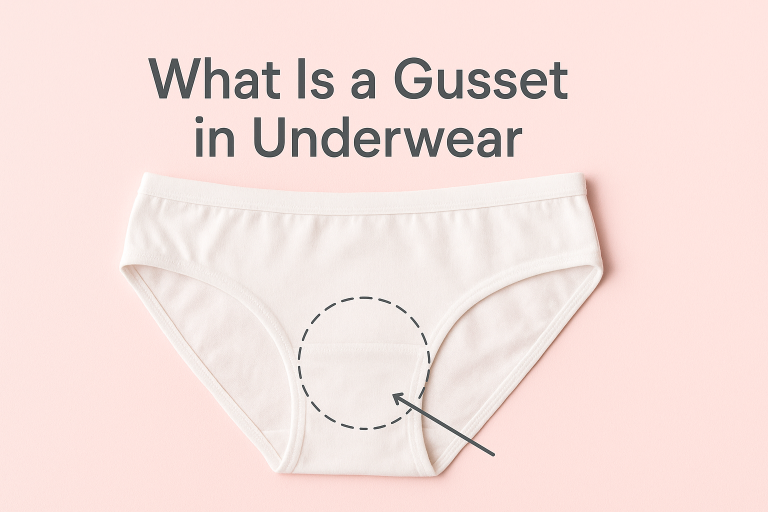
Full-coverage cotton briefs provide a lined cotton gusset that covers the entire vulvar area without creating friction points at the sides of the leg or the pubic region. The cotton gusset functions as a breathable, non-irritating barrier between sensitive tissue and the outside environment.
A gusset width of at least 3 inches across the crotch area provides adequate coverage without fabric gathering or bunching that could cause pressure points against sensitized tissue. Narrower gusset designs, common in bikini-cut or thong styles, reduce the protective surface area and concentrate contact pressure on a smaller region of already sensitive skin.
Dermatologists at the Cleveland Clinic recommend 100% cotton underwear as the first-line recommendation for women experiencing vulvovaginal irritation, noting that synthetic fabrics and lace can trap moisture and increase friction on compromised tissue.
Why Thongs and Lace Become More Problematic After Menopause
Thong underwear creates a narrow strip of fabric that rests directly against the perineum and anus, and the friction from normal movement can irritate thinned, dry vaginal tissue more significantly than it would in premenopausal skin. The American Academy of Dermatology notes that repeated friction against atrophied tissue can trigger micro-abrasions that increase susceptibility to bacterial or yeast infections.
Lace fabrics present a separate issue. The textured surface of lace, even soft lace, creates multiple small contact pressure points across sensitive skin rather than a smooth, even surface. For women with vulvar sensitivity, this texture functions as persistent low-grade friction with every movement.
This does not mean thongs or lace styles are universally off-limits, but they are worth reconsidering during periods of heightened sensitivity, particularly in the first years after menopause when tissue changes are most pronounced.
Body Shape Changes and Waistband Comfort
Abdominal fat redistribution during menopause is a documented physiological response to declining estrogen. A 2012 study published in Menopause: The Journal of the North American Menopause Society found that waist circumference increases an average of 1.6 cm per year during the menopausal transition, independent of total body weight gain. This shift in fat distribution from the hips and thighs to the abdomen changes how waistbands sit and how much support different cuts provide.
High-Waisted Styles and Abdominal Comfort
High-waisted underwear sits above the natural waist, typically at or above the navel, distributing waistband pressure across a wider area of the abdomen rather than concentrating it at the narrowest point of the torso. This distribution reduces the likelihood of the waistband rolling down or digging into soft abdominal tissue.
A wider waistband, generally 2 inches or more, spreads elastic tension over a larger surface area and reduces the pressure-per-square-inch that a narrow band exerts. Narrow waistbands with strong elastic can create a digging sensation that becomes more noticeable as abdominal tissue softens.
Key Specifications for high-waisted underwear suited to menopausal body changes:
- Waistband width: 2 to 3 inches minimum
- Rise height: sits at or above the navel (approximately 5 to 7 inches from the crotch seam)
- Fabric: cotton or cotton-modal blend for breathability at the waist
- Elastic type: soft, wide-set elastic without rigid boning or strong compression
- Size range: check for full-torso graded sizing, not just hip-based sizing
Avoiding Waistband Dig-In and Rolling
Waistbands roll or dig in when the garment’s waist circumference is smaller than the natural waist it is resting against, creating a rolling effect as the band seeks equilibrium. The solution is selecting a style where the waistband is designed for the specific torso shape, not just the hip measurement.
Many underwear brands size only by hip measurement, which can result in a waistband that is too tight even when the hip fit is correct. Brands that offer separate waist and hip sizing, or that specify the relaxed waistband circumference on their size charts, provide more accurate fit guidance for women with larger waist-to-hip differentials after menopause.
If the waistband digs in after a few hours, high-waisted underwear with a wider comfort band distributes pressure more evenly and is less likely to roll or indent during extended wear.
Incontinence and Underwear Selection
Stress urinary incontinence (SUI) affects an estimated 30-50% of postmenopausal women, according to the International Urogynecological Association, making it one of the most common and least discussed factors in menopausal underwear decisions. Declining estrogen reduces urethral tissue support, and pelvic floor changes after menopause can cause leakage during coughing, sneezing, laughing, or physical activity.
Absorbent Underwear Versus Pads and Liners
Absorbent underwear designed for light incontinence integrates an absorbent layer directly into the gusset, eliminating the need for separate pads or liners that can shift, bunch, or create visible lines under clothing. These styles are now available in standard underwear cuts (briefs, hipsters, bikini) with absorbency ratings matched to light, moderate, or heavy leakage volumes.
Women’s incontinence underwear typically absorbs between 10 ml and 80 ml depending on the product tier, compared to 3-7 ml for a standard panty liner. For women with light SUI, an absorbent brief designed for 10-20 ml provides adequate protection for most daily activities without the bulk of a pad.
Standard panty liners remain an option, but they require a stable, flat gusset to stay in position. Thong and narrow-gusset styles are not compatible with liner use because the liner has insufficient surface area to adhere properly.
Period and Absorbent Underwear for Perimenopausal Irregular Bleeding
Perimenopause, the transitional stage before menopause is confirmed, is characterized by irregular and often unpredictable menstrual cycles. The Office on Women’s Health notes that cycles may become heavier, lighter, or erratic for several years before menopause. This unpredictability creates a practical case for period underwear as a regular part of the underwear rotation during perimenopause.
Period underwear with moderate absorbency (20-40 ml) covers both unexpected light menstrual flow and mild incontinence leakage, making it a functional dual-purpose option for perimenopausal women managing both issues simultaneously.
Choosing absorbent underwear matched to your specific leakage volume eliminates the discomfort and unreliability of shifting pads while providing coverage appropriate to both perimenopausal bleeding and stress incontinence.
Skin Sensitivity and Fabric Texture After Menopause
The same estrogen decline that thins vaginal tissue also reduces skin hydration and elasticity across the entire body. Dermatologist Dr. Diane Madfes, a clinical assistant professor at Mount Sinai Medical Center, notes that postmenopausal skin loses approximately 30% of its collagen in the first five years after menopause, with ongoing slower loss thereafter. This systemic skin thinning makes the entire body, not just the vulvar area, more reactive to rough or irritating fabrics.
Fabrics That Work With Sensitive Postmenopausal Skin
Cotton-modal blends combine the breathability of cotton with the softness of modal (a semi-synthetic fabric derived from beech tree pulp), producing a fabric that is measurably softer than 100% cotton while retaining good moisture absorption. Modal has a Taber abrasion resistance score that is lower than cotton, meaning it causes less surface friction against skin with each movement cycle.
Bamboo-derived underwear has a reputation for exceptional softness, and comparative textile testing confirms that bamboo viscose ranks among the softest natural-adjacent fabrics available in underwear construction. For women whose skin reacts to the slightly rougher texture of standard cotton, bamboo is a well-supported alternative.
Avoid fabrics with raised surface textures, including broderie anglaise lace, crochet-trim edges, and open-weave synthetic lace panels, during periods of heightened sensitivity. These textures create repetitive micro-friction that accumulates across a full day of movement.
Elastic Quality and Skin Pressure
Elastic quality degrades with washing and use, and degraded elastic exerts uneven pressure that can mark or irritate thin skin more quickly than it would have in younger, more resilient skin. Silicone-banded elastic, which uses a non-latex grip to stay in place without pulling, is gentler than traditional elastic because it relies on surface adhesion rather than constriction to maintain position.
No-elastic waistband underwear styles, which use a self-fabric fold or woven band instead of added elastic, eliminate the constriction-based pressure mechanism entirely. These styles are particularly useful for women who notice red marks or indentations from waistbands after removal.
Choosing underwear with quality, wide, or non-constricting elastic reduces the pressure marks and skin irritation that thin, sensitive postmenopausal skin is more vulnerable to developing.
How Coverage and Cut Preferences Shift During Menopause
Survey data from the Intimate Apparel Association consistently shows that full-coverage and mid-rise styles gain market share among women aged 45 and older, while minimal-coverage styles like thongs and low-rise bikinis see reduced preference in the same demographic. These shifts reflect real functional changes rather than purely aesthetic preferences.
Full-Coverage Briefs and Hipsters
Full-coverage briefs provide a wide cotton gusset, leg openings that do not cut into the inner thigh, and a waistband positioned at the natural waist or above. These characteristics address the three primary comfort concerns of menopausal women: vulvar coverage, reduced leg friction, and abdominal containment without digging.
Cotton full-coverage briefs in a size that allows the waistband to sit without tension provide the highest level of all-day comfort for women managing hot flashes, vulvar sensitivity, and abdominal shape changes simultaneously.
Hipster cuts, which sit slightly lower than a traditional brief but provide full front and back coverage, offer an intermediate option for women who find the high waistband of a traditional brief uncomfortable but need more coverage than a bikini cut provides.
When Boyshorts Become a Preferred Option
Cotton boyshorts extend coverage down the upper thigh, eliminating the leg opening friction point that bikini and thong styles create. For women who experience inner thigh chafing as body composition shifts during menopause, boyshorts provide a practical solution by covering the area where thigh contact and friction occur most.
Boyshorts also work well under dresses and skirts as a chafing barrier, replacing the need for separate anti-chafing products. The additional coverage means they are longer than briefs and may be visible under fitted shorts, so fabric weight and color selection matter for outerwear compatibility.
The shift toward fuller coverage cuts during menopause is driven by real changes in sensitivity, body composition, and the need for fabrics that breathe and protect rather than simply cover.
Building a Menopause-Appropriate Underwear Wardrobe
A functional underwear wardrobe for menopausal women typically requires more variety than a pre-menopause drawer because different days and situations demand different levels of absorbency, coverage, and temperature management. The North American Menopause Society recommends having enough underwear pairs to change once or twice daily during periods of heavy hot flash sweating, which suggests a minimum rotation of 10-14 pairs.
Use the table below to match your primary menopause symptom to the most appropriate underwear type, fabric, and cut.
| Primary Symptom | Recommended Cut | Recommended Fabric | Key Feature to Look For | Amazon Search |
|---|---|---|---|---|
| Hot flashes and night sweats | Brief or hipster | 100% cotton or bamboo viscose | Tagless, seamless construction | Cotton tagless briefs |
| Vulvar dryness and sensitivity | Full-coverage brief | 100% cotton gusset minimum | Wide gusset (3 inches or more), no lace trim at leg opening | Full coverage cotton briefs |
| Abdominal shape change and waistband discomfort | High-waisted brief | Cotton-modal blend or soft cotton | Wide waistband (2+ inches), non-compressive elastic | High waisted cotton underwear |
| Light stress incontinence | Absorbent brief | Cotton outer with absorbent liner layer | Absorbency rating of 10-25 ml, odor-resistant inner layer | Light incontinence underwear |
| Perimenopausal irregular periods | Period brief or hipster | Cotton outer with leak-proof inner layer | Absorbency 20-40 ml, machine washable | Period underwear women |
| Inner thigh chafing from body composition change | Boyshort | Cotton or cotton-modal blend | Extended leg coverage, flat seams at thigh hem | Cotton boyshort underwear |
Building a varied rotation that addresses your specific combination of symptoms provides better day-to-day comfort than trying to find one style that solves every issue at once.
The following interactive tool helps you identify which underwear features matter most for your specific combination of menopause symptoms, so you can narrow your search before purchasing.
Interactive Finder
Find the Right Underwear for Your Menopause Symptoms
Answer 2 questions to get a personalized recommendation based on your primary concerns.
How to Transition Your Underwear Drawer Gradually
Replacing an entire underwear drawer at once is unnecessary and expensive. A more practical approach is to identify your two or three most disruptive current symptoms and replace the styles that address those first, then evaluate whether additional changes are needed after 4-6 weeks of wearing the new styles.
Starting with Fabric, Then Cut
If you are currently wearing synthetic fabrics like polyester or nylon, switching to cotton or bamboo alternatives in your existing preferred cut (bikini, hipster, brief) is the fastest improvement for hot flash-related discomfort. This single change removes the heat-trapping mechanism without requiring adjustment to a new silhouette.
Once you have confirmed the fabric change helps, evaluate whether the cut is still working. If you notice persistent waistband pressure, inner thigh friction, or inadequate gusset coverage, adjust the cut to address those specific issues.
Laundering Menopause-Appropriate Underwear
Natural fabrics and absorbent underwear require careful laundering to maintain their functional properties. Cotton shrinks 3-5% in high-heat wash and dry cycles, which tightens the waistband and reduces the relaxed fit that makes high-waisted styles comfortable. Washing in cold water and air-drying or using a low-heat dryer cycle preserves the original dimensions.
Period and absorbent underwear should be rinsed in cold water immediately after use before machine washing. Hot water sets protein-based stains and can degrade the waterproof inner layer of absorbent styles.
Use a mesh lingerie wash bag and gentle lingerie detergent for all natural-fiber and absorbent underwear to extend the elastic life and fabric integrity.
Making changes gradually, starting with fabric and then adjusting cut, allows you to confirm which changes actually improve your day-to-day comfort rather than replacing everything at once based on assumptions.
Frequently Asked Questions About How Menopause Affects Underwear Preferences
Why does underwear that used to be comfortable suddenly feel irritating during menopause?
Declining estrogen during menopause reduces skin collagen density by approximately 30% in the first five years after menopause, according to research published in the British Journal of Dermatology. Thinner, less resilient skin is more reactive to friction from seams, lace textures, and synthetic fabrics that previously caused no noticeable discomfort. Vaginal tissue thinning (vulvovaginal atrophy) simultaneously increases sensitivity in the vulvar area, amplifying the irritation caused by narrow gussets and rough fabric textures. Switching to 100% cotton or bamboo-derived fabrics with seamless, tagless construction typically resolves the majority of sudden irritation.
Is it safe to wear thong underwear during menopause?
Thong underwear is not medically prohibited during menopause, but it becomes a more significant risk factor for women who are experiencing vulvovaginal atrophy (thinned, dry vaginal tissue). The American Academy of Dermatology notes that repeated friction against atrophied tissue can cause micro-abrasions that increase susceptibility to bacterial and yeast infections. Women without significant vulvovaginal symptoms may tolerate thong wear without issues, while women experiencing dryness, sensitivity, or recurrent infections are generally better served by full-coverage styles with a wide cotton gusset.
What is the best underwear fabric for managing hot flashes?
100% cotton and bamboo-viscose fabrics perform best for hot flash management because they absorb moisture, allow air circulation, and release heat rather than trapping it. A 2020 comparative textile study published in the Journal of Natural Fibers confirmed that bamboo-derived textiles show lower thermal resistance than polyester, meaning they release body heat more efficiently. Moisture-wicking performance fabrics (typically 95% polyester with a moisture-transport finish) dry faster than cotton but provide less breathability at rest, making them better suited for women with very heavy sweating rather than typical hot flash episodes.
How does menopause affect underwear sizing?
Menopausal weight redistribution, specifically the shift of fat from the hips and thighs to the abdomen, changes the waist-to-hip ratio in ways that affect underwear sizing. A 2012 study published in Menopause: The Journal of the North American Menopause Society found that waist circumference increases an average of 1.6 cm per year during the menopausal transition. This means a size that fit correctly based on hip measurement may now have a waistband that is too tight even though the hip fit has not changed. Checking both waist and hip measurements against a brand’s specific size chart, rather than relying on a previously known size, produces a more accurate fit during this period of body change.
Can the right underwear help with light incontinence during menopause?
Absorbent underwear designed for light incontinence absorbs between 10 ml and 25 ml of fluid, which covers the leakage volume typical of stress urinary incontinence during coughing, sneezing, or light activity. The International Urogynecological Association confirms that stress urinary incontinence affects 30-50% of postmenopausal women due to urethral tissue changes caused by estrogen loss. Absorbent underwear does not treat or correct incontinence, but it manages leakage discreetly and eliminates the need for separate pads that can shift or bunch during movement. It is not a substitute for pelvic floor therapy or medical evaluation if incontinence is moderate or severe.
Should I size up in underwear during menopause?
Sizing up is appropriate when your current underwear creates visible elastic marks, rolls down from the waist, cuts into the inner thigh at the leg opening, or feels tight across the abdomen during normal seated positions. These are fit problems caused by the garment’s dimensions, not simply a sign of preference. Sizing up by one size, while also confirming the waistband circumference on the brand’s size chart, usually resolves these issues without requiring a different style. Many women find that sizing up by one in the waistband while staying at the same hip size, where brands offer separate waist and hip sizing, produces a better overall fit during the menopausal transition.
The Right Underwear Choices Make a Measurable Difference During Menopause
Menopause changes the specific requirements your underwear needs to meet, from fabric breathability and gusset width to waistband construction and absorbency, and addressing those changes directly produces a noticeable improvement in daily comfort. Start by switching to 100% cotton or bamboo-derived fabrics with seamless construction if hot flashes or skin sensitivity are your primary concerns, then evaluate cut and coverage based on abdominal comfort and vulvar protection needs. A well-matched underwear rotation for your specific symptom profile is one of the simplest and most immediate comfort improvements available during the menopausal transition.



2 Comments