
Best Underwear for Elderly or Aging Skin: Skin-Safe Comfort
Underwear for aging skin needs to do more than just fit. It needs to protect fragile skin, prevent irritation, and stay comfortable through hours of wear. The right pair reduces friction, supports circulation, and avoids the elastic pressure that causes bruising or skin tears in older adults. This guide covers the fabrics, fits, and features that matter most, along with specific product types that genuinely work for elderly wearers and aging skin.
Why Aging Skin Needs Different Underwear
Aging skin loses roughly 20% of its thickness by age 80, according to research published in the British Journal of Dermatology. Thinner skin bruises more easily, tears under friction, and heals more slowly after irritation.
Standard underwear designed for younger wearers often includes tight elastic bands, rough seams, and synthetic fabrics that trap heat and moisture. These features become direct sources of harm for elderly skin.
The sebaceous glands produce less oil as the body ages, which means the skin’s natural protective barrier weakens. This makes the skin more vulnerable to chafing, pressure marks, and contact dermatitis from dyes and synthetic fibers.
Reduced collagen also means skin sits looser on the body, creating folds where moisture collects. Underwear that does not wick moisture away from these areas creates conditions for fungal infections, rashes, and skin breakdown.
The right underwear addresses all of these changes directly: soft, breathable fabrics that minimize friction; flat or no seams that eliminate pressure points; and waistbands that sit comfortably without digging into delicate tissue.
Choosing underwear designed for aging skin is not about aesthetics. It is a genuine health and comfort decision that affects skin integrity, daily mobility, and quality of life.
Key Features to Look For in Underwear for Elderly Skin
The most important features in underwear for aging skin are fabric softness, seam construction, waistband design, and moisture management. Each of these directly reduces the risk of skin damage during everyday wear.
Fabric Softness and Breathability
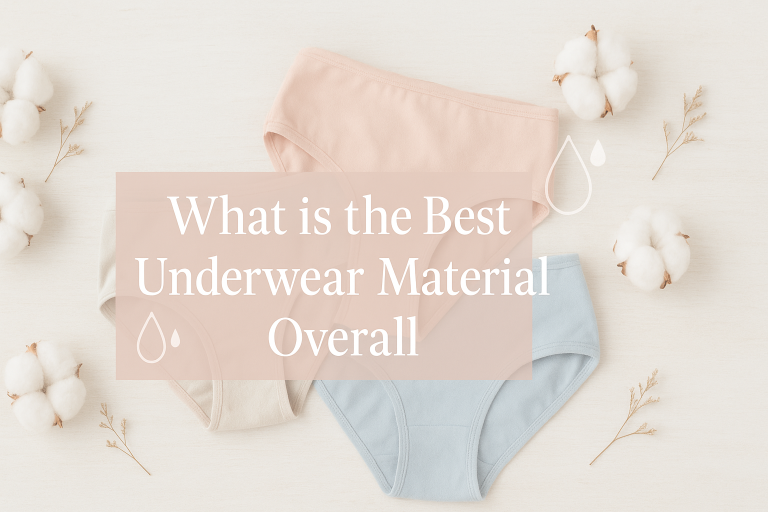
Cotton remains the most recommended fabric for elderly skin because it is soft, breathable, and free of synthetic irritants. The 100% cotton underwear options allow airflow that reduces heat buildup and moisture retention, both of which accelerate skin breakdown.
Pima cotton and organic cotton provide an even softer hand feel than standard cotton. These varieties have longer fibers that create a smoother surface against skin, which matters significantly for fragile tissue.
Bamboo-derived fabric (labeled as bamboo viscose or bamboo rayon) has gained strong clinical support as an alternative. A study published in the Journal of Natural Fibers found bamboo fabric to be significantly softer and more moisture-wicking than standard cotton, with natural antimicrobial properties that reduce bacteria growth in skin folds.
Modal fabric, derived from beech tree pulp, is another option. Modal is 50% more moisture-absorbent than cotton and maintains its softness through repeated washing, according to fabric testing published by Lenzing AG, the primary modal fiber producer.
Avoid polyester, nylon, and spandex-heavy blends as the primary fabric. These materials trap heat, reduce airflow, and create more friction against thin skin. Small percentages of spandex (under 8%) for shape retention are acceptable if the main fabric is cotton, modal, or bamboo.
Flat Seams and Seamless Construction
Seamless underwear eliminates the raised seam lines that press against skin during movement. For aging skin, even a standard sewn seam at the leg opening or crotch can cause enough repeated friction to create a raw patch within a single day of wear.
Flat-lock seams are a step below fully seamless but still significantly reduce friction compared to standard raised seams. In flat-lock construction, the seam lies flat against the fabric rather than creating a ridge.
Laser-cut edges at the leg openings eliminate the seam entirely at the most friction-prone area. Many laser-cut seamless briefs combine this edge construction with a soft knit fabric that has no visible or tactile seam lines.
Tagless construction is equally important. Printed labels rather than sewn-in tags remove one more source of repeated skin contact. The National Institute on Aging notes that skin sensitivity increases with age, making previously tolerable irritants like clothing tags genuinely uncomfortable or harmful for older adults.
Waistband Design
The waistband is the most common source of pressure marks and skin damage in elderly underwear wearers. A waistband that is too tight cuts off circulation and leaves indentations that, for very thin skin, can progress to bruising or surface tears.
Wide, soft waistbands that distribute pressure over a larger surface area are the gold standard. A waistband width of 1.5 to 2.5 inches spreads the elastic’s tension across more skin, reducing the pressure per square centimeter.
No-dig waistband underwear uses a softer elastic or a fabric-wrapped elastic that folds rather than cuts into the skin when the wearer sits, bends, or shifts position. This is particularly important for elderly wearers who spend extended periods sitting.
For wearers with extreme skin fragility or those at risk of skin tears, high-waisted underwear with a full fabric panel rather than exposed elastic at the top is often the safest option. The panel distributes any compression across the entire torso rather than concentrating it in a single band.
Leg Opening Fit
Leg openings that are too tight cut into the inner thigh, where skin is especially thin and prone to bruising in older adults. Openings that are too loose bunch and create friction folds.
A well-fitted leg opening should sit flat against the skin without visible indentation after removal. If an indentation remains on the skin for more than 10 minutes after removing the underwear, the leg opening is too tight.
Full-coverage brief styles and full-coverage cotton briefs have higher-cut leg openings that sit closer to the hip, which reduces the amount of elastic in contact with the inner thigh. This is often more comfortable for elderly wearers than mid-cut or low-cut styles.
Best Underwear Styles for Elderly and Aging Skin
Not every underwear style is equally suitable for aging skin. The cut, coverage, and construction each affect how much friction, pressure, and moisture the skin experiences during daily wear.
Full-Coverage Cotton Briefs
Full-coverage cotton briefs are the most consistently recommended style for elderly wearers by geriatric care specialists. They provide maximum surface coverage, which reduces the amount of skin exposed to clothing friction from outer garments.
The waistband on a full brief sits at or just below the natural waist, distributing pressure across a broader section of the torso. The leg openings are higher-cut, which means less elastic in contact with the inner thigh.
Key Specifications:
- Fabric: 100% cotton or 95% cotton, 5% spandex
- Rise: full rise, sits at or above the navel
- Coverage: full seat and full front
- Leg opening: higher-cut, closer to the hip
- Care: machine washable, cool to warm water
This style is the safest general-purpose choice for daily wear, incontinence pad use, and extended sitting or bed rest.
Seamless Soft Briefs
Seamless soft briefs remove raised seam lines entirely, which makes them ideal for wearers whose skin reacts to any friction. The knit construction allows the fabric to move with the body rather than pulling against it.
Many seamless briefs use a nylon-spandex or modal-spandex blend. Modal blends maintain better breathability than pure nylon, making them preferable for elderly skin that needs airflow to prevent moisture buildup.
Key Specifications:
- Fabric: modal or bamboo blend, typically 90% modal, 10% spandex
- Seam construction: fully seamless, no raised seam edges
- Waistband: soft, wide elastic or fold-over fabric band
- Coverage: mid to full coverage
- Care: machine washable, gentle cycle
Seamless briefs in modal or bamboo blends are particularly well-suited for wearers who have experienced skin rashes, contact dermatitis, or pressure marks from standard underwear.
High-Waisted Underwear with a Soft Panel
High-waisted cotton underwear with a soft, non-compressive panel is beneficial for elderly wearers who have loose abdominal skin or who use incontinence pads. The extended coverage prevents the pad from shifting and reduces the area of skin in direct contact with outer clothing.
This style also provides light support for the lower abdomen without the compression level of shapewear, which can be harmful for wearers with circulation issues or lymphedema.
Key Specifications:
- Fabric: cotton or cotton-modal blend
- Rise: high rise, typically 4 to 6 inches above the natural waist
- Panel: smooth, non-compressive front panel
- Waistband: wide, soft-finish elastic or fabric-covered elastic
- Care: machine washable
Incontinence Underwear and Protective Styles
For elderly wearers managing light to moderate urinary incontinence, washable incontinence underwear provides built-in absorbent layers without the bulk of adult disposable briefs. These styles are designed to hold 1 to 4 teaspoons of fluid while remaining thin enough to wear under regular clothing.
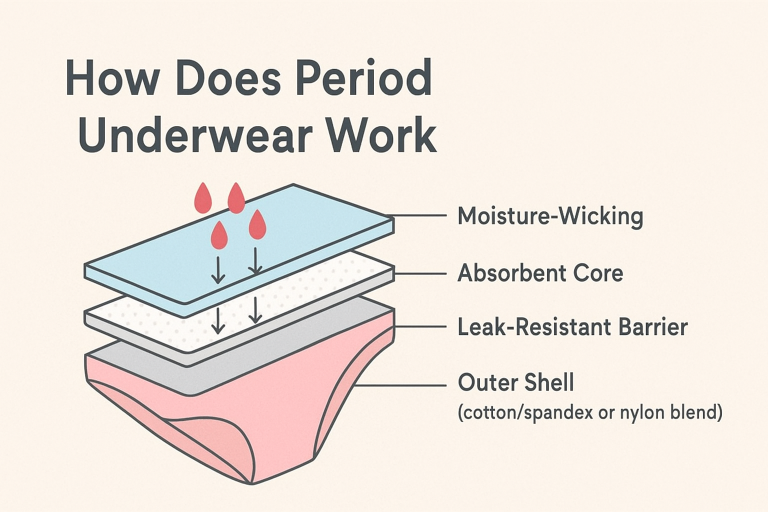
The absorbent layer in quality washable incontinence underwear uses a moisture-wicking top sheet that pulls fluid away from the skin surface, reducing the prolonged skin contact with moisture that leads to incontinence-associated dermatitis (IAD). The Wound, Ostomy and Continence Nurses Society identifies prolonged skin-moisture contact as the primary cause of IAD, which affects up to 50% of nursing home residents.
Key Specifications:
- Absorbency: light (1-2 tsp), moderate (3-4 tsp), or heavy (5+ tsp) options
- Top layer: moisture-wicking, skin-facing layer
- Outer layer: waterproof or water-resistant barrier
- Construction: full brief or high-waisted style
- Care: machine washable, up to 200 washes per manufacturer ratings
For wearers needing maximum protection or those with limited mobility, disposable incontinence underwear designed for adult use provides a pull-on format that is easier to manage during assisted care routines.
Boyshorts for Thigh Protection
Cotton boyshorts extend coverage down the inner thigh, which provides a fabric barrier between the thighs during walking. For elderly wearers with inner thigh skin that chafes or tears from thigh contact, this added coverage directly prevents a painful and common skin injury.
Key Specifications:
- Fabric: 100% cotton or bamboo blend
- Coverage: extends 2 to 4 inches down the inner thigh
- Leg opening: wide, non-binding, minimal elastic
- Waistband: flat or fabric-wrapped elastic
- Care: machine washable
Boyshorts are particularly effective for elderly wearers who experience intertrigo, a skin rash that forms in skin folds, including the inner thigh. The fabric layer separates the skin surfaces and reduces the friction and moisture that cause intertrigo flares.
Here is the comparison matrix for all five styles at a glance, showing which features matter most for aging skin by style:
Product Comparison
Underwear Styles for Aging Skin: At-a-Glance Comparison
Key features compared across the five most recommended styles for elderly wearers
| Style | Seam Risk | Waistband Pressure | Moisture Control | Best For |
|---|---|---|---|---|
| Full-Coverage Cotton Brief | Low | Low (wide band) | Good | Everyday wear, pad use |
| Seamless Soft Brief | None | Very Low | Very Good | Sensitive or reactive skin |
| High-Waisted Soft Panel | Low | Very Low | Good | Loose abdominal skin, pads |
| Washable Incontinence Brief | Low to Moderate | Low | Highest | Light to moderate incontinence |
| Cotton Boyshorts | Low | Low | Good | Thigh chafing, intertrigo |
Seam risk and waistband pressure ratings are editorial assessments based on construction type. Individual fit may vary by brand and size.
For most elderly wearers, the seamless soft brief in a modal or bamboo blend provides the lowest overall friction and pressure risk, while the full-coverage cotton brief remains the most practical choice for everyday use with incontinence pads.
Fabrics That Protect Aging Skin: A Detailed Comparison
The fabric is the single most important variable in underwear for aging skin. Softness, breathability, moisture management, and the absence of irritating chemical treatments all determine whether a fabric protects or harms fragile skin over repeated daily wear.
Use the table below to compare the four most appropriate fabrics for elderly underwear wearers across the properties that matter most for skin health.
| Fabric | Softness | Breathability | Moisture Wicking | Shrinkage Risk | Best Use |
|---|---|---|---|---|---|
| 100% Cotton | High | High | Moderate | Moderate (cold wash) | Everyday, sensitive skin |
| Pima or Organic Cotton | Very High | High | Moderate | Low (cold wash) | Reactive or eczema-prone skin |
| Modal (Beechwood) | Very High | High | High | Very Low | Long wear, warm climates |
| Bamboo Viscose | Very High | Very High | High | Low | Skin folds, moisture-prone areas |
As the table shows, modal and bamboo viscose outperform standard cotton on moisture wicking and dimensional stability, while pima and organic cotton lead on skin gentleness for reactive or eczema-prone skin. For most elderly wearers, a modal or bamboo brief used as the daily staple, with organic cotton as the backup for any skin-reactive days, gives the best protection across all conditions.
Sizing and Fit: Getting It Right for Aging Bodies
Fit errors are the leading cause of underwear-related skin damage in elderly wearers. Underwear that is too small creates constant pressure and friction. Underwear that is too large bunches and causes fold friction. Both damage aging skin over a full day of wear.
How Body Shape Changes Affect Underwear Sizing
The body’s fat distribution shifts with age. Fat migrates from the limbs toward the abdomen, which means hip-to-waist proportions change even without a significant change in body weight. A woman who wore a size M through her 40s may need a size L or XL in the same brand by her 70s, not because her weight increased substantially, but because her proportions shifted.
Underwear sizing charts use hip measurement as the primary reference point for most brief and bikini styles, and waist measurement for high-waisted and control styles. Measuring both at the same time and choosing based on the larger measurement is the most reliable approach for aging bodies.
Key Specifications for measuring correctly:
- Hip measurement: taken around the fullest part of the hips and seat
- Waist measurement: taken around the natural waist, about 1 inch above the navel
- Measuring tape position: snug but not compressing the skin
- Posture: standing with feet together, not sucking in
- Size selection: if between sizes, size up for aging skin
When measurements fall between sizes, always choose the larger size for aging skin. A slightly looser fit is far safer than a slightly tighter one. The pressure from undersized elastic against thin skin can cause indentations that take hours to resolve, and in very fragile skin, can progress to bruising.
Signs That Current Underwear Is the Wrong Size or Fit
Several visible and physical signs indicate that current underwear is causing skin harm. The most direct sign is elastic mark impressions that remain on the skin for more than 10 to 15 minutes after removing the underwear, according to guidance from the Wound Care Education Institute.
Other signs include persistent redness along the waistband or leg openings, skin that feels raw or sore after a day of wear, and visible bunching or pulling during movement. Any of these signs warrants a size change before the next wear, not a wait-and-see approach, because aging skin does not recover from repeated friction damage as quickly as younger skin does.
Using a Size Calculator for Accurate Fit
The interactive tool below lets you enter a hip measurement and immediately see the recommended US letter size and numeric size, so you can match measurements to underwear packaging without guesswork.
Sizing Tool
Underwear Size Calculator by Hip Measurement
Enter your hip measurement to find your recommended letter and numeric size. For aging skin, size up if between sizes.
For aging skin, always size up if your measurement falls at the top of a size range. A looser fit reduces pressure against fragile skin.
Measure around the fullest part of your hips while standing with feet together. Always check the specific brand’s own size chart, as cut and stretch vary by style and manufacturer.
Getting the size right before purchase, rather than adjusting after wearing, prevents the skin damage that comes from even a single day in undersized underwear.
What to Avoid: Materials and Construction Features That Harm Aging Skin
Certain underwear materials and construction features that are acceptable for younger skin become genuinely harmful for elderly wearers. Identifying and avoiding these features is as important as choosing the right fabric.
Synthetic Fabrics as the Primary Material
Polyester and nylon as the dominant fabric create a warm, low-airflow environment against the skin. The American Academy of Dermatology notes that reduced skin barrier function in older adults makes them more susceptible to contact dermatitis, and synthetic fabrics increase this risk by trapping heat and preventing moisture from evaporating.
Synthetic fabrics also generate more static electricity than natural fibers, which causes the fabric to cling and pull against skin during movement. This adds friction that, over a full day, accumulates into real skin irritation.
Tight Elastic Waistbands and Leg Bands
Narrow elastic waistbands (under 1 inch wide) concentrate all the waistband tension onto a small strip of skin. For aging skin that already has less padding and reduced elasticity, this creates a pressure injury risk that is comparable to a poorly fitted medical device.
Lace leg bands, while decorative, are a particular problem for elderly wearers. The textured surface of lace creates uneven pressure points along the entire leg opening, and lace fabrics typically contain less stretch than knit fabrics, which means they bind more as the wearer moves.
Heavy Dyes and Chemical Treatments
Dark-dyed fabrics, particularly in synthetic materials, use more chemical mordants and fixatives to hold the color. For elderly skin with a compromised barrier function, these residual chemicals can trigger allergic contact dermatitis. A review published in Contact Dermatitis journal identified textile dye allergy as a significant and underdiagnosed cause of dermatitis in older adults.
Opting for undyed, naturally colored, or very lightly dyed underwear in natural fabrics minimizes chemical exposure against the skin. At minimum, washing new underwear two to three times before first wear removes a significant portion of excess dye and finishing chemicals.
Thong Styles
Thong underwear concentrates a narrow strip of fabric in the perianal area, where skin folds are most prone to friction and bacterial colonization. For elderly wearers, this increases the risk of both skin breakdown and urinary tract infections. The National Institute on Aging recommends that elderly women avoid underwear styles that allow bacteria to migrate from the rectal area toward the urethra, and narrow-gusset thong styles present the highest risk of this migration.
For elderly wearers, the tradeoffs of thong underwear (primarily no-show lines under clothing) do not outweigh the skin health risks. Full-coverage or seamless brief styles achieve a low-visibility profile under fitted clothing without the friction and infection risks of a thong cut.
Caring for Underwear to Preserve Skin-Safe Properties
How underwear is washed and dried directly affects how long it remains safe for aging skin. Incorrect washing degrades elastic, stiffens fabric, and can leave detergent residue that irritates sensitive skin.
Washing Instructions for Aging-Skin Underwear
Cotton and cotton-blend underwear should be washed in cool to warm water (under 104 degrees Fahrenheit or 40 degrees Celsius) to prevent shrinkage and elastic degradation. Hot water accelerates elastic fiber breakdown, which causes the waistband and leg openings to lose their even tension and develop the hard, uneven edges that dig into skin.
Use a gentle, fragrance-free detergent for all underwear worn against aging skin. Fragrance compounds are among the most common contact allergens for elderly skin, according to the American Contact Dermatitis Society. Fabric softeners should be avoided for underwear, as softener residue reduces the moisture-wicking performance of the gusset lining and can leave a film that irritates sensitive skin.
Modal and bamboo-viscose underwear should always be washed on a gentle or delicate cycle. These fabrics are more susceptible to pilling and surface damage from agitation than cotton. Using a mesh lingerie wash bag reduces agitation and protects the fabric's smooth surface, which directly translates to continued skin gentleness after repeated washing.
Drying Methods That Preserve Elastic and Fabric
Air drying is the best option for all underwear designed for aging skin. Tumble drying on high heat is the single most damaging step in the underwear care cycle for elastic integrity. A study published in Textile Research Journal found that elastic fiber (spandex and rubber core) degrades by approximately 30% after 50 high-heat machine drying cycles compared to air-dried equivalents.
If machine drying is necessary, use the lowest heat setting available (often labeled "delicate" or "air fluff") and remove the underwear while slightly damp rather than fully dry. The residual moisture finishes drying without heat exposure, which preserves elastic tension far longer than full machine-drying cycles.
When to Replace Underwear for Skin Safety
Underwear that has been worn and washed regularly should be replaced when any of these signs appear: visible elastic sagging, waistband or leg openings that have hardened or become uneven, fabric pilling that creates a rough surface, or any thinning of the gusset lining. For elderly wearers, pilled or thinned fabric is not just a cosmetic issue. It represents a friction surface that can abrade aging skin.
A general replacement schedule of every 6 to 12 months for daily-wear pieces maintains the skin-protective properties of the fabric and elastic throughout the useful life of each pair. Underwear worn less frequently lasts longer before replacement is needed.
Underwear for Specific Skin Conditions Common in Elderly Adults
Several skin conditions are significantly more common in elderly adults and each requires specific underwear considerations beyond the general guidance for aging skin.
Eczema and Contact Dermatitis
Elderly adults with eczema or contact dermatitis need underwear that minimizes both friction and chemical exposure. The National Eczema Association recommends 100% organic cotton or untreated bamboo as the safest fabric choices for eczema-prone skin, because both are free of the synthetic processing chemicals that trigger contact reactions.
Organic cotton underwear for sensitive skin is certified under standards such as GOTS (Global Organic Textile Standard), which limits pesticide residues, dye chemicals, and formaldehyde finishing treatments. For elderly eczema sufferers, this certification is a meaningful skin-safety indicator, not just a marketing term.
Tagless construction is especially critical for eczema sufferers. A standard sewn-in tag at the waistband is a localized chemical and mechanical irritant that can trigger or worsen a dermatitis flare on reactive skin.
Lymphedema
Elderly women managing lower-body lymphedema require underwear that provides absolutely no compression at the leg openings. Even mild elastic compression can impede lymphatic drainage and worsen swelling. Loose-fitting cotton underwear with minimal elastic at the leg openings, or styles with a wide soft band rather than narrow elastic, are the safest choices.
High-waisted styles that extend coverage over the lower abdomen can be beneficial for lymphedema patients, provided the panel is non-compressive. The goal is skin protection and moisture management, not compression, which is provided separately through medical-grade garments prescribed by a lymphedema therapist.
Skin Tears and Fragile Skin Syndrome
Skin tears are a major concern in elderly care. The International Skin Tear Advisory Panel (ISTAP) classifies skin tears as traumatic wounds caused by friction, shearing, or blunt force that result in separation of skin layers. Poorly fitting underwear with tight elastic or rough seams is a recognized cause of skin tears in elderly patients.
For wearers with documented skin tear history or those assessed as high-risk (skin that is very thin, shows multiple bruises from minor contact, or has visible fragility), seamless underwear in modal or bamboo fabric with a wide, soft waistband is the minimum standard. Some geriatric wound care specialists recommend fully seamless underwear options as the only appropriate choice for this population.
Diabetes-Related Skin Changes
Diabetes accelerates skin aging and causes additional specific vulnerabilities. Peripheral neuropathy reduces the wearer's ability to feel friction or pressure damage as it is happening, which means skin injuries develop unnoticed. Poor circulation slows healing, and elevated blood glucose creates a favorable environment for yeast and bacterial infections in warm, moist skin areas.
For elderly diabetic women, underwear selection priorities shift toward maximum breathability (to reduce moisture and infection risk), full coverage (to protect all skin surfaces), and seamless or flat-seam construction (to prevent unnoticed friction injuries). The American Diabetes Association recommends that diabetic patients inspect their skin daily, including skin covered by underwear, for early signs of pressure damage or infection.
Where to Buy Underwear for Elderly or Aging Skin
Several reliable sources stock underwear specifically designed for the features aging skin requires. Knowing where to look saves time and reduces the risk of purchasing underwear that does not meet the necessary specifications.
Major online retailers, including Amazon, carry a broad range of soft underwear for elderly women, tagless cotton underwear, bamboo underwear, and modal underwear options that can be filtered by size, fabric, and construction. Reading verified buyer reviews from elderly wearers or caregivers provides the most relevant fit and comfort data for this population.
Medical supply retailers and ostomy care suppliers stock adaptive underwear and incontinence styles that are designed specifically for elderly wear, often with features not found in standard lingerie retailers, such as extended back coverage, extra-soft gusset linings, and odor-control treatments that are skin-safe.
Specialty adaptive clothing brands offer underwear with additional accessibility features for elderly wearers with limited mobility: magnetic closures, velcro side openings, and open-back styles that assist caregivers during dressing and personal care routines.
Frequently Asked Questions About Underwear for Elderly and Aging Skin
What is the best fabric for underwear for elderly women?
Cotton, modal, and bamboo viscose are the three best fabrics for elderly women's underwear. Cotton is highly breathable and gentle on sensitive skin. Modal is 50% more moisture-absorbent than cotton and maintains softness through repeated washing, according to Lenzing AG fabric testing. Bamboo viscose has natural antimicrobial properties that reduce bacteria in skin folds. All three are significantly safer for aging skin than polyester or nylon, which trap heat and increase friction against thin skin.
Is seamless underwear better for aging skin?
Seamless underwear is the safest construction choice for aging skin because it eliminates the raised seam lines that create repeated friction against fragile tissue. Standard sewn seams at the leg openings and crotch panel can cause raw patches on elderly skin within a single day of wear. Seamless construction, particularly in modal or bamboo fabric, provides a smooth contact surface with no pressure points. For elderly wearers with a history of skin tears or contact dermatitis, seamless construction is the minimum recommended standard rather than a preference.
What type of underwear is best for elderly women with incontinence?
Washable incontinence underwear with a built-in moisture-wicking absorbent layer is the best option for elderly women managing light to moderate urinary incontinence. These styles hold 1 to 4 teaspoons of fluid while drawing moisture away from the skin surface, which reduces the prolonged skin-moisture contact that causes incontinence-associated dermatitis (IAD). The Wound, Ostomy and Continence Nurses Society identifies IAD as affecting up to 50% of nursing home residents, making moisture management a genuine clinical priority rather than a comfort preference. For heavier incontinence, disposable incontinence briefs designed for adult use provide a pull-on format that is easier to manage during assisted care.
How should underwear fit elderly women to avoid skin damage?
Underwear for elderly women should fit so that the waistband and leg openings sit flat against the skin without visible indentation after removal. The waistband should not roll, dig, or leave a mark that persists for more than 10 minutes after the underwear is removed. If indentations remain longer than that, the underwear is too small or the elastic is too tight for that wearer's skin. Choosing one size up from the measured hip size is generally the safest approach for aging skin, because loose elastic causes far less damage than tight elastic. A waistband width of 1.5 to 2.5 inches distributes pressure across more skin and reduces the force per square centimeter against fragile tissue.
How often should elderly women replace their underwear?
Elderly women who wear the same pairs daily should replace underwear every 6 to 12 months to maintain the skin-safe properties of the fabric and elastic. Signs that immediate replacement is needed include visible elastic sagging at the waistband or leg openings, hardened or uneven elastic edges, fabric pilling that creates a rough surface, and any thinning of the gusset lining. For aging skin, a pilled or degraded fabric surface is a friction hazard rather than just a cosmetic issue. Washing on cool to warm settings and air drying (rather than high-heat machine drying) extends the useful life of each pair by reducing elastic degradation.
Is high-waisted underwear better for elderly women?
High-waisted underwear is often a better choice for elderly women because the extended coverage distributes the waistband pressure across a wider section of the torso rather than concentrating it in a single narrow band. High-waisted styles are particularly beneficial for wearers with loose abdominal skin, those using incontinence pads (the extended coverage keeps the pad in place), and those who experience the standard brief waistband rolling or digging during extended sitting. A high-waisted brief with a non-compressive soft panel provides coverage and comfort without the compression risks of shapewear, which can be inappropriate for elderly wearers with circulation issues or lymphedema.
Choosing the right underwear for aging skin is a genuine health decision that protects fragile tissue from daily friction, pressure, and moisture damage. Focus on soft natural fabrics like cotton, modal, or bamboo; seamless or flat-seam construction; wide, soft waistbands that do not dig; and a fit that is slightly looser rather than tightly sized. Replacing underwear when elastic or fabric shows signs of degradation, washing in cool water with fragrance-free detergent, and sizing up when in doubt are the three most actionable steps to take immediately for anyone managing aging skin or caring for an elderly person who relies on comfortable, skin-safe underwear every day.



One Comment