
Should You Wash New Underwear Before Wearing? Why It Matters
Yes, you should wash new underwear before wearing it. New underwear contains residual chemicals from the manufacturing process, including formaldehyde-based fabric finishes, dyes, and sizing agents that remain in the fabric until the first wash. Skipping that first wash puts those substances directly against your most sensitive skin.
Why New Underwear Is Not Clean Straight from the Package
New underwear goes through multiple handling stages before it reaches you, including factory production, quality inspection, packaging, warehouse storage, and retail display. According to Dr. Philip Tierno, a clinical professor of microbiology and pathology at New York University, garments in retail stores can carry residual bacteria, fecal matter, and skin flora from people who tried them on before purchase.
A study published in Dermatitis found that formaldehyde-releasing resins are commonly applied to textiles to prevent wrinkling and mildew during shipping. These resins remain biologically active in unwashed fabric and are a documented cause of allergic contact dermatitis.
What Chemicals Are in New Underwear Fabric?
New cotton underwear and synthetic styles both carry chemical residues from production. The most common include formaldehyde-based anti-wrinkle finishes, azo dyes (used in fabric coloring), optical brighteners, and fabric softening coatings applied before packaging.
Azo dyes, used widely in fabric manufacturing, can release aromatic amines under certain conditions. The European Commission’s REACH regulation restricts azo dyes in textiles that come into prolonged skin contact, which includes underwear, precisely because of the skin absorption risk.
How Many People Try on Underwear Before You Buy It?
Retail underwear is typically sold in sealed packaging, which reduces direct contamination risk compared to clothing displayed on hangers. However, packaging seals are not always intact, and some retailers allow in-store returns of packaged underwear, meaning a pair you purchase could have been previously opened and repackaged.
Even sealed packaging does not eliminate chemical residues from the manufacturing process itself. Those finish agents are inside the fabric fiber structure, not just on the outer surface.
Health Risks of Wearing Unwashed New Underwear
Wearing unwashed new underwear puts chemical residues and potential microbial contaminants in direct contact with the vulvar and perineal skin, areas with thinner skin barrier function and higher absorption capacity compared to other body areas. The American Contact Dermatitis Society recognizes textile dye allergy as a significant cause of contact dermatitis in the genital region.
People with sensitive skin, eczema, or a history of allergic reactions to synthetic fabrics face the highest risk. Even individuals without a known skin sensitivity can develop irritation after prolonged contact with unwashed fabric finishes.
Skin Reactions Linked to Unwashed New Underwear
The most common reactions include contact dermatitis (redness, itching, and inflammation at points of fabric contact), localized rash along waistband and leg opening edges, and vulvar irritation or increased discharge in sensitive individuals. These symptoms typically appear within 24 to 48 hours of first wear and resolve once the garment is removed and washed.
Persistent or severe reactions should be evaluated by a dermatologist, who can perform patch testing to identify the specific textile chemical responsible.
Who Is at Highest Risk?
Individuals with atopic dermatitis, vulvar vestibulitis, or a documented textile allergy face the greatest risk from unwashed new underwear. Children and people who wear underwear for extended periods without changing (such as during travel) are also in a higher-risk category.
Pregnancy increases skin sensitivity due to hormonal changes affecting barrier function. The American College of Obstetricians and Gynecologists recommends choosing gentle, chemical-free products for sensitive areas during pregnancy, making pre-wash even more important for new maternity or maternity underwear purchases.
How to Wash New Underwear Before the First Wear
Washing new underwear before the first wear requires using the correct method to remove chemical residues without damaging elastic, fabric structure, or specialty finishes. The goal is a thorough rinse with mild detergent, not an aggressive clean that degrades the fabric.
Here is the step-by-step process for first wash preparation:
This guide walks you through the correct first-wash method to remove manufacturing residues without shortening the life of your underwear.
Step-by-Step Guide
How to Wash New Underwear Before First Wear
6 steps. Takes about 5 minutes of active prep plus 30 to 45 minutes for a machine cycle.
Remove all packaging and tags
Remove plastic wrappers, cardboard inserts, hang tags, and adhesive labels before washing. Adhesive residue from stickers can transfer to other items in the same load.
Place in a mesh laundry bag
Put your new underwear inside a mesh lingerie bag to protect elastic and delicate fabric from tangling or stretching during the machine cycle. This is especially important for lace or seamless styles.
Select cold or warm water, gentle cycle
Use cold water (60 to 86 degrees Fahrenheit) or warm water (up to 104 degrees Fahrenheit) on a delicate or gentle machine cycle. Hot water above 104 degrees Fahrenheit degrades elastic fibers and can cause cotton to shrink by 3 to 5 percent on the first wash.
Use a gentle, fragrance-free detergent
Add a small amount (1 to 2 teaspoons for a partial load) of lingerie-specific detergent or a fragrance-free, dye-free detergent. Fragrances and optical brighteners in standard detergents are a secondary source of skin irritation for the same sensitive areas you are trying to protect.
Run a full rinse cycle
Allow the machine to complete a full rinse and spin cycle to remove all detergent residue. Detergent left in the fabric can cause irritation equivalent to the original manufacturing chemicals.
Air dry or use low heat in the dryer
Air drying flat or on a drying rack is the gentlest option and extends elastic lifespan. If using a dryer, select the lowest heat setting (below 130 degrees Fahrenheit) to avoid elastic breakdown, which can cause waistbands to lose recovery after as few as 10 to 15 high-heat cycles.
Following these six steps once before the first wear removes the vast majority of manufacturing residues. It also sets up a correct care routine that will extend the life of your underwear from that point forward.
Can You Hand Wash New Underwear Instead?
Hand washing is equally effective for the first wash and is preferable for delicate styles like lace, seamless, or lace panties. Fill a clean basin with lukewarm water (around 85 degrees Fahrenheit), add half a teaspoon of gentle detergent, submerge the underwear, and agitate gently for 2 to 3 minutes. Rinse thoroughly under running cool water until the water runs clear, then press (do not wring) excess water out and lay flat to dry.
Hand washing reduces mechanical stress on elastic and fabric structure compared to machine washing, making it the better first-wash option for specialty fabrics like modal, silk, or microfiber.
Does One Wash Remove All Manufacturing Chemicals?
A single wash with a gentle detergent removes the majority of surface-applied finishes and loose dye molecules. A 2018 report in Contact Dermatitis found that repeated washing progressively reduces residual textile chemical levels, with formaldehyde levels dropping by approximately 60 percent after the first wash and by over 90 percent after three washes.
For individuals with known textile chemical sensitivity or allergic contact dermatitis, washing new underwear two to three times before first wear provides a more complete reduction in chemical exposure.
What Fabrics Need the Most Attention Before First Wear
Not all underwear fabrics carry the same chemical residue risk. The level of processing a fabric undergoes before it becomes a finished garment correlates directly with the amount of chemical treatment required. Heavily processed synthetic fabrics and dark-colored styles consistently carry higher residue loads than lightly processed natural fibers in light colors.
Use the table below to match fabric type and color to the appropriate first-wash approach.
| Fabric Type | Chemical Residue Risk | Recommended First Wash | Number of Pre-Wears Washes |
|---|---|---|---|
| Dark-dyed synthetic (nylon, polyester) | Highest | Machine gentle, fragrance-free detergent | 2 to 3 |
| Light-colored synthetic (nylon, polyester) | Moderate to high | Machine gentle, fragrance-free detergent | 1 to 2 |
| Modal or bamboo blend | Moderate | Hand wash or gentle machine, cool water | 1 |
| Dark-dyed cotton | Moderate | Machine gentle, cold water | 1 to 2 |
| White or undyed cotton | Lower | Machine gentle or hand wash | 1 |
Dark-dyed synthetic styles carry the highest residue risk and benefit most from two to three pre-wear washes to fully reduce azo dye migration.
Do Seamless Underwear Styles Need Special Care?
Seamless underwear is typically constructed from nylon-spandex or polyester-spandex blends bonded with heat rather than sewn seams. The bonding agents used in seamless construction can contain adhesive chemicals that are released during the first few wears and washes.
Wash seamless styles in a mesh bag on the delicate cycle in cold water to protect the bonded edges. Avoid fabric softener on seamless styles because softener coats the nylon fiber and reduces moisture-wicking performance over time.
Key Specifications for a typical seamless brief:
- Fabric: 88% nylon, 12% spandex (common construction ratio)
- Bonded edges (no sewn seams at leg openings)
- Wash temperature: cold only (max 86 degrees Fahrenheit)
- Dry: lay flat or low-heat tumble dry
- No fabric softener
What About Period Underwear?
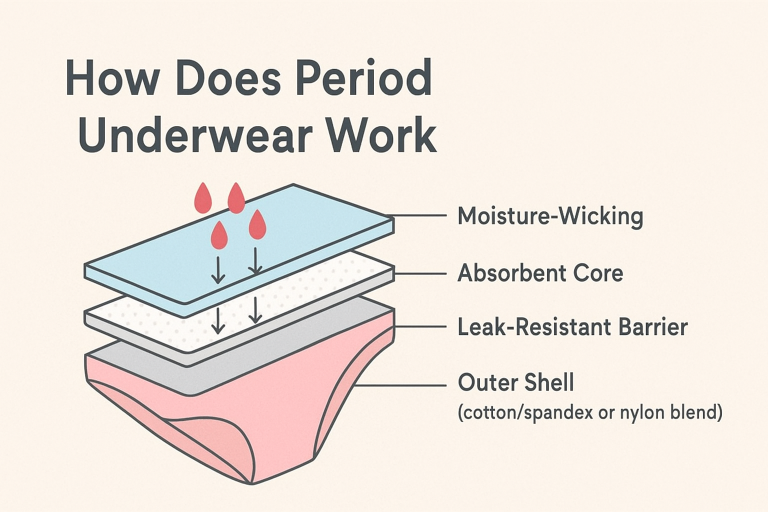
Period underwear uses a multi-layer absorbent construction with moisture-wicking inner layers, absorbent middle layers, and leak-proof outer layers. The absorbent core is often treated with antimicrobial finishes to prevent odor during wear.
Wash period underwear before the first wear using cool water and fragrance-free detergent. Some brands recommend a cold rinse (no detergent) on the very first wash to activate the absorbent layers, followed by a full gentle wash with detergent. Always check the brand’s specific care instructions before the first wash, as incorrect first washing can reduce absorbency capacity permanently.
Common First Wash Mistakes That Damage Underwear
The first wash establishes the baseline condition of the elastic, fabric structure, and any specialized finishes in your underwear. Mistakes made during this wash are often irreversible because elastic damage and fiber breakdown that happen in the first cycle set the trajectory for how quickly the garment degrades over its full wash cycle lifespan.
Use the table below to identify and avoid the most common first-wash mistakes.
| Mistake | What It Damages | Correct Action |
|---|---|---|
| Hot water wash (above 104 degrees Fahrenheit) | Elastic fibers, cotton shrinkage | Cold or warm (60 to 104 degrees Fahrenheit) |
| High-heat dryer | Elastic recovery, shape | Air dry or low-heat tumble dry |
| Washing with heavy items (jeans, towels) | Lace, seamless edges, elastic | Mesh bag, delicate load only |
| Bleach or harsh stain removers | Fabric color, fiber strength | Fragrance-free gentle detergent only |
| Skipping the rinse cycle | Detergent residue causes skin irritation | Full rinse cycle every wash |
Avoiding these five mistakes on the first wash protects both your skin and the garment’s structural integrity from day one.
How Long Can You Keep Unwashed New Underwear in Storage?
Unwashed new underwear can be stored indefinitely before first wear without the fabric degrading, but chemical residues from manufacturing do not diminish over time in storage. A pair stored for one year carries the same residue load as a pair washed right after purchase. The first wash is still required regardless of how long the garment sat in a drawer.
Elastic, however, does degrade in storage under specific conditions. Exposure to high heat, direct sunlight, or humidity above 60 percent accelerates elastic breakdown even in unworn garments. Store new underwear in a cool, dry drawer away from direct sunlight to preserve elastic integrity until the first wash.
Does Packaging Protect Underwear from Contamination?
Factory-sealed plastic packaging provides a physical barrier against external contamination, dust, and handling after the item leaves the manufacturer. It does not neutralize the manufacturing chemicals already in the fabric, and it does not prevent elastic degradation caused by storage conditions (heat, humidity, UV exposure).
Packaging should be left intact until you are ready to wash the underwear. Removing underwear from packaging and leaving it unwashed in a drawer for extended periods before the first wash adds no protective benefit over leaving it in the original packaging.
Special Situations Where Pre-Washing Matters Most
Pre-washing is important for all new underwear, but certain situations raise the stakes significantly. In these contexts, skipping the first wash creates a meaningful health or comfort risk that warrants extra care in both the washing process and the products chosen.
New Underwear During Pregnancy
Pregnancy alters skin barrier function and immune response, increasing susceptibility to chemical irritants in textiles. The vulvar and perineal skin becomes more vascular and sensitive during the second and third trimesters, making contact with unwashed fabric finishes more likely to produce visible irritation.
Wash all new maternity underwear twice before first wear using fragrance-free, dye-free detergent. Avoid fabric softeners on any underwear worn during pregnancy, as softener coating on fabric can trap moisture and increase the risk of yeast overgrowth in a population already prone to pregnancy-related vaginal infections.
New Underwear After Surgery or Postpartum Recovery
The first weeks postpartum and the recovery period following gynecological surgery involve open or healing tissue in the perineal area. Contact with unwashed fabric chemicals against healing tissue increases infection risk and can cause contact dermatitis that is indistinguishable from wound infection in the early stages.
Wash all new postpartum disposable underwear or high-waisted recovery underwear before use. For postpartum disposable styles that cannot be machine washed, use a damp cloth to wipe the interior fabric surface before wearing, or opt for pre-washed brands that label their products as ready-to-wear.
New Underwear for Children
Children’s skin has a thinner stratum corneum (the outermost protective skin layer) compared to adult skin, which means chemical penetration from unwashed fabric occurs more readily. A 2017 report in the International Journal of Environmental Research and Public Health specifically identified children’s clothing as a priority category for pre-washing due to higher skin absorption rates in this age group.
Wash all new children’s underwear before the first wear using a hypoallergenic, fragrance-free detergent. Two washes before first wear is the more protective option for children with eczema or known skin sensitivities.
Ongoing Underwear Care After the First Wash
Establishing correct care habits after the first wash determines how long your underwear lasts and whether it continues to feel comfortable and hygienic over its full lifespan. The first wash sets the benchmark for fabric condition, and ongoing care either maintains or degrades that baseline with every subsequent cycle.
The American Cleaning Institute recommends washing underwear after every single wear, noting that underwear accumulates bodily fluids, skin cells, and microorganisms during normal wear that require removal with each laundering. A Journal of Applied Microbiology study found that used underwear contains on average 0.1 grams of fecal matter per garment, making regular washing a hygiene necessity, not a personal preference.
How Often Should You Replace Underwear?
Underwear should be replaced every 6 to 12 months under normal wear conditions (wearing a pair once or twice a week with correct laundering), according to Good Housekeeping Institute textile experts. Signs that replacement is needed include visible elastic breakdown (waistband or leg openings no longer snap back), fabric thinning at the seat or gusset, permanent staining that washing does not remove, and any persistent odor that survives laundering.
High-waisted underwear with wide elastic waistbands typically degrades faster at the waistband than in the fabric body because elastic experiences the most mechanical stress during wear and washing. Inspect the waistband first when assessing whether a pair needs replacement.
Best Detergents for Ongoing Underwear Care
Fragrance-free, dye-free liquid detergents formulated for delicates or lingerie provide the gentlest ongoing care for all underwear fabric types. Powder detergents can leave residue in the gusset area if not fully rinsed, which creates a chemical irritant equivalent to the manufacturing finishes you removed with the first wash.
Use the table below to match your underwear fabric to the appropriate ongoing detergent type.
| Underwear Fabric | Recommended Detergent Type | Water Temperature | Fabric Softener |
|---|---|---|---|
| Cotton | Fragrance-free liquid, gentle formula | Cold to warm | Optional, low dose |
| Nylon or polyester seamless | Lingerie-specific or Sport delicate wash | Cold only | No (reduces moisture-wicking) |
| Modal or bamboo | Fragrance-free gentle liquid | Cold | Optional, very low dose |
| Lace (nylon base) | Delicate lingerie wash, hand wash preferred | Cold only | No |
| Period underwear (multi-layer absorbent) | Fragrance-free, enzyme-free liquid | Cold only | No (clogs absorbent layers) |
Matching your detergent and temperature to the specific fabric type protects both the garment and your skin across hundreds of wash cycles.
Correct ongoing care after the first wash preserves the elastic structure and fabric integrity that your pre-wear preparation established.
Frequently Asked Questions About Washing New Underwear
Is it safe to wear new underwear without washing it first?
Wearing new underwear without washing it first exposes your skin to residual manufacturing chemicals, including formaldehyde-based fabric finishes and azo dyes, that remain in the fabric until the first wash. The American Contact Dermatitis Society recognizes textile dye allergy as a documented cause of contact dermatitis in the genital region. While a single exposure is unlikely to cause a severe reaction in most people, individuals with sensitive skin, eczema, or known textile allergies face a higher risk of irritation, rash, or allergic contact dermatitis. Washing before the first wear eliminates this risk entirely.
Does washing new underwear once remove all chemicals?
One wash with a gentle detergent removes the majority of surface-applied finishes. Research published in Contact Dermatitis found that formaldehyde levels in new textiles drop by approximately 60 percent after the first wash. For individuals without known chemical sensitivity, one wash is sufficient for most fabrics. For dark-dyed synthetic styles or for people with documented textile allergies, two to three pre-wear washes provide a more complete reduction, with residue levels falling by over 90 percent after three washes.
Can you put new underwear straight into the dryer without washing first?
Putting new underwear through a dryer cycle without washing it first does not remove manufacturing chemical residues. Heat can actually set some dye molecules more firmly into fabric fibers rather than releasing them. A dryer cycle alone does not substitute for washing with detergent and water. Always wash first, then dry on a low-heat or air-dry setting.
Do you need to wash new underwear if it is packaged in sealed plastic?
Sealed packaging prevents external contamination from handling and retail environments, but it does not neutralize the manufacturing chemicals already present in the fabric itself. Formaldehyde-based finishes and azo dyes are applied during the textile manufacturing process before packaging occurs. The package seal is irrelevant to the chemical residue question. Wash new underwear before first wear regardless of whether the packaging was sealed.
What type of detergent is best for washing new underwear for the first time?
A fragrance-free, dye-free liquid detergent, ideally a lingerie-specific formula or a hypoallergenic gentle detergent, is the best choice for the first wash of new underwear. Standard detergents with added fragrances and optical brighteners introduce new potential irritants to the fabric at the same time you are trying to remove the original manufacturing chemicals. Use 1 to 2 teaspoons for a partial load and complete a full rinse cycle to ensure no detergent residue remains in the gusset or waistband area.
How do you wash new lace underwear without damaging it?
New lace underwear should be hand washed in cool water (around 85 degrees Fahrenheit) with a small amount of delicate or lingerie-specific detergent. Submerge the garment and agitate gently for 2 minutes. Rinse thoroughly under cool running water until no detergent remains, then gently press (never wring) excess water from the fabric and lay flat on a clean towel to air dry. Machine washing lace on the first wash risks snagging the lace structure on other items in the load, even inside a mesh bag, because the fabric is at its most chemically stiff before the first rinse cycle softens the finish.
Washing new underwear before the first wear is a simple, one-time step that removes manufacturing chemicals, reduces the risk of skin irritation, and sets up the correct care routine for the garment’s full lifespan. Choose a cool, gentle wash cycle, a fragrance-free detergent, and a mesh laundry bag to protect the fabric, then air dry or use low heat. For sensitive skin, dark synthetic fabrics, or specialty styles like period underwear and seamless underwear, repeat the wash one to two additional times before wearing. That single preparation step protects both the garment and the most sensitive area of your skin from the very first wear.



2 Comments