Types of Underwear for Women: Find Your Perfect Fit
Women’s underwear includes more than a dozen distinct styles, each designed for a specific combination of coverage, silhouette, and function. Choosing the right type means matching the underwear’s cut and fabric to your outfit, activity level, and personal comfort preference. This guide covers every major style with precise measurements and fit guidance so you can build a versatile, functional wardrobe.
The Complete List of Underwear Types for Women
Women’s underwear is classified by the amount of coverage the back panel provides, the height of the waistband, and the cut of the leg opening. Understanding these three variables makes it straightforward to match any underwear style to any outfit or activity.
Use the table below to compare the core styles at a glance before reading the full descriptions.
| Style | Back Coverage | Waistband Height | Best For | Price Range |
|---|---|---|---|---|
| Bikini | Medium (50-60%) | Low to mid-rise | Everyday casual wear | $6-$18 |
| Briefs | Full (90-100%) | Mid to high-rise | All-day comfort, postpartum | $8-$22 |
| Boyshorts | Full (100%) | Low to mid-rise | Active wear, lounge | $9-$24 |
| Thong | Minimal (less than 10%) | Low to mid-rise | Tight or fitted clothing | $7-$20 |
| G-String | Minimal (less than 5%) | Very low-rise | No-show under dresses | $6-$18 |
| Hipster | Medium-full (70-80%) | Hip-level (low-mid) | Jeans, casual outfits | $8-$22 |
| High-Waist Briefs | Full (100%) | High-rise (at or above navel) | High-waist bottoms, shapewear | $10-$28 |
| Cheeky | Partial (25-40%) | Low to mid-rise | Mid-coverage between bikini and thong | $8-$22 |
| Shapewear Shorts | Full (100%) | Mid to high-rise | Smoothing under dresses | $18-$55 |
| Period Underwear | Full (100%) | Mid to high-rise | Menstrual protection | $22-$45 |
The style name alone does not tell the full story: the fabric composition and waistband height within each category determine real-world comfort as much as the cut does.
Bikini Underwear: the Everyday Staple
Bikini underwear provides medium coverage across the back (approximately 50 to 60 percent) with a waistband that sits between the hip bone and the natural waist. It is the most widely sold women’s underwear style in the United States, according to retail data compiled by the NPD Group.
The leg opening cuts straight across or slightly angled, creating a silhouette that works under most clothing without visible panty lines in looser fabrics. A seamless bikini eliminates the rear seam that causes show-through under fitted pants or skirts.
Key Specifications:
- Back coverage: 50-60% of the seat
- Waistband height: 1 to 2 inches below the natural waist
- Common fabrics: 95% cotton/5% spandex, or 88% nylon/12% spandex
- Available in sizes XS through 3X from most mainstream brands
- Seamed and seamless constructions available
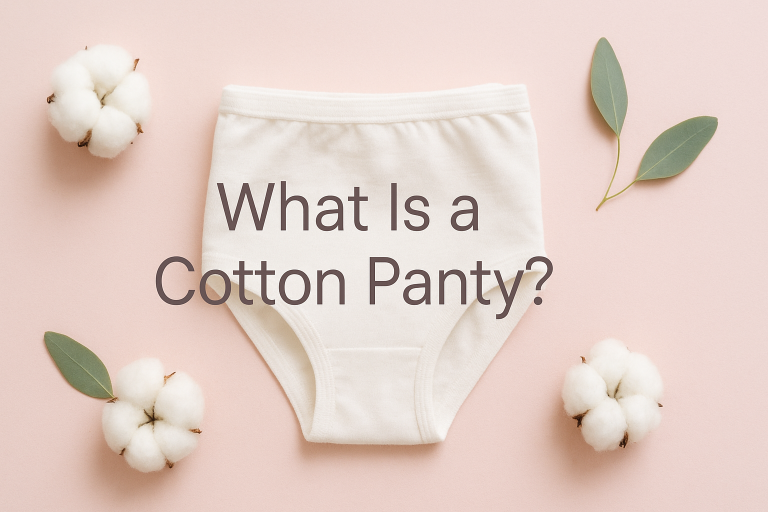
A classic cotton bikini breathes better than synthetic versions for everyday wear, making it the first choice for women who experience moisture sensitivity. Choose bikini cut as your baseline everyday style and use it as the reference point when trying other cuts.
Brief Underwear: Maximum Coverage and All-Day Comfort
Briefs cover 90 to 100 percent of the seat with a waistband that sits at mid-rise to high-rise, typically 1 to 3 inches above the hip bone. The American College of Obstetricians and Gynecologists (ACOG) identifies full-coverage underwear as the preferred style during pregnancy and the postpartum recovery period because the higher waistband does not press on a C-section incision or an expanding abdomen.
Full-coverage women’s briefs distribute waistband pressure across a larger surface area, reducing the elastic dig that affects narrower waistbands after long periods of sitting. The flat rear panel also eliminates friction for women who experience skin sensitivity or chafing.
Key Specifications:
- Back coverage: 90-100% of the seat
- Waistband height: 1.5 to 3 inches above the hip bone
- Typical inseam: none (full-panel cut, no short leg)
- Common fabrics: 100% cotton, or 95% cotton/5% elastane
- Standard sizing range: XS to 4X
Briefs are not limited to postpartum or medical contexts: many women prefer them as their primary everyday style because full coverage reduces repositioning throughout the day. The brief is the most practical high-coverage choice for all-day wear across any activity level.
Boyshorts: Full Coverage with a Short-Leg Cut
Boyshorts extend a short leg panel (typically 1 to 2.5 inches) below the seat, covering the full rear and the upper thigh. This leg extension prevents ride-up during movement, making boyshorts a preferred choice for yoga, Pilates, and loungewear according to activewear fit testers at consumer review platform Wirecutter.
Boyshort underwear works especially well under mini skirts and short dresses because the leg panel prevents accidental exposure. The flat, full rear panel also eliminates visible panty lines under fitted knit fabrics more reliably than bikini cut.
Key Specifications:
- Back coverage: 100% of the seat plus 1 to 2.5-inch leg panel
- Waistband height: low to mid-rise, sitting at the hip bone
- Common fabrics: modal, microfiber, cotton-spandex blend
- Leg panel width: 1 to 2.5 inches depending on brand
- Available in sizes XS through 3X
Modal-fabric modal boyshorts are notably softer than cotton versions and retain their shape through repeated washing, making them a strong choice for daily wear. Boyshorts deliver the most stay-put coverage of any non-shapewear style, which makes them ideal for active daily routines.
Thong Underwear: No-Show Under Fitted Clothing
A thong features a narrow back panel (typically 0.5 to 1 inch wide) that sits between the buttocks, leaving the seat uncovered. This construction eliminates visible panty lines under fitted pants, skirts, and body-con dresses more completely than any other style.
A 2016 study published in the journal Infectious Diseases in Obstetrics and Gynecology found no statistically significant increase in bacterial vaginosis or vulvovaginal candidiasis among thong wearers compared to brief wearers, provided the fabric crotch gusset is made from 100% cotton. Synthetic-crotch thongs carry a higher risk of moisture retention than cotton-gusset versions.
Key Specifications:
- Back panel width: 0.5 to 1 inch
- Waistband height: very low-rise to mid-rise
- Crotch gusset: 100% cotton recommended by gynecologists
- Common outer fabrics: lace, microfiber, nylon-spandex
- Sizing: XS to 3X in most mainstream ranges
Seamless thong underwear with a cotton gusset provides the best combination of no-show discretion and hygiene-conscious construction. A thong is the correct choice specifically for fitted clothing where no other cut achieves a truly smooth silhouette.
G-String Underwear: Minimal Material for Maximum Discretion
A G-string is a more minimal version of the thong: the back panel narrows to a single thin string (less than 0.25 inches wide) rather than a narrow panel, and the front triangle is smaller than a standard thong front. G-strings provide the absolute minimum fabric under a garment.
G-string underwear is best suited for occasions where even a low-rise thong waistband would be visible, such as very low-waist trousers or bodycon evening wear. It is not designed for long-duration wear or high-activity use because the thin string construction offers no structural support and can shift during movement.
Key Specifications:
- Back string width: less than 0.25 inches
- Front panel: smaller than a standard thong (approximately 2 to 3 inches wide)
- Waistband height: very low-rise, sitting below the hip bone
- Common fabrics: lace, satin, microfiber
- Best use duration: short-term occasion wear
Reserve G-strings for specific occasion dressing rather than daily rotation, since the thin construction does not withstand the abrasion of extended daily use. The G-string fills one specific wardrobe need: invisibility under extremely low-rise or figure-hugging garments.
Hipster Underwear: Low-Rise Coverage Without the Thong Trade-Off
Hipster underwear sits at the hip bone (lower than a bikini but higher than a thong) with a wider back panel that covers 70 to 80 percent of the seat. The wider rear panel and low-rise waistband make hipsters a popular choice for low-waist jeans and casual pants where a high waistband would be visible.
The hipster waistband sits approximately 0.5 to 1 inch lower than a bikini waistband, placing it at the widest point of the hips. Hipster panties offer more rear coverage than a cheeky or bikini cut without the higher waist of a full brief.
Key Specifications:
- Back coverage: 70-80% of the seat
- Waistband height: at the hip bone, 0.5 to 1 inch below bikini rise
- Leg opening: straight cut at mid-thigh level
- Common fabrics: cotton-spandex, microfiber, modal
- Available in sizes XS through 3X
A cotton hipster is the best everyday option for women who find the bikini waistband too high or the thong back panel too minimal. The hipster is the natural mid-point between coverage and low-rise profile for everyday casual dressing.
High-Waist Briefs: Core Support and Smooth Silhouette
High-waist briefs extend the front and back panels to sit at or above the navel, typically 2 to 4 inches above the hip bone. This extended waistband provides light abdominal compression, smooths the midsection under fitted clothing, and prevents the waistband from rolling down during movement.
According to fit guidelines published by lingerie brand ThirdLove, a high-waist brief is the most compatible underwear style with high-rise jeans, high-waist skirts, and tucked-in tops because the waistband does not create a visible ridge at the trouser waistband. High-waist underwear also provides consistent postpartum coverage over a C-section scar site, which sits approximately 2 to 3 inches below the navel.
Key Specifications:
- Back coverage: 100% of the seat
- Waistband height: 2 to 4 inches above the hip bone (at or above the navel)
- Front panel height: covers the full lower abdomen
- Common fabrics: cotton-spandex, nylon-spandex, microfiber
- Compression level: light smoothing (non-shapewear version)
Seamless high-waist briefs provide the smoothest silhouette under fitted high-rise bottoms without the compression level of dedicated shapewear. High-waist briefs solve the waistband-visibility problem for high-rise clothing while delivering full seat coverage and light abdominal support.
Cheeky Underwear: Between Bikini and Thong Coverage
Cheeky underwear covers 25 to 40 percent of the seat, leaving the lower portion of the buttocks exposed. The cut falls between a standard bikini (more coverage) and a thong (less coverage), providing a balance that works for women who find thongs uncomfortable but want less fabric than a full bikini back.
The cheeky cut is sometimes labeled “Brazilian cut” by European lingerie brands, referring to the same 25 to 40 percent rear coverage range. Cheeky underwear is particularly popular for swimwear-inspired styling and works well under fitted skirts and dresses where some rear exposure is aesthetic rather than functional.
Key Specifications:
- Back coverage: 25-40% of the seat
- Waistband height: low to mid-rise
- Rear panel: covers the upper seat only, lower portion uncovered
- Common fabrics: lace, microfiber, nylon-spandex
- Available in sizes XS through 2X in most brands
A lace cheeky style provides both aesthetic appeal and a mid-coverage option that avoids the full commitment of a thong. Choose cheeky cut when you want slightly more coverage than a thong but prefer a lighter fabric presence than a standard bikini.
Shapewear Underwear: Smoothing and Light Compression
Shapewear underwear incorporates graduated compression panels (typically 15 to 20 mmHg in the midsection) to smooth the silhouette under fitted dresses, pants, and skirts. It is classified separately from standard underwear because its primary function is shaping rather than coverage or hygiene.
The American Board of Cosmetic Surgery notes that shapewear providing light compression (under 20 mmHg) does not pose circulatory risks for healthy adults in normal daily use. Graduated compression shapewear shorts are the most commonly purchased shapewear silhouette because the thigh coverage prevents fabric from riding up under dresses.
Key Specifications:
- Compression level: 15 to 20 mmHg (light-moderate smoothing)
- Back coverage: 100% of the seat plus thigh coverage (shorts style)
- Waistband height: mid to high-rise
- Common fabrics: nylon-spandex (typically 80% nylon, 20% spandex)
- Available in sizes XS through 4X
A high-waist shapewear short provides the most comprehensive smoothing from waist to mid-thigh, making it the correct choice for body-con or fitted knit dresses. Shapewear underwear earns its place in a wardrobe for specific occasion dressing rather than daily rotation, since sustained compression over eight or more hours can cause discomfort.
Period Underwear: Integrated Menstrual Protection
Period underwear incorporates a multi-layer absorbent gusset that replaces or supplements disposable menstrual products. The absorbent layers typically consist of a moisture-wicking top layer, an absorbent middle layer (often 100% cotton or bamboo), and a leak-resistant outer layer.
Independent testing by consumer safety organization Good Housekeeping Institute found that period underwear brands including Thinx, Knix, and Dear Kate absorbed between 1 and 4 teaspoons of fluid per pair depending on the absorbency level. Light-absorbency styles hold approximately 1 teaspoon (5 ml), equivalent to a standard panty liner. Heavy-absorbency styles hold up to 4 teaspoons (20 ml), equivalent to two regular tampons.
Key Specifications:
- Absorbency range: 5 ml (light) to 20 ml (heavy) per pair
- Gusset layers: 3 to 4 layers of moisture-wicking, absorbent, and leak-resistant fabric
- Back coverage: full brief or boyshort cut
- Waistband height: mid to high-rise
- Care: cold machine wash or hand wash, air dry (no dryer heat)
Period underwear in a high-waist brief cut provides the most coverage and leak protection during heavy flow days. Period underwear reduces single-use product waste and functions as a reliable backup to tampons or menstrual cups, making it a practical addition to any menstrual care routine.
Maternity and Postpartum Underwear: Adaptive Fit Through Body Changes
Maternity underwear is engineered to accommodate an expanding abdomen through the second and third trimesters, while postpartum styles provide coverage over a C-section incision site. ACOG recommends high-waist, full-coverage underwear during the first six weeks postpartum to avoid pressure on the perineum and incision area.
Maternity underwear divides into two sub-types: under-the-bump styles with a low waistband that sits below the growing abdomen, and over-the-bump styles with an extended panel that covers the full belly. Over-the-bump maternity underwear provides light belly support and prevents the waistband from digging into the lower abdomen during sitting.
Under-the-Bump vs. Over-the-Bump Underwear
Under-the-bump styles suit early pregnancy (first and second trimester) when the abdomen has not yet expanded past the hip line. Over-the-bump styles become more comfortable in the third trimester as the belly grows above the natural waistband position.
Use the table below to match your trimester to the correct maternity underwear cut.
| Pregnancy Stage | Recommended Style | Waistband Position | Key Feature |
|---|---|---|---|
| First trimester (weeks 1-13) | Standard high-waist brief | At navel | No specialized panel needed yet |
| Second trimester (weeks 14-26) | Under-the-bump maternity | Below bump | Soft, non-elasticized waistband |
| Third trimester (weeks 27-40) | Over-the-bump maternity | Above bump | Extended stretch belly panel |
| Postpartum (first 6 weeks) | High-waist postpartum brief | Covers incision (if C-section) | Soft, seam-free construction |
As your body changes trimester by trimester, matching the underwear style to the belly position prevents the discomfort of elastic pressing on sensitive abdominal tissue.
Sports and Performance Underwear: Function-First Construction
Sports underwear is engineered with moisture-wicking fabrics (typically 88 to 92% polyester or nylon with 8 to 12% spandex) and flat or bonded seams that eliminate chafing during high-repetition movement. Standard cotton underwear retains moisture during exercise, which can increase friction and bacterial growth on the skin surface.
A 2019 study published in the Journal of Athletic Training found that moisture-wicking underwear reduced skin surface moisture by 34% compared to 100% cotton briefs during moderate-intensity exercise lasting 45 minutes. Moisture-wicking women’s underwear in a bikini or brief cut is the most versatile performance option for running, cycling, and gym training.
Seamless vs. Flat-Seam Sports Underwear
Seamless sports underwear is cut from a continuous fabric tube with no stitched seams on the sides or rear, eliminating the primary friction point during repetitive movement. Flat-seam construction uses a heat-bonded or ultrasonically welded seam that lies flat against the skin rather than creating a raised ridge.
Both constructions outperform standard sewn seams during exercise, but seamless seamless performance underwear is more suitable for yoga and Pilates (where the fabric stretches in multiple directions), while flat-seam styles provide more structural hold during high-impact activities like running.
Key Specifications (Sports Underwear):
- Fabric composition: 88-92% polyester or nylon, 8-12% spandex
- Seam type: seamless or flat/bonded seam
- Moisture management: wicking finish, quick-dry construction
- Gusset: 100% cotton or moisture-wicking liner
- Machine wash: yes, cold water cycle recommended
Performance underwear is a non-negotiable replacement for cotton during any workout lasting more than 20 minutes, because prolonged moisture contact increases friction-related skin irritation by a measurable margin. Match the seam construction to the activity type for the best performance outcome.
Fabric Guide for Women’s Underwear
The fabric composition of underwear determines breathability, moisture management, durability, and skin sensitivity response. Gynecologists universally recommend 100% cotton or cotton-gusset construction for the crotch panel regardless of the outer fabric type, because cotton allows air circulation and absorbs rather than traps moisture.
Use the table below to select the correct fabric for your daily wear pattern and sensitivity level.
| Fabric | Breathability | Moisture-Wicking | Best For | Wash Care |
|---|---|---|---|---|
| 100% Cotton | High | Low (absorbs, holds) | Sensitive skin, daily wear | Machine wash warm |
| Modal | High | Medium | Softness-priority daily wear | Machine wash cold |
| Bamboo | High | Medium | Eco-conscious, sensitive skin | Machine wash cold, gentle |
| Microfiber (Nylon) | Low-medium | High | No-show under fitted clothing | Machine wash cold |
| Polyester-Spandex | Low | Very high | Sports and active wear | Machine wash cold, no fabric softener |
| Lace (Nylon base) | Medium (open weave) | Low | Occasion wear, aesthetic | Hand wash or delicate cycle |
Regardless of outer fabric type, a 100% cotton gusset is the single most important construction feature for vulvar health, confirmed by dermatologist guidance published by the American Academy of Dermatology. Fabric selection determines long-term skin health outcomes as much as style selection determines comfort and fit.
Here is the interactive underwear style finder to help you match your daily activity and coverage priority to the right cut in seconds.
Interactive Finder
Find the Right Underwear Style for You
Answer 2 questions to get a personalized recommendation based on your primary need and coverage preference.
How to Build a Functional Underwear Wardrobe
A functional women’s underwear wardrobe covers four use categories: everyday wear, active wear, occasion wear, and specialty needs (period protection, maternity, or shapewear). Lingerie fit experts at Nordstrom recommend a minimum of 14 pairs in daily rotation to avoid elastic degradation from washing the same pairs too frequently.
Elastic in underwear waistbands degrades by approximately 20% per 50 machine wash cycles when washed in hot water, according to textile durability testing published by the American Association of Textile Chemists and Colorists (AATCC). Cold-water washing and air drying extend the functional life of each pair by 30 to 40% compared to hot wash and machine dry cycles.
Recommended Wardrobe Mix by Category
Use the table below to allocate your wardrobe across the four core underwear categories based on your lifestyle.
| Category | Recommended Styles | Pairs in Rotation | Fabric Priority |
|---|---|---|---|
| Everyday | Bikini, brief, hipster, high-waist | 7-10 pairs | Cotton or modal |
| Active Wear | Seamless thong, boyshorts, performance bikini | 3-4 pairs | Polyester-spandex, nylon-spandex |
| Occasion | Seamless thong, G-string, cheeky, shapewear | 2-3 pairs | Microfiber nylon, lace (cotton gusset) |
| Specialty | Period underwear, maternity, postpartum brief | 2-4 pairs as needed | Cotton, bamboo, nylon-spandex |
A 14-pair rotation across these four categories, washed in cold water and air dried, provides the most cost-efficient long-term wardrobe because it prevents elastic degradation while covering every outfit and activity need. Building from everyday basics outward is the most practical approach to a complete underwear wardrobe.
How to Choose the Right Size
Women’s underwear is sized by hip measurement in inches or centimeters, not by bra band size. The hip measurement is taken at the fullest point of the seat, typically 7 to 9 inches below the natural waist. Sizing standards vary by brand: a size Medium at one brand may correspond to a size Large at another, even for the same hip measurement.
The Intimate Apparel Association recommends measuring hips with a flexible tape measure held parallel to the floor, with feet together and no clothing on, to get the most accurate baseline measurement. Most brands size their underwear on the following hip measurement ranges:
- XS: Hip 32 to 34 inches (81 to 86 cm)
- S: Hip 34 to 36 inches (86 to 91 cm)
- M: Hip 36 to 38 inches (91 to 97 cm)
- L: Hip 38 to 41 inches (97 to 104 cm)
- XL: Hip 41 to 44 inches (104 to 112 cm)
- 2X: Hip 44 to 47 inches (112 to 119 cm)
- 3X: Hip 47 to 50 inches (119 to 127 cm)
When your measurement falls at the top of one size range or the bottom of the next, size up rather than down: underwear that is too small creates waistband pressure and leg-band indentation, while underwear that is one size larger simply fits more loosely without structural consequences. Accurate hip measurement is the single most reliable way to avoid the most common underwear fit complaints.
Care Instructions That Extend Underwear Life
Machine washing underwear in warm or hot water (above 105 degrees Fahrenheit) accelerates elastic fiber breakdown and causes cotton fibers to shrink by up to 5% per wash cycle, according to textile care guidelines published by the AATCC. Cold water washing (60 to 80 degrees Fahrenheit) preserves both elastic integrity and fabric dimensions over the full lifespan of each pair.
Hand washing with a lingerie-specific detergent in cool water extends the life of lace, microfiber, and delicate fabric underwear by reducing mechanical abrasion. A mesh lingerie wash bag placed inside the machine drum provides a practical alternative to hand washing for everyday cotton styles, protecting lace edges and thin elastic from catching on other garments.
- Cotton and modal styles: Machine wash cold, gentle cycle, air dry or tumble dry low
- Microfiber and nylon styles: Machine wash cold, no fabric softener (softener coats moisture-wicking fibers), air dry
- Lace and delicate styles: Hand wash in cool water with lingerie detergent, lay flat to dry
- Period underwear: Cold rinse immediately after wear, then machine wash cold, air dry only (no dryer heat, which damages leak-resistant layers)
- Shapewear: Hand wash or machine wash cold in a mesh bag, air dry flat to preserve compression panel structure
Proper care doubles the functional lifespan of most underwear styles compared to standard machine washing in warm water with a standard detergent. Treating underwear as a delicate garment class pays off in preserved fit and fabric quality over time.
Frequently Asked Questions About Types of Underwear for Women
What is the most comfortable type of underwear for everyday wear?
Full-coverage cotton briefs or modal boyshorts are the most comfortable options for all-day everyday wear, according to fit feedback compiled by consumer underwear review platform Wirecutter. Both styles distribute waistband pressure over a larger surface area, cover the full seat to prevent fabric shift, and use natural or semi-synthetic fibers that allow air circulation. A 100% cotton brief or a modal boyshort in size M or L retains its shape through 50 or more wash cycles when laundered cold.
What underwear is best for wearing under leggings?
A seamless thong or a seamless bikini in microfiber nylon-spandex is the best choice under leggings because neither creates a visible fabric ridge through the thin knit fabric. Seamless construction eliminates the rear seam that shows through fitted activewear. A cotton-gusset seamless thong in the 88% nylon/12% spandex construction provides moisture management for active use while maintaining the no-show profile required under leggings.
What type of underwear do gynecologists recommend?
Gynecologists at the Cleveland Clinic and the American College of Obstetricians and Gynecologists recommend underwear with a 100% cotton crotch gusset for daily wear, regardless of the outer fabric type. Cotton allows moisture evaporation and reduces the warm, moist conditions that support bacterial and yeast overgrowth. Beyond the gusset material, gynecologists recommend avoiding tight waistbands or leg bands that create skin occlusion, and changing out of wet or sweaty underwear promptly after exercise.
How is a thong different from a G-string?
A thong has a back panel that is approximately 0.5 to 1 inch wide, while a G-string narrows to a single string of less than 0.25 inches. Both styles leave the seat exposed, but the thong’s slightly wider back panel provides more structural stability and stays in position more reliably during daily movement. A G-string is more appropriate for very low-rise occasion wear where even a thong waistband would be visible, rather than for regular daily use.
What is the difference between boyshorts and bikini underwear?
Boyshorts extend a short leg panel of 1 to 2.5 inches below the seat, covering the upper thigh in addition to the full rear. Bikini underwear cuts straight across the seat at the top of the thigh without a leg panel. Boyshorts prevent ride-up and thigh friction during movement, making them better suited for active use and wear under short skirts, while bikini styles are more compact and versatile for most everyday clothing types.
How many pairs of underwear should a woman own?
Lingerie fit advisors at Nordstrom and the Intimate Apparel Association recommend a minimum rotation of 14 pairs for women in daily use, sufficient to wash pairs every 1 to 2 days without rewearing or over-washing any single pair. A rotation of 14 pairs distributed across everyday, active, occasion, and specialty categories provides full wardrobe coverage while preventing the elastic degradation that results from washing the same pairs daily. Most adult women maintain practical wardrobes of 14 to 25 pairs.
What type of underwear is best for sensitive skin?
Underwear made from 100% organic cotton or bamboo-derived viscose fabric is best for women with sensitive skin or vulvar dermatitis, according to guidelines from the American Academy of Dermatology. Both fabrics minimize synthetic dye exposure, allow air circulation, and avoid the residual surfactants present in some microfiber finishes. A tagless, flat-seam construction further reduces mechanical irritation at the waistband and leg openings for women whose skin reacts to repetitive friction.
Every woman’s underwear wardrobe functions best when it matches the style, fabric, and size to the specific clothing and activity it supports. Start with a foundation of well-fitted cotton briefs or bikinis for everyday wear, add performance styles for active use, and select seamless no-show cuts for fitted occasion clothing. Accurate hip measurement, cold-water washing, and air drying are the three habits that protect both fit and fabric quality over the full life of your collection.