What Is a Hi-Cut Panty: Complete Guide to Fit & Comfort
A hi-cut panty, also called a high-cut brief or high-leg panty, is a style of underwear with leg openings that sit higher on the hip, typically reaching the natural waist or just below it. The raised cut creates a longer, leaner line on the leg while providing full rear coverage and moderate front coverage. Readers who want to understand exactly how hi-cut panties differ from other styles, which body types they flatter most, and how to choose the right fabric and fit will find every answer below.
What Is a Hi-Cut Panty and How Does It Differ from Other Styles
A hi-cut panty is defined by its leg opening, which rises to the upper hip or natural waist rather than sitting at the mid-hip or bikini line. This elevated leg cut distinguishes it immediately from bikini panties, which sit roughly 1 to 2 inches below the natural waist, and from brief panties, which have a lower, more rounded leg opening.
The leg opening on a hi-cut panty typically sits between 3 and 5 inches above the natural leg crease. This measurement is what separates a true hi-cut from a standard brief or a high-waist style.
Hi-cut panties belong to the broader category of full-coverage underwear. They are a specific type within that category, defined by their leg geometry rather than their waistband height alone.
The style is a holonym that contains several component elements: the waistband, the front panel, the rear panel, and the leg bands. Each component contributes to the overall silhouette and fit experience.
Hi-cut panties differ from thongs in that they provide complete rear coverage. They differ from boyshorts in that they have a narrower, higher leg opening rather than a short-leg cut that follows the thigh. They differ from hipster panties in that hipsters sit lower on the hip with a wider, lower leg opening.
Use the table below to compare hi-cut panties against the four most common alternative styles.
| Style | Waistband Position | Leg Opening Height | Rear Coverage | Best For |
|---|---|---|---|---|
| Hi-cut brief | Natural waist to just below | High hip (3-5 inches above leg crease) | Full | Elongating leg line, smooth layering |
| Bikini | 1-2 inches below natural waist | Mid-hip | Moderate | Everyday wear, low-rise bottoms |
| Brief | Natural waist | Mid-thigh to upper hip (rounded) | Full | Maximum comfort, medical use |
| Boyshort | Hip to natural waist | Low, follows thigh | Full, with leg coverage | Active wear, sleeping |
| Thong | Hip to natural waist | High hip | Minimal | Eliminating visible panty lines |
The hi-cut brief is the only style that combines full rear coverage with a high leg opening, which is what creates its signature elongating visual effect on the leg.
Understanding exactly where the leg opening sits is the single most useful distinction to keep in mind when shopping for this style.
The Physical Characteristics That Define a Hi-Cut Panty
Hi-cut panties share a consistent set of physical features that determine their fit, function, and appearance under clothing. The leg opening height is the primary defining characteristic, but four additional structural elements shape how this style wears throughout the day.
Leg Opening Geometry and Cut Angle
The leg opening of a hi-cut panty follows a diagonal cut that angles sharply upward from the inner thigh toward the hip bone. This diagonal, rather than curved, line is what creates the visual leg-lengthening effect commonly associated with the style.
In a standard brief, the leg opening curves gently from the inner thigh and rounds toward the hip, producing a lower, more horizontal line. In a hi-cut, that curve is replaced by a steeper angle, pulling the fabric higher before it meets the waistband.
The steeper the angle, the more pronounced the visual elongation effect on the leg.
Front Panel Coverage
The front panel of a hi-cut panty provides moderate to full coverage across the abdomen. The waistband typically sits at or just below the natural waist, covering the lower abdomen completely.
Some hi-cut styles feature a wider front panel that extends slightly higher, approaching what is sometimes marketed as a “high-waist hi-cut” hybrid. These versions sit 1 to 2 inches above the natural waist and provide light compression across the lower abdomen, according to fit guides published by major intimate apparel manufacturers including Vanity Fair and Hanes.
Rear Panel Coverage
The rear panel of a hi-cut panty covers the full seat, with fabric extending from the waistband down to the lower curve of the buttocks. This full rear coverage differentiates hi-cut panties from high-cut thongs, which share a similar leg opening height but provide minimal rear coverage.
Rear panel depth in hi-cut panties typically measures between 5 and 7 inches from waistband to the lowest point of the seat, depending on the wearer’s size.
Waistband Construction
Hi-cut panties are manufactured with three common waistband constructions: a standard elastic band (typically 0.5 to 1 inch wide), a fold-over fabric waistband for softer contact, and a seamless knitted edge with no separate elastic.
The seamless knitted-edge construction is most common in nylon and microfiber hi-cut styles. The standard elastic band is most common in cotton-blend versions. According to fit testing data from Consumer Reports, seamless waistbands reduce visible panty lines (VPL) under fitted clothing compared to standard elastic waistbands.
Gusset Design
The gusset in a hi-cut panty is the reinforced fabric panel sewn into the crotch area. Most hi-cut panties use a rectangular gusset measuring approximately 2.5 to 3.5 inches wide and 3 to 4 inches long.
Gusset fabric is nearly always 100% cotton in mainstream hi-cut styles, even when the outer shell is nylon, polyester, or microfiber. The cotton gusset maintains breathability and meets the recommendation from the American College of Obstetricians and Gynecologists (ACOG) that women choose underwear with a cotton crotch to reduce moisture retention.
The gusset width and attachment method affect comfort significantly, and choosing a hi-cut with a wide, flat-sewn gusset reduces bunching during movement.
Fabrics Used in Hi-Cut Panties and What Each Offers
Hi-cut panties are manufactured in five primary fabric categories, each with distinct performance characteristics for comfort, durability, moisture management, and care requirements. Fabric choice affects how the hi-cut style functions against the body throughout the day.
Cotton and Cotton-Blend Hi-Cut Panties
Cotton hi-cut panties are the most widely sold version of this style in the United States. Pure cotton (100% cotton) or cotton-blend versions (typically 95% cotton, 5% elastane) provide natural breathability and moisture absorption.
Cotton absorbs up to 27 times its weight in water, making it effective at managing light daily moisture, according to textile research published by the American Fiber Manufacturers Association. The addition of 5% elastane (spandex) improves stretch recovery and prevents sagging at the leg bands after repeated washing.
Cotton hi-cut panties are the recommended choice for women managing yeast infections or bacterial vaginosis, based on guidelines from the American Academy of Dermatology, which notes that breathable, natural-fiber underwear reduces the warm, moist conditions that encourage pathogen growth.
Key Specifications:
- Fabric composition: 95% cotton, 5% elastane (most common blend)
- Moisture absorption: up to 27x fabric weight (cotton)
- Stretch recovery: good with elastane addition
- Care: machine washable, cold cycle
- Price range: $6 to $18 per pair
Nylon and Microfiber Hi-Cut Panties
Nylon and microfiber hi-cut panties are manufactured from synthetic fibers that create a smooth, lightweight surface ideal for wearing under fitted clothing. Microfiber typically refers to a nylon or polyester fabric with fibers measuring less than 1 denier in diameter, producing a surface smoother than standard nylon.
Microfiber hi-cut panties reduce visible panty lines more effectively than cotton versions because the thinner fabric creates fewer ridges under clothing. Brands including Maidenform and Vanity Fair produce microfiber hi-cut microfiber panties specifically marketed for seamless layering under dresses and pants.
Key Specifications:
- Fabric composition: 88-92% nylon, 8-12% spandex (typical)
- Surface texture: ultra-smooth, low-profile under clothing
- Moisture wicking: moderate (less absorbent than cotton)
- Care: hand wash or delicate machine cycle recommended
- Price range: $8 to $22 per pair
Lace and Lace-Trim Hi-Cut Panties
Lace hi-cut panties use a nylon or polyester lace fabric for the outer shell, with a cotton gusset sewn in separately. Full-lace construction means the entire front and rear panel consists of lace fabric, while lace-trim versions combine a smooth microfiber or cotton body with lace panels at the waistband or leg openings.
Full-lace lace hi-cut panties provide a dressier aesthetic suitable for special occasions or as coordinating pieces with lace bras. The lace construction does reduce breathability compared to cotton or seamless nylon versions.
Key Specifications:
- Shell fabric: 90% nylon, 10% spandex lace (typical)
- Gusset: 100% cotton
- Breathability: moderate (lower than cotton shell)
- Care: hand wash cold, lay flat to dry
- Price range: $12 to $35 per pair
Modal and Bamboo Hi-Cut Panties
Modal is a semi-synthetic fiber made from beech tree pulp, processed to create a fabric softer than cotton with better moisture-wicking properties. Modal hi-cut panties are approximately 50% more moisture-absorbent than cotton, according to data published by Lenzing AG, the primary global manufacturer of modal fiber.
Bamboo-derived fabrics (technically bamboo viscose or bamboo rayon) share similar softness characteristics with modal and are marketed as a sustainable option. Both modal and bamboo hi-cut panties are well-suited for women with sensitive skin because neither fiber uses harsh chemical finishes in standard production.
Key Specifications:
- Fabric composition: 95% modal or bamboo viscose, 5% elastane
- Moisture absorption: 50% higher than cotton (modal)
- Softness: significantly softer hand feel than standard cotton
- Care: machine wash cold, gentle cycle
- Price range: $14 to $30 per pair
Seamless and No-Show Hi-Cut Panties
Seamless hi-cut panties are knitted as a single piece using circular knitting technology, eliminating sewn seams at the leg openings and side panels. The absence of seams reduces the ridges that create visible panty lines under thin or fitted outer garments.
Seamless construction uses a nylon-spandex blend (typically 87% nylon, 13% spandex) that provides four-way stretch for ease of movement. The seamless hi-cut panty is the most frequently purchased style for wearing under bodycon dresses, leggings, and tailored trousers.
Key Specifications:
- Construction: circular-knit seamless (zero sewn seams at leg or sides)
- Fabric: 87% nylon, 13% spandex (typical)
- Four-way stretch: yes
- VPL reduction: highest of all hi-cut construction types
- Price range: $10 to $28 per pair
Fabric choice is the single biggest factor in daily comfort, and matching fabric to your primary activity or concern, whether that is breathability, smoothness under clothes, or softness against sensitive skin, will determine how satisfied you are with the hi-cut style over time.
Body Types That the Hi-Cut Panty Flatters and Why
The hi-cut panty’s high leg opening creates a visual lengthening effect on the leg by drawing the eye upward along the thigh. This geometric effect makes the hi-cut one of the most universally flattering underwear styles, but its benefits are especially pronounced for specific body proportions.
How the Hi-Cut Elongates the Leg Visually
The visual elongation effect of a hi-cut panty works through the principle of interrupted negative space. When the leg opening sits high on the hip, it extends the visible skin of the thigh upward, creating the perception of a longer leg. This effect is well-documented in fashion design literature and is the same principle used in high-cut swimwear and high-rise shorts.
The effect is most visible when wearing the hi-cut panty without outer garments, such as under a robe or swimsuit cover-up, but the structural benefit of the high leg opening also affects how fitted clothing drapes over the hip and thigh.
Proportions That Benefit Most from the Hi-Cut Style
Women with shorter torsos benefit from the hi-cut style because the raised leg opening visually lengthens the lower body relative to the upper body. A bikini or hipster panty creates a horizontal line at mid-hip that can visually shorten the leg and trunk; the hi-cut eliminates this horizontal interruption.
Women with fuller thighs benefit from the hi-cut’s diagonal cut angle, which avoids cutting into the thigh at its widest point. A mid-rise style with a lower leg opening may press against fuller thighs and create visible indentation lines under clothing. The hi-cut bypasses this area entirely.
Women with narrow hips benefit from the hi-cut because the high leg opening creates the visual impression of a wider hip-to-waist ratio by drawing attention to the upper hip rather than the mid-hip.
When Other Styles May Work Better
Women with longer torsos and proportionally shorter legs may find that low-rise bikini or hipster styles work better for them, because the lower cut keeps visual weight at the hip rather than emphasizing the length of the torso. The hi-cut’s high waistband can visually increase torso length, which may not suit every preference.
Women with very wide or prominent hip bones sometimes find that the diagonal leg cut of a hi-cut panty sits against the hip bone rather than lying flat, causing discomfort or gapping. In this case, a softer-waistband hi-cut in a stretchy microfiber may solve the fit issue.
The hi-cut style flatters the widest range of body types of any underwear style precisely because its high leg opening works with natural body geometry rather than against it, and most wearers find they can identify their preferred version within one or two fabric and sizing trials.
How to Find Your Correct Size in Hi-Cut Panties
Hi-cut panties are sized using waist and hip circumference measurements. Unlike bras, which require two separate measurements (band and cup), panty sizing uses hip circumference as the primary fit variable, with waist circumference as a secondary check.
Taking Accurate Measurements
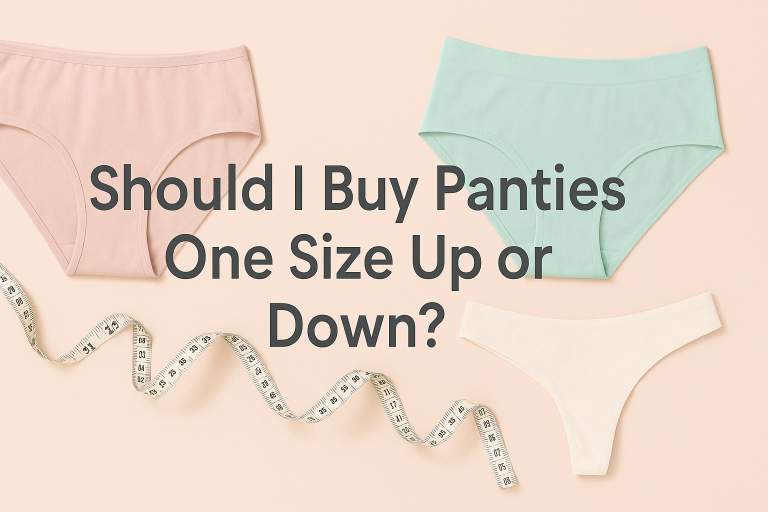
Use a flexible fabric measuring tape to measure two body points. First, measure your natural waist: the narrowest part of your torso, typically 1 to 2 inches above your belly button. Second, measure your hips: the fullest part of your seat, typically 7 to 9 inches below your natural waist.
Stand with feet together and measure each point with the tape parallel to the floor and snug but not compressing the skin. Record both measurements in inches.
Take both measurements twice to verify consistency. A difference of more than 0.5 inch between readings usually means the tape was not held level.
Matching Measurements to Size Charts
Use the table below to match your hip measurement to the standard US panty size range used by most major brands.
| US Panty Size | Hip Circumference (inches) | Waist Circumference (inches) | Numeric Size Equivalent |
|---|---|---|---|
| XS | 33-35 | 24-26 | 4-6 |
| S | 35-37 | 26-28 | 6-8 |
| M | 37-39 | 28-30 | 8-10 |
| L | 39-41 | 30-32 | 10-12 |
| XL | 41-43 | 32-34 | 12-14 |
| 2X | 43-46 | 34-37 | 14-16 |
| 3X | 46-49 | 37-40 | 16-18 |
When your waist and hip measurements fall into different size categories, size up to accommodate the larger measurement. A waistband that is too tight will roll or dig in; a leg band that cuts into the hip will be uncomfortable and create visible lines under clothing.
Fit Indicators to Check When Trying On Hi-Cut Panties
The waistband should lie flat against the skin without rolling outward or digging inward. Run two fingers under the waistband: it should feel snug but not restrictive.
The leg bands should not pull or gap. If the leg band pulls toward the inner thigh during movement, the size is too small. If it gaps and shifts away from the skin, the size is too large or the cut is wrong for your hip shape.
The rear panel should cover the full seat without pulling up, bunching, or riding. If the rear fabric consistently rides up, the rise (the vertical distance between waistband and gusset) is too short for your body proportions, and a different brand’s cut may fit better even in the same size.
Accurate measurement and checking all three fit indicators together ensures you select a hi-cut panty that stays comfortable throughout a full day of wear.
How Hi-Cut Panties Compare to High-Waist, Bikini, and Thong Styles
Hi-cut panties occupy a specific position in the underwear spectrum, offering more coverage than a bikini and more leg visibility than a full brief, while sitting below the high-waist style in terms of abdominal coverage. Understanding where each style falls helps clarify which scenarios each one serves best.
Use the table below to compare these four styles across the factors most relevant to everyday decision-making.
| Feature | Hi-Cut Brief | High-Waist Brief | Bikini | Thong |
|---|---|---|---|---|
| Waistband position | Natural waist to just below | 1-2 inches above natural waist | 1-2 inches below natural waist | Hip to natural waist |
| Leg opening | High hip (elongating) | Mid to upper hip (rounded) | Mid-hip | High hip |
| Abdominal coverage | Moderate (lower abdomen) | Full (lower and mid abdomen) | Low (hip only) | Hip only |
| Rear coverage | Full | Full | Moderate | Minimal (single strip) |
| VPL risk under clothes | Low (with seamless version) | Moderate | Low to moderate | Lowest |
| Best use case | Dresses, skirts, everyday layering | High-rise jeans, post-surgical, light shaping | Low-rise bottoms, casual daily wear | Bodycon, sheer, or fitted outer garments |
| Price range | $6-$35 | $10-$40 | $5-$25 | $6-$30 |
The high-waist brief and the hi-cut brief are often confused because both sit at or near the natural waist, but the high-waist style uses a rounded, lower leg opening and extends higher on the abdomen, while the hi-cut uses a raised, diagonal leg opening and does not extend above the natural waist.
The thong shares the hi-cut’s high leg opening position but provides no rear coverage, making it the right choice specifically when rear panty lines are the primary concern, rather than when coverage or comfort are priorities.
The hi-cut brief is the best single-style choice for women who want full rear coverage combined with a leg-elongating silhouette and the ability to wear the style under both fitted and loose outer garments without visible panty lines.
When to Wear a Hi-Cut Panty and When to Choose Something Else
Hi-cut panties work well across a wide range of outfit and activity scenarios, but specific situations call for other styles to perform better. Knowing where the hi-cut excels and where it falls short prevents the common problem of underwear that feels wrong before the day is half over.
Outfits Where Hi-Cut Panties Perform Best
Hi-cut panties perform best under midi and maxi dresses, A-line skirts, and tailored trousers. The high leg opening means the panty fabric sits above the hemline of most dress slits and does not bunch under skirt fabric that drapes across the upper thigh.
Under high-rise jeans and trousers, a hi-cut panty in a seamless microfiber construction lies flat because both the panty waistband and the trouser waistband sit at a similar height, eliminating the bunching that occurs when a low-rise panty waistband is compressed by a higher-rise trouser waistband.
Fitted athleisure styles, including yoga pants and leggings, pair well with seamless seamless hi-cut underwear because the high leg opening reduces the chance of panty lines across the rear or inner thigh.
Situations Where Another Style Is the Better Choice
Very low-rise jeans (sitting 3 or more inches below the natural waist) pair poorly with hi-cut panties, because the hi-cut waistband sits significantly above the trouser waistband and is visible above the back of the jeans. A low-rise bikini or hipster panty is the correct choice for very low-rise bottoms.
Backless or open-back dresses create the same problem: a hi-cut waistband that sits at the natural waist is visible when the back of the garment is open. A thong or low-back adhesive style resolves this.
For high-intensity athletic activity, such as running or cycling, the hi-cut style does not provide the compressive leg grip that boyshorts or tight athletic briefs offer. Movement can cause the leg band to shift, which is uncomfortable during extended activity. A fitted athletic boyshort or sports brief is more appropriate for high-movement workouts.
Post-Surgical and Postpartum Considerations
Women recovering from cesarean section (C-section) delivery are often advised by their obstetric care providers to wear underwear with a waistband that sits either well above or well below the incision site to avoid pressure on the healing wound. ACOG notes that high-waist or hi-cut styles that sit above the incision are preferred by many women in the early postpartum recovery period because the fabric does not press directly on the horizontal incision line typically made 1 to 2 inches above the pubic bone.
However, individual incision placement varies, and some women find that a hi-cut panty waistband still contacts the incision area. A medical-grade C-section recovery underwear designed with an adjustable panel is a more reliable option during the first 4 to 6 weeks post-surgery.
Matching your underwear style to your actual outfit and activity requirements each day, rather than defaulting to one style for all occasions, is the most practical way to maximize comfort across your wardrobe.
Care and Longevity of Hi-Cut Panties
Hi-cut panties last longest when washed according to the fabric type rather than following a generic laundry routine. The leg band elastic, gusset attachment seams, and waistband elastic are the three components most vulnerable to premature degradation from incorrect care.
Washing Instructions by Fabric Type
Cotton and cotton-blend hi-cut panties tolerate machine washing on a cold or warm cycle (below 104 degrees Fahrenheit or 40 degrees Celsius) in a mesh lingerie wash bag. Hot water (above 140 degrees Fahrenheit) accelerates elastic breakdown and causes cotton fibers to shrink. Tumble dry on low or hang to dry. Avoid high-heat dryer cycles.
Nylon and microfiber hi-cut panties should be washed in cool water (below 86 degrees Fahrenheit or 30 degrees Celsius) on a delicate machine cycle or by hand. High heat weakens nylon fibers and causes pilling. Line or flat drying is preferable to machine drying for all synthetic-fabric styles.
Lace hi-cut panties require hand washing in cool water with a gentle lingerie detergent. Machine agitation stretches and snags lace fibers, shortening the garment’s life significantly. Lay flat to dry.
Modal and bamboo hi-cut panties machine wash well on a gentle cycle in cool water but should not be wrung out or twisted, as this distorts the fabric structure. Lay flat or hang to dry.
How Long Hi-Cut Panties Last and When to Replace Them
The general guideline from textile care experts and the American Cleaning Institute is to replace underwear every 6 to 12 months with regular daily wear. However, observable wear indicators are more reliable than a fixed time schedule for determining when a specific pair needs replacement.
Replace a hi-cut panty when any of these indicators appear:
- The waistband no longer returns to its original diameter after stretching (elastic exhaustion)
- The leg band has stretched visibly wider than the original cut, causing gapping
- The gusset fabric is pilling, thinning, or has developed holes
- The fabric color has faded unevenly due to repeated washing
- The waistband rolls outward when worn, indicating the elastic has lost its tension
Rotating between 7 to 10 pairs of everyday hi-cut panties rather than wearing the same 3 to 4 pairs daily extends the lifespan of each pair because elastic recovery time between washes is maximized.
Following fabric-specific care instructions and rotating pairs regularly are the two most effective actions for extending the life of hi-cut panties beyond the average 6-to-12-month replacement window.
Hi-Cut Panties for Different Needs: Everyday, Maternity, Plus-Size, and Sensitive Skin
The hi-cut style is available in versions designed for specific needs and life stages. Each version shares the defining high leg opening and full rear coverage of the standard hi-cut but incorporates construction adjustments for its intended use.
Everyday Hi-Cut Panties
Everyday hi-cut panties are the most widely sold version of the style. They are manufactured in cotton-blend or microfiber fabrics, with minimal decorative elements, at price points between $6 and $18 per pair. Brands including Hanes, Fruit of the Loom, Jockey, and Vanity Fair produce the majority of everyday hi-cut panties sold in the US market.
The everyday category prioritizes durability, wash resistance, and consistent sizing across multi-pack purchases. Multi-packs of 5 to 10 pairs are common and reduce per-unit cost to $4 to $8 per pair. A cotton hi-cut panties multipack from a mainstream brand is the most cost-effective entry point for building a rotation of this style.
Maternity Hi-Cut Panties
Maternity hi-cut panties are constructed with an over-belly panel that extends the front fabric upward to cover the growing abdomen. The panel uses a four-way stretch fabric (typically 80% nylon, 20% spandex) that accommodates belly growth from the first trimester through the third.
ACOG recommends that pregnant women choose underwear in breathable natural or semi-synthetic fabrics to support vaginal health during pregnancy, a recommendation that maternity hi-cut styles in cotton or modal fulfill. Maternity hi-cut underwear is particularly suited to the second and third trimesters, when the growing abdomen makes low-rise styles uncomfortable.
Key Specifications (maternity hi-cut):
- Panel fabric: 80% nylon, 20% spandex (over-belly panel)
- Body fabric: 95% cotton, 5% elastane or modal blend
- Panel height: covers full abdomen through third trimester
- Care: machine wash cold, gentle cycle
- Price range: $14 to $28 per pair
Plus-Size Hi-Cut Panties
Plus-size hi-cut panties are manufactured in sizes 1X through 4X (hip circumferences of 43 to 56 inches) and use the same high leg opening geometry as standard sizes. The fit challenge specific to plus-size hi-cut panties is maintaining the high leg cut without the leg band rolling or cutting into the upper thigh.
Brands that produce well-regarded plus-size hi-cut options include Bali, Warner’s, Vanity Fair, and Elomi. The key construction feature to look for in plus-size hi-cut panties is a leg band with a fabric-covered elastic rather than bare elastic, which reduces friction and rolling at the upper thigh.
Hi-Cut Panties for Sensitive Skin
Women with sensitive skin, vulvar vestibulitis, or chronic skin irritation should prioritize hi-cut panties with three specific construction features: a 100% cotton gusset, a fabric-covered (not bare) waistband elastic, and a fabric composition free of synthetic dyes or finish chemicals on the inner surface.
The National Eczema Association recommends that individuals with eczema or contact dermatitis choose underwear with natural fiber content (cotton, modal, or silk) and avoid nylon or polyester fabric directly against sensitized skin. Modal hi-cut panties or organic cotton sensitive-skin cotton underwear are the two best options in this category.
Whether your priority is everyday durability, pregnancy comfort, inclusive sizing, or skin sensitivity management, a version of the hi-cut style exists that serves the need, and identifying your primary requirement before purchasing narrows the field significantly.
How to Style Hi-Cut Panties Under Different Outfit Types
The styling compatibility of a hi-cut panty depends on two variables: the height of the outer garment’s waistband and the fit of the fabric over the hip and thigh. Getting these two variables right eliminates the most common complaint about this style, which is waistband visibility above low-rise outer garments.
Under Dresses and Skirts
A-line, fit-and-flare, and wrap dresses are the easiest outer garments to pair with hi-cut panties. The flared silhouette of these styles means the outer fabric is not in close contact with the underwear across the hip and thigh, minimizing both VPL and waistband awareness.
Bodycon and pencil dresses require a seamless or no-show hi-cut panty in a thin microfiber or nylon construction. A cotton or lace hi-cut under a bodycon dress creates visible seam ridges across the rear and upper thigh. Seamless construction eliminates this problem.
Midi and maxi skirts with elastic waistbands pair well with hi-cut panties because the outer waistband sits at a similar height to the panty waistband, preventing the two from working against each other.
Under Pants and Trousers
High-rise and mid-rise trousers (waistband sitting at or within 1 inch of the natural waist) pair best with hi-cut panties because the matching waistband heights eliminate the panty-above-trouser visibility problem. This is the single strongest use case for the hi-cut style in everyday professional dressing.
Wide-leg trousers and culottes are forgiving of the hi-cut’s waistband height because the loose fabric drape means waistband visibility is unlikely even if the heights differ slightly.
Low-rise jeans (waistband sitting 3 or more inches below the natural waist) are incompatible with standard hi-cut panties. Opt for a low-rise low-rise bikini underwear or a hipster style for low-rise bottoms.
Under Swimwear and Activewear
Hi-cut panties are not worn under swimwear. Swimwear is designed to function as both the outer garment and the undergarment, and wearing underwear beneath swimsuit bottoms creates moisture retention and hygiene issues.
Under leggings and yoga pants, a seamless hi-cut in a thin nylon-spandex blend provides the least visible outline. The key factor is that the leg opening of the hi-cut panty should not create a ridge line across the outer thigh where the legging fabric is tightest. Trying on the panty-legging combination before relying on it for a workout or public activity is the most reliable way to verify this fit.
Selecting the right construction version of the hi-cut panty for each outer garment type, rather than wearing the same pair under every outfit, is the practical approach that delivers the style’s full benefit across a varied wardrobe.
Frequently Asked Questions About Hi-Cut Panties
What is the difference between a hi-cut panty and a high-waist panty?
A hi-cut panty has a leg opening that rises high on the hip, typically reaching the upper hip or natural waist, creating a diagonal, leg-lengthening line. A high-waist panty has a waistband that extends 1 to 2 inches above the natural waist to provide extra abdominal coverage and light shaping. The high-waist style uses a rounded, lower leg opening similar to a standard brief. The defining difference is where the cut is: hi-cut refers to the leg opening height, while high-waist refers to the waistband height. The two styles can be combined in a “high-waist hi-cut” design, but they describe separate garment features when used individually.
Are hi-cut panties the same as high-cut panties?
Hi-cut panties and high-cut panties are the same style, described with two different spellings of the same term. Both names refer to underwear with a leg opening positioned high on the hip. Manufacturers, retailers, and size charts use both spellings interchangeably. Searching either term on a retail site will return the same category of product. Some brands use “high-leg” as a third alternative name for the same style, which is also equivalent in meaning.
Do hi-cut panties show under clothing?
Hi-cut panties can show visible panty lines under fitted clothing if they are made from thick fabric or have sewn seams at the leg openings and sides. Seamless hi-cut panties in thin microfiber or nylon construction minimize visible panty lines (VPL) significantly. Consumer Reports testing data indicates that seamless underwear constructions reduce VPL compared to seamed styles under fitted outer garments. Choosing a seamless, thin-fabric version and ensuring the correct size (so the fabric lies flat without pulling) are the two factors that most reliably eliminate visible lines under tight dresses, trousers, or leggings.
Can you wear hi-cut panties during pregnancy?
Standard hi-cut panties can be worn during early pregnancy (first trimester) when the abdomen has not yet changed significantly in size. During the second and third trimesters, the waistband of a standard hi-cut panty may press uncomfortably against a growing belly. Maternity hi-cut panties are specifically designed for pregnancy, with an over-belly stretch panel that expands with the abdomen. ACOG recommends breathable, natural-fiber underwear during pregnancy to support vaginal health, a recommendation that maternity hi-cut styles in cotton or modal fulfill. For C-section recovery postpartum, consult your obstetric provider about which waistband height is safest relative to your incision placement.
What body type does a hi-cut panty suit best?
Hi-cut panties suit the widest range of body types of any underwear style because the high leg opening creates a leg-lengthening visual effect that benefits most proportions. Women with shorter torsos benefit most directly, as the raised leg cut visually lengthens the lower body. Women with fuller thighs benefit because the diagonal cut angle sits above rather than across the widest part of the thigh, preventing the indentation lines that lower leg openings can create. Women with narrow hips benefit because the high cut draws the eye to the upper hip, creating the visual impression of a wider hip-to-waist ratio. The style suits petite, average, tall, and plus-size frames equally when the correct size and fabric are chosen.
How do you keep hi-cut panties from riding up?
Hi-cut panties ride up when the rear panel rise (the vertical distance between the waistband and the gusset) is too short for the wearer’s body proportions, or when the leg band elastic has stretched and lost its grip. To address fit-related riding: size up by one size, try a brand with a deeper-cut rear panel, or switch to a cotton-elastane blend (95% cotton, 5% elastane) that recovers its shape after washing. To address elastic wear: replace panties showing visible elastic loosening at the leg bands, as stretched elastic cannot be restored through washing or drying methods. Proper care, including cool-water washing and line drying, slows elastic degradation and extends the period before riding becomes a problem.
Are hi-cut panties good for plus sizes?
Hi-cut panties are well-suited for plus sizes when they are constructed with fabric-covered leg band elastic rather than bare elastic. Bare elastic at the leg opening can roll, dig in, or create pressure marks on fuller upper thighs. Fabric-covered elastic distributes pressure more evenly and reduces friction. Major brands including Bali, Warner’s, Vanity Fair, and Elomi manufacture plus-size hi-cut briefs in sizes up to 3X and 4X with fabric-covered leg bands specifically for this reason. The leg-lengthening visual effect of the hi-cut style is fully present in plus sizes and is often cited by plus-size wearers as a key reason for preferring this style over lower leg opening options.
Conclusion
A hi-cut panty is defined by its high leg opening, which rises to the upper hip and creates a diagonal cut that lengthens the visible leg line and provides full rear coverage. The style is available in cotton, nylon, microfiber, lace, modal, and seamless constructions, each suited to specific comfort, outfit, and lifestyle needs. Start by measuring your hip circumference, matching it to your brand’s size chart, and selecting a seamless microfiber version for fitted clothing and a cotton-blend version for everyday breathable comfort. Choose the fabric and construction that fits your primary need and you will find the hi-cut style works consistently well across a wider range of outfits than almost any other underwear silhouette.


One Comment