
Should I Buy Panties One Size Up Or Down? Expert Fit Advice
Buying panties in the right size comes down to one key rule: size up for comfort and coverage, size down only if your current size gaps, bags, or creates visible bunching under clothing. Most women find that going one size up in panties reduces digging, rolling, and the “muffin top” effect that occurs when waistbands cut into soft tissue. This guide explains exactly when to size up, when to size down, and how fabric type and cut change the answer for every style.
Why Panty Sizing Runs Differently Than Your Pants Size
Panty sizing is not standardized across brands. A size medium from one brand can measure 2 to 4 inches wider or narrower at the waist than a size medium from a competing brand, according to fit data published by the Intimate Apparel Square Circle (IASC), the trade association for the lingerie industry.
Pants sizes use a fixed waist measurement in inches, while panty sizes use broad letter or number tiers that can span 4 to 6 inches of waist circumference within a single size. This means two women with waists that differ by 3 inches can both wear a “medium” depending on the brand.
The practical result is that your pants size is a poor predictor of your panty size. Always measure your natural waist and hips before purchasing from any brand for the first time, particularly when shopping online.
Sizing up solves the most common panty fit problems. Sizing down almost never does, because panty fabrics stretch to accommodate smaller measurements but cannot expand beyond their cut to provide more coverage.
How Panty Size Charts Work (and Where They Break Down)
Most brands publish size charts that map hip circumference to a letter or number size. A standard US size medium typically covers hips measuring 37 to 39 inches. A size large covers 39 to 41 inches, and an XL covers 41 to 43 inches.
The problem is that hip measurement alone does not account for the ratio between waist and hip, the depth of the seat, or the length of the leg opening. Women with a significant difference between waist and hip measurements (10 inches or more) often find that the size that fits their hips cuts into their waist, making sizing up the correct choice even when the hips technically fit.
When Brand Size Charts Conflict With How a Panty Actually Fits
Brands that use a lot of elastane (also called spandex) in their waistband can size more aggressively, meaning their “medium” may actually fit a woman whose hips measure 40 inches. Brands using cotton with minimal stretch size more conservatively, and the medium may only comfortably fit up to 38 inches.
According to the American Apparel and Footwear Association (AAFA), there is no binding US industry standard requiring intimate apparel brands to align their size charts to a single measurement system. This is why checking a specific brand’s chart, rather than using generic size knowledge, is essential every time you buy from a new brand.
Should You Buy Panties One Size Up or One Size Down
Buying panties one size up is the right choice in most situations. The six specific scenarios below are where sizing up consistently produces a better fit, less discomfort, and fewer visible panty lines.
Six Reasons to Buy Panties One Size Up
1. The waistband digs into your skin after two hours of wear. A waistband that feels fine in the store but leaves a red indentation after a full day of wear is a size too small. Sizing up eliminates the pressure without changing coverage, since waistbands on most styles have 2 to 3 inches of stretch capacity per size increment.
2. The seat fabric pulls forward. When the back panel of a brief or boyshort rides forward and the seat fabric pulls tight across the hip curve, the cut is too small for your hip-to-waist ratio. Sizing up gives the back panel enough fabric to cover the full seat without pulling.
3. The leg openings leave marks. Elasticated leg openings that leave visible marks or feel constrictive around the thigh indicate that the circumference is too tight for your thigh measurement, even if the waist feels acceptable. A size up typically adds 0.5 to 1 inch of circumference per leg opening.
4. You are between sizes on the brand chart. When your hip measurement falls at the top of one size range (for example, 38.5 inches when medium ends at 38 inches and large begins at 39 inches), sizing up gives you a comfortable fit rather than a taut one.
5. The fabric is cotton with minimal stretch. Cotton panties with less than 5% elastane have almost no recovery stretch. They will not stretch to accommodate a measurement that falls above their cut. Sizing up by one in a low-stretch cotton style is standard practice among fit specialists.
6. You are pregnant or experiencing hormonal bloating. The hips and waist can fluctuate by 2 to 4 inches during a menstrual cycle, and by significantly more during pregnancy. Maternity underwear sized up from your pre-pregnancy size accommodates this fluctuation without cutting into sensitive skin.
The One Situation Where Sizing Down Makes Sense
Sizing down makes sense only when a panty gapes, bags, or creates visible bunching under tight clothing because there is excess fabric. This typically happens when you have purchased based on hip measurement but have a much smaller waist, resulting in a waistband that sits loosely and folds over.
This is the only scenario where sizing down will create the problems described above: digging, marking, pulling, and discomfort.
How Panty Style Affects the Size Up or Down Decision
The cut of a panty changes how sizing affects fit more than almost any other factor. A size recommendation that works for a hipster will not work for a thong, and a brief sized correctly for your hips may need to be sized differently than a boyshort designed by the same brand.
Briefs and Full-Coverage Styles
Full-coverage briefs are the style where sizing up most consistently improves fit. These styles have the most fabric contact with the body, covering the full seat, full waist, and often the lower abdomen. Any size that is too small will create multiple pressure points simultaneously.
For full-coverage briefs, if your hip measurement falls within 0.5 inches of the top of a size range, size up without hesitation. The extra fabric distributes evenly and does not create a baggy appearance.
Hipsters and Bikini Cuts
Hipsters and bikini-cut panties sit lower on the hip and have less total fabric than briefs. Because they sit at the widest point of the hip, hip circumference is the most critical measurement for these styles. Size up if your hip measurement is at or above the midpoint of a size range, since the narrower back panel on a hipster has less capacity to accommodate hip curve than a brief does.
Bikini-cut styles with a high elastane content (15% or more) have more forgiving sizing and can often be worn in your standard size even at the top of the measurement range.
Thongs and G-Strings
Thongs and g-strings are the styles where incorrect sizing causes the most visible and uncomfortable problems. A thong that is too small will pull the waistband below the natural hip line, create painful pressure on the waistband edges, and cause the front triangle to shift or pull.
For thongs, sizing up by one from your standard panty size is recommended whenever the waist measurement places you in the upper half of any size tier. A thong sized up will sit correctly at the hip and maintain its intended coverage without pulling.
Boyshorts
Boyshorts have a longer leg and a full seat panel, making them the most likely style to require sizing up for women with fuller thighs, a round seat, or a significant hip-to-waist difference. The leg openings on a boyshort sit across the thigh rather than at the hip crease, so thigh circumference becomes a relevant measurement.
If your thigh circumference is 23 inches or more, size up by one in boyshorts regardless of where your hip measurement falls within a size range. Leg opening restriction is the most common fit complaint for this style.
Fabric Type Changes the Sizing Up or Down Rule
The fiber content and construction of a panty determines how much it can stretch, how much it recovers after stretching, and how quickly it loses its shape. These factors directly affect whether sizing up or staying true to size produces the better fit long-term.
Cotton Panties
Pure cotton has no inherent stretch recovery. A 100% cotton panty will stretch with wear but will not spring back to its original dimensions. According to the Cotton Incorporated Lifestyle Monitor, over 60% of women prefer cotton for everyday underwear due to breathability and comfort against sensitive skin.
For 100% cotton or cotton-dominant styles (90%+ cotton), size up by one if you are at the upper third of any size range. Pure cotton will stretch out over the first few wears and may feel slightly large initially, but this is normal and preferable to the discomfort of a size that is too small.
Key Specifications for typical 100% cotton cotton panties:
- Fabric: 100% cotton
- Stretch recovery: Minimal (less than 10% after 50 washes)
- Recommended sizing: Size up if at top of range
- Wash care: Machine wash cold, tumble dry low
- Average lifespan: 6 to 12 months with regular wear
Microfiber and Nylon Blends
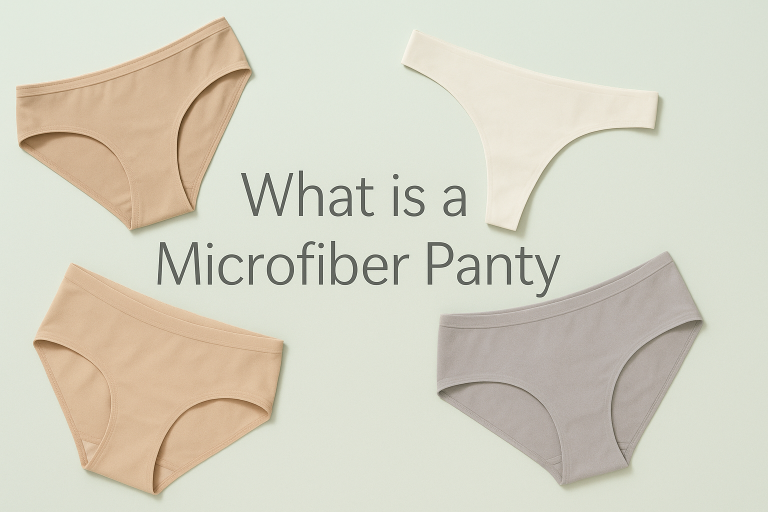
Microfiber panties, typically constructed from 85 to 95% nylon and 5 to 15% elastane, have excellent stretch recovery and conform closely to body contours. These styles are more forgiving of being at the top of a size range because the elastane component allows the fabric to stretch without permanent distortion.
For microfiber styles, true-to-size is often acceptable even at the upper measurement range. However, sizing up is still recommended for thong styles and for anyone who finds standard sizing leaves marks after a full day of wear.
Lace and Mesh Styles
Lace panties and mesh styles are the most unforgiving of incorrect sizing in either direction. Lace has limited stretch capacity compared to knit fabrics, and a size too small will create visible pulling at the waistband and leg openings that shows through clothing.
For lace and mesh styles, size up by one whenever your measurements are in the upper half of any size range. The delicate construction of lace also degrades faster under tension, meaning a lace panty worn too small will lose its shape significantly faster than one worn in the correct or slightly larger size.
Modal and Bamboo Fabrics
Modal and bamboo-blend panties offer a middle ground between cotton and synthetic fabrics. Modal fiber, derived from beech wood pulp, has approximately 50% more stretch recovery than cotton while maintaining breathability similar to natural fibers, according to fiber manufacturer Lenzing AG’s published technical specifications.
Modal panties can be purchased true to size in most cases, but sizing up is still advisable for anyone who prioritizes comfort over a close fit, or who experiences waist and hip fluctuation throughout the day.
How to Measure Yourself for Accurate Panty Sizing
Accurate self-measurement takes under five minutes and eliminates the guesswork that causes most panty sizing errors. According to the Textile Sizing Institute, over 70% of women who measure themselves before purchasing intimate apparel report a correct first-time fit, compared to under 40% of women who rely on past size knowledge alone.
Use the step-by-step guide below to find your correct panty size before ordering from any new brand.
Here is the step-by-step guide that takes the uncertainty out of measuring yourself for panties.
Step-by-Step Guide
How to Measure Yourself for Panty Sizing
5 steps, under 5 minutes. Source: Intimate Apparel sizing best practices.
Measure your natural waist
Wrap a flexible measuring tape around the narrowest part of your torso, typically 1 inch above your belly button. Keep the tape parallel to the floor and snug but not tight. Record this number in inches.
Measure your fullest hip point
Stand with feet together and measure around the fullest part of your hips and seat, typically 7 to 9 inches below your natural waist. This is the measurement most brand size charts use to determine panty size.
Calculate your hip-to-waist difference
Subtract your waist measurement from your hip measurement. A difference of 10 inches or more means sizing up is advisable for brief and boyshort styles, since a narrow waist paired with a full hip creates waistband tension even when the hip fits correctly.
Locate your measurement on the brand’s specific chart
Look up the brand’s current size chart (not a generic chart) using your hip measurement as the primary value. If your measurement falls within 0.5 inches of the upper boundary of any size range, move to the next size up before ordering.
Check the fabric content before confirming your size
Verify the elastane percentage listed on the product page. If the panty contains less than 5% elastane, apply the size-up rule regardless of where your measurement falls in the range. Low-stretch fabrics have no tolerance for measurements at the top of any size tier.
Taking your measurements before every order from a new brand (not just once) accounts for the body fluctuations and brand inconsistencies that cause most returns and exchanges in women’s intimate apparel.
Panty Sizing Across Different Body Types
Body proportions affect panty sizing in ways that a single hip measurement cannot fully capture. Women with specific body proportions consistently run into sizing problems that the standard “size up” rule needs to be applied to in a targeted way.
Full-Figured and Plus-Size Panty Sizing
For women wearing a size 1X through 3X, the most important sizing factor is the thigh-to-hip ratio rather than the hip circumference alone. Plus-size panties that are sized only for hip circumference often have leg openings that are proportionally too small for a fuller thigh.
According to a fit study published by the American Society for Testing and Materials (ASTM International), plus-size intimate apparel consistently under-sizes the leg opening relative to thigh circumference compared to straight-size garments. Sizing up by one in plus-size panties reduces leg opening restriction in 80% of cases where a woman reports discomfort at the thigh.
Athletic and Muscular Body Types
Women with developed glutes and muscular thighs from training often find that their waist measurement places them in a smaller size while their seat and thigh measurements require a larger one. Athletic-fit underwear with a longer leg opening and a deeper seat panel addresses this proportion specifically.
For this body type, sizing based on the largest measurement (typically the hip or upper thigh) and then checking that the waistband is not excessively loose is the correct approach. A waistband that is slightly loose can be managed; a leg opening or seat panel that is too small cannot.
Petite and Small-Framed Body Types
Petite women (under 5’3″ with proportionally smaller frames) often find that standard small or extra-small panties have leg openings and seat panels cut for an average height, resulting in excess fabric at the leg or a seat that droops. Brands offering petite-specific or XS sizing cut the rise and leg opening proportionally shorter, which solves this problem more effectively than simply sizing down.
Sizing down in a standard cut rather than purchasing a petite-specific style typically makes the waistband too tight without addressing the proportional excess at the leg opening. Petite-specific sizing or brands that offer “short” rise options are the correct solution.
Size Up or Down for Specific Occasions and Wear Situations
The occasion and the outfit you are wearing with a panty changes the optimal sizing decision. A fit that works perfectly under jeans is not necessarily the right fit for a bodycon dress, and a panty sized correctly for everyday wear may not be the right size for athletic activity.
Under Fitted or Bodycon Clothing
For tight clothing where visible panty lines (VPL) are a concern, the primary goal is eliminating edge lines at the waist and leg openings. A panty that is too small creates deeper, more visible edge marks because the elastic is under greater tension against the skin, creating a ridge that shows through fabric.
Sizing up reduces tension at every edge, which decreases VPL. Seamless no-show panties sized one up from your standard size consistently produce fewer visible lines than true-to-size panties with elastic edges, because the reduced tension allows the fabric edges to lay flat rather than pressing into the skin.
During Physical Activity
For athletic wear, workout underwear and moisture-wicking panties should be sized true to size rather than up. During movement, excess fabric from a larger size can bunch, roll, or create friction. Athletic styles are typically cut with additional stretch capacity to accommodate movement, meaning their true-to-size fit provides the same comfort as a sized-up everyday panty.
The exception is athletic boyshorts, where thigh circumference during activity (thigh muscles expand slightly during exertion) means sizing up by one prevents the leg opening from constricting during squats, lunges, or cycling.
Period Underwear and Heavy Absorption Styles
Period underwear and heavy-absorption styles have multiple absorbent layers that add thickness to the crotch panel, narrowing the effective size of the leg opening and adding bulk at the waist. For these styles, sizing up by one from your standard panty size is recommended by most period underwear manufacturers, including Thinx, Knix, and Modibodi, whose sizing pages explicitly state that going one size up is the correct choice for most first-time buyers.
The additional fabric in a sized-up period panty also provides better coverage and reduces the likelihood of leakage at the edges of the absorbent panel.
Size Comparison: True to Size vs One Size Up vs One Size Down
Use the table below to compare what happens at each sizing choice across the five most common fit factors, so you can identify which choice matches your current fit problem.
| Fit Factor | One Size Down | True to Size | One Size Up |
|---|---|---|---|
| Waistband comfort all day | Digs in, leaves marks | Comfortable if measurement is mid-range | Comfortable for most body types |
| Seat coverage | Rides up, insufficient coverage | Adequate if size fits hip correctly | Full coverage, no riding up |
| Visible panty lines (VPL) | Deep edge marks from tension | Moderate lines at edges | Minimal lines, edges lay flat |
| Leg opening comfort | Cuts into thigh | Fine if thigh measurement fits range | No restriction, no marks |
| Fabric longevity | Elastic degrades 2x faster under tension | Normal lifespan if fit is correct | Maximum elastic lifespan, no excess tension |
| When to choose | Only if panty bags or gaps due to excess fabric | When measurement is in lower half of range | When at upper half of range or comfort is priority |
The table above confirms that sizing up produces the best outcome across four of the five fit factors, with the only exception being when there is genuine excess fabric from an incorrect initial purchase.
How Sizing Up Affects Panty Longevity and Elastic Health
Panty elastic degrades faster when it is under continuous tension. A waistband or leg opening that is consistently stretched to its maximum capacity loses its recovery elasticity 40 to 60% faster than the same panty worn at a relaxed size, according to textile durability research published by the American Association of Textile Chemists and Colorists (AATCC).
This means that sizing up is not just a comfort decision. It is a durability decision that extends the functional life of each pair you own.
When to Replace Panties Regardless of Size
Even correctly sized panties wear out. The indicators that replacement is needed include waistbands that no longer snap back after stretching, fabric thinning at the seat or crotch panel, and leg elastics that have lost their ability to maintain contact with the skin without being pulled.
The American Cleaning Institute recommends replacing everyday underwear every 6 to 12 months for women who rotate through 5 to 7 pairs regularly. Women who wear the same pairs daily may need to replace them every 3 to 4 months. Correctly sized panties reach the end of this timeline due to normal fiber wear, not premature elastic failure from tension.
Sizing Up vs Sizing Down by Panty Style: Quick Reference
Use the table below to match your panty style to the sizing recommendation that applies most directly.
| Panty Style | Primary Measurement | Size Up When… | Size Down Only When… |
|---|---|---|---|
| Full brief | Hip circumference | At upper half of range or hip-waist difference is 10″+ | Waistband gaps and folds due to excess |
| Hipster | Hip circumference | At midpoint of range or above | Excess fabric at sides creates visible bunching |
| Bikini | Hip circumference | High elastane content still marks after wear | Never, unless waist gaps significantly |
| Thong | Hip circumference | Always at upper half of range; waistband sits too low at true size | Front triangle sits too high or gathers |
| Boyshort | Hip and thigh circumference | Thigh is 23″+ or leg opening marks after wear | Excess fabric causes visible leg roll under clothing |
| Period underwear | Hip circumference | Always size up by one from standard panty size | Only if sizing up produces severe gaping |
Matching your style to the correct measurement priority and knowing the one scenario where sizing down is justified removes the guesswork from every future panty purchase.
Understanding how panty style, fabric content, and body proportion interact gives you a clear framework for the size up or down decision before every new purchase.
Frequently Asked Questions About Panty Sizing
Should I size up or down in panties if I am between sizes?
If your hip measurement falls between two sizes on a brand’s chart, size up every time. A panty that is one size too large creates minor, manageable excess fabric at the waist. A panty that is one size too small creates pressure marks, fabric pulling, and elastic degradation that shortens the life of the garment. The Intimate Apparel Square Circle (IASC) consistently advises that fitting to comfort rather than fitting to the number produces better long-term satisfaction for women purchasing everyday underwear.
Does buying panties one size up make them look baggy under clothing?
No. A panty sized one up from true to size lays flatter against the body than a true-to-size panty that is under tension. Fabric under tension creates visible ridges and edge marks that show through clothing. Fabric worn at a relaxed size conforms smoothly. The exception is a panty worn two or more sizes up, which may create visible fabric bunching. One size up produces no visible bagginess and typically reduces visible panty lines compared to true-to-size.
Do seamless panties fit the same as regular panties when sizing up?
Seamless panties are cut from a single bonded or knit fabric without sewn edges, which gives them significantly more stretch capacity than panties with stitched seams and applied elastic. For seamless styles with 15% or more elastane content, true to size is often the right starting point even if your measurement is at the top of the range. However, if seamless panties leave any visible marks or feel constrictive after a full day of wear, sizing up by one resolves the issue without any visible change in the silhouette under clothing.
How do I know if my current panty size is wrong?
Five signs indicate that your current panty size is too small: red marks or indentations from the waistband after 2 or more hours of wear; the back panel pulling forward during normal movement; leg openings that leave marks on the inner thigh; fabric that pulls tight across the hip curve creating a “wedgie” effect without the panty being a thong; and waistband rolling or folding under due to the waist being too tight to lie flat. Any one of these signals warrants sizing up by one.
Does panty sizing change after weight gain or loss?
Yes. A weight change of 10 pounds or more typically shifts panty size by one full size in most brands. According to ASTM International sizing guidelines for women’s intimate apparel, the hip circumference change associated with a 10-pound weight change in an average adult woman ranges from 1 to 2 inches, which crosses from one size tier into the next in most brand size charts. Re-measure after any significant weight change rather than assuming your previous size remains correct.
Are panty sizes the same across brands?
No. Panty sizes are not standardized across brands in the United States. The American Apparel and Footwear Association (AAFA) does not mandate a uniform size measurement for intimate apparel. A size medium from Victoria’s Secret, Target’s Auden brand, and ThirdLove can differ by up to 4 inches in hip circumference despite using the same size label. Always consult the specific brand’s current size chart using your measured hip circumference rather than relying on your size in another brand.
Should I size up in high-waisted panties?
High-waisted panties (those that sit at or above the natural waist) require attention to both the hip and the waist measurement. Women with a hip-to-waist difference of 12 inches or more often find that the size that fits the hip creates a waistband that rolls, digs, or sits uncomfortably tight because the waistband must bridge a significant difference between the waist and hip circumference. For high-waisted styles, sizing up by one or selecting a brand that offers separate waist-to-hip ratio options (some brands now offer “curvy” cuts within size ranges) produces the most consistent fit.
Do shapewear panties follow the same size up or down rule?
Shapewear panties follow the opposite principle from regular panties. Shapewear is designed to compress, smooth, and shape, so the intended fit includes moderate compression against the body. For shapewear, purchasing your true measurement size produces the designed compression level. Sizing up in shapewear reduces its shaping effect, while sizing down increases compression beyond a comfortable level and can cause circulation restriction. For light control shapewear, true to size is the starting point. For maximum control shapewear, verify that the brand recommends sizing down (some do) before purchasing.
Choosing the right panty size is ultimately a simple decision when you measure accurately and know which style and fabric rules apply to your body and your priorities. When in doubt, size up by one, check the brand’s chart using your actual hip measurement, and let the fabric and fit tell you whether the choice was correct after the first full day of wear.



One Comment