What Is Period Underwear? Your Guide to Leak-Free Comfort
Period underwear is absorbent underwear designed to replace or back up traditional menstrual products like pads and tampons. Built-in layers of moisture-wicking, absorbent, and leak-resistant fabric work together to capture menstrual flow directly against the skin. This guide covers how period underwear works, which styles fit different flow levels, and what to look for before buying your first pair.
How Does Period Underwear Work
Period underwear works through a multi-layer fabric system sewn directly into the gusset area of the underwear. Each layer performs a specific function: the innermost layer wicks moisture away from the skin, the middle layer absorbs and holds menstrual blood, and the outer layer resists leaks.
Most period underwear brands use three to four distinct layers. According to textile research published by the American Association of Textile Chemists and Colorists, moisture-wicking fabrics transfer liquid away from skin at a rate of approximately 0.1 to 0.3 milliliters per second when engineered with hydrophilic fiber structures.
The absorbent core layer is typically made from microfiber, cotton, or bamboo materials. These fibers create a dense matrix that traps fluid and holds it away from the skin surface, reducing the wet feeling that standard underwear cannot address.
The leak-resistant outer layer uses tightly woven or coated fabrics, often polyurethane laminate (PUL), which is a fabric bonded to a thin waterproof membrane. PUL prevents absorbed fluid from transferring to clothing while still allowing some breathability.
The entire absorbent panel typically measures 4 to 6 inches in length and covers the full crotch area. Some styles extend the panel toward the back for overnight protection or heavier flow days.
Understanding the layer system helps you evaluate whether a specific pair can handle your flow volume before you purchase it.
What Are the Different Types of Period Underwear
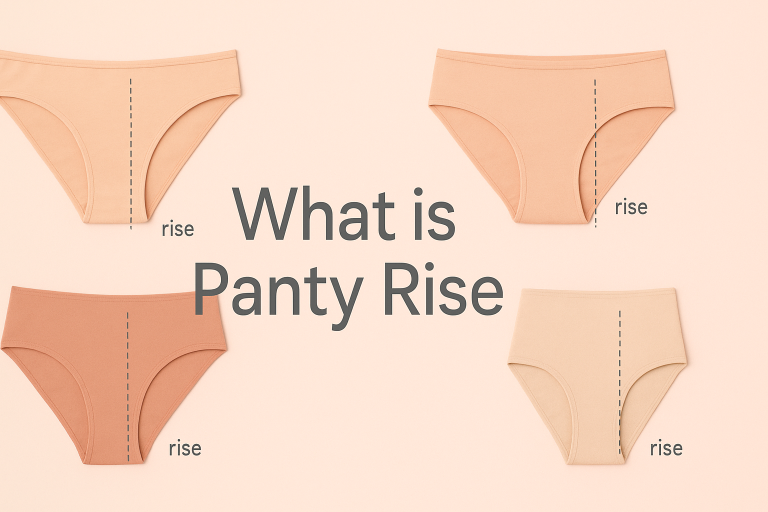
Period underwear comes in five main silhouettes, each designed to suit a different coverage need, activity level, or flow volume. The silhouette affects both comfort and absorbency capacity.
Bikini Style Period Underwear
Bikini period underwear sits at a mid-rise with standard leg openings and covers the same area as conventional bikini-cut underwear. Most bikini styles hold 2 to 4 teaspoons (10 to 20 milliliters) of fluid, making them suitable for light to moderate flow days.
This style works well as a backup to a menstrual cup or tampon, adding security without bulk. The narrower gusset panel provides enough coverage for everyday wear without the extra fabric that heavier-flow styles require.
High-Waist Period Underwear
High-waist period underwear rises above the navel, typically 4 to 6 inches above the hip line. The extended waistband provides additional compression across the lower abdomen, which many people find reduces cramping discomfort during menstruation.
Absorbency in high-waist styles ranges from 3 to 6 teaspoons (15 to 30 milliliters), covering moderate to heavy flow. The higher cut also minimizes the visible waistband line under fitted clothing.
Boyshort Period Underwear
Boyshort period underwear features a wider leg opening that extends down the upper thigh, similar to a shorts silhouette. The wider base accommodates a longer absorbent panel, with most boyshort styles holding 4 to 6 teaspoons (20 to 30 milliliters) of fluid.
Boyshorts are a strong choice for overnight wear because the extended rear panel reduces the risk of leaks during sleep position changes. Many people also find boyshorts more secure during physical activity.
Thong Period Underwear
Thong period underwear uses a narrow back panel with the absorbent gusset concentrated entirely in the front crotch area. Most thong styles hold 1 to 2 teaspoons (5 to 10 milliliters), making them appropriate only for very light flow, spotting, or discharge management.
Thong styles eliminate visible underwear lines under tight clothing and work as a backup to tampons or menstrual cups on lighter days. They are not suitable as standalone protection for moderate or heavy flow.
Shorts and Sleep Shorts Period Underwear
Period sleep shorts extend to mid-thigh and feature an extra-long absorbent panel that covers both the front and rear areas fully. Absorbency in sleep shorts reaches 5 to 8 teaspoons (25 to 40 milliliters), making them the highest-capacity option available for overnight and heavy-flow use.
Matching the silhouette to your flow volume and daily activity is the single most important fit decision before buying period underwear.
How Much Can Period Underwear Hold
Period underwear absorbency is measured in teaspoons or milliliters of fluid, and each pair is rated by the manufacturer based on laboratory absorption tests. Most pairs fall into four standardized absorbency categories.
Use the table below to match your flow description to the correct absorbency tier before selecting a style.
| Absorbency Level | Fluid Capacity | Equivalent In Tampons | Best For |
|---|---|---|---|
| Light | 1 to 2 teaspoons (5 to 10 ml) | 1 regular tampon | Spotting, discharge, backup use |
| Moderate | 2 to 4 teaspoons (10 to 20 ml) | 2 regular tampons | Light to moderate flow days |
| Heavy | 4 to 6 teaspoons (20 to 30 ml) | 3 regular tampons | Heavy flow days, active use |
| Super / Overnight | 6 to 8 teaspoons (30 to 40 ml) | 4 regular tampons | Overnight, postpartum, very heavy flow |
The average menstrual cycle produces 1 to 6 tablespoons (15 to 90 milliliters) of total blood loss over the entire period, according to the American College of Obstetricians and Gynecologists. A single pair of heavy-absorbency period underwear typically handles 4 to 8 hours of wear on moderate to heavy flow days.
Brands measure absorbency using a standardized fluid (typically saline solution) rather than actual menstrual blood, so real-world capacity may vary slightly based on the viscosity of your flow.
Choosing the right absorbency level eliminates the need to layer additional products and makes period underwear fully functional as a standalone solution for most flow levels.
What Fabrics Are Used in Period Underwear
The fabric composition of period underwear determines comfort, absorbency speed, odor control, and how long the underwear holds up through repeated washing. Three fabric families are used across most period underwear brands.
Cotton Period Underwear
Cotton period underwear uses organic or conventional cotton for the absorbent core and, in many cases, the skin-contact layer. Cotton absorbs up to 27 times its own weight in moisture, according to data published by Cotton Incorporated, making it effective for fluid retention.
Cotton breathes well and is suitable for people with sensitive skin or latex sensitivities. The primary drawback is that cotton dries more slowly than synthetic alternatives, which can extend drying time after washing from 6 to 12 hours.
Bamboo Period Underwear
Bamboo viscose period underwear uses fibers derived from bamboo pulp processed into a soft, breathable textile. Bamboo fabric has a natural antimicrobial property attributed to a bio-agent called bamboo kun, which inhibits bacterial growth and reduces odor formation during wear.
Bamboo viscose is also temperature-regulating, making it a practical choice for people who experience menstrual-related body temperature fluctuations. Most bamboo period underwear blends bamboo with elastane at a ratio of approximately 95% bamboo to 5% elastane for stretch and shape retention.
Synthetic and Blended Period Underwear
Nylon, polyester, and microfiber blends are commonly used for the outer shell and moisture-wicking inner layer in period underwear. Synthetic fabrics dry faster than natural fibers, typically within 2 to 4 hours after hand washing, and they hold their shape through more wash cycles.
Many brands use a blend of natural fibers in the absorbent core and synthetic fibers in the shell layer to balance absorbency, drying speed, and durability. A common construction uses a 100% organic cotton gusset lining with a nylon and spandex outer body at a blend of approximately 87% nylon and 13% spandex.
Fabric choice affects how quickly period underwear feels dry against the skin and how many wash cycles it maintains its absorbency, so reading the composition label before buying directly affects long-term performance.
How to Wash and Care for Period Underwear
Proper washing extends the lifespan of period underwear and maintains its absorbency. Most pairs last 2 to 5 years with correct care, according to manufacturer guidelines from major period underwear brands including Thinx, Saalt, and Knix.
Here is how to wash period underwear correctly after each use.
Step 1: Rinse in cold water immediately after removal. Run the gusset under cold water until the water runs mostly clear. Cold water prevents blood proteins from binding to the fabric fibers. Hot water at this stage sets stains permanently.
Step 2: Hand wash or machine wash on cold. Hand washing with a small amount of gentle lingerie detergent is the gentlest method. If using a machine, place the underwear in a mesh laundry bag and wash on the delicate or gentle cycle with cold water.
Step 3: Avoid fabric softener and bleach. Fabric softener coats the absorbent fibers with a hydrophobic film that reduces absorption capacity over time. Bleach degrades the elastic and can break down the PUL leak-resistant layer.
Step 4: Air dry only. Hang or lay flat to dry. Machine drying on high heat degrades the elastic waistband and can delaminate the PUL barrier layer. Most pairs dry fully within 4 to 8 hours at room temperature with adequate airflow.
Following these four steps after every wear preserves absorbency and prevents odor buildup across the full lifespan of the garment.
Period Underwear vs Pads vs Menstrual Cups
Period underwear, pads, and menstrual cups each address menstrual protection through a fundamentally different mechanism, making them suited to different preferences, lifestyles, and flow volumes. No single product is universally better; the right choice depends on your priorities.
Use the table below to compare the three options across the criteria that matter most to most buyers.
| Feature | Period Underwear | Disposable Pads | Menstrual Cup |
|---|---|---|---|
| Capacity per use | 5 to 40 ml depending on style | 5 to 30 ml depending on size | 12 to 38 ml depending on cup size |
| How it works | Absorbs flow into built-in fabric layers | Absorbs flow into disposable pad material | Collects flow in a silicone or rubber cup |
| Wear time | 4 to 12 hours depending on flow | 3 to 8 hours depending on absorbency | Up to 12 hours |
| Cost per year | $10 to $20 per pair, one-time cost | $50 to $150 per year ongoing | $20 to $45, one-time cost |
| Environmental impact | Reusable for 2 to 5 years | Disposable, generates approximately 150 kg of waste per lifetime of use | Reusable for up to 10 years |
| Best for | Everyday comfort, overnight, backup use | Convenience, travel, irregular cycle | Active lifestyles, heavy flow, swimming |
| Learning curve | None: wear like regular underwear | None: peel and stick | Moderate: requires correct insertion and removal technique |
A 2021 review published in the journal Lancet Regional Health Europe found that reusable menstrual products including period underwear and menstrual cups reduced lifetime plastic waste from menstrual products by up to 94% compared to disposable pad use.
Period underwear has the lowest learning curve of the three options and requires no internal insertion, making it accessible for first-time users and adolescents.
The choice between these three products ultimately comes down to whether you prioritize simplicity, total cost over time, or environmental impact, and all three factors point toward reusable options for most long-term users.
Here is a tool to help you figure out which type of period protection best matches your lifestyle and flow before you commit to a purchase.
Interactive Finder
Find the Right Period Underwear Style for You
Answer 2 questions to get a personalized recommendation based on your flow and lifestyle.
How to Choose Period Underwear for Your Flow
Choosing period underwear correctly requires matching three variables: absorbency capacity to your measured flow volume, silhouette to your activity level, and fabric to your skin sensitivity. Getting all three right determines whether period underwear works as a standalone product or needs a backup.
Matching Absorbency to Your Flow Volume
The most reliable way to estimate your flow volume is to count the number of fully saturated regular tampons or pads you use per day at your heaviest flow point. One fully saturated regular tampon holds approximately 5 to 10 milliliters of fluid, according to menstrual health data published by the National Institutes of Health.
If you saturate 3 regular tampons in a single day, your peak daily flow is approximately 15 to 30 milliliters, which falls within the heavy-absorbency category. A single pair of heavy-absorbency period underwear holds 20 to 30 milliliters, meaning you would need to change or rinse the pair once during that day.
Choosing a Silhouette for Your Activity Level
Active use, including running, yoga, or extended walking, benefits from a higher-coverage silhouette. Boyshorts and high-waist styles keep the absorbent panel secured in place during movement better than bikini cuts, which can shift slightly during high-intensity activity.
Sedentary or low-activity days are well-served by bikini or thong styles, which provide adequate coverage without the additional fabric weight of extended-panel designs.
Selecting Fabric for Skin Sensitivity
People with contact dermatitis or sensitivity to synthetic fibers should choose period underwear with a 100% organic cotton or certified OEKO-TEX Standard 100 gusset lining. OEKO-TEX Standard 100 certification confirms that every component of the fabric, including dyes, threads, and coatings, has been tested for harmful substances at concentrations above established safety thresholds.
Matching all three variables simultaneously (absorbency, silhouette, fabric) ensures the pair you choose performs as a standalone product rather than requiring backup protection throughout the day.
Are Period Underwear Safe and Hygienic
Period underwear is safe for daily menstrual use when the fabric composition has been tested for chemical residues and the garment is washed correctly after each wear. Safety concerns about period underwear primarily relate to two issues: chemical content of fabric treatments and bacterial growth during extended wear.
Chemical Safety of Period Underwear Fabrics
A 2020 study commissioned by consumer advocacy group Yuka and published by French certification laboratory Bureau Veritas found trace levels of per- and polyfluoroalkyl substances (PFAS) in several period underwear brands tested. PFAS are synthetic compounds used in some water-resistant fabric treatments and have been associated with endocrine disruption at high exposure levels, according to the U.S. Environmental Protection Agency.
In response, many major period underwear brands, including Thinx, Saalt, and Modibodi, independently tested and publicly confirmed their current products are free of PFAS and meet OEKO-TEX Standard 100 or GOTS (Global Organic Textile Standard) certification requirements.
Purchasing period underwear certified to OEKO-TEX Standard 100, GOTS, or bluesign standards provides independent third-party confirmation that the fabric has been screened for over 100 harmful substances.
Bacterial Growth and Odor During Wear
Period underwear does not increase the risk of bacterial vaginosis or yeast infections when worn for the recommended 4 to 12 hours per use. A 2022 clinical review published in the journal Obstetrics and Gynecology found no statistically significant increase in vaginal microbiome disruption among period underwear users compared to pad users over a three-cycle observation period.
Proper rinsing immediately after removal prevents bacteria from colonizing the fabric between uses. Allowing period underwear to sit unwashed for more than 24 hours after wearing increases odor and reduces the effectiveness of subsequent cleaning.
Choosing certified fabrics and washing correctly within 24 hours of wear makes period underwear as hygienic as any other reusable textile used close to the body.
How Long Does Period Underwear Last
Period underwear lasts 2 to 5 years with correct cold-water washing and air drying after each use. The lifespan depends on washing frequency, water temperature, and whether fabric softener or bleach is used, since both degrade the absorbent and leak-resistant layers progressively.
The first sign that period underwear has reached the end of its useful life is reduced absorbency: fluid that previously stayed contained begins to saturate through to the outer layer. This change typically occurs after 200 to 300 wash cycles, which corresponds to 4 to 6 years of use for someone who wears period underwear for an average 5-day period each month.
At an average cost of $12 to $35 per pair, period underwear purchased at the moderate price point costs approximately $0.10 to $0.25 per use over its full lifespan, compared to $0.20 to $0.50 per use for a regular disposable pad, according to unit cost analysis based on publicly listed retail pricing.
Rotating between 5 to 7 pairs during each menstrual cycle reduces per-pair wash frequency and extends the lifespan of each garment proportionally.
Period Underwear for Specific Needs
Period underwear addresses several specific menstrual and reproductive health situations beyond standard flow management. Each situation benefits from a different absorbency level and silhouette choice.
Period Underwear for Teenagers
Period underwear is widely recommended by pediatric gynecologists as a starter option for adolescents beginning their first periods, because it requires no internal insertion and eliminates the anxiety of tampon or cup use during early cycles. The American Academy of Pediatrics includes reusable menstrual products as a recommended option in its adolescent gynecology guidelines.
For teenagers, a moderate-absorbency bikini or boyshort style in soft organic cotton provides adequate coverage for the lighter, irregular flows common in the first 1 to 2 years of menstruation. A starter set of 5 to 7 pairs covers a full cycle without daily laundry.
Period Underwear for Postpartum Lochia
Postpartum lochia, the uterine discharge that occurs for 4 to 6 weeks after delivery, produces significantly higher fluid volumes than typical menstruation. Flow volume is heaviest in the first 3 to 5 days postpartum, when lochia resembles a very heavy period, and gradually decreases to light spotting by weeks 4 to 6.
Postpartum period underwear at super or overnight absorbency (6 to 8 teaspoons capacity) is recommended for the first week after delivery. High-waist styles provide additional compression across the lower abdomen and C-section incision area, which many postpartum individuals find supportive during early recovery.
Period Underwear for Menopause and Perimenopause
Perimenopause commonly produces irregular and unpredictable menstrual cycles, including sudden heavy bleeding episodes known as flooding. Period underwear at heavy or super absorbency provides reliable backup protection during unpredictable perimenopausal cycles without requiring constant pad use throughout the month.
For people experiencing perimenopause-related night sweats alongside irregular cycles, bamboo-fiber period underwear offers the best combination of moisture management and temperature regulation during sleep.
Period Underwear for Bladder Leaks
Some period underwear brands produce styles explicitly rated for light urinary incontinence, holding 1 to 4 teaspoons of urine in addition to menstrual flow. The fabric construction for bladder leak protection is designed to manage urine, which has a different viscosity and pH than menstrual blood, requiring a different absorbent core formulation.
Not all period underwear is rated for urinary incontinence; check the product specification to confirm dual-purpose absorbency ratings before purchasing for this use.
Selecting period underwear based on your specific life stage and flow pattern, rather than defaulting to a single standard style, ensures the product performs reliably for the situation it is being used in.
Best Period Underwear Brands and What They Offer
Several established brands dominate the period underwear market, each with a distinct approach to absorbency technology, sizing inclusivity, and fabric certification. Use the table below to compare the most widely reviewed brands across the criteria that most affect purchase decisions.
| Brand | Absorbency Range | Size Range | Fabric Certification | Price Per Pair | Best For |
|---|---|---|---|---|---|
| Thinx | Light to super (1 to 6 teaspoons) | XS to 3X | OEKO-TEX Standard 100 | $30 to $45 | Everyday moderate flow, established brand with wide style range |
| Saalt | Light to heavy (1 to 5 teaspoons) | XS to 3X | OEKO-TEX Standard 100 | $28 to $38 | Sensitive skin, soft fabrics, sustainable manufacturing focus |
| Modibodi | Barely there to maxi overnight (2 to 20 ml) | XS to 5X | OEKO-TEX Standard 100, B Corp certified | $20 to $40 | Extended size inclusivity, postpartum, bladder leak support |
| Knix | Light to super (up to 8 teaspoons) | XS to 4X | OEKO-TEX Standard 100 | $25 to $40 | Active lifestyles, seamless styles, bladder leak dual-use |
| Dear Kate | Light to moderate (1 to 3 teaspoons) | XS to XXL | OEKO-TEX Standard 100 | $22 to $35 | Athletic styles, yoga and gym use, lighter flow days |
Modibodi offers the widest size range, extending to 5X, and is the only B Corp certified brand in this comparison, meaning it has met verified standards for social and environmental performance set by B Lab. For heavy flow or postpartum needs, Modibodi’s maxi overnight style at a capacity up to 20 milliliters is the highest publicly rated single-pair capacity among these five brands.
All five brands listed hold current OEKO-TEX Standard 100 certification, confirming PFAS-free fabric construction at the time of publication. Confirm certification status on each brand’s website before purchasing, as certifications are renewed on an annual basis.
How to Transition to Period Underwear
Transitioning to period underwear works best as a gradual process rather than a complete switch on the first cycle. Starting with one or two pairs used on lighter flow days builds confidence in the product’s absorbency before relying on it during heavier days.
A practical starter approach is to use period underwear as a backup to your existing menstrual product for the first full cycle. This lets you observe how the pair performs at your specific flow level without the anxiety of relying on an unfamiliar product.
A starter kit of 5 to 7 pairs covers a 5-day cycle with one pair per day plus two backups for rotation. At an average cost of $25 to $35 per pair, a full starter kit costs $125 to $245, which most users recover in savings within 2 to 3 menstrual cycles compared to ongoing disposable product costs.
After the first cycle, most users identify which absorbency level they need for each day of their cycle and adjust their kit accordingly. Many people keep two to three heavy-absorbency pairs for days 1 to 3 and three to four moderate-absorbency pairs for lighter days.
Building your kit based on observed flow volume by cycle day, rather than buying all the same absorbency level, is the most cost-effective and functional approach to a complete transition.
Frequently Asked Questions About Period Underwear
Can you wear period underwear in water or while swimming?
Period underwear is not designed for swimming. The absorbent fabric layers absorb water as well as menstrual fluid, which saturates the gusset immediately upon submersion and renders the product ineffective as leak protection. For swimming during menstruation, a menstrual cup or tampon is the appropriate product. Some brands sell separate swim-specific styles that use a water-resistant outer layer, but these are a distinct product category from standard period underwear and hold significantly less absorbency than regular styles.
How do you know when period underwear is full?
Period underwear feels slightly damp or heavy against the skin when approaching its absorbency limit, similar to the sensation of a saturated pad. The exact timing depends on your flow rate and the absorbency rating of the pair you are wearing. On heavy flow days, a pair rated at 4 to 6 teaspoons typically requires changing after 4 to 6 hours. On lighter days, the same pair may last 8 to 12 hours without noticeable saturation. If you notice moisture transferring to your outer clothing, the pair has exceeded its capacity and needs to be changed immediately.
Can you wear period underwear overnight?
Period underwear can be worn overnight when the absorbency rating matches your overnight flow volume. Boyshort styles and sleep shorts at overnight or super absorbency (6 to 8 teaspoons, or 30 to 40 milliliters) are specifically designed for the 7 to 9 hour overnight window. For very heavy overnight flow or postpartum lochia, pairing overnight period underwear with a menstrual cup provides dual-layer protection for users who soak through a standard overnight product regularly.
Do you need to use anything else with period underwear?
Period underwear can function as a standalone product for light to moderate flow. For heavy flow days, some users pair period underwear with a tampon or menstrual cup to extend the wearing window or add a second layer of protection for high-activity situations. Using period underwear as a backup alongside another product also works well during the transition period when you are still learning how your flow volume interacts with a specific pair’s absorbency rating.
Is period underwear good for heavy periods?
Period underwear is effective for heavy periods when you choose a pair rated at heavy or super absorbency (4 to 8 teaspoons, or 20 to 40 milliliters). Boyshort and sleep short silhouettes provide the widest gusset panel and highest per-pair capacity. For periods classified as menorrhagia (defined by ACOG as blood loss exceeding 80 milliliters per cycle), period underwear alone may not be sufficient as a standalone product on peak flow days, and pairing with a menstrual cup or tampon is recommended for those highest-volume hours.
How many pairs of period underwear do you need?
A functional starter set requires 5 to 7 pairs to cover a standard 5-day cycle with daily changes and a two-pair buffer for drying time. People with longer cycles or heavier flow may need 7 to 10 pairs. The minimum practical number is 3 to 4 pairs if you are willing to rinse and air-dry daily, since most pairs dry within 4 to 8 hours after a cold rinse and gentle wash. A larger rotation of 7 or more pairs allows all pairs to air-dry fully between wears without requiring same-day turnaround.
Can teenagers use period underwear?
Period underwear is suitable for teenagers from their first period onward. The American Academy of Pediatrics includes reusable menstrual products as an appropriate option for adolescents, and period underwear specifically requires no internal insertion, making it the lowest-barrier option for new menstruators. Soft organic cotton styles in moderate absorbency work well for the irregular, lighter flows common in the first 1 to 2 years after menarche. Many brands offer styles sized down to XS or junior sizing to fit adolescent body proportions accurately.
Period underwear offers a practical, cost-effective, and low-learning-curve approach to menstrual management that works for most flow levels and life stages. Start with 5 to 7 pairs in the absorbency levels that match your heaviest and lightest cycle days, choose a certified OEKO-TEX fabric for skin safety, and follow cold-rinse washing after every wear to preserve absorbency for the full 2 to 5 year lifespan of each pair.