
How to Choose Panties for Your Body Type: Ultimate Fit Tips
Choosing the right panties for your body type transforms everyday comfort and the way clothes fit and feel. The wrong cut can create visible lines, uncomfortable bunching, or unflattering proportions, while the right style works with your natural shape to deliver smooth, confident results. This guide covers every major body type, every panty style, and the specific fits that serve each shape best.
Understanding Panty Styles and What They Do for Your Shape
Each panty cut is engineered with a different coverage, rise, and silhouette that interacts with your body’s proportions in a distinct way. Understanding what each style does structurally lets you match it to your body type rather than guessing.
The seven core panty styles found in most lingerie drawers each serve a different function. Use the table below to understand how each style differs in coverage, rise, and body-type suitability at a glance.
| Style | Coverage | Rise | Best Fabric | Best For |
|---|---|---|---|---|
| Brief | Full rear, full front | Mid to high | Cotton, modal | Everyday wear, fuller hips |
| Bikini | Moderate front and rear | Low to mid | Nylon, lace | Most body types, versatile |
| Hipster | Full rear, moderate front | Low | Cotton-spandex blend | Straighter hips, low-rise jeans |
| Boyshort | Full coverage, short-leg hem | Low to mid | Seamless microfiber | Thigh chafing, skirts, dresses |
| Thong | Minimal rear | Low to mid | Seamless microfiber | Fitted clothing, VPL elimination |
| High-waist brief | Full front, full rear | High (above navel) | Modal, seamless nylon | Tummy smoothing, hourglass |
| G-string | Minimal front and rear | Low | Microfiber | Sheer or very fitted clothing |
The bikini cut is the most versatile style across body types because its moderate coverage and adjustable rise work with most hip-to-waist ratios.
Every panty style also has a rise measurement, which is the distance from the gusset seam to the waistband at the front. Low-rise sits 1 to 2 inches below the navel. Mid-rise lands at or just below the navel. High-rise extends 2 or more inches above the navel, covering the lower abdomen fully.
Knowing your natural waist-to-hip ratio is the single most useful measurement before selecting a panty style. According to research published in the journal Evolution and Human Behavior, a waist-to-hip ratio under 0.80 is associated with a curvier silhouette, while ratios closer to 1.0 reflect a straighter or more rectangular frame.
The right panty style works with your natural proportions rather than fighting them.
How to Choose Panties for a Pear Body Type
A pear body type is defined by hips that are noticeably wider than the shoulders, with a defined waist and proportionally narrower upper body. The hips and seat carry more volume, which means panty cuts that sit too low or too narrow across the hip can cut in, create bulging at the leg opening, or ride down throughout the day.
Full-coverage briefs and high-waist briefs are the most consistently recommended styles for pear shapes because they sit above the fullest part of the hip rather than cutting across it. A panty that sits at or below the widest hip point creates a horizontal line that visually widens an already full hip area.
Seamless high-waist briefs made from modal or microfiber are particularly effective for pear shapes because they smooth the transition from waist to hip without elastic that digs into the flesh. According to lingerie fit specialists at Nordstrom’s bra fitting program, the leg opening width is the most common fit issue for fuller hips, and a brief with a wider leg band rather than a narrow elastic edge prevents the “cupcake” effect where fabric rolls over tight elastic.
The boyshort style is also a strong option for pear shapes when chosen in a seamless fabric. The short-leg hem distributes coverage across the upper thigh rather than cutting at the fullest part of the hip, which reduces the risk of leg-band indentation. A seamless boyshort in a four-way stretch fabric accommodates up to 15 to 20 percent more hip circumference than a standard woven panty at the same waist size.
Avoid low-rise bikini cuts that hit directly at the widest hip point, as they create a visual line that exaggerates hip width and often result in the waistband rolling down throughout the day for fuller hips.
Best Fabrics for Pear Body Type Panties
Modal and microfiber blends are the top fabric choices for pear shapes because both materials offer four-way stretch that expands to accommodate fuller hips without elastic resistance. Modal, derived from beech wood pulp, is 50 percent more moisture-absorbent than cotton according to Lenzing AG, the primary commercial producer of modal fiber, making it both comfortable and breathable for all-day wear.
Cotton-spandex blends (typically 92% cotton, 8% spandex) provide stretch without sacrificing breathability, which is important for full hip coverage where fabric touches skin over a larger surface area. Avoid 100% woven cotton panties for pear shapes as they have minimal stretch and can bind at the leg opening when hips are fuller than the waist measurement suggests.
The best panty for a pear shape sits above the fullest hip point, uses a wide or seamless leg opening, and contains at least 8 percent spandex or elastane for stretch recovery.
How to Choose Panties for an Apple Body Type
An apple body type carries weight primarily around the midsection and abdomen, with shoulders and hips that are relatively similar in width and a less defined waist. The key panty challenge for apple shapes is finding a waistband that sits comfortably without digging into the softer abdominal area or rolling down due to abdominal fullness pushing against the elastic.
High-waist briefs are the strongest choice for apple shapes because they extend above the natural waist and distribute the waistband across the flattest, narrowest part of the torso rather than sitting at the widest abdominal point. A high-waist tummy-smoothing brief with a soft, wide waistband (typically 1.5 to 2 inches wide) avoids the “muffin top” effect that narrow elastics create on fuller abdomens.
According to the American Council on Exercise, 54 percent of women with apple-shaped body composition report discomfort from waistbands that sit at the natural waist. Wide-waistband panties reduce this by distributing pressure across a 1.5- to 2-inch elastic zone rather than a single narrow band.
Seamless microfiber briefs are particularly effective for apple shapes under fitted tops and dresses because the absence of seams eliminates the visible horizontal line at the waistband. A seamless microfiber brief in a mid to high rise provides smooth coverage from the lower abdomen to the hip without creating definition lines through clothing.
Waistband Fit Considerations for Apple Shapes
The waistband should sit comfortably without rolling or folding, which indicates the panty’s rise is too short for the torso length. Apple shapes with a longer torso often benefit from sizing up by one in waistband measurement and choosing a style with a 3- to 4-inch rise rather than a standard 2-inch rise.
Panties with a silicone grip strip inside the waistband are useful for apple shapes because they prevent the waistband from rolling inward, a common issue when the abdomen is fuller than the hip. Avoid low-rise cuts entirely for apple shapes, as they sit at the widest abdominal point and roll down consistently.
For apple shapes, the waistband width and rise height matter more than any other fit variable, and sizing up rather than down almost always produces a more comfortable result.
How to Choose Panties for an Hourglass Body Type
An hourglass body type is characterized by shoulders and hips that are approximately equal in width, with a waist that is significantly narrower, typically 8 to 12 inches smaller than the hip measurement. This proportional balance gives hourglass shapes the most flexibility in panty styles, but the pronounced waist-to-hip differential creates its own fit challenge: panties that fit the waist may be too small across the hips, and panties that fit the hips may gap at the waist.
The bikini cut is the most consistently well-fitting style for hourglass shapes because it is designed for a significant waist-to-hip differential. A standard bikini panty’s side panel is cut on a curve that accommodates 6 to 10 inches of difference between waist and hip measurement.
High-waist briefs also work exceptionally well for hourglass figures because the higher rise emphasizes the defined waist rather than concealing it. A high-waist brief in a smooth satin-finish fabric creates a sleek, retro silhouette that follows the body’s natural curves without compressing them.
According to fit data from ThirdLove’s published sizing research, which analyzed over 10,000 body measurements, women with a waist-to-hip ratio below 0.75 (a defining metric for hourglass shapes) most frequently report fit satisfaction with bikini and high-waist brief styles compared to hipsters or low-rise cuts.
Avoiding Waistband Gaps for Hourglass Shapes
Waistband gapping occurs when the panty’s waist opening is too large for the narrow waist, even though the hip fits correctly. This is particularly common in hipster and boyshort styles, which are cut for a smaller waist-to-hip differential. Hourglass shapes should look for panties with adjustable side ties or stretch-lace waistbands that contract to the waist measurement rather than a fixed elastic diameter.
A panty with at least 12 percent elastane in the waistband fabric stretches to accommodate the hip when pulling on and contracts to fit the narrower waist once in place. Styles labeled “stretch lace” or “soft stretch” typically achieve this range of motion more reliably than rigid structured waistbands.
Hourglass shapes generally perform best with bikini or high-waist styles in stretch-lace or microfiber, both of which accommodate the waist-to-hip differential without gapping or cutting in.
How to Choose Panties for a Rectangle Body Type
A rectangle body type (also called a straight or athletic body type) has shoulders, waist, and hips that are all approximately the same width, with minimal waist definition. The panty challenge for rectangle shapes is the reverse of the hourglass: the waist and hip measurements are very close, so most panty styles fit easily in terms of circumference, but some cuts create an unflattering boxy silhouette that adds no shape to the figure.
Bikini and hipster styles with side panels that have a slight hip-cut curve work well for rectangle shapes because the angular leg opening creates the visual impression of hip-to-waist contrast where little exists naturally. A bikini panty with a Brazilian-cut rear (moderate rear coverage with a higher-cut leg opening) adds visual roundness to the seat that can enhance the appearance of hip definition.
Thongs and G-strings are also particularly practical for rectangle shapes because minimal fabric provides no restriction around a proportionally uniform frame. A seamless thong works under virtually any outfit without creating bulge or definition lines.
According to style guidance published by the Council of Fashion Designers of America’s consumer education resources, rectangle body types benefit most from panty styles with curved or scalloped leg openings because the angular line creates the illusion of hip curvature.
Creating Visual Curves for Rectangle Shapes
Panty styles with decorative rear ruching, gathered fabric, or structured side paneling add dimensional volume to the seat area without padding. A ruched-back bikini or a panty with a smocked side panel creates visual texture that suggests curves on a straight frame.
Printed or patterned panties with diagonal or curved geometric patterns work similarly, drawing the eye in an arc that implies a narrower waist and fuller hip. Solid dark colors have the opposite effect, reducing contrast and visual dimensionality on a rectangle figure.
Rectangle shapes have the most freedom in panty style choice and benefit most from visual contrast at the hip and seat rather than emphasizing their natural proportions.
How to Choose Panties for an Inverted Triangle Body Type
An inverted triangle body type has shoulders that are noticeably wider than the hips, with a defined waist and relatively narrow lower body. The panty challenge for inverted triangle shapes is avoiding styles that visually narrow the hip further, which can make the shoulder-to-hip imbalance more pronounced.
Full briefs and high-waist briefs with wide side panels are the most effective choice for inverted triangle shapes because they maximize coverage across the hip and add visual volume to the lower half of the body. A full-coverage high-waist brief with a lace or textured side panel draws visual attention downward and outward, balancing the wider shoulder line.
Boyshort styles with a wider-cut leg hem also add visual width to the hip and thigh area, effectively countering the narrow lower body associated with inverted triangle shapes. A lace boyshort with a hip-level waistband and full side coverage creates horizontal visual lines at the widest part of the hip, which increases the perceived hip measurement.
The American Journal of Human Biology published research in 2017 noting that visual body perception is significantly influenced by horizontal line placement in clothing, and that garments creating horizontal emphasis at the hip level increase perceived hip-to-shoulder balance in inverted triangle body types.
Panty Styles to Avoid for Inverted Triangle Shapes
Narrow thongs and G-strings reduce the visual presence of the hip to its minimum, which emphasizes rather than counters the width of the shoulders. Low-rise bikini cuts that sit below the hip also work against inverted triangle proportions because they leave the hip area visually bare and narrow-looking rather than full.
Side-string panties or very minimal side panels narrow the hip silhouette by removing the fabric that would otherwise create horizontal visual width at the side of the hip. Solid black or dark-colored minimal styles compound this effect and are best avoided for this body type.
Inverted triangle shapes benefit from maximum coverage at the hip and thigh, using wide side panels, lace, or texture to create visual fullness in the lower body.
Choosing Panties by Rise Height for Your Torso Length
Rise height is as important as panty style when matching underwear to body type, and torso length determines which rise height sits where on the body. A panty labeled “high-rise” on a short-torso woman may function as a full brief above the navel, while the same panty on a long-torso woman may land at or below the navel, acting more like a mid-rise.
Use the table below to match your torso length and body type to the appropriate rise height.
| Torso Length | Low-Rise Result | Mid-Rise Result | High-Rise Result | Best Choice |
|---|---|---|---|---|
| Short (under 16 in.) | Below hip, may roll | Sits at hip | Above navel, may feel large | Mid-rise bikini or brief |
| Average (16-18 in.) | Sits at hip bone | Sits at navel | Sits 1-2 in. above navel | Most styles work |
| Long (over 18 in.) | Well below hip | Below navel | At or below navel | High-rise or true full brief |
Measuring torso length from the hip bone (iliac crest) to the natural waist takes less than 30 seconds and eliminates the guesswork of whether a labeled “high-rise” will actually deliver high-rise coverage on your specific frame.
Torso length measurement is the most overlooked variable in panty fit, and a 10-second measurement prevents the frustration of purchasing a style that sits too low or too high for your specific proportions.
How to Choose Panties for Thigh Chafing and Inner Thigh Comfort
Thigh chafing occurs when inner thighs rub together repeatedly, creating friction, redness, and skin irritation. This is a functional comfort concern rather than an aesthetic one, and it is entirely independent of body type since thighs that touch during walking affect women at every weight and hip size. The panty style that prevents chafing most reliably is the one that places fabric between the inner thighs throughout the full range of movement.
Boyshort panties are the most effective anti-chafing style because the short-leg hem extends 1 to 2 inches down the inner thigh, creating a fabric barrier between skin surfaces. A seamless anti-chafing boyshort in a microfiber or modal blend covers the friction zone without adding visible bulk under clothing.
The American Academy of Dermatology identifies repeated friction on moist skin as the primary cause of chafing-related dermatitis, and recommends moisture-wicking fabric as the most effective preventive measure alongside physical coverage. Synthetic microfiber boyshorts wick moisture 2 to 3 times faster than 100% cotton equivalents, reducing the moisture that accelerates friction damage.
For women who prefer not to wear boyshorts, thigh bands worn over panties provide the same inner-thigh barrier without changing the panty style. Silicone-lined thigh bands stay in place without rolling and add an anti-chafing layer independent of the panty choice.
Fabric and Seam Placement for Inner Thigh Comfort
Seam placement at the leg opening is a critical variable in inner thigh comfort. Panties with an inseam seam (a seam running along the inner leg) can create a raised ridge that increases friction at the point where the thighs touch. Seamless panties or panties with the leg-opening seam placed at the outer thigh rather than the inner thigh eliminate this ridge entirely.
A seamless microfiber boyshort with a leg opening cut at the outer thigh and a flat-knit leg band (rather than a folded elastic leg edge) delivers the lowest friction profile of any available panty construction. These are frequently marketed as “anti-chafing” or “chafe-proof” underwear in major lingerie retail catalogs.
For thigh chafing concerns, choose a seamless boyshort with moisture-wicking fabric and a leg band positioned at the outer rather than inner thigh for the most effective friction prevention.
Choosing Panties for Different Clothing Types
The outer clothing being worn over panties is a practical filter that determines which panty style is appropriate regardless of body type. Even the most flattering body-type-matched panty creates visible panty lines, bunching, or discomfort if it is not compatible with the clothing worn over it.
Use the table below to match your outfit type to the right panty style for a smooth, invisible result.
| Outfit Type | Best Panty Style | Second Choice | Avoid |
|---|---|---|---|
| Fitted jeans | Hipster or bikini | Thong | Full brief (waistband shows) |
| Bodycon dress | Seamless thong | Seamless bikini | Boyshort (leg line shows) |
| A-line skirt | Brief or boyshort | High-waist brief | N/A (most styles work) |
| Athletic leggings | Seamless thong | Seamless hipster | Lace (texture shows through) |
| High-waist trousers | High-waist brief | Seamless bikini | Low-rise (waistband shows) |
| Sheer or light fabric | Seamless nude bikini | Seamless thong | Any lace or printed style |
The most common VPL (visible panty line) mistake is wearing a panty with a firm woven-edge leg seam under leggings or bodycon fabric, since any seam with structural stiffness will telegraph through a second-skin fabric layer.
Matching the panty to the outer garment first, then selecting within the body-type-appropriate range of styles, produces the best combination of comfort, proportion, and invisibility under clothing.
Panty Sizing: How to Measure Correctly and Size Accurately
Panty sizing uses a different measurement system than bra sizing, but the same principle of measuring the body rather than guessing based on clothing size applies. Panty size is determined by hip circumference in most US sizing systems, not waist measurement alone, which is why a woman who wears a size 6 dress can wear anything from a panty size small to a panty size large depending on her specific hip-to-waist ratio and the brand’s size chart.
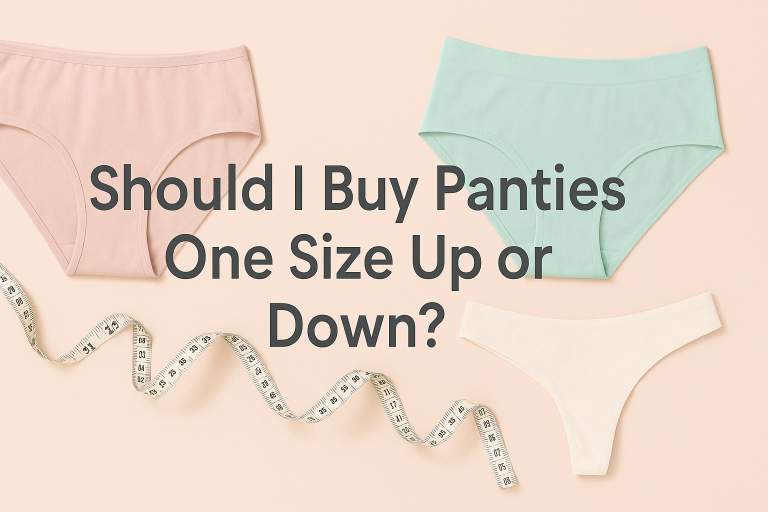
The correct measurement for panty sizing is taken at the fullest part of the hips and seat, typically 7 to 9 inches below the natural waist. A flexible measuring tape held snugly (but not compressing the skin) at this level gives the hip circumference that corresponds to panty size. According to Hanes’ published sizing guide, which covers the most widely distributed US panty brand, the standard size-to-hip-measurement conversion is: small (34 to 36 inches), medium (37 to 39 inches), large (40 to 42 inches), XL (43 to 45 inches).
A flexible body measuring tape costs under $5 and eliminates sizing errors that result in panties that roll, cut in, or fall down during wear.
Brands differ in their ease of fit, with some cutting for a more generous hip and others for a narrower profile. Reading the brand’s size chart every time rather than assuming your size translates across labels prevents the most common panty fit errors.
When to Size Up in Panties
Size up by one in any of these situations: the leg openings leave red marks after a day of wear, the waistband rolls inward rather than lying flat, the rear rides up and requires adjustment throughout the day, or the back panel is not fully covering the seat. These are all signs of insufficient hip room, not waist room, and sizing up resolves all four issues simultaneously.
According to consumer fit research published by Intimates specialist brand Soma, 43 percent of women wear their panties one size too small as a result of sizing by waist rather than hip measurement. This is the single most common panty fit error and is corrected entirely by measuring the hip circumference and matching it to the brand’s size chart before purchasing.
When in doubt, sizing up in panties produces a more comfortable result than sizing down, since stretch fabrics accommodate a smaller waist measurement by contracting, but cannot expand to accommodate a larger hip than the garment’s maximum stretch allows.
Choosing Panties for Plus Sizes and Fuller Figures
Plus-size panty fit requires the same body-type principles as straight sizing, but the range of styles available and the construction details that matter most differ in important ways. The primary challenges for plus-size panty fit are waistband rolling, leg-band indentation, and insufficient seat coverage that results in the fabric riding up or shifting during movement.
A plus-size high-waist brief with a wide, soft waistband (minimum 1.5 inches) is the most reliable all-day comfort option for fuller figures because the high rise distributes pressure across a larger area than a narrow low-rise band. Research from the American Society for Bariatric Physicians notes that waistbands exerting more than 0.6 PSI (pounds per square inch) of pressure on abdominal tissue can restrict circulation and cause discomfort after 4 to 6 hours of wear.
Wide-leg briefs with a non-elastic fabric leg opening (rather than a folded elastic edge) prevent the indentation that occurs when a standard narrow elastic is stretched over a fuller thigh. Many plus-size-specific panty brands cut the leg opening on a curve that is 20 to 25 percent wider than their straight-size equivalent to accommodate this proportion difference.
Seamless plus-size bikini panties in four-way stretch microfiber accommodate fuller hips and thighs with equal ease in the waist and seat without creating horizontal lines from seam edges. Four-way stretch fabric (stretching both horizontally and vertically) is a specific construction requirement for plus-size panties that single-direction stretch fabrics cannot replicate.
Plus-Size Panty Brands and Size Ranges
Several major brands offer extended plus-size panty lines up to 4X or size 20 and beyond. Lane Bryant’s Cacique line extends to size 28/30. Torrid’s panty collection covers sizes 0X to 6X (equivalent to US 10 to 30). Hanes offers plus-size options to 3XL in most styles. Savage X Fenty extends its full panty range to 3X in all styles including thongs, bikinis, and boyshorts.
All four brands publish detailed hip-measurement size charts rather than relying on dress size equivalents, which is the most accurate method for plus-size panty selection. Measuring hip circumference before purchasing from any new brand prevents the most common fit errors regardless of the style chosen.
Plus-size panty selection requires the same body-type matching principles as straight sizing, with additional attention to waistband width, leg-opening construction, and four-way stretch fabric to ensure all-day comfort without rolling or indentation.
How Fabric Affects Panty Fit and Comfort for Every Body Type
Fabric is not a secondary consideration in panty selection. The same style cut in two different fabrics can produce entirely different fit outcomes, particularly around the waist, leg opening, and seat where stretch recovery and surface friction determine whether a panty stays in place or shifts throughout the day.
The five most common panty fabrics each have distinct stretch, breathability, and durability profiles. Use the table below to match your priority and body type to the right fabric choice.
| Fabric | Stretch | Breathability | Durability | Best For |
|---|---|---|---|---|
| Cotton (100%) | Minimal (5-8%) | Excellent | High | Sensitive skin, everyday comfort |
| Cotton-spandex (92/8) | Good (20-30%) | Very good | High | Fuller hips, pear shapes |
| Modal | Good (25-35%) | Excellent | Medium | Sensitive skin, all-day wear |
| Microfiber (nylon-spandex) | Excellent (40-50%) | Moderate | High | VPL prevention, seamless styles |
| Lace (nylon base) | Variable (15-40%) | Moderate | Medium | Aesthetic preference, A-line skirts |
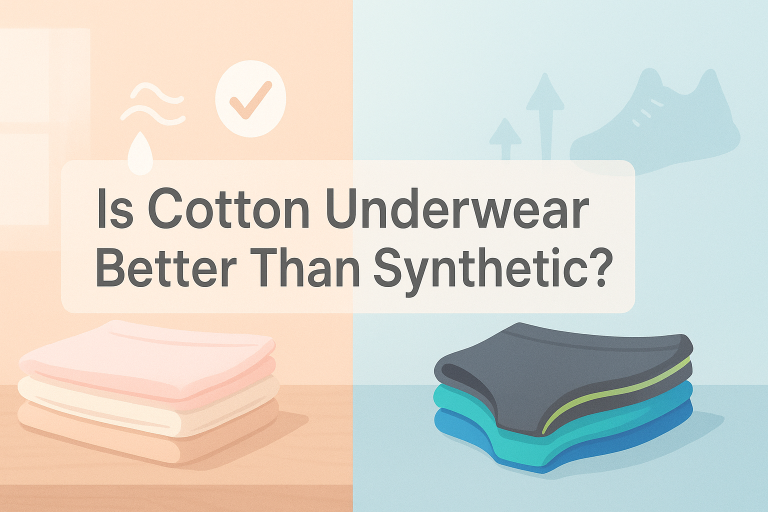
The American Academy of Dermatology recommends 100% cotton or cotton-gusset panties for women prone to vaginal irritation or recurrent yeast infections, noting that synthetic fabrics that trap moisture create the warm, moist environment that supports yeast proliferation.
Even in fully synthetic panties, a cotton gusset (the internal crotch panel) provides the dermatologically recommended breathability at the point of most direct skin contact. Most reputable lingerie brands include a cotton gusset in synthetic panties regardless of the outer fabric, and this detail is worth verifying on the product label before purchasing.
Fabric selection is a functional decision as much as an aesthetic one, and matching fabric stretch to hip-to-waist differential and fabric breathability to skin sensitivity produces the most comfortable long-term result for every body type.
Here is an interactive finder to help you match your body type and primary panty priority to the most suitable style in seconds.
Interactive Finder
Find the Right Panty Style for Your Body Type
Answer 2 questions to get a personalized panty recommendation.
How to Care for Panties to Maintain Fit and Fabric Integrity
Panty fit degrades over time when elastic loses recovery and fabric stretches without rebounding. The primary causes of premature elastic failure are heat exposure (hot water washing and tumble drying) and mechanical stress (wringing or overstuffing a washing machine). Proper care extends panty life by 30 to 50 percent according to the American Cleaning Institute’s published laundry guidance for delicate garments.
Hand-washing in cool water with a lingerie-specific detergent is the most effective care method for all panty fabrics, particularly lace, modal, and microfiber. A lingerie detergent with a pH between 6 and 7 (neutral to slightly acidic) preserves elastic fiber integrity better than standard alkaline laundry detergents, which break down elastane fibers with repeated use.
Machine washing is acceptable for cotton and cotton-spandex panties when done in a mesh laundry bag on a cold, delicate cycle. The mesh bag prevents the waistband elastic from catching on other garments during the spin cycle, which is the primary cause of elastic deformation in machine-washed panties.
Never tumble-dry panties. The American Cleaning Institute states that heat above 105 degrees Fahrenheit (the temperature of a standard warm tumble-dry cycle) degrades elastane fiber by accelerating oxidation, reducing elastic recovery by up to 40 percent after 20 wash cycles compared to air-dried equivalents.
Lay panties flat or hang them to dry at room temperature, away from direct sunlight. UV exposure bleaches dyes and accelerates fabric degradation in synthetic microfiber and modal panties, shortening wearable life regardless of washing method.
Proper care of your panties costs nothing and preserves the fit, elastic, and fabric quality that make a well-chosen style comfortable, so cold-water washing and air-drying are the two non-negotiable care habits for every panty fabric type.
Frequently Asked Questions About How to Choose Panties for Your Body Type
What is the best panty style for hiding a belly?
A high-waist brief is the most effective panty style for smoothing and concealing the lower abdomen. The waistband sits 1 to 2 inches above the navel and provides gentle compression across the lower stomach without a separate shapewear layer. Styles with a front tummy panel (a double-layer front section) deliver additional smoothing and are widely available from brands including Maidenform, Vanity Fair, and Hanes in sizes small through 3XL. Seamless microfiber construction is preferable to seamed styles to avoid visible horizontal lines through clothing over the tummy area.
Are thongs comfortable for all day wear?
Thongs are comfortable for all-day wear for most women when sized correctly and made from soft, seamless microfiber. The most common source of thong discomfort is wearing a size too small, which places tension on the rear elastic and creates persistent pressure. Correctly sized seamless thongs in nylon-spandex microfiber are consistently rated the most comfortable style for all-day wear in women who prefer minimal fabric. The American College of Obstetricians and Gynecologists notes no clinical evidence linking properly fitting thongs to increased infection risk when made with a cotton gusset.
How do I stop my underwear from riding up?
Underwear rides up for three specific reasons: the leg opening is too narrow for the thigh circumference, the rear coverage is too small for the seat, or the fabric has insufficient stretch recovery and creeps upward during movement. Sizing up by one and choosing a style with at least 8 percent elastane and a wider rear coverage panel resolves all three causes. For thong styles, riding up indicates the back panel length is too short and switching to a style labeled “extended back” or “full-coverage thong” corrects this without changing the thong cut.
What panties are best for plus-size women?
Plus-size women benefit most from high-waist briefs or boyshorts in seamless microfiber or modal-spandex blends with a wide, soft waistband (1.5 to 2 inches) and a wide leg opening cut on a curve rather than with a folded narrow elastic edge. Four-way stretch fabric is essential in plus-size panties to accommodate fuller hips without elastic resistance at the leg opening. Lane Bryant’s Cacique, Torrid, and Savage X Fenty all produce extended-size panty ranges with these construction features through 4X and larger. Measuring hip circumference and using the brand’s specific size chart produces more accurate results than sizing by dress size.
Can the wrong panty style cause discomfort or skin irritation?
Panties that are too small, made from non-breathable synthetic fabric without a cotton gusset, or cut with narrow leg-band elastics that dig into soft tissue can cause skin irritation, friction abrasions, and contact dermatitis. The American Academy of Dermatology identifies tight elastic, synthetic fabric against sensitive skin, and prolonged moisture retention as the three primary causes of panty-related skin irritation. Switching to cotton or cotton-gusset styles, sizing up by one, and choosing seamless leg openings eliminates these three causes in most cases without requiring a dermatology visit.
What panties are best for wearing under leggings?
A seamless microfiber thong is the most invisible panty choice under athletic leggings because the absence of seams and minimal fabric eliminates all sources of visible texture through the legging fabric. A seamless microfiber hipster is the second-best option for women who prefer more coverage, provided the style has no seam at the leg opening that could create a line at the outer thigh. Lace-trimmed styles, printed fabrics, and any style with a structured seam edge telegraph through legging fabric and are not recommended for this specific application.
Choosing panties for your body type comes down to three decisions: matching the rise height to where your torso needs coverage, matching the leg opening width to your hip circumference, and choosing a fabric with enough stretch to accommodate your specific waist-to-hip ratio. Start by measuring your hip circumference at the fullest point, then use your body type to narrow the style range, and finally match the style to the outer clothing you wear most. Those three steps, applied in that order, produce a panty collection that stays in place, fits comfortably all day, and works invisibly under any outfit.



4 Comments