What Is Panty Rise? Find Your Perfect Underwear Fit
Panty rise refers to the measurement from the waistband to the bottom of the crotch panel, and it determines how high or low underwear sits on your torso. This measurement directly affects comfort, coverage, and how underwear looks under clothing. Understanding panty rise helps you choose the right women’s underwear for every outfit, activity, and body type.
What Panty Rise Means and How It Is Measured
Panty rise is the vertical distance from the top of the waistband to the top of the crotch seam, measured in inches along the front panel of the garment. A higher rise number means the waistband sits closer to or above your natural waist, while a lower rise number means the waistband sits at or below your hip bones.
Most underwear brands categorize rise into three or four tiers. Low-rise typically measures 2 to 3 inches from crotch to waistband. Mid-rise measures approximately 3 to 4 inches. High-rise measures 5 to 7 inches, and extra-high or full-coverage styles can measure 7 inches or more.
The measurement is taken flat, from the center front waistband edge down to the point where the crotch seam begins. Stretch fabrics can affect the actual fit, so brands that list both a flat measurement and a stretch measurement give you the most accurate sizing guidance.
Rise measurement is part of a broader set of underwear fit specifications that also include hip circumference, waist circumference, and leg opening height. Together, these four measurements define whether a pair of underwear fits correctly across your entire lower torso.
Knowing your preferred rise in inches helps you shop across brands consistently, since style names like “bikini” or “hipster” do not always correspond to the same rise measurement from one manufacturer to another.
The Four Main Panty Rise Categories
Panty rise falls into four distinct categories, each designed for a different combination of coverage, silhouette, and wear purpose. Choosing the correct category for your body and outfit reduces visible panty lines, improves comfort, and ensures the garment stays in place throughout the day.
Low-Rise Underwear (2 to 3 Inches)
Low-rise underwear sits below the natural waist and typically aligns with or just below the hip bones, at roughly 2 to 3 inches of front rise. This rise works best with low-rise jeans, hip-hugging skirts, and cropped tops where any visible waistband would be unflattering.
The short front panel means low-rise styles provide minimal abdominal coverage. Women with shorter torsos often find low-rise the most proportionate option because the reduced coverage does not visually shorten the waist-to-hip ratio.
Low-rise bikini underwear and low-rise thong underwear are the two most common styles in this category. Both are popular choices under fitted pants and bodycon dresses where waistband bulk is unwanted.
Mid-Rise Underwear (3 to 4 Inches)
Mid-rise underwear sits at the top of the hip bones and covers the lower abdomen, with a front rise measurement between 3 and 4 inches. This rise category is the most universally flattering because it hits a neutral zone that suits most torso lengths and works under the widest variety of clothing.
Mid-rise hipster underwear and mid-rise briefs are the dominant styles in this category. The moderate coverage makes them a practical everyday choice for most body types without creating visible waistband bumps under mid-rise pants or skirts.
High-Rise Underwear (5 to 7 Inches)
High-rise underwear extends from above the natural waist down to full coverage of the seat, with a front rise of 5 to 7 inches. This rise category provides the most abdominal coverage and is frequently recommended for postpartum recovery, menstruation comfort, and wearing under high-waisted trousers and skirts.
According to fit specialists at major intimates retailers including ThirdLove and Soma, high-rise styles have seen consistent demand growth as high-waisted clothing has become a wardrobe staple. The waistband alignment between high-rise underwear and high-waisted bottoms eliminates the double-waistband bunching that lower-rise underwear creates under these garments.
High-rise brief underwear and high-waist control briefs are the two primary styles in this category. High-rise briefs focus on full coverage while high-waist control briefs incorporate light compression fabric for a smoother silhouette.
Extra-High-Rise or Full-Coverage Underwear (7 Inches and Above)
Extra-high-rise underwear extends to or above the belly button, with front rise measurements of 7 inches or more. This category includes postpartum recovery underwear, shapewear briefs, and period underwear designed for overnight or heavy-flow protection.
The extended front panel in extra-high-rise styles distributes compression more evenly across the lower abdomen, which is why this rise is commonly recommended by OB-GYNs during postpartum recovery according to guidance published by the American College of Obstetricians and Gynecologists on post-cesarean wound care and abdominal support.
Postpartum recovery underwear and high-waist period underwear typically fall into this category. Both use soft, stretchy fabrics that accommodate fluctuating waist measurements without binding.
Choosing a rise category is the first and most important underwear decision because it determines coverage, waistband placement, and garment compatibility before any other fit variable comes into consideration.
How Panty Rise Affects Fit and Comfort
Panty rise directly controls where the waistband sits on your torso, and that placement determines whether the garment pulls, bunches, digs, or stays in place throughout the day. A mismatch between your torso length and the rise measurement is the most common cause of underwear discomfort, more so than incorrect hip or waist sizing.
Torso Length and Rise Compatibility
Women with longer torsos between the natural waist and hip bones generally need a higher rise to achieve the same proportional coverage as a lower-rise style on a shorter torso. The Journal of the Textile Institute has published research on garment fit variables showing that torso length variation among women of the same hip circumference can differ by as much as 3 to 4 inches, which is the entire difference between a low-rise and a high-rise underwear category.
A low-rise style on a longer torso can create a gap between the waistband and the natural waist, causing the fabric to sag and the crotch panel to shift during wear. A high-rise style on a shorter torso can roll down because the waistband has no natural anatomical ledge to anchor against.
Waistband Comfort and Pressure Points
Waistband placement directly affects where pressure is distributed across the abdomen and hip bones. Low-rise waistbands place pressure directly on the iliac crest (the bony upper edge of the hip) in many women, which can cause redness and discomfort after several hours of wear.
High-rise waistbands distribute pressure across the softer abdominal tissue above the hip bones, which most women experience as more comfortable during extended sitting, bending, or physical activity. This is why high-rise styles are consistently recommended for women who experience hip bone pressure from lower-rise underwear.
Coverage and Shifting During Movement
The front rise measurement also determines how much of the seat is covered in back. A shorter front rise generally corresponds to a shorter back rise, which reduces seat coverage. During activities that involve bending, squatting, or stretching, styles with insufficient back rise will shift and require readjustment.
A rise that matches your activity level, not just your clothing preference, reduces the need for readjustment. Women who are physically active throughout the day benefit from a mid-rise or high-rise style with a full-seat back panel, while women primarily seated in office settings may find low-rise or mid-rise more comfortable under form-fitting trousers.
Getting the rise right for your torso length and daily activity level is the single most effective step for eliminating underwear discomfort that keeps recurring despite switching brands or sizes.
Panty Rise by Underwear Style
Different underwear styles have standard rise ranges associated with them, but these ranges vary by brand. Understanding which styles typically fall into which rise category helps you shop more efficiently and set accurate expectations before ordering.
Use the table below to match underwear style to its typical rise range and best-use scenario.
| Underwear Style | Typical Rise Range | Coverage Level | Best For |
|---|---|---|---|
| Thong | Low-rise (2 to 3 inches) | Minimal back coverage | Fitted dresses, trousers, no panty line |
| G-string | Low-rise (2 to 2.5 inches) | Minimal front and back | Very low-rise bottoms, swimwear cover-ups |
| Bikini | Low to mid-rise (2.5 to 3.5 inches) | Moderate front, moderate back | Everyday casual, jeans, mid-rise skirts |
| Hipster | Mid-rise (3 to 4 inches) | Full back, low front | Hip-hugging pants, athletic wear |
| Boyshort | Mid-rise (3.5 to 4.5 inches) | Full back, extended leg | Leggings, loungewear, preventing thigh chafing |
| Brief | High-rise (5 to 6 inches) | Full front and back | High-waisted bottoms, everyday full coverage |
| Full Brief / Granny Panty | Extra-high-rise (6.5 to 8 inches) | Complete torso coverage | Postpartum, menstruation, shapewear base |
| High-Waist Control Brief | Extra-high-rise (7 to 9 inches) | Abdominal compression | Smoothing under fitted clothing, postpartum |
The table above shows that thongs and bikinis anchor the low end of the rise spectrum, while control briefs occupy the high end, with hipsters and boyshorts filling the mid-range for everyday coverage needs.
Boyshort underwear and hipster underwear represent the best compromise styles for women who want more coverage than a bikini but less constriction than a high-rise brief.
How to Choose the Right Panty Rise for Your Body Type
Selecting the correct rise for your body is a practical decision based on three measurements: your natural waist circumference, your hip circumference, and the distance between those two points. These three numbers determine which rise category will sit properly on your body without rolling, digging, or bunching.
Measuring Your Torso for Rise Selection
To identify your ideal rise category, measure the vertical distance from your natural waist (the narrowest point of your torso, typically 1 inch above your navel) to the top of your hip bone. This measurement in inches maps directly to the rise categories described in this guide.
A torso-to-hip measurement of 3 inches or less indicates a short waist-to-hip distance, and low-rise to mid-rise styles will provide proportionate coverage. A measurement of 4 to 5 inches corresponds to mid-rise styles. A measurement of 6 inches or more indicates a longer waist-to-hip distance where high-rise or extra-high-rise styles provide full, proportionate coverage.
Rise Recommendations by Body Shape
Body shape affects how different rise categories look and feel in addition to the raw measurement. Women with a pronounced waist curve benefit from high-rise styles that anchor against the narrow waist point, preventing the waistband from slipping down. Women with a more columnar torso shape (less difference between waist and hip measurements) may find mid-rise styles stay in place more consistently because the waistband has less distance to travel before it slides.
Women who carry weight in the lower abdomen often find high-rise styles more comfortable than low or mid-rise because the higher waistband avoids the most prominent part of the abdomen, sitting above it rather than across it. The Cleveland Clinic recommends soft, high-waisted underwear specifically during bloating, digestive discomfort, and postoperative recovery for this same reason.
Rise Selection for Pregnancy and Postpartum
During the second and third trimesters of pregnancy, maternity underwear with an extra-high rise or over-bump panel is recommended by maternity wear specialists because the extended front panel accommodates the growing abdomen without rolling down or creating pressure bands across the belly. A standard high-rise brief typically loses its fit comfort after the second trimester as the belly extends beyond the waistband range.
Postpartum, high-rise and extra-high-rise recovery underwear provide gentle compression that many women find supportive during the 6 to 8 weeks after delivery. Over-bump maternity underwear and postpartum high-waist underwear are specifically designed for these two stages with different panel constructions.
Matching rise to your current body measurement, not to your historical clothing preferences, is the fastest path to consistent all-day comfort regardless of which life stage you are dressing for.
Panty Rise and Clothing Compatibility
The primary practical purpose of understanding panty rise is selecting underwear that is invisible under clothing. Waistband and seam placement relative to your clothing’s waist position determines whether underwear creates visible lines, bulk, or shifting under garments.
Matching Rise to Pant and Skirt Waistline
The most reliable rule for eliminating visible panty lines at the waist is to match your underwear’s waistband height to your clothing’s waistband height, or to keep the underwear waistband at least 1.5 inches below the clothing waistline. Any zone in between creates a double-waistband ridge visible through fitted fabrics.
Low-rise jeans and trousers pair best with low-rise underwear (2 to 3 inch rise) that sits at the same height as the clothing waistband. High-waisted trousers and skirts pair best with high-rise underwear (5 inches or more) so both waistbands align at the same natural waist point. Mid-rise clothing is the most flexible, accepting mid-rise underwear at the same level or low-rise underwear tucked well below the clothing waistband.
Rise Selection for Fitted and Bodycon Silhouettes
Fitted dresses, leggings, and bodycon skirts require underwear with seam and waistband placement that does not interrupt the smooth surface of the outer garment. Seamless no-show underwear in a mid-rise or low-rise cut eliminates the most common visible panty line locations (leg opening seam, side seams, and waistband ridge) under these garments.
High-rise seamless underwear works equally well under high-waisted bodycon skirts and fitted trousers because the waistband is concealed under the clothing waistline, leaving no visible edge at hip level.
Rise Selection for Active and Athleisure Wear
Athletic leggings and yoga pants require underwear that stays in position during flexion, extension, and lateral movement. A mid-rise hipster or boyshort in a moisture-wicking, four-way stretch fabric is the most stable choice because the wider waistband and greater leg coverage reduce both waistband rolling and leg riding-up.
Low-rise styles tend to shift during high-movement activities because the shorter waistband has less contact surface to stay anchored. High-rise styles under compression leggings can create a double-compression band at the waist that feels restrictive. The mid-rise range represents the best performance-to-comfort balance for most athletic activities.
Aligning underwear rise to your clothing’s waistline height eliminates the most visible and most uncomfortable fit problems without requiring any changes to your clothing or sizing.
Panty Rise Across Different Underwear Fabrics
Fabric composition affects how rise measurements perform in practice because stretch percentage, recovery rate, and weight all change how a waistband sits and maintains its position throughout the day. Two pairs of underwear with identical rise measurements can behave very differently depending on their fabric content.
Cotton and Cotton-Blend Rise Behavior
Cotton underwear has limited stretch recovery compared to synthetic fabrics, meaning a cotton waistband that stretches during wear does not spring back to its original position as reliably. This causes high-rise cotton briefs to gradually lose their waist grip over the course of a day, particularly in warmer conditions where sweat reduces friction between fabric and skin.
A study published in the Journal of Natural Fibers confirms that cotton blended with 5 to 8% elastane retains shape significantly better than 100% cotton after repeated washing and wearing cycles. Cotton brief underwear in a 92% cotton, 8% elastane blend is the industry standard for maintaining rise position across a full wearing day.
Nylon, Microfiber, and Synthetic Rise Performance
Nylon and microfiber underwear typically incorporates 15 to 20% elastane, which gives synthetic styles superior stretch recovery compared to cotton. This means a high-rise microfiber brief will return to its original waistband position more consistently after bending, sitting, and stretching. Synthetic fabrics also reduce friction against clothing due to their smooth surface, which makes them better suited to fitted silhouettes where fabric bunching is a concern.
Microfiber seamless underwear in a high-rise cut is the top-performing combination for maintaining rise position throughout an active day while staying invisible under fitted clothing.
Lace and Mesh Rise Considerations
Lace and mesh panels are decorative fabrics with lower elastane content than performance or everyday fabrics. A lace waistband typically has less grip than an elastane-bound waistband, which means lace-topped high-rise styles may roll down at the waist more easily than solid-fabric high-rise styles.
When choosing lace-trimmed high-rise underwear, look for styles where the structural waistband is a separate silicone-edged or elastane-reinforced band with a lace overlay, rather than a lace panel folded over to form the waistband. Lace high-rise briefs with reinforced waistbands maintain their rise position significantly better than those with a lace-only waistband construction.
Fabric choice and waistband construction work together with the rise measurement to determine how consistently underwear stays in position, so evaluating both simultaneously gives you the most accurate prediction of real-world performance.
Panty Rise Size Charts and How to Read Them
Underwear size charts from different brands use inconsistent terminology for rise, which makes direct comparison difficult. Understanding how to decode these charts allows you to shop accurately across multiple brands without relying solely on style names.
Use the table below to compare how major underwear brands categorize rise across their style lines.
| Rise Category | Front Rise (inches) | Common Style Names | Typical Waistband Position |
|---|---|---|---|
| Low-rise | 2.0 to 3.0 | Low bikini, low thong, low hipster | Below hip bone, at or below iliac crest |
| Mid-rise | 3.0 to 4.5 | Bikini, hipster, boyshort | At hip bone level |
| High-rise | 5.0 to 7.0 | Brief, full brief, high-waist bikini | Above hip bone, at or near natural waist |
| Extra-high-rise | 7.0 and above | Control brief, full coverage, over-bump | At or above natural waist, covering navel |
The table above shows why style names alone are insufficient for accurate rise selection: a “bikini” from one brand at 2.5 inches is a low-rise garment, while a “high-waist bikini” from another brand at 5 inches functions as a high-rise garment despite sharing the bikini name.
How to Find Rise Measurements in Size Charts
Most underwear size charts list hip and waist circumferences but omit the rise measurement. To find rise data, look for the product’s measurement guide in its detailed specifications section, typically listed under “product dimensions” or “fit details” rather than the main size chart. If the rise measurement is not listed, the front-to-back length measurement (also called the “crotch length” or “inseam length” on flat-lay specification diagrams) provides an approximate equivalent.
Brands that publish comprehensive fit guides, including Soma, Natori, and Hanky Panky, list rise in their detailed product specifications. When shopping with brands that do not publish rise measurements, customer reviews filtered by height can provide proxy information because shorter women typically report proportional fit issues when a style runs too high, and taller women report the inverse.
Sizing Up or Down for Rise Adjustments
Sizing up in underwear increases both circumference and rise because garment construction scales all dimensions proportionally. If a style fits well at the hip but the rise is too short, sizing up by one increment adds approximately 0.25 to 0.5 inches of additional rise in most brands. This adjustment only works within the style’s designed rise range, since a low-rise style sized up will remain a low-rise garment at a larger circumference.
Choosing a different style category with a higher inherent rise is more effective than sizing up when you need significantly more coverage. A mid-rise style in your correct size delivers more consistent front coverage than a low-rise style in a size larger.
Reading past the main size chart to find the specific rise measurement in inches is the most reliable strategy for getting the exact coverage you need, especially when ordering from a new brand for the first time.
Special Considerations for Panty Rise
Several specific situations require targeted rise selection beyond the general body-type and clothing-compatibility guidelines. These include medical recovery, athletic performance, and age-related anatomical changes that affect how underwear fits and functions.
Rise Selection After Abdominal Surgery
Following cesarean delivery, appendectomy, hysterectomy, or other lower abdominal surgeries, the incision location determines the safest rise choice. A waistband that crosses directly over an incision site creates friction and pressure that can delay healing and cause significant discomfort.
The American College of Obstetricians and Gynecologists recommends soft, seamless underwear positioned either well below the incision (low-rise) or entirely above it (extra-high-rise) during the initial recovery period. C-section recovery underwear specifically designed with a fold-down or fold-up waistband panel allows positioning adjustment as swelling changes in the weeks after surgery.
C-section recovery underwear with an adjustable fold-over waistband provides the most flexibility because the same garment can be worn below the incision in early recovery and pulled to full height once the incision is healed.
Rise and Pelvic Floor Considerations
Women managing pelvic floor conditions including stress urinary incontinence benefit from mid-rise to high-rise underwear because lower-rise styles can shift during the movements that trigger incontinence symptoms (coughing, sneezing, bending). A stable waistband position reduces garment distraction during pelvic floor exercises and daily activities.
Women’s health physical therapists frequently recommend mid-rise to high-rise cotton-blend underwear for patients in pelvic floor rehabilitation programs because the coverage and stability these styles provide support consistent positioning of absorbent liners or pads when needed. Light-incontinence underwear integrates an absorbent panel into the crotch of a high-rise brief construction for seamless protection.
Rise Selection During Menstruation
High-rise and extra-high-rise briefs are strongly preferred during menstruation for two reasons. First, the higher waistband keeps the back panel of the underwear anchored in position during sleep, when shifting causes leakage at the back. Second, high-rise coverage accommodates overnight pad length, which typically ranges from 11 to 14 inches, within the garment’s back panel without folding or bunching.
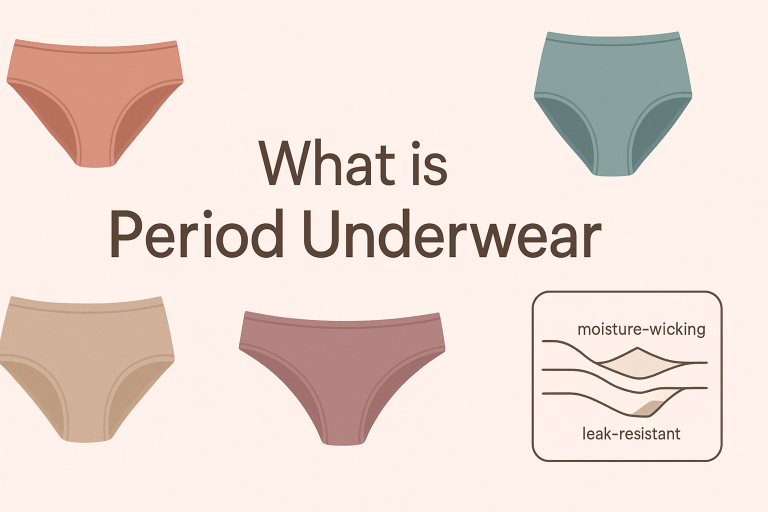
High-waist period underwear designed with a built-in absorbent layer uses an extra-high rise specifically to prevent the absorbent zone from shifting backward during movement and sleep. The extended back rise keeps the absorbent panel flat against the body throughout the night.
Treating rise as a functional specification rather than a style preference in these situations results in garments that perform their protective and supportive roles without requiring adjustment during the activities that matter most.
Interactive Tool
Find the Right Panty Rise for Your Needs
Answer 2 questions to get a personalized panty rise recommendation.
Common Panty Rise Mistakes and How to Fix Them
The most frequent underwear fit complaints trace back to a mismatch between rise and either torso length, clothing height, or activity level. Identifying which specific mismatch is causing the problem lets you solve it with a targeted rise adjustment rather than a full underwear replacement.
Waistband Rolling Down
A waistband that rolls down during wear usually indicates the chosen rise is too high for the torso length. When the waistband has no anatomical anchor point (a natural waist indentation or hip bone ledge to rest against), it slides to the nearest stable position, which is typically several inches lower than its intended placement.
The fix is to drop one rise category. If a high-rise style rolls to hip level, switch to a mid-rise style designed to sit at hip level from the start. Alternatively, choose a high-rise style with a silicone-gripper interior waistband edge, which adds friction against the skin to counteract the rolling.
Waistband Digging Into the Hip Bone
A waistband that digs into or leaves visible marks on the hip bone indicates a low-rise style placing its entire elastane tension on the iliac crest. This is one of the most common underwear comfort complaints, particularly in women who wear low-rise or mid-rise styles for extended sitting periods.
Switching to a mid-rise or high-rise style moves the waistband above the hip bone to the softer abdominal tissue, eliminating the pressure point entirely. Wide-waistband underwear in a mid-rise cut distributes pressure across a broader contact area as an alternative approach if you prefer to remain in a lower rise category.
Underwear Shifting or Riding Up During Activity
Shifting and riding up during movement indicates insufficient rise relative to the seat coverage required for your level of activity. Low-rise styles have a shorter back rise that reduces seat coverage, and when the garment is stretched during bending or squatting, the reduced back panel is pulled upward.
Increasing the rise by one category adds back panel length, which gives the garment more fabric to extend across the seat before it begins to pull. Adding a boyshort or hipster style (which extends the leg opening lower than a bikini or thong) provides additional fabric anchoring that reduces riding up from the leg opening direction as well.
Diagnosing the specific type of rise failure (rolling, digging, or shifting) points you directly to the targeted fix, which is almost always a single rise adjustment rather than a complete change of style or brand.
Frequently Asked Questions About Panty Rise
What is the difference between low-rise, mid-rise, and high-rise underwear?
Low-rise underwear has a front rise of 2 to 3 inches and sits at or below the hip bones. Mid-rise underwear measures 3 to 4.5 inches and sits at the hip bones. High-rise underwear measures 5 to 7 inches and sits above the hip bones at or near the natural waist. Each category differs in abdominal coverage, waistband placement, and compatibility with different clothing waistline heights.
How do I measure my panty rise at home?
Lay the underwear flat on a firm surface. Use a soft measuring tape to measure from the center top of the waistband straight down to the top of the crotch seam. This front-panel measurement in inches is the rise. Brands size rise proportionally, so the same numeric size in a bikini versus a brief will yield a meaningfully different rise measurement despite sharing the same waist circumference.
What panty rise is best for high-waisted jeans?
High-waisted jeans pair best with high-rise underwear at 5 inches or above. The underwear waistband should align with or sit just above the jeans waistband to prevent a double-waistband bulge. A seamless high-rise brief in a smooth microfiber or nylon-elastane blend eliminates both the waistband ridge and side seam lines under fitted high-waisted denim.
What panty rise is most comfortable for plus-size women?
Plus-size women most frequently report high-rise briefs as the most comfortable option because the waistband sits above the widest part of the hip and abdomen, distributing pressure more evenly across a broader area of softer tissue. Low-rise styles in larger sizes place a narrower waistband across the most curved part of the hip, which concentrates pressure and increases the likelihood of rolling and digging. Plus-size high-rise briefs with a wide, soft elastane waistband are consistently the top-rated choice in this category.
Does panty rise affect how underwear looks under leggings?
Panty rise determines waistband and leg seam placement under leggings, which directly affects visibility. A waistband that sits at the same height as the leggings waistband creates a visible ridge. A low-rise seamless underwear style at 2 to 3 inches sits well below most legging waistbands, leaving no visible edge. A high-rise seamless brief at 5 to 6 inches can sit above the leggings waistband and remain invisible if the leggings are high-waisted. Mid-rise options risk the most visible panty line because the waistband lands at hip level, exactly where most athletic leggings transition from solid to sheer fabric.
What is the best panty rise for a postpartum body?
An extra-high-rise soft recovery brief at 7 inches or more is the most recommended panty rise for the early postpartum period (the first 6 to 8 weeks after delivery). The extended front panel avoids the cesarean incision site when positioned correctly, provides gentle abdominal support, and accommodates postpartum body shape changes as swelling resolves and core tone returns. After the initial recovery period, transitioning to a high-rise brief (5 to 6 inches) provides ongoing coverage comfort as the body continues its recovery.
Is high-rise underwear the same as shapewear?
High-rise underwear and shapewear are not the same garment. High-rise underwear positions the waistband above the hip bones for coverage and comfort but uses standard-weight fabric without targeted compression. Shapewear uses compression fabric engineered to a specific pressure rating to reshape the silhouette. High-waist control briefs occupy a middle category, using moderately compressive fabric in a high-rise cut to smooth without the structured compression of true shapewear. Light shapewear briefs are available for women who want both the high-rise placement and a modest smoothing effect without full shapewear compression.
Understanding panty rise as a specific, measurable specification transforms underwear selection from a guessing game into a straightforward matching exercise between your torso, your clothing, and your daily activities. Choose your rise category first, then choose your style and fabric within that category. Check the specific front rise measurement in inches when shopping from new brands, since style names alone are unreliable guides. With the right rise, the right fabric, and the right size, underwear should stay in place, stay invisible, and stay comfortable from the first wear to the last.