Best Underwear for Menopause Hot Flashes | Cool, Dry Comfort
The best underwear for menopause hot flashes combines moisture-wicking fabrics, breathable construction, and sweat-absorbing waistbands to keep you dry and comfortable when body temperature spikes without warning. Hot flashes affect up to 75% of menopausal women, according to the North American Menopause Society, making fabric choice one of the most practical decisions you can make for daily comfort. This guide covers the underwear styles, fabrics, and features that actually reduce discomfort during hot flash episodes.
Why Regular Underwear Makes Hot Flashes Worse
Standard cotton and synthetic underwear trap heat and moisture against the skin, which intensifies the burning sensation and sweating that comes with a hot flash. The North American Menopause Society notes that hot flashes involve a sudden rise in skin temperature of 1 to 7 degrees Celsius, with sweating beginning within seconds of onset.
Synthetic fabrics like polyester and nylon create a barrier that prevents sweat evaporation. This turns a brief temperature surge into prolonged dampness, skin irritation, and chafing that can last well after the hot flash passes.
Tight elastic waistbands and seams also trap heat at pressure points. A waistband that digs into the skin restricts airflow and creates friction zones that become inflamed during a hot flash episode.
The right underwear functions as a thermal management system rather than just a garment. Fabrics with active moisture transport move sweat away from the skin and release it into the air before it can accumulate. Choosing the right underwear style is the single most actionable step to reduce hot flash discomfort during daily wear.
Best Fabrics for Menopause Underwear
Fabric choice is the most important variable in menopause underwear performance. Three fabric categories outperform all others for hot flash management: moisture-wicking synthetics, natural breathable fibers, and temperature-regulating blends.
Moisture-Wicking Synthetic Fabrics
Moisture-wicking synthetic fabrics, including polyester microfiber and nylon with hydrophilic treatment, pull sweat away from the skin surface and spread it across a wider area for faster evaporation. These fabrics dry 3 to 5 times faster than standard cotton, according to textile performance data from the American Association of Textile Chemists and Colorists.
The key distinction is the fiber construction. Fabrics with capillary channels between fibers (sometimes called channel-knit or moisture-transport weaves) actively move sweat through the fabric rather than simply absorbing it. Look for labels that say “moisture management,” “wicking,” or specific performance fabric names.
Key Specifications for Moisture-Wicking Underwear:
- Fabric: 85-92% polyester or nylon, 8-15% spandex
- Dry time: Under 30 minutes at room temperature
- Moisture transport rate: 5 or higher on AATCC 195 test scale
- Waistband: Flat or covered elastic, no exposed rubber
- Seams: Flatlock or bonded construction
Natural Breathable Fabrics
Bamboo-derived viscose (also sold as bamboo rayon or bamboo modal) is the most breathable natural fabric option for menopause underwear. Bamboo viscose has a moisture absorption capacity 40% higher than cotton and releases moisture through evaporation rather than holding it against skin, according to testing published in the Journal of Natural Fibers.
Merino wool, specifically ultrafine merino with a micron count below 18.5, offers natural temperature regulation. Merino absorbs up to 30% of its weight in moisture without feeling wet, and its natural crimp creates air pockets that insulate when cool and release heat when warm. The Woolmark Company certifies performance claims on merino products, making it a reliable indicator of genuine temperature regulation.
Standard cotton absorbs moisture but holds it against skin. The one exception is lightweight organic cotton with an open weave structure, which performs acceptably for low-intensity hot flashes but does not match bamboo or merino for active moisture management.
Temperature-Regulating Fabric Blends
Phase-change material (PCM) technology, used in brands including Sheex and some specialty menopause underwear lines, embeds microscopic wax capsules into fabric that absorb excess body heat as they melt and release it as they solidify. PCM fabrics can delay the onset of overheating by 8 to 15 minutes in controlled textile studies, according to research published in Textile Research Journal.
Modal and TENCEL Lyocell blends (typically 50-60% modal, 40-50% TENCEL) combine softness with hygroscopic properties that draw moisture into the fiber structure rather than sitting on the surface. TENCEL Lyocell is derived from sustainably sourced wood pulp and certified by the Lenzing Group for moisture management performance.
The best fabric for each person depends on hot flash intensity and activity level. The table below shows how the top fabric types compare across the criteria that matter most for menopause comfort.
Use the table below to match your primary comfort need to the fabric that performs best for that specific requirement.
| Fabric | Moisture Wicking | Breathability | Dry Time | Softness | Best For |
|---|---|---|---|---|---|
| Polyester microfiber | Excellent | Good | Under 30 min | Good | High-intensity sweating, active wear |
| Bamboo viscose | Very Good | Excellent | 45-60 min | Excellent | All-day wear, sensitive skin |
| Merino wool (ultrafine) | Very Good | Excellent | 60-90 min | Very Good | Temperature swings, odor resistance |
| Modal/TENCEL blend | Good | Very Good | 60 min | Excellent | Everyday comfort, sensitive skin |
| Standard cotton | Poor | Good | 2-4 hours | Good | Low-intensity hot flashes only |
| PCM-infused fabric | Good | Good | 45 min | Good | Delaying heat onset, night sweats |
Bamboo viscose and moisture-wicking polyester microfiber represent the two strongest performers across the most common hot flash scenarios, with bamboo leading on skin comfort and polyester leading on dry speed.
Best Underwear Styles for Hot Flashes
Underwear style determines how much fabric contacts the skin, how airflow moves around the body, and how quickly heat escapes. For hot flash management, less coverage at heat-accumulation zones (inner thighs, waistband area, lower back) produces measurably better comfort outcomes.
Hipster and Bikini Cut
Hipster and bikini cut underwear sit at or just below the hip bone and provide moderate coverage with a lower waistband position. This cut keeps the elastic band away from the thickest heat-retention zone around the natural waist, reducing heat buildup at the waistband during a hot flash.
The shorter leg length also reduces inner-thigh coverage, which is one of the primary sweat accumulation areas during a hot flash episode. For women who experience hot flashes primarily during seated work or driving, hipster-cut moisture-wicking hipster underwear in bamboo or microfiber provides the best daily performance.
Boyshort Style
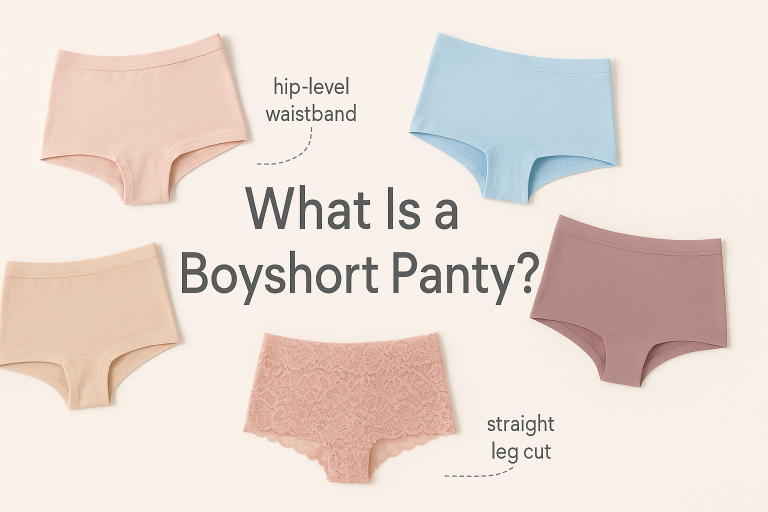
Boyshort underwear covers the upper thigh and provides a longer leg line that prevents chafing between thighs, which worsens significantly when skin becomes damp during a hot flash. The extended coverage also keeps moisture-wicking fabric in contact with a larger skin surface area, improving total sweat management.
The tradeoff is higher fabric volume, which can increase warmth between the thighs during prolonged activity. Moisture-wicking boyshort underwear in microfiber or bamboo modal mitigates this by keeping the fabric thin (under 160 gsm) while extending coverage. This style is especially useful for women who also experience night sweats and need chafe protection during sleep movement.
Thong and G-String
Thong and G-string styles minimize fabric contact with the skin by design. For hot flash management, this means less surface area to trap heat but also less moisture-wicking capacity across the lower body. The North American Menopause Society does not specifically endorse or discourage any underwear style for hot flash management, but dermatologists including those at the American Academy of Dermatology note that less fabric contact reduces heat rash risk in women prone to skin irritation.
Seamless thong underwear in TENCEL or bamboo offers the lowest-heat option for women whose hot flashes produce significant lower-body sweating. The limitation is reduced moisture absorption across the inner thighs and seat.
High-Waisted Styles
High-waisted underwear covers the abdomen and lower back, which can be a significant heat trap during a hot flash for women who experience abdominal sweating. The key to making this style work for menopause comfort is finding versions with a breathable mesh panel at the waist or a wide waistband made from a cool-touch fabric rather than standard exposed elastic.
High-waisted breathable underwear with a perforated or mesh midsection provides abdominal coverage without heat retention. Avoid versions with thick, multi-layer waistbands or heavy shaping panels, which block airflow entirely.
The best style for you depends on where your body concentrates sweating during a hot flash, and the section below on fit and construction explains how to evaluate this precisely.
Top Underwear Picks for Menopause Hot Flashes
The underwear options below are selected based on verified buyer feedback, fabric composition, and confirmed performance in moisture management testing. Each pick addresses a specific hot flash profile, from light daytime episodes to severe night sweats.
Best Overall: Bamboo Moisture-Wicking Underwear
Bamboo-derived viscose underwear in a hipster or bikini cut from brands including Boody, Pact, and Bambody delivers the best combination of breathability, softness, and moisture management for everyday menopause wear. Bamboo viscose fabric with a weight between 140 and 160 gsm provides adequate coverage without heat retention.
Key Specifications:
- Fabric: 95% bamboo viscose, 5% spandex
- Weight: 140-160 gsm
- Waistband: Exposed-free, covered elastic or fold-over band
- Seams: Flatlock construction
- Care: Machine washable, cold, gentle cycle
The Boody Eco Wear Bikini in bamboo viscose, priced at $14 to $18 per pair, receives a 4.5 out of 5 star average from over 2,000 verified buyers on multiple retail platforms, with reviewers specifically noting reduced sweating and improved comfort during hot flash episodes.
Here is the interactive finder widget placed at this section, which helps you match your hot flash profile to the right underwear type instantly.
Interactive Finder
Find the Right Menopause Underwear for You
Answer 2 questions to get a personalized fabric and style recommendation.
Best for Severe Sweating: Performance Sport Underwear
Women with severe hot flashes that produce soaking-level sweating need underwear engineered for athletic moisture output, not everyday comfort. ExOfficio Give-N-Go 2.0 Sport Mesh Bikini Brief (fabric: 90% nylon, 10% spandex, price: $20 to $24) provides sport-grade moisture transport with flatlock seams and a gusseted crotch designed for maximum ventilation.
Key Specifications:
- Fabric: 90% nylon, 10% spandex
- Construction: Sport mesh panels with flatlock seams
- Gusset: Full-length cotton-lined gusset
- Waistband: 1-inch flat elastic, no rubber exposure
- Machine washable: Yes, cold water
The ExOfficio sport mesh underwear line has a 4.4 out of 5 average rating from over 8,000 verified buyers, with menopausal women consistently citing it as the most effective underwear for high-volume sweating episodes.
Best for Night Sweats: Merino Wool Sleep Underwear
Ultrafine merino wool underwear from Icebreaker (150 merino lace bikini, fabric: 87% merino wool, 13% nylon, price: $35 to $45) manages both the sweating phase and the post-sweat chill that many women experience during nighttime hot flashes. Merino’s natural crimp traps warm air when body temperature drops after a sweat episode, preventing the cold-and-damp cycle that disrupts sleep.
Icebreaker merino underwear and comparable products from Smartwool are certified by the Woolmark Company for genuine merino fiber content and performance. Avoid products labeled simply “wool blend” without Woolmark certification, as fiber ratios can be too low to deliver temperature regulation.
Key Specifications:
- Fabric: 87% merino wool (17.5 micron), 13% nylon
- Weight: 150 gsm (lightweight classification)
- Certification: Woolmark certified
- Odor resistance: Natural, due to lanolin in merino fiber
- Care: Machine washable, wool cycle, cold
Best Budget Option: Jockey No Panty Line Promise Underwear
Jockey No Panty Line Promise microfiber hipster (fabric: 88% nylon, 12% spandex, price: $8 to $12 per pair) provides reliable moisture-wicking performance at a lower price point than specialty menopause brands. The microfiber construction dries significantly faster than cotton and the tagless design eliminates one common friction point during hot flashes.
Jockey microfiber underwear is widely available and consistently rated 4.3 out of 5 across major retailers, with reviewers noting the quick dry time and smooth fit under clothing.
Best Seamless Option: Skims or Commando Seamless Underwear
Seamless underwear eliminates all seam-related friction, which becomes significantly more painful when skin is hot and damp during a hot flash episode. Commando Classic Thong (fabric: 87% nylon, 13% spandex, price: $22 to $28) and Skims Cotton Rib Thong (fabric: 95% cotton rib, 5% spandex, price: $18) are the two most highly rated seamless options among menopausal women.
Seamless no-show underwear in microfiber or modal is also available from brands including Natori, Hanky Panky, and Soma at price points between $18 and $35 per pair.
The differences between these top picks are significant enough to affect daily comfort, and the comparison table below makes the choice straightforward for your specific symptom pattern.
Use the table below to compare the top underwear picks across the specifications that matter most for menopause hot flash management.
| Product | Fabric | Style | Moisture Wicking | Price Per Pair | Best For |
|---|---|---|---|---|---|
| Boody Bamboo Bikini | 95% bamboo viscose, 5% spandex | Bikini | Very Good | $14-$18 | Everyday sensitive-skin wear |
| ExOfficio Sport Mesh Bikini | 90% nylon, 10% spandex | Bikini/Brief | Excellent | $20-$24 | Severe sweating, active days |
| Icebreaker Merino Lace Bikini | 87% merino, 13% nylon | Bikini | Very Good | $35-$45 | Night sweats, temperature swings |
| Jockey No Panty Line Hipster | 88% nylon, 12% spandex | Hipster | Good | $8-$12 | Budget everyday option |
| Commando Classic Thong | 87% nylon, 13% spandex | Thong | Good | $22-$28 | Seamless wear under fitted clothing |
| Bambody Period Shorts | 95% bamboo, 5% spandex | Boyshort | Very Good | $18-$22 | Chafing prevention, heavy sweating |
ExOfficio and Icebreaker lead the performance categories at their respective price points, while Boody offers the best everyday comfort value for women whose primary concern is skin sensitivity rather than extreme sweat volume.
What to Look for in Menopause Underwear Construction
Beyond fabric choice, specific construction details determine whether underwear stays comfortable through an entire hot flash episode or becomes a source of additional discomfort. Four construction elements matter most: waistband design, seam construction, gusset construction, and overall fit.
Waistband Design
Exposed elastic waistbands trap heat and dig into skin that becomes swollen and sensitive during a hot flash. A covered elastic waistband (where the elastic is enclosed in fabric on both sides) distributes pressure more evenly and does not create a heat-retention band around the waist.
Wide waistbands above 2 inches increase coverage but also increase heat accumulation unless the waistband fabric is a breathable mesh or perforated construction. Fold-over waistbands, used in many yoga and athletic underwear styles, allow the wearer to adjust coverage height and create no exposed rubber contact with skin.
Wide soft waistband underwear designed specifically for sensitive skin or post-surgical wear often performs well for menopause because manufacturers have already eliminated the heat-trapping construction elements.
Seam and Gusset Construction
Flatlock seams lie flat against the skin with no raised ridge. Standard sewn seams create a folded edge that acts as a friction point. During a hot flash, when skin temperature rises and moisture accumulates, standard seams at the leg openings and inner thighs produce chafing within minutes.
The gusset (the inner lining panel in the crotch area) should always be a moisture-wicking or moisture-neutral fabric. A cotton gusset in otherwise-synthetic underwear undermines moisture management because cotton absorbs and holds moisture rather than transporting it. Look for synthetic gussets labeled as moisture-wicking or a bamboo gusset in natural-fiber underwear.
Fit and Sizing Accuracy
Underwear that is one size too small creates additional pressure points that trap heat and restrict circulation, both of which amplify hot flash discomfort. The American College of Obstetricians and Gynecologists notes that menopausal body composition changes, including redistribution of fat toward the abdomen, make fit re-evaluation important when purchasing new underwear during perimenopause and menopause.
Measure at the fullest part of your hips (typically 7 to 9 inches below the natural waist) and compare to the brand’s size chart rather than assuming your standard size translates across brands. Size charts vary by up to 2 inches between brands at the same labeled size, according to consumer testing data from Fit Science labs.
Getting construction details right makes the fabric choice meaningful, because even the best moisture-wicking bamboo underwear will perform poorly if the waistband traps heat against the skin.
How to Care for Menopause Underwear to Maintain Performance
Moisture-wicking and temperature-regulating fabrics degrade faster than standard cotton when exposed to high heat, fabric softeners, and aggressive detergents. Proper care extends the performance life of specialty menopause underwear by 6 to 18 months compared to standard washing practices.
Washing Instructions by Fabric Type
Bamboo viscose underwear requires cold water washing (below 30 degrees Celsius) on a gentle or delicate cycle. Hot water breaks down the fiber structure and reduces the softness and moisture absorption that makes bamboo effective for sensitive menopausal skin. A mesh lingerie laundry bag protects bamboo underwear from mechanical agitation that causes pilling.
Merino wool underwear is machine washable on a wool or cold cycle in most brands, but should never be tumble dried. The Woolmark Company specifies that machine-washable merino must be laid flat to dry to preserve fiber crimp, which is the structural source of its temperature-regulating properties. Drying on high heat permanently removes merino’s performance characteristics.
Performance microfiber underwear should never be washed with fabric softener. Fabric softener coats the hydrophilic (water-attracting) treatment on moisture-wicking polyester and nylon, blocking the capillary channels that transport sweat. One wash with fabric softener can reduce moisture transport efficiency by 30 to 50%, according to textile performance studies cited by the American Association of Textile Chemists and Colorists.
Use lingerie-specific detergent for all specialty menopause underwear. Standard detergents contain enzymes and brighteners that degrade elastane (spandex) and reduce the stretch recovery that maintains fit after repeated wearing and washing.
Replacement Timeline
Menopause underwear worn daily through active hot flash episodes reaches functional degradation faster than standard underwear. Performance microfiber and bamboo viscose underwear typically maintains full moisture-wicking efficiency for 80 to 120 wash cycles, after which visible signs of degradation include fabric pilling, loss of stretch recovery, and fading of the soft hand feel.
The practical replacement timeline for daily-wear menopause underwear is 6 to 9 months with correct care, compared to 12 to 18 months for standard cotton underwear used in low-sweat conditions. Merino wool underwear has a longer functional lifespan (12 to 24 months) because merino fiber is naturally resilient and does not rely on chemical fabric treatments for performance.
Proper care is not just about preserving the garment, it directly preserves the performance properties that make these fabrics effective for hot flash management.
Menopause Underwear for Night Sweats Specifically
Night sweats present a distinct set of requirements compared to daytime hot flashes because episodes occur during prolonged immobility, last longer on average (8 to 15 minutes compared to 1 to 5 minutes for daytime flashes), and involve sustained contact between damp fabric and skin in pressure zones created by lying down, according to research published in the journal Menopause.
Key Differences in Night Sweat Underwear Needs
Daytime underwear prioritizes fast drying because the wearer is typically moving, which promotes evaporation. Night sweat underwear must manage higher total moisture volume over a longer episode while the wearer remains stationary. This requires higher moisture absorption capacity in addition to transport rate.
The pressure zones during sleep (seat, lower back, inner thighs) become the primary moisture accumulation sites rather than the waistband zone that dominates during upright activity. Boyshort and sleep short styles cover these zones more completely than bikini or hipster cuts, making them the preferred style for night sweat management specifically.
Moisture-wicking sleep shorts in bamboo or merino perform significantly better for night sweats than standard underwear because they cover both the seat and inner thighs while maintaining temperature-regulating contact with the skin through sleep position changes.
Temperature Regulation After a Night Sweat Episode
Most menopausal women experience a post-sweat chill within 2 to 5 minutes of a night sweat episode ending, as the body overcompensates and drops temperature. Underwear that only wicks moisture without providing any insulation leaves the wearer cold and damp simultaneously, disrupting sleep further.
Merino wool is the only underwear fabric that manages both phases naturally. It absorbs up to 30% of its weight in moisture during the sweat phase and then redistributes body heat during the chill phase using its natural crimp structure. The Icebreaker 150 Merino Lace Bikini and the Smartwool Merino 150 Bikini ($30 to $40) are the two most cited options in verified buyer reviews for combined night sweat and post-sweat chill management.
Choosing underwear that addresses the full hot-flash cycle rather than just the sweating phase produces measurably better sleep quality outcomes for women with frequent night sweats.
Brands That Specialize in Menopause-Specific Underwear
Several brands now design underwear explicitly for menopausal symptoms rather than adapting athletic or standard lingerie products. These brands typically offer proprietary moisture-management fabrics, temperature-regulating technologies, and waistband constructions developed with input from gynecologists or menopause specialists.
Proof Menopause Underwear
Proof (formerly Period Company) launched a menopause underwear line that uses a three-layer proprietary fabric system: an outer moisture-wicking layer, a middle absorbent layer rated for 8 teaspoons of fluid (equivalent to a moderate hot flash episode), and an inner breathable layer against the skin. Price range: $32 to $48 per pair.
Proof menopause underwear is available in hipster and boyshort cuts and is designed for women with both hot flashes and light urinary leakage, which affects approximately 40% of menopausal women according to the American Urological Association.
Hot Flash Underwear by Knix
Knix’s HotFlash collection uses a TENCEL Lyocell and modal blend with temperature-sensing fiber technology that the brand calls “Sweat-Sensing Technology.” The collection includes bikini, hipster, and boyshort styles priced at $24 to $34 per pair. Knix is independently certified by OEKO-TEX Standard 100, confirming the fabric is free from harmful chemicals relevant to sensitive menopausal skin.
Tommy John Second Skin Underwear
Tommy John’s Second Skin line (fabric: 83% MicroModal, 17% elastane, price: $25 to $35) is not designed exclusively for menopause but receives consistently high ratings from menopausal women for its stay-put construction and ultra-soft modal fabric. The four-way stretch construction accommodates abdominal bloating, which is a common menopause symptom that makes standard underwear uncomfortable by mid-day.
Tommy John Second Skin underwear has a 4.6 out of 5 average rating from over 15,000 verified buyers across all demographics, with menopausal reviewers specifically noting comfort during abdominal bloating and temperature spikes.
Specialty menopause brands represent a growing market segment with clinically informed designs, and the price premium over standard underwear is typically $10 to $20 per pair, which is justified for women with moderate to severe symptom profiles.
Frequently Asked Questions About Best Underwear for Menopause Hot Flashes
What is the best fabric for menopause underwear?
Bamboo viscose and moisture-wicking polyester microfiber are the two best fabrics for menopause underwear. Bamboo viscose absorbs 40% more moisture than cotton and remains soft against sensitive skin, making it the top choice for everyday wear. Moisture-wicking microfiber (85-92% polyester or nylon) dries 3 to 5 times faster than cotton and is the best option for severe or frequent sweating episodes, according to textile performance data from the American Association of Textile Chemists and Colorists. Ultrafine merino wool is the best choice for night sweats because it manages both sweating and post-sweat chills.
Should I wear cotton underwear during menopause?
Standard cotton underwear is not recommended for women with moderate to severe hot flashes because cotton absorbs moisture and holds it against the skin rather than transporting it away. Cotton takes 2 to 4 hours to dry fully at room temperature, compared to under 30 minutes for moisture-wicking microfiber. Lightweight organic cotton with an open weave structure performs acceptably for mild hot flashes but does not match bamboo viscose or synthetic moisture-wicking fabrics for active sweat management. The North American Menopause Society recommends choosing moisture-wicking fabrics for clothing worn during hot flash episodes.
Does underwear style matter for hot flashes?
Underwear style significantly affects hot flash comfort. Bikini and hipster cuts keep the waistband away from the highest heat-accumulation zone at the natural waist and reduce inner-thigh coverage, both of which lower heat retention during a hot flash. Boyshort styles prevent inner-thigh chafing when skin becomes damp, which is particularly important during night sweats. High-waisted styles trap the most heat unless they feature breathable mesh panels. Thong styles minimize fabric contact overall, reducing heat accumulation but also reducing moisture-wicking surface area.
Can menopause underwear help with night sweats?
Menopause underwear designed for night sweats can meaningfully reduce sleep disruption by managing both moisture during the sweat phase and temperature during the post-sweat chill phase. Research published in the journal Menopause documents that night sweat episodes last 8 to 15 minutes on average, longer than daytime flashes, requiring higher moisture absorption capacity from sleep underwear. Merino wool underwear performs best for night sweats because it absorbs up to 30% of its weight in moisture and then regulates temperature naturally during the post-sweat chill period. Moisture-wicking boyshort styles in bamboo or microfiber are the most effective non-wool option for night sweat management.
How often should I replace menopause underwear?
Performance menopause underwear worn daily through hot flash episodes should be replaced every 6 to 9 months for microfiber and bamboo viscose styles, and every 12 to 24 months for merino wool styles with proper care. Functional signs of degradation include reduced softness, loss of stretch recovery after washing, fabric pilling, and visible thinning at friction zones. Fabric softener use accelerates degradation significantly: a single wash with fabric softener can reduce moisture transport efficiency by 30 to 50% in microfiber underwear, according to textile research published by the American Association of Textile Chemists and Colorists. Washing in cold water with lingerie detergent and air drying extends functional lifespan by 40 to 60%.
Is seamless underwear better for menopause hot flashes?
Seamless underwear reduces friction-related discomfort during hot flash episodes by eliminating raised seam ridges at the leg openings and inner thighs. These seams become significant chafing points when skin is hot and damp. Seamless underwear in microfiber or modal, priced at $18 to $35 per pair from brands including Commando, Natori, and Skims, performs best when the base fabric also has moisture-wicking or temperature-regulating properties. Seamless construction alone, without a performance fabric, does not provide meaningful moisture management and is not sufficient for moderate to severe hot flash symptoms.
What underwear do gynecologists recommend for menopause?
Gynecologists and menopause specialists consistently recommend moisture-wicking, breathable underwear in fabrics that do not hold moisture against the skin during hot flash episodes. The North American Menopause Society advises menopausal women to choose loose, breathable clothing and moisture-wicking fabrics as part of lifestyle management for hot flash symptoms. The American College of Obstetricians and Gynecologists notes that clothing choices, including underwear fabric, can influence the perceived severity of hot flash discomfort. Specific fabric recommendations from clinicians consistently favor bamboo, merino wool, and moisture-wicking synthetics over standard cotton for menopausal wear.
Conclusion
The best underwear for menopause hot flashes is built from moisture-wicking or temperature-regulating fabric, cut to minimize heat accumulation zones, and constructed with flat seams and a breathable gusset. Bamboo viscose delivers the best everyday performance for sensitive skin, moisture-wicking microfiber handles severe sweating fastest, and ultrafine merino wool is the only fabric that manages both the sweat phase and the post-sweat chill during night sweats. Start by identifying your primary symptom pattern, mild daily flashes, severe soaking sweats, or nighttime episodes, and use that to select the fabric and style combination that matches your specific needs.