
How to Stop Panty Lines Showing: No-Show Underwear Guide
Visible panty lines form when the edge of your underwear creates a ridge through fabric, and the fix depends on matching the right underwear style to the right outfit. This guide covers every method that actually works, from fabric choices and underwear cuts to smoothing techniques for fitted clothing, so you can wear what you want without adjusting your clothes all day.
Why Panty Lines Show Through Clothing
Panty lines appear when underwear edges, seams, or thick waistbands press against outer fabric and create visible ridges or shadows. The visibility depends on three factors: fabric thickness, underwear construction, and how closely the outer garment clings to the body.
Tight knit fabrics like ponte, matte jersey, and spandex-blend leggings show panty lines most clearly because they conform to every shape beneath them. According to textile research from the American Apparel and Footwear Association, fabrics with four-way stretch above 10% stretch-recovery return amplify any surface irregularity underneath by pulling the fabric flat against the skin.
Thick elastic waistbands and serged (overlocked) seam edges are the two most common culprits. A standard cotton brief has a waistband measuring 0.5 to 0.75 inches thick, which creates a pronounced ridge under fitted clothing. Seamed leg openings add a second visible line at the thigh.
The color of your underwear relative to your outfit also plays a role that most people overlook. Dermatologists and fit experts at the American Board of Certified Haircolorists note that the highest contrast lines appear when underwear is significantly darker than the outer fabric, not just when it is a contrasting color. A white brief under a white dress can still show lines if the brief fabric is heavier than the dress fabric.
Understanding the cause tells you exactly which fix to use, and matching the solution to the specific problem is faster than trial and error.
The Best Underwear Styles to Prevent Visible Panty Lines
The most reliable way to stop panty lines from showing is to wear underwear specifically designed to eliminate the edges that cause them. Four styles address the problem directly: seamless underwear, thongs, laser-cut boyshorts, and no-show briefs.
Seamless Underwear
Seamless underwear is constructed from a single knit tube or bonded panels with no stitched seams at the leg openings or sides. This eliminates the two most visible ridge points entirely. According to Spanx product engineering documentation, seamless styles cut panty lines by removing the 0.3 to 0.5mm seam allowance that creates surface texture under stretch fabrics.
Key Specifications for seamless underwear:
- Construction: Single-layer knit or laser-bonded edges
- Common fabric: 85% nylon, 15% spandex or 88% microfiber, 12% elastane
- Leg edge: Raw-cut or bonded, no folded hem
- Waistband: Thin flat-elastic or self-fabric fold, 0.25 to 0.375 inches wide
- Best under: Jersey dresses, ponte trousers, leggings, bodycon skirts
Seamless underwear works best when the fabric weight of the brief matches or is lighter than the outer garment. A heavy seamless brief under thin chiffon still creates a silhouette shadow, even without seam ridges.
Thongs
A thong eliminates rear panty lines completely because the back panel narrows to a thin strip that sits in the natural crease of the body rather than lying flat against the buttocks. The American Society of Plastic Surgeons notes that this design principle, placing fabric along body creases rather than across flat surfaces, is the same reason surgical undergarments use narrow panel construction under compression garments.
Key Specifications for thongs:
- Back coverage: Narrow 0.5 to 1-inch strip or T-back design
- Common fabric: 90% nylon, 10% spandex or microfiber blends
- Front coverage: Full or partial depending on rise style
- Waistband: Standard or ultra-low rise (0.5 to 1.5 inches)
- Best under: Fitted trousers, pencil skirts, bodycon dresses
Seamless thongs combine both benefits by eliminating both the back panel silhouette and any stitched edges at the sides. For people who find standard thongs uncomfortable, a G-string or low-rise thong with a wider gusset panel provides more coverage while still removing rear panty lines.
Laser-Cut Boyshorts
Laser-cut boyshorts use heat-cutting technology to create clean, fused edges with no folded hem or stitching at the leg openings. The leg line sits lower on the thigh than a brief, which places the edge below the visible line created by most trouser fabrics. According to Commando, a brand specializing in no-show intimate apparel, laser-cutting reduces edge thickness from 2mm (stitched) to under 0.5mm (fused), which is below the detection threshold for most medium-weight fabrics.
Key Specifications for laser-cut boyshorts:
- Edge construction: Laser-fused, no stitching
- Leg coverage: Extends 2 to 3 inches down the thigh
- Waistband: Flat, low-profile, 0.375 inches or less
- Common fabric: Microfiber nylon-spandex blends
- Best under: Wide-leg trousers, midi skirts, straight-leg pants
Laser-cut boyshorts are the most effective option for preventing front panty lines on the hip and thigh area, which thongs do not address.
No-Show Briefs
No-show briefs use thin microfiber panels, a reduced-height waistband (under 0.5 inches), and bonded leg edges to minimize all three visibility points simultaneously. They offer more coverage than a thong while delivering near-seamless performance under most fabrics.
Key Specifications for no-show briefs:
- Waistband height: 0.25 to 0.5 inches
- Leg edge: Bonded or self-folded microfiber, under 0.5mm thick
- Fabric: 80 to 92% microfiber nylon, 8 to 20% spandex
- Weight: Typically 28 to 35 grams per pair
- Best under: Dress pants, fitted skirts, ponte blazers
No-show briefs are the most versatile option for everyday wear because they provide full coverage while minimizing all visible edges.
Choosing the right underwear style for the outfit you are wearing eliminates the problem at its source rather than adding layers or workarounds on top.
How Fabric Choice Affects Panty Line Visibility
The fabric of your underwear determines whether panty lines show even when the cut is correct. Fabric weight, texture, and thickness all contribute to how visible underwear edges become under outer clothing.
Best Underwear Fabrics for Preventing Panty Lines
Microfiber nylon-spandex blends are the top-performing fabric category for panty line prevention. A fabric with 85 to 92% nylon and 8 to 15% spandex produces a weight of 80 to 120 grams per square meter (GSM), which is thin enough to disappear under most outer fabrics. The Textile Institute defines fabrics below 100 GSM as “lightweight,” which is the threshold below which fabric layers become visually undetectable under smooth-surface garments.
Use the table below to match fabric type to your outer garment for the least visible combination.
| Underwear Fabric | Weight (GSM) | Best Outer Garment Match | Avoid Pairing With |
|---|---|---|---|
| Microfiber nylon-spandex | 80 to 120 | Jersey, ponte, spandex | Nothing (works with all) |
| Modal | 120 to 160 | Cotton twill, denim, woven trousers | Thin jersey, chiffon |
| Bamboo-modal blend | 130 to 170 | Woven fabrics, structured pants | Bodycon knits |
| Standard cotton (single jersey) | 150 to 200 | Jeans, structured wovens | Leggings, ponte, bodycon |
| Lace (unlined) | 40 to 80 | Loose wovens, thick knits | Thin or sheer fabrics |
Cotton underwear above 150 GSM adds enough thickness to create visible ridges under stretch fabrics, which is why standard cotton briefs are among the most common causes of panty lines in leggings and fitted dress pants. Microfiber at 80 to 120 GSM eliminates this weight differential.
Underwear Color and Its Role in Line Visibility
Underwear color affects visibility in two ways: contrast against skin tone and contrast against outer fabric color. The most effective approach, supported by color science research from the Pantone Color Institute, is to match underwear color to skin tone rather than to clothing color.
Nude underwear matched to your skin tone becomes optically invisible under sheer or light-colored fabrics because it eliminates the skin-to-fabric color contrast that reveals the underwear’s presence. Black underwear under black clothing still shows lines because the seams create a surface texture difference rather than a color difference.
Use the table below to choose the right underwear shade for each clothing color category.
| Clothing Color | Best Underwear Color | Why It Works |
|---|---|---|
| White or cream | Skin-tone nude (not white) | Nude disappears under sheer; white adds opacity contrast |
| Black or very dark | Black or charcoal seamless | Eliminates color contrast; seam texture still visible if fabric is thin |
| Bright colors (red, cobalt, yellow) | Skin-tone nude or seamless | Any contrasting color shows through vibrant fabrics |
| Prints and patterns | Mid-tone grey or skin-tone nude | Pattern breaks up silhouette; tone-matching minimizes edges |
| Light pastels | Skin-tone nude or blush | Pale fabrics transmit color contrast easily |
Fabric weight and color work together, and the best result comes from choosing underwear that is both lightweight and skin-tone matched for the garment you are wearing.
How to Stop Panty Lines in Leggings Specifically
Leggings show panty lines more than any other garment because four-way stretch fabric conforms precisely to every surface beneath it. The fix requires eliminating both the edge ridge and the panel silhouette across the entire covered area.
The most effective method for leggings is a seamless thong or seamless no-show brief in microfiber nylon-spandex at 80 to 100 GSM. Research from activewear brand Lululemon’s product development team, published in their fit guide, confirms that fabrics above 110 GSM under compression leggings register as a visible layer in photographic testing under standard lighting conditions.
A seamless thong for leggings works for full rear coverage elimination. For those who prefer brief-style coverage, a seamless brief specifically designed for leggings uses a body-mapped flat panel at the back that eliminates both the waistband ridge and the leg edge line simultaneously.
Commando’s “Perfect Fit Brief” (constructed from 88% nylon, 12% spandex at 85 GSM with bonded leg edges and a 0.375-inch waistband) is a well-documented example of a legging-specific design that performs at this standard.
Key Specifications for legging-specific underwear:
- Fabric weight: 80 to 100 GSM maximum
- Composition: 85 to 92% nylon, 8 to 15% spandex
- Leg edge: Bonded or laser-cut, under 0.5mm
- Waistband: Under 0.5 inches, no rigid elastic
- Back panel: Flat-mapped or thong construction
Another technique specific to leggings is wearing underwear that extends to the same length as the legging’s waistband fold. When underwear sits just inside the waistband rather than below it, the fabric layers merge and the transition point disappears.
For athletic leggings with a mid-rise waistband of 3 to 4 inches, choosing underwear with a waistband at or below 1 inch in height keeps the underwear fully hidden within the legging panel rather than creating a visible second layer above the hip.
Getting underwear selection right for leggings specifically is the single highest-impact fix for this garment type, and it works across all legging colors and fabric weights.
Shapewear and Smoothing Solutions for Panty Lines
When changing underwear is not practical or when outer fabric is particularly revealing, smoothing shapewear provides an alternative by replacing underwear edges with a continuous, graduated surface. Shapewear works differently from no-show underwear because it adds compression to smooth the body’s surface, not just remove fabric edges.
Smoothing shapewear shorts extend coverage from waist to mid-thigh, moving all fabric edges outside the visible area of most dresses and skirts. According to Spanx fit research, thigh-length shapewear with a silicone grip hem at the leg opening prevents both panty lines and the hemline rolling up during wear.
Use the table below to choose the right smoothing solution based on your outfit type.
| Outfit Type | Best Smoothing Solution | Coverage Length Needed | Price Range |
|---|---|---|---|
| Bodycon dress (knee-length) | High-waist thigh shaper | Waist to mid-thigh (15 to 18 inches) | $30 to $65 |
| Fitted trousers | Seamless brief or hipster shaper | Waist to upper thigh (10 to 13 inches) | $18 to $45 |
| Pencil skirt | Slip or smoothing half-slip | Waist to knee (22 to 25 inches) | $20 to $55 |
| Mini dress or skirt | Seamless thong or laser-cut brief | Hip coverage only | $12 to $35 |
| Wide-leg pants | Standard underwear (lines not visible) | Not applicable | $8 to $30 |
Seamless slips are an underrated solution for midi and maxi dresses because they add a smooth layer between underwear and outer fabric, eliminating both panty lines and static cling simultaneously. A slip in a fabric weight of 80 to 100 GSM adds virtually no visible bulk under structured dresses.
Shapewear with side seams can replace panty lines with shapewear seam lines, so choosing seamless or bonded-edge shapewear is as important as choosing the right coverage length. The best shapewear for panty line prevention uses circular knit construction with no side seams and a flat-bonded waistband under 0.75 inches wide.
Shapewear and smoothing layers work best for special occasions and specific outfit challenges, while no-show underwear remains the more practical everyday solution.
The Role of Underwear Fit in Creating Panty Lines
Underwear that does not fit correctly creates panty lines even when the style and fabric are appropriate. Two fit problems cause most of the lines that persist after switching to seamless styles: undersizing and elastic tension mismatch.
Signs Your Underwear is the Wrong Size
Underwear that is too small pulls fabric tightly across the body, creating tension lines that press the edges more forcefully against outer clothing. According to the National Textile Center’s fit research, elastic waistbands under 20% tension distribute evenly, but elastic stretched above 30% of its resting length creates localized pressure points that form visible ridges in garments above them.
Signs your underwear is too small include: the leg elastic leaves red marks or indentations lasting more than 20 minutes after removal, the waistband sits below its intended position and rolls, or the fabric pulls away from the gusset panel creating visible tension across the front hip area.
Signs your underwear is too large include: the back panel sags or bunches, the leg openings gap, or the waistband folds rather than lying flat. Both undersized and oversized underwear create panty lines; the cause is different but both result in fabric edges that protrude under outer clothing.
How to Measure for the Right Underwear Size
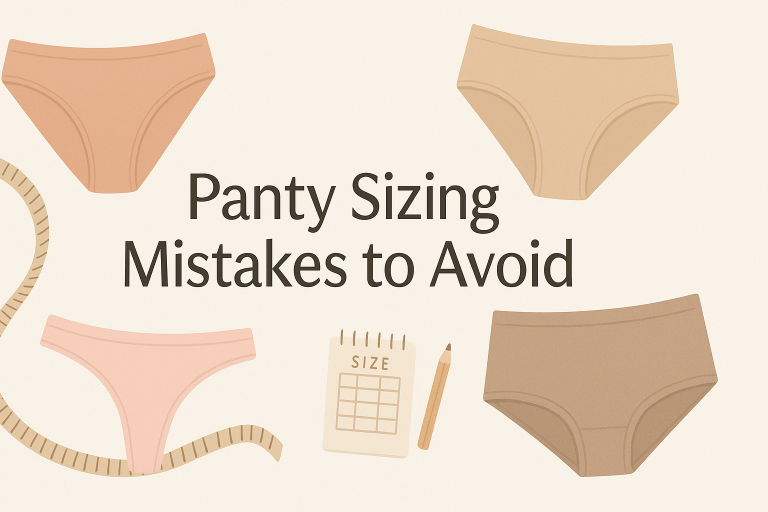
Underwear sizing uses hip measurement as the primary variable, not waist measurement. The American Society for Testing and Materials (ASTM) standard D5585 for women’s intimate apparel defines underwear size ranges as follows: size S covers hip measurements of 35.5 to 37.5 inches, size M covers 37.5 to 39.5 inches, size L covers 39.5 to 41.5 inches, and size XL covers 41.5 to 43.5 inches.
Use a flexible measuring tape held parallel to the floor at the fullest part of the hip, typically 7 to 9 inches below the natural waistline. Round up if your measurement falls at the upper end of a size range rather than rounding down, because a slightly looser fit reduces elastic tension and minimizes visible lines.
A flexible body measuring tape costing $5 to $8 provides accurate measurements that prevent the two most common fit errors: buying the same size across all brands (sizing varies by up to 1 inch per size between brands) and measuring at the waist rather than the hip.
Correct underwear fit is the foundation that allows no-show construction to perform as designed, and no seamless fabric can compensate for elastic that is stretched beyond its intended tension range.
Outfit-Specific Techniques to Hide Panty Lines
Some outfits require technique adjustments beyond underwear choice. Certain fabrics, silhouettes, and garment constructions amplify panty line visibility in ways that even the best underwear cannot fully address alone.
Fitted Dresses and Bodycon Styles
Bodycon dresses in viscose-jersey, scuba, or spandex-blend fabrics stretch to 150 to 180% of their resting width across the hip area, which means any underwear edge exerts pressure against a surface under continuous tension. For these dresses, the most effective solution is a thigh-length seamless shaper or a seamless thong in microfiber under 90 GSM.
An alternative technique specific to bodycon dresses is wearing the dress over a seamless bodysuit instead of separate underwear. A bodysuit snaps at the gusset and provides a continuous smooth surface from shoulder to hip with no separate waistband line, which eliminates the most visible line point entirely.
Trousers and Dress Pants
Fitted trousers in ponte, wool-blend suiting, and stretch twill show panty lines primarily at the waistband and back seam area. The most effective fix for dress pants is a low-rise seamless brief or hipster that sits below the trouser’s natural waistband, keeping underwear entirely within the trouser’s covered zone.
For high-waisted trousers with a waistband above the navel, a seamless high-waist brief that matches the trouser’s rise eliminates the gap between underwear waistband and trouser waistband where lines most commonly appear.
Leggings and Athletic Wear
As covered in the leggings section above, athletic wear requires underwear at or below 100 GSM with bonded or laser-cut edges. An additional technique for athletic contexts is choosing underwear and leggings from the same brand’s system, as brands like Athleta, Lululemon, and Nike design their base layers and leggings to work together with matching compression levels that prevent edge visibility.
Skirts and Flowing Fabrics
Midi and maxi skirts in chiffon, georgette, or matte crepe are the most forgiving fabrics for panty line prevention because the fabric drape reduces surface tension across the hip area. Even standard cotton underwear rarely shows through a full chiffon skirt because the fabric does not cling. For fitted pencil skirts in structured wovens, a seamless half-slip between underwear and skirt eliminates any residual edge visibility while also preventing static cling.
Matching the solution to the specific garment type is more efficient than using the same approach for every outfit, and most wardrobes need only two or three key underwear styles to cover every situation.
Common Mistakes That Make Panty Lines Worse
Several habits that seem logical actually increase panty line visibility. Correcting these mistakes produces immediate results without any product changes.
Wearing white or cream underwear under white clothing is the most common error. White underwear under white fabric creates a doubled opacity point where the underwear sits, which is more visible than the alternative. Nude-to-skin underwear under white or light-colored fabrics reduces total opacity at that point, making the underwear invisible by color-matching to skin rather than clothing color. The Council of Fashion Designers of America (CFDA) has noted this as one of the top styling errors in formal wear presentations.
Layering underwear over shapewear creates double waistband lines. Wearing underwear under shapewear rather than over it eliminates one visible layer entirely because the shapewear’s smooth surface covers the underwear’s edges.
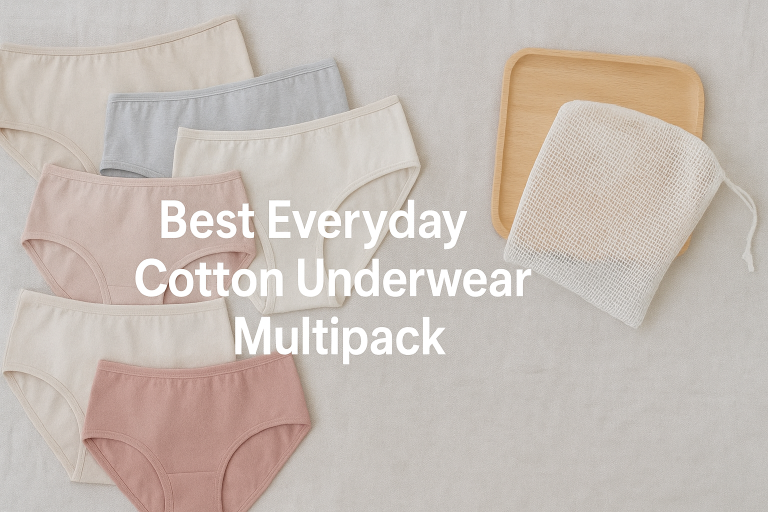
Washing cotton underwear at high temperatures (above 60 degrees Celsius) causes the elastic to set in a permanently tight state, reducing its stretch recovery and increasing tension against outer fabrics with each wash cycle. The Woolmark Company’s fiber care research shows elastic degradation accelerates 3 to 4 times faster at 60 degrees Celsius versus 30 degrees Celsius. Washing in a mesh lingerie bag on a delicate cycle below 30 degrees Celsius extends elastic life and maintains consistent tension.
Choosing underwear based on coverage preference rather than outer garment type means wearing a style designed for comfort that is not designed for the specific garment over it. A full-coverage brief is excellent for everyday comfort under jeans but creates multiple visible edges under a bodycon dress.
Avoiding these four mistakes removes the most common obstacles that persist even after switching to no-show underwear styles.
Here is an interactive tool to help you match the right underwear style and fabric to your specific outfit type and priority.
Interactive Tool
Find the Right No-Show Underwear for Your Outfit
Answer 2 questions to get a personalized recommendation.
How to Check If Your Underwear Is Showing Before You Leave Home
A quick three-step check before leaving the house catches panty line issues that are not visible in a front-facing mirror. This process takes under 60 seconds and prevents the need to adjust clothing throughout the day.
Step 1: Check in natural light, not bathroom light. Overhead bathroom lighting casts downward shadows that flatten the appearance of ridges and lines. Stand in front of a window or in a room with natural side lighting, which reveals surface texture and ridges accurately.
Step 2: Check the rear view in motion, not just standing still. Turn your back to a full-length mirror, hold a hand mirror at hip height angled toward the large mirror, and take two to three steps. Lines that are invisible when standing flat become visible when the fabric stretches across the hip during walking.
Step 3: Check the waistband line specifically by bending forward 45 degrees. This motion stretches the fabric over the lower back and reveals whether the underwear waistband creates a ridge that disappears when standing. If a line appears only when bending, the solution is a lower-rise brief rather than a thinner fabric, since the issue is waistband placement rather than fabric weight.
This check is most useful for new underwear and outfit combinations, and for fabrics you have not worn before with a specific pair of underwear.
Frequently Asked Questions About How to Stop Panty Lines Showing
What is the best underwear to avoid panty lines?
Seamless microfiber underwear in nylon-spandex blends at 80 to 100 GSM is the most effective choice for preventing panty lines across all outfit types. Seamless thongs eliminate rear lines completely, while laser-cut no-show briefs address front, side, and rear lines simultaneously. The specific best style depends on the outer garment: thongs for bodycon dresses and fitted trousers, seamless boyshorts for wider-leg styles, and seamless briefs with bonded edges for everyday knit fabrics. Both Commando and Spanx publish garment-specific fit guides that match their underwear styles to specific outfit categories.
Does nude underwear really prevent panty lines?
Nude underwear matched to your skin tone reduces visibility under sheer and light-colored fabrics by eliminating the color contrast between skin and underwear, but it does not eliminate lines caused by seams or thick elastic. Skin-tone nude underwear is most effective under white, cream, and pastel fabrics where any contrasting color reads clearly through the outer layer. Under dark fabrics, nude underwear offers no advantage over any other color. The most effective approach combines a skin-tone nude color with seamless or bonded-edge construction, which addresses both the color contrast and the physical ridge simultaneously.
Why do I still see panty lines even with seamless underwear?
Seamless underwear still shows lines under three conditions: the fabric weight is too heavy for the outer garment (above 120 GSM under compression fabrics), the underwear is too small and the elastic is under excess tension, or the underwear is a significantly different color from your skin tone under a sheer outer fabric. A fourth cause is the waistband: some seamless styles retain a folded waistband hem 0.5 to 0.75 inches wide that creates a ridge even though the leg edges are seamless. Choosing a style with a self-fabric bonded waistband under 0.375 inches eliminates this last remaining line point.
Is it better to wear a thong or no underwear to avoid panty lines?
A seamless thong in microfiber performs equivalently to going without underwear for panty line prevention, while providing hygienic protection and support. Going without underwear under structured fabrics like ponte trousers or lined skirts provides no additional benefit over a seamless thong because the outer garment’s lining handles panty line visibility, not the underwear directly. For unlined stretch fabrics, a seamless microfiber thong at 80 to 90 GSM is undetectable under most garments and is the recommended approach over going without underwear, particularly for athletic and high-movement activities where abrasion from outer fabric seams is a comfort consideration.
How do I stop panty lines showing through white pants?
White pants and white jeans require underwear that is nude-to-skin rather than white, because white underwear creates a doubled opacity point that is more visible than the surrounding fabric. Use a seamless microfiber brief or thong in a color matched to your skin tone, which eliminates color contrast at the underwear’s location. Fabric weight is equally critical: choose underwear at 80 to 100 GSM because white pants in cotton twill or stretch denim have a GSM of 200 to 350, and any underwear above 120 GSM creates a detectable layer differential. A light-compression seamless brief in skin-tone microfiber is the most reliable single solution for white pants across all styles.
Can the way I wash underwear affect panty lines?
Washing underwear incorrectly accelerates elastic degradation and changes the tension behavior that determines how visibly underwear edges press against outer clothing. The Woolmark Company’s fiber care research confirms that elastic in nylon-spandex underwear degrades 3 to 4 times faster at 60 degrees Celsius versus 30 degrees Celsius, causing elastic to lose stretch recovery and sit under increased tension against outer fabrics. Machine washing seamless underwear in a mesh laundry bag on a delicate cycle at 30 degrees Celsius or below, followed by air drying rather than tumble drying, extends elastic life and maintains the low-tension fit that prevents visible lines. Tumble drying nylon-spandex blends at medium heat causes irreversible elastic set within 3 to 5 cycles.
Stopping panty lines from showing is primarily a matter of matching underwear construction and fabric weight to the specific garment you are wearing. Start with seamless microfiber underwear in a skin-tone nude color, verify the fit is correct at your current hip measurement, and check in natural light with the motion test before wearing a new combination. Most panty line problems resolve completely with one or two style changes, and the methods in this guide cover every garment type and body type without requiring a full underwear wardrobe overhaul.



4 Comments