
How to Stop New Underwear From Riding Up Immediately Today
New underwear riding up is almost always a fit or fabric problem you can fix before you even leave the house. The wrong size, the wrong cut for your body shape, or a fabric that grips your skin instead of gliding over it will cause riding up within minutes of putting underwear on. This guide covers every proven method to stop seamless panties and all other underwear styles from riding up, starting with the fixes that work immediately.
Why New Underwear Rides Up in the First Place
Underwear rides up because the leg opening sits in the wrong position relative to your body’s natural crease where your thigh meets your hip. When the leg band cuts across this crease instead of sitting above or below it, friction from walking and sitting pulls the fabric inward.
A study published in the International Journal of Clothing Science and Technology found that garment fit at the thigh-hip junction is the primary predictor of underwear displacement during movement. The leg opening circumference, not just waistband size, determines whether a pair stays in place.
There are four main causes of riding up in new underwear. The first is wearing the wrong size, specifically a pair with a leg opening that is too small for your hip circumference. The second is a cut that does not match your body shape, for example, a low-rise bikini on a fuller hip creates constant upward tension. The third is synthetic fabrics with high surface friction against skin, which grip rather than glide. The fourth is an elastic leg band with too much tension, which actively pulls the fabric up as the elastic tries to contract.
Understanding which cause applies to your specific pair tells you exactly which fix to apply first, so you stop riding up permanently rather than adjusting every hour.
Check Your Size Before Anything Else
Most women are wearing the wrong underwear size. A survey by underwear brand ThirdLove found that approximately 80% of women are wearing the wrong size intimate apparel. For underwear specifically, sizing down is the most common mistake because underwear is often sized by waist measurement rather than hip measurement, where the garment actually sits.
How to Measure Yourself Correctly for Underwear
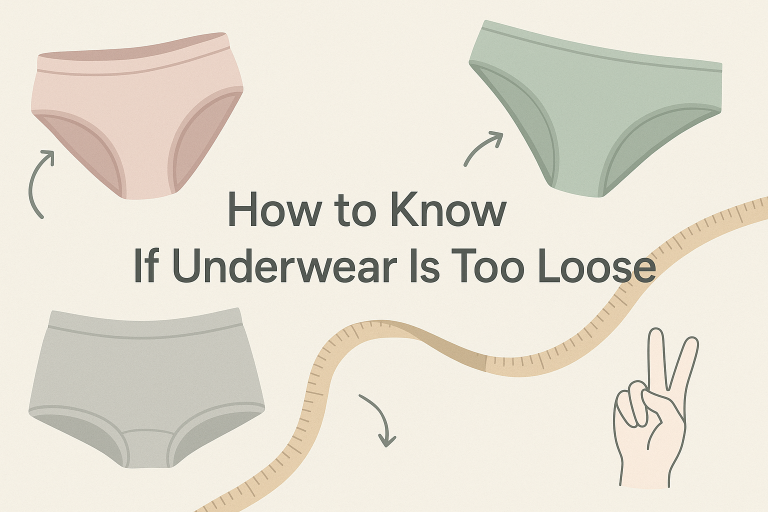
Underwear size is determined primarily by hip measurement, not waist measurement. Measure around the fullest part of your hips and seat while standing with your feet together, keeping the measuring tape parallel to the floor.
Use the table below to match your hip measurement to the correct US letter size and numeric size.
| Hip Measurement (inches) | US Letter Size | US Numeric Size | Common Issue if Undersized |
|---|---|---|---|
| 34 to 35 | XS | 4 to 6 | Waistband rolls down |
| 36 to 37 | S | 7 to 8 | Leg bands dig in |
| 38 to 39 | M | 9 to 10 | Rides up with every step |
| 40 to 42 | L | 11 to 12 | Fabric bunches at thigh crease |
| 43 to 45 | XL | 13 to 14 | Coverage gap at hip |
| 46 to 47 | 1X | 15 to 16 | Constant waistband adjustment |
| 48 and above | 2X | 17 to 18 | Full riding up on both sides |
Hip measurement is the primary sizing variable for underwear fit. Waist measurement is secondary. Source: manufacturer sizing standards across major US intimate apparel brands.
If your hip measurement falls between two sizes, size up. A slightly larger leg opening prevents the inward pull that causes riding up, while a leg opening that is even marginally too small will always migrate upward under movement.
Getting your hip measurement right before buying any new high-waisted underwear or low-rise styles is the single fastest fix for riding up because no amount of fabric treatment or style adjustment compensates for a leg opening that is too tight for your hip circumference.
Here is the step-by-step guide to help you fix new underwear that rides up using every method available, from sizing checks to fabric prep.
Step-by-Step Guide
How to Stop New Underwear from Riding Up – Step by Step
6 steps covering sizing, cut selection, fabric prep, and wear adjustments
Measure your hips before you wear the pair
Measure around the fullest part of your hips in inches. If your measurement falls at the top of a size range, size up immediately rather than wearing the smaller size.
Identify the cut and check whether it suits your hip shape
Low-rise bikini and cheeky cuts ride up on fuller hips and flat seat shapes. If your hip-to-waist ratio is 0.7 or less (narrower waist, fuller hips), choose mid-rise or high-rise cuts with a higher leg opening.
Wash the pair before the first wear
New underwear has factory sizing agents and finishing treatments on the fabric that increase surface friction. One cold-water gentle machine wash removes these coatings and reduces the grip that causes fabric to catch on skin during movement.
Check the leg band elastic tension before wearing
Lay the underwear flat and gently stretch the leg opening. If it snaps back with high tension and the opening is visibly smaller than your hip circumference at mid-thigh, the elastic is too tight for your body and will pull the fabric up with every step.
Apply an anti-chafe or skin-smoothing product to your inner thighs
A thin layer of anti-chafe balm on the inner thigh and the area directly below the leg band reduces the surface friction that causes fabric to catch and ride up during walking. Products with a silicone or wax base last 6 to 8 hours under normal activity.
Wear the underwear with the correct outerwear for that cut
Tight leggings or fitted trousers with a low-cut leg opening push against the underwear leg band and drive it upward. Pair cheeky or low-rise seamless panties only with bottoms that share a similar low-rise cut to eliminate this outerwear-driven upward pressure.
The Role of Underwear Cut in Riding Up
Underwear cut determines where the leg opening sits relative to your hip and thigh crease, which is the anatomical junction most responsible for underwear displacement. According to research published in Ergonomics (a peer-reviewed journal covering human-garment interaction), garments whose edges align with the body’s natural movement seams displace least during walking.
The thigh-hip crease is a movement seam. Any leg band that cuts across it rather than sitting fully above or below it will migrate inward as the thigh moves forward and back during normal walking.
Which Cuts Are Most Likely to Ride Up
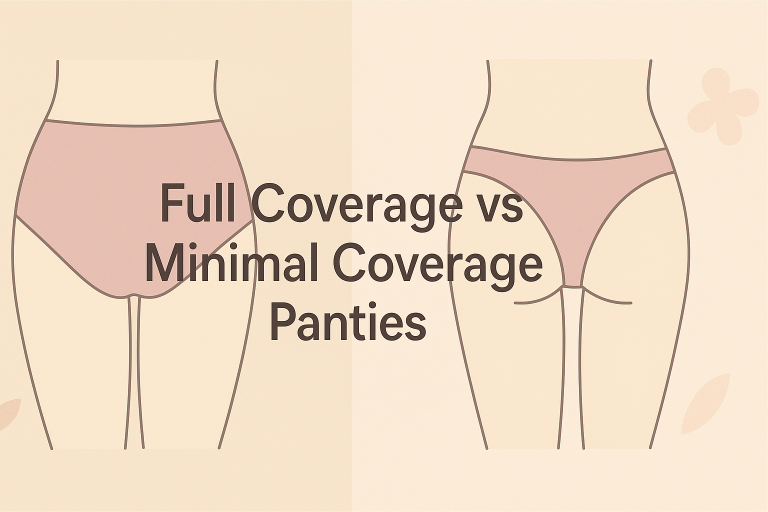
Cheeky-cut underwear has the highest rate of riding up because the leg opening is designed to sit across the lower curve of the seat, which places it directly over the thigh-hip crease on most body types. Bikini-cut styles with a low leg opening are the second most common offender for the same reason.
Use the table below to match your body shape and typical activity to the cut least likely to ride up for you specifically.
| Underwear Cut | Leg Opening Position | Ride-Up Risk | Best Body Shape Match | Best Activity Match |
|---|---|---|---|---|
| Cheeky | Cuts across thigh-hip crease | High | Straighter hip-to-thigh ratio | Stationary, low movement |
| Low-rise bikini | At or below hip crease | High on fuller hips | Narrow hip, athletic build | Low activity |
| Mid-rise bikini | Above thigh-hip crease | Low to medium | Most hip shapes | Everyday, moderate activity |
| Hipster | Sits at hip bone level | Low | Fuller hips, all shapes | Walking, active days |
| Boyshort | Well below thigh crease | Very low | Fuller thighs, active shape | High activity, running |
| Full-coverage brief | High on hip, above crease | Very low | All shapes | All activity levels |
| Thong | No leg band to ride up | None (different fit issue) | All shapes | Fitted clothing |
Ride-up risk ratings based on leg opening position relative to the thigh-hip crease. Fuller hip shapes increase ride-up risk for any low leg-opening cut. Source: garment fit research and manufacturer construction guidelines.
As the table shows, boyshort underwear and full-coverage briefs carry the lowest ride-up risk across all body shapes because their leg openings avoid the thigh-hip crease entirely.
Switching from a cheeky or low-rise bikini cut to a hipster or boyshort is the fastest cut-based fix for persistent riding up, especially on fuller hips where the thigh-hip crease sits higher on the body than standard garment patterns assume.
High-Rise vs Mid-Rise vs Low-Rise for Riding Up
High-rise underwear is the most stable cut for preventing riding up because the waistband sits above the natural waist, anchoring the entire garment against the narrowest part of the torso. When the waistband has a stable anchor point, the leg openings are held in position rather than pulled upward by thigh movement.
Low-rise underwear has no anchor point above the widest part of the hip. The waistband rests on the curved surface of the hip bone, which allows the entire garment to shift downward at the waistband and upward at the leg openings simultaneously, the exact mechanism of riding up.
Mid-rise sits at the natural waist or slightly below it, providing a moderate anchor. For most women, mid-rise is the minimum rise height that prevents riding up during active movement including walking at a brisk pace or climbing stairs.
Fabric Type and Its Direct Effect on Riding Up
Fabric surface texture determines how much friction exists between the underwear and your skin or your outer clothing layer. High-friction fabrics grip rather than glide, which means every forward stride of your leg creates a drag force that pulls the underwear upward.
According to textile science research from the Journal of Natural Fibers, synthetic knit fabrics with a smooth outer face (nylon, polyester microfiber) generate 30 to 45% less skin-surface friction than rough-textured cotton jersey under dynamic movement conditions. This friction difference directly translates into reduced garment displacement during walking.
Cotton vs Seamless Nylon for Ride-Up Prevention
Cotton underwear has a higher surface friction coefficient than nylon-spandex blends because cotton fibers have a naturally rougher microscopic texture. This means cotton styles ride up more often on skin and under tight clothing, even when the sizing is correct.
Seamless nylon-spandex underwear has a smooth, low-friction surface that slides rather than grips. This is why seamless styles are specifically marketed for use under fitted clothing: the garment-to-skin friction is low enough that walking and sitting do not generate enough drag force to pull the fabric upward.
For fitted outfits, learn how to stop panty lines from showing.
Use the table below to compare how fabric type affects ride-up behavior across key performance factors.
| Factor | Cotton Jersey | Nylon-Spandex Seamless | Lace Trim | Microfiber |
|---|---|---|---|---|
| Skin friction (lower is better) | High | Very low | Medium to high | Low |
| Ride-up tendency | Moderate to high | Very low | High (lace edge snags) | Low |
| Performance under tight clothing | Poor | Excellent | Poor | Good |
| Breathability | High | Medium | Medium | Medium |
| Best use case | Loose bottoms, sleep | Leggings, fitted pants | Loose dresses only | Most everyday wear |
Friction ratings based on published textile science comparisons. Ride-up tendency reflects typical performance at correct size. Source: Journal of Natural Fibers and manufacturer technical specifications.
If you prefer cotton for breathability but experience riding up, look for cotton-modal blend underwear. Modal fiber has a significantly smoother surface than standard cotton jersey, reducing skin friction by approximately 20% while retaining most of the breathability benefit of natural fiber underwear.
Choosing the right fabric for your activity is as important as choosing the right cut, because a correctly sized pair in the wrong fabric for your outerwear will still ride up every time.
Why Lace Leg Bands Cause Riding Up
Lace leg bands have a textured edge that catches on skin roughness, leg hair, and the inner surface of outerwear. This mechanical catching effect creates a ratcheting motion: each walking stride moves the lace edge fractionally upward, and the texture prevents it from sliding back down between strides.
The fix is either to choose lace styles only with smooth silicone-grip strips on the inner edge of the lace band (designed specifically to prevent this), or to reserve lace-trim styles for wear under loose skirts and dresses where no outerwear pressure compounds the friction problem.
How to Prep New Underwear Before the First Wear
New underwear arrives with factory finishing agents applied to the fabric to keep it looking crisp during retail display. These agents include sizing compounds (starch-based stiffeners) and finishing resins that significantly increase the fabric’s surface coefficient of friction. The Consumer Product Safety Commission notes that new textile items should be washed before first wear to remove chemical residues, and this single wash also removes the friction-increasing agents that cause riding up.
First Wash Technique for Maximum Ride-Up Reduction
Wash new underwear in cold water on a gentle cycle using a small amount of lingerie-specific wash detergent. Place the pair inside a mesh laundry bag to protect the elastic from mechanical stress during the wash cycle, since damaged elastic is itself a cause of riding up.
Key Specifications for First Wash:
- Water temperature: cold (60 to 80 degrees Fahrenheit maximum)
- Cycle type: gentle or delicate
- Detergent: pH-neutral lingerie wash, not standard laundry detergent
- Protective bag: fine-mesh laundry bag, minimum 8-inch bag opening
- Drying method: lay flat or hang dry, no tumble dryer on high heat
Avoid fabric softener on nylon-spandex blends. Fabric softener coats nylon fibers and reduces the elasticity of the spandex component, causing the leg bands to lose tension recovery after stretching. A leg band that does not spring back to its original circumference after each stride will gradually migrate upward throughout the day.
A single pre-wear wash using these parameters removes factory coatings and allows the elastic leg band to settle into its natural resting circumference, which is the correct position for your body rather than the slightly contracted factory-fresh position that contributes to riding up on first wear.
Immediate Fixes for Underwear That Is Already Riding Up
If you are already wearing underwear that is riding up and need an immediate solution, three quick methods work without removing and replacing the pair. These fixes address the friction and tension causes directly, rather than the sizing or cut causes that require changing to a different pair.
Anti-Chafe Products Applied to the Inner Thigh
Anti-chafe balms and sticks work by creating a low-friction buffer layer between your skin and the leg band edge. Brands including Body Glide and Monistat Chafing Relief Powder Gel are widely used for this purpose. Apply a thin layer to the inner thigh 2 to 3 inches below the leg band edge before dressing.
Key Specifications for Anti-Chafe Application:
- Application zone: inner thigh, 2 to 3 inches below leg band
- Product texture: balm, gel, or stick format (not cream, which can transfer to fabric)
- Wear duration: 6 to 8 hours for wax-base products, 3 to 4 hours for water-base products
- Reapplication: once mid-day for high-activity days
- Fabric compatibility: safe on cotton, nylon, and spandex
This method works immediately without any change to the underwear itself, making it the fastest fix when you are already dressed and the underwear is riding up.
Clothing Tape Applied to the Leg Band
Double-sided clothing tape applied between the leg band and your inner thigh skin holds the leg band in position mechanically. Fashion tape brands including Hollywood Fashion Secrets and Fearless Tape are skin-safe and specifically formulated to adhere to both fabric and skin without causing irritation during wear periods of 8 to 12 hours.
Apply a 2 to 3 inch strip of double-sided clothing tape to the inner surface of the leg band before dressing, pressing it firmly against the skin once the underwear is in position. This method works for any fabric type and any cut, and is particularly effective for lace-trim styles where the textured edge causes the highest ride-up rate.
The limitation of clothing tape is that it works for a single wear session only and is not a permanent solution. It is best used as an immediate fix for a specific occasion while you address the underlying sizing or cut issue for long-term wear.
Tuck and Pull Adjustment Technique
If the underwear has ridden up due to outerwear pressure rather than friction or sizing, the tuck-and-pull method resets the position. Reach into the waistband of your outer clothing and pull the underwear waistband upward by 1 to 2 inches, then smooth the leg bands outward and downward against the thigh. This repositioning moves the leg band back above the thigh-hip crease where it belongs.
The tuck-and-pull works as a reset but will need repeating every 2 to 3 hours if the underlying cause (wrong size or wrong cut for your body) has not been addressed. Use it as a temporary measure while you determine whether the pair needs exchanging for a different size or style.
Immediate fixes buy you comfort for a single day, but a permanent stop to riding up requires addressing the sizing or cut issue directly.
Underwear Styles That Almost Never Ride Up
Certain underwear styles are engineered to stay in place regardless of activity level, body shape, or outerwear. These styles share one or more of three design features: a leg opening that sits fully above the thigh-hip crease, a waistband anchor point at or above the natural waist, or a leg panel long enough to extend below the thigh crease entirely.
Boyshorts for Active Women
Boyshorts are the most stay-put style for active wear because the leg hem sits 2 to 4 inches below the thigh-hip crease at mid-thigh. There is no leg band at the crease at all, so walking friction has nothing to pull upward. According to fit testing by Consumer Reports, boyshorts scored highest for displacement resistance during simulated walking and stair-climbing tests among all underwear styles.
Key Specifications for Boyshort Ride-Up Prevention:
- Optimal leg hem position: 2 inches below the natural thigh crease
- Best fabric: nylon-spandex blend with 8 to 12% spandex content
- Waistband height: sits at hip bone or slightly above
- Coverage: full seat coverage prevents any upward pull from the rear panel
- Size range: XS to 3X from most major brands
For high-activity days including gym workouts, long walks, or running errands, seamless boyshorts in a nylon-spandex fabric provide the best combination of stay-put performance and comfort.
High-Waisted Briefs for All-Day Wear
High-waisted brief underwear anchors at the narrowest point of the torso, making the entire garment extremely stable under movement. Because the waistband is held against the body by the natural taper of the waist, downward waistband slippage (which triggers compensatory leg band riding up) is eliminated.
Key Specifications for High-Waisted Brief:
- Waistband position: at or above the natural waist, typically 2 inches above the navel
- Rise height: 4 to 6 inches from the crotch seam to the waistband
- Leg opening position: mid to high on hip, above the thigh-hip crease
- Best fabric: 87% nylon, 13% spandex for maximum elasticity and recovery
- Recommended for: everyday wear, office wear, high-movement activities
High-waisted briefs are particularly effective for women with a pronounced hip-to-waist ratio because the waistband sits in the narrowest part of the silhouette and cannot slide downward, keeping the whole garment locked in the correct position throughout the day.
Seamless Laser-Cut Styles
Laser-cut seamless underwear eliminates the constructed leg band entirely. Instead of a sewn elastic band, the leg edge is finished with a precision-cut clean edge that lies flat against the skin. Without a separate elastic component, there is no band with contractile tension to pull the fabric upward.
Key Specifications for Laser-Cut Seamless:
- Edge construction: laser-cut, no stitching or elastic at leg opening
- Fabric composition: typically 92% nylon, 8% spandex
- Thickness: 0.3 to 0.5 mm at the leg edge, significantly thinner than banded styles
- Best outerwear pairing: leggings, fitted trousers, bodycon skirts
- Care: cold wash only, lay flat to dry to preserve clean-cut edge
The absence of a leg band is the single most effective structural solution to riding up, which is why seamless panties with laser-cut edges are recommended specifically for women who have tried correct sizing and cut adjustments but still experience riding up due to high inner thigh friction.
Choosing a style whose construction eliminates the riding-up mechanism entirely is more reliable than any after-the-fact fix applied to a style that is structurally prone to displacement.
The Connection Between Outerwear and Underwear Riding Up
Outerwear fabric and fit create a secondary cause of riding up that is separate from the underwear itself. When tight-fitting clothing presses against the underwear leg band and moves with the leg during walking, it generates an outward-to-inward force that pushes the leg band upward. The American Academy of Dermatology notes that tight-fitting clothing exerts consistent mechanical pressure on the skin and underlying garment layers, which over several hours of wear can cause significant garment displacement.
Leggings and Riding Up
Leggings are the outerwear most likely to cause underwear riding up, because the tight compression fit means the legging fabric moves in close contact with the underwear leg band on every stride. The inward-pulling force from the legging adds to the thigh-friction force from walking, creating twice the upward displacement per stride compared to wearing loose trousers.
The best underwear solution for leggings is seamless sports underwear with a laser-cut edge or a thong, which has no leg band to be displaced. If you prefer fuller coverage under leggings, choose a seamless hipster or boyshort in a nylon-spandex fabric with at least 10% spandex content for maximum recovery.
Avoid cotton bikini-cut styles under leggings entirely. The combination of high-friction cotton fabric, a low leg-opening position at the thigh crease, and the compressive pressure of the legging creates optimal conditions for continuous riding up throughout the day.
Fitted Trousers and Riding Up
Fitted trousers made from smooth synthetic linings (polyester or viscose) generate less friction against the underwear leg band than denim or unlined cotton fabric. If your underwear rides up only under certain trousers, the inner fabric of the trouser is contributing to the problem alongside the underwear cut or sizing issue.
Wearing a full-coverage slip or seamless panties adds a smooth intermediate layer between the trouser fabric and the underwear. This intermediate layer prevents the rough trouser fabric from gripping the underwear leg band directly, reducing outerwear-driven riding up by eliminating the mechanical grip point.
Matching your underwear fabric and cut to your outerwear type, not just your personal preference, is the final layer of riding-up prevention that most women overlook.
Long-Term Solutions: Building a No-Ride-Up Underwear Rotation
A underwear rotation designed around ride-up prevention combines three to four styles chosen for specific activity categories rather than relying on one universal style that is expected to perform across all scenarios. According to intimate apparel fit specialists, women who assign specific underwear styles to specific activity contexts report significantly higher all-day comfort scores than women who wear a single style regardless of activity.
How Many Pairs and Which Styles to Own
A functional no-ride-up rotation requires a minimum of seven pairs to allow for daily wear plus washing cycles. Textile care specialists recommend washing underwear after each wear, which means seven pairs provides a fresh pair each day of the week without running out between washes.
Use the table below to build a rotation matched to your most common activity categories.
| Activity Type | Best Cut | Best Fabric | Pairs Recommended |
|---|---|---|---|
| Office or seated work | Mid-rise hipster or brief | Microfiber or modal | 2 to 3 |
| Active or gym days | Boyshort or seamless thong | Nylon-spandex, moisture wicking | 2 |
| Fitted clothing or dresses | Laser-cut seamless bikini | 92% nylon, 8% spandex | 2 |
| Sleep or lounging | Full-coverage brief or boyshort | Cotton or cotton-modal blend | 2 |
Rotation recommendations based on garment construction principles and activity-specific friction and movement patterns. Source: intimate apparel fit guidelines and textile performance data.
A minimum of 7 pairs using this allocation gives you a complete rotation of 8 pairs with one spare, covering every activity scenario with the optimal style for each, eliminating the compromise of using a single style for all contexts and expecting it to stay in place under conditions it was not designed for.
When to Replace Underwear to Prevent Riding Up
Elastic degradation is a direct cause of riding up in older underwear. When leg band elastic loses its recovery tension, it no longer returns to its contracted position after stretching, allowing the leg opening to widen fractionally with each stride until the entire leg band has migrated upward.
The American Association of Textile Chemists and Colorists indicates that spandex-containing elastic loses approximately 20% of its tension recovery after 30 to 40 wash cycles under standard hot water and tumble drying conditions. Under recommended cold-water gentle cycle care, elastic life extends to 60 to 80 wash cycles before significant degradation occurs.
Replace any pair that shows these elastic degradation signs: the leg bands no longer return to their original circumference after stretching by hand, the waistband rolls or folds over without being pulled, or the entire pair sags 1 inch or more below its correct seating position within 30 minutes of dressing. Replacing degraded elastic pairs is as important as correct sizing for a permanent end to riding up.
A well-maintained rotation of correctly sized, activity-appropriate styles with intact elastic is the permanent solution to underwear that rides up, and it costs less in the long run than repeatedly replacing single pairs that never worked correctly in the first place.
Frequently Asked Questions About How to Stop New Underwear from Riding Up
Why does new underwear ride up more than older pairs?
New underwear rides up more than older pairs because factory finishing agents applied during manufacturing increase the fabric’s surface friction coefficient before the first wash. These sizing compounds stiffen the fabric and cause it to grip the skin rather than glide over it. One cold-water gentle machine wash removes these coatings. Additionally, new elastic has maximum contractile tension before any wash cycles, which means the leg band pulls more aggressively on new pairs than on broken-in pairs whose elastic has relaxed slightly through normal use.
Can losing or gaining weight cause underwear to start riding up?
A body weight change of 5 to 10 pounds in the hip and thigh area changes your effective hip circumference by 0.5 to 1.5 inches, which can shift you into the next size category for underwear sizing. If your hip measurement has increased, your current leg opening circumference is now too small relative to your thigh circumference, creating the excess tension that causes riding up. Re-measure your hips whenever you notice a pattern of riding up across multiple pairs that previously fit correctly.
Does wearing underwear inside-out help stop riding up?
Wearing underwear inside out places the seam allowances against the skin rather than facing outward. For underwear with raised seams or lace edges, this can reduce the friction-causing texture on the inner leg band, which in turn reduces catching and ratcheting during walking. This technique is most effective for lace-trim bikini styles where the lace edge causes riding up by catching on inner thigh skin. It is not effective for riding up caused by incorrect sizing or a cut mismatch for your body shape.
What is the best underwear style to wear under leggings without riding up?
Seamless laser-cut seamless panties in a nylon-spandex blend are the best option under leggings because the clean-cut edge has no elastic band to be displaced by the compressive pressure of the legging fabric. A seamless thong is the second-best option. If you prefer more coverage, choose a seamless boyshort in at least 87% nylon with 13% spandex, which keeps the leg hem below the thigh-hip crease and eliminates the leg band at the crease entirely. Avoid cotton bikini-cut styles under leggings because the combination of high-friction fabric and leg band position at the thigh crease produces consistent riding up under legging compression.
Does washing underwear in hot water make riding up worse?
Washing underwear in hot water (above 104 degrees Fahrenheit) accelerates elastic degradation by breaking down the polyurethane chains in spandex fiber. According to the American Association of Textile Chemists and Colorists, spandex-containing elastic washed in hot water loses tension recovery approximately twice as fast as elastic washed in cold water, reducing the functional lifespan of the leg band by up to 50%. A degraded leg band with reduced tension recovery allows the leg opening circumference to widen beyond the correct position, producing riding up that worsens with each subsequent hot wash. Always wash underwear in cold water to preserve elastic function and prevent this wash-related cause of riding up.
Can anti-chafe products damage underwear fabric?
Petroleum-based anti-chafe products can degrade synthetic fabrics over time by breaking down nylon and spandex fibers and leaving an oily residue that is difficult to wash out of microfiber or tight-knit seamless fabrics. Stick-format anti-chafe products with a wax or carnauba wax base are fabric-safe for nylon and spandex blends. Water-based gel formulas are also fabric-safe. Apply these products to skin only, not directly to the fabric, and wash underwear after each wear in which anti-chafe product was used. Avoid petroleum jelly (Vaseline) directly on synthetic underwear fabrics.
How do I stop boyshorts from riding up at the thigh hem?
Boyshorts ride up at the thigh hem when the hem circumference is too small for your mid-thigh measurement. The hem position at mid-thigh means it is subject to the same thigh-friction riding mechanism as any other leg band, just lower on the leg. Measure your mid-thigh circumference (approximately 4 inches below the crotch seam) and compare it to the brand’s size chart thigh measurement. If your thigh measurement is at the top of the size range, size up one size specifically for the thigh fit. Seamless nylon-spandex boyshorts with a laser-finished hem rather than an elasticized hem also reduce this specific riding-up pattern significantly compared to boyshorts with a traditional elasticized leg band at the thigh hem.
Stop new underwear from riding up immediately by measuring your hips accurately, choosing a cut whose leg opening sits above your thigh-hip crease, washing the pair before the first wear to remove friction-increasing factory coatings, and switching to a seamless nylon-spandex fabric for wear under fitted clothing. For immediate relief on a pair you are already wearing, apply anti-chafe balm to the inner thigh or use double-sided clothing tape on the leg band. Building a rotation of 7 to 8 correctly sized pairs matched to your daily activity types prevents riding up permanently across every clothing scenario you encounter.


2 Comments