
How to Fix Panties Riding Up and Stay Comfortable All Day
Panties riding up is one of the most common underwear fit problems women face, and the fix is almost always simpler than you think. The wrong size, cut, or fabric causes constant adjusting throughout the day. This guide covers every cause and every solution so you can find underwear that stays in place from morning to night.
Why Do Panties Ride Up in the First Place
Panties ride up primarily because the leg opening is too large relative to your thigh circumference, creating excess fabric that bunches and migrates inward with movement. According to a fit study conducted by the Hohenstein Institute, underwear with a leg opening circumference more than 15% larger than the wearer’s upper thigh measurement will shift position during normal walking within 30 minutes of wear.
A second major cause is waistband tension that is too loose. When the waistband fails to anchor the garment at the hip or waist, the entire brief has no fixed point to hold it in place, and leg movement pulls the fabric upward.
Fabric elasticity loss is the third driver. Elastic degrades after repeated washing, particularly at temperatures above 104 degrees Fahrenheit (40 degrees Celsius), according to the American Association of Textile Chemists and Colorists (AATCC). Once the leg elastic stretches out, it can no longer grip the thigh and the brief rides up.
The cut of the underwear itself is often the root cause that sizing alone cannot fix. Bikini and high-cut styles have the shallowest rise and the highest leg opening, making them the styles most prone to riding up on athletic or muscular thighs. Brief and boyshort cuts distribute fabric more evenly and stay in place for a wider range of body types.
Understanding which of these four causes applies to your situation determines which fix will actually work for you.
The Right Underwear Size Stops Most Riding Up Problems
Wearing the wrong size is the single most common reason panties ride up, and it affects women in both directions. Underwear that is too large gives excess leg fabric nowhere to go except upward. Underwear that is too small pulls tight across the hips, and the body’s movement works the brief upward to relieve that tension.
How to Measure for the Correct Underwear Size
To find your correct underwear size, measure your fullest hip circumference (typically 7 to 9 inches below your natural waist) and your natural waist circumference with a flexible tape measure pulled snug but not compressing the skin. Use the larger of the two measurements as your primary sizing reference.
Most US brands size underwear on a hip measurement scale: XS fits 33 to 35 inches, S fits 35 to 37 inches, M fits 37 to 39 inches, L fits 39 to 42 inches, XL fits 42 to 45 inches, and 2X fits 45 to 48 inches. These ranges vary by brand by up to 2 inches in either direction, so always check the brand’s specific size chart rather than relying on your label size alone.
If your measurements fall at the top of a size range, size up. The extra half-inch of leg opening fabric in the larger size lies flat instead of pulling tight.
Getting your measurements right before purchasing new brief underwear is the fastest way to eliminate riding up without changing your style preference.
Why Sizing Varies So Much Between Brands
Underwear sizing is not standardized across the US apparel industry. A study published in the International Journal of Fashion Design, Technology and Education found that measurement variance for women’s underwear across 12 major retailers reached up to 3 full inches within the same labeled size.
This means a size medium from one brand can fit identically to a large from another. Always request or look up the brand’s actual inch measurements rather than assuming your usual letter size will transfer.
Best Underwear Styles That Do Not Ride Up
The cut of your underwear determines more about riding-up behavior than almost any other factor. Some styles are engineered to stay in place and others are not.
Boyshort Underwear
Boyshort underwear has the lowest cut leg opening of any brief style, sitting at mid-thigh rather than at the crease of the hip. This design means the leg opening circumference is significantly larger than the upper thigh, so there is no tension pulling the fabric upward during walking or sitting. The boyshort is the style most consistently recommended by fit specialists for women with athletic or muscular thighs, because the extended leg coverage eliminates the gap between leg opening and thigh that causes riding up on other cuts.
Full Brief and High-Waist Underwear
Full brief and high-waist underwear anchors at the natural waist, which is the narrowest point of the torso, giving the waistband the best possible grip point. This high anchor prevents the downward slip that allows leg movement to pull a brief upward. Full briefs also have a deeper seat that covers more of the buttock, reducing the upward migration caused by hip flexion during walking.
Seamless Underwear
Seamless underwear is constructed from a single knit fabric piece with no cut-and-sewn leg seams. Traditional sewn leg openings create a stiffer edge that can catch on skin, pull inward, and create a friction point that causes riding up. Seamless edges fold softly against the skin and do not grip or pull. According to Invista, the fiber technology company behind Lycra, seamless construction combined with at least 20% spandex content produces a leg opening that self-adjusts to thigh movement rather than resisting it.
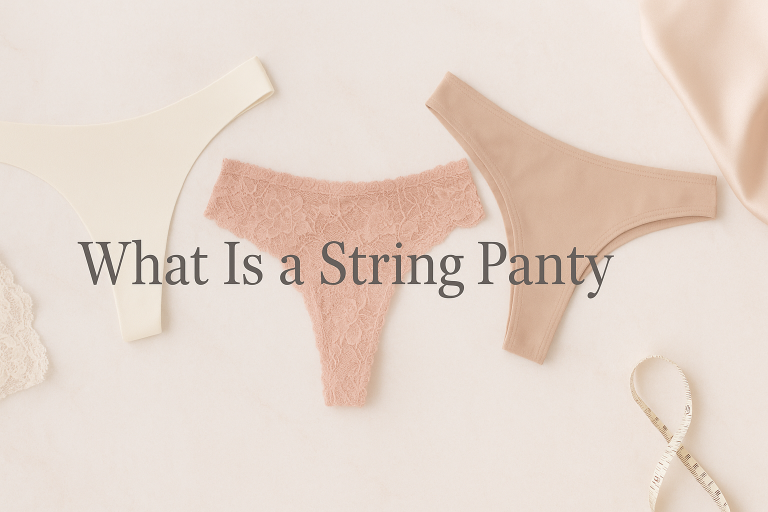
Thong and G-String Underwear
A thong eliminates the riding-up problem entirely by design, since there is no rear fabric panel to migrate upward. For women whose primary complaint is bunching and wedging at the back, a thong is the most direct solution. The trade-off is minimal rear coverage, which is not appropriate for all clothing types or preferences.
Use the table below to match your body type and primary complaint to the underwear cut most likely to stay in place for you.
| Body Type or Complaint | Best Cut | Why It Works | Second Choice |
|---|---|---|---|
| Athletic or muscular thighs | Boyshort | Leg opening sits below thigh peak, no upward tension | Full brief |
| Rear fabric bunches and wedges | Thong | No rear panel to migrate | Boyshort |
| Waistband slips down and brief rides up | High-waist brief | Anchors at narrowest torso point | Full brief |
| Leg edge digs and pulls inward | Seamless brief | No cut seam to grip skin | Boyshort |
| Curvy hip-to-waist ratio | Full brief | Deeper seat accommodates hip curve without pulling | High-waist brief |
If your current style does not appear in the “Best Cut” column for your complaint, switching styles is a more reliable solution than adjusting sizing within the same cut.
Fabric and Elastic Quality Affect How Long Underwear Stays in Place
The fiber content and elastic construction of underwear directly determines how well it maintains position throughout the day. Cotton underwear with no spandex content has zero stretch recovery, meaning it deforms with body movement and does not spring back to its original position. This creates loosening at the leg opening over the course of a day, allowing the brief to ride up.
Best Fabric Blends for Underwear That Stays Put
Underwear with 10 to 20% spandex (also sold as elastane or Lycra) maintains its shape through movement because spandex has a recovery rate of approximately 500% elongation return, according to Invista technical specifications. This means the leg opening stretches with your thigh movement and immediately returns to its original circumference, keeping the brief in position.
Nylon-spandex blends (typically 87% nylon, 13% spandex) offer the highest combination of smooth drape and elastic recovery, making them the most effective fabric construction for anti-ride-up performance. Modal-spandex blends (often 92% modal, 8% spandex) are softer against the skin and offer good recovery for low-activity wear.
Pure cotton underwear without any elastane performs adequately for low-movement wear but will shift during exercise or extended walking. If you prefer cotton, look for styles with a separate silicone grip strip at the leg opening, which substitutes for spandex-based recovery.
When Elastic Wears Out and What to Do
Elastic in underwear leg openings and waistbands degrades faster than the main fabric. The AATCC states that repeated washing at temperatures above 40 degrees Celsius accelerates elastic breakdown by up to 40% compared to cold-water washing.
Signs that elastic has worn out include wavy or ruffled leg edges, a leg opening that no longer lies flat against the thigh, and a waistband that folds outward rather than lying smooth. Underwear showing these signs will ride up regardless of fit adjustments, because the elastic can no longer exert the grip force needed to hold position.
Washing underwear in cold water (below 30 degrees Celsius) and air drying rather than machine drying extends elastic life significantly. Dryer heat is the single fastest accelerant of elastic degradation in intimate apparel, according to research published in Textile Research Journal.
When elastic is worn out, replacement is the only fix; no adjustment of size or style compensates for inoperative elastic.
Step-by-Step Fixes to Stop Panties from Riding Up Right Now
The following steps address the most common riding-up scenarios with specific, immediate actions you can take with underwear you already own or when shopping for replacements.
Here is a visual guide to the full process for fixing panties that ride up, covering each step from diagnosis to solution.
Step-by-Step Guide
How to Fix Panties That Ride Up
7 steps to diagnose the cause and choose the right fix
Check your current size against your hip measurement
Measure your fullest hip circumference and compare it to the brand’s size chart in inches, not by labeled size. If your measurement sits within 1 inch of the top of your current size range, size up immediately.
Inspect the leg elastic for wear and distortion
Stretch the leg opening to twice its resting circumference and release it. If it does not snap back to its original shape within 2 seconds or if the edge is wavy, the elastic is spent and the pair should be retired.
Identify where the riding up occurs: front, back, or both
If only the back rides up, the seat is too shallow for your body. If both sides ride up, the leg opening is too large. If the front panel folds under, the rise is too short for your torso length. Each location points to a different fix.
Switch to a deeper-seat cut if the back panel is the problem
Replace bikini or high-cut styles with a full brief or boyshort, which add 1 to 2 inches of rear seat depth. This extra fabric has enough room to move with your body during walking without bunching upward.
Try seamless or silicone-grip leg openings if the edge digs or pulls
Sewn leg seams create friction points that catch on skin and tug the brief inward. Seamless knit edges or styles with a thin silicone strip inside the leg opening grip softly without pulling, holding position through movement.
Adjust your washing routine to protect leg elastic
Wash underwear in cold water on a gentle cycle inside a mesh laundry bag and air dry completely. Eliminating dryer heat and reducing agitation extends elastic life by an estimated 30 to 50 wash cycles, according to AATCC guidelines for elastic fabric care.
Replace pairs showing visible elastic wear rather than resizing
Underwear elastic has a functional lifespan of approximately 6 to 12 months with regular wear and correct washing. If a pair is beyond this threshold, no fit adjustment will restore its staying power. Retiring worn pairs is a maintenance task, not a failure of fit.
Working through these steps in order ensures you address the actual cause rather than guessing, which saves money and avoids buying replacements that still ride up.
How Clothing Worn Over Underwear Makes Riding Up Worse
The outer garment creates friction forces on your underwear that contribute directly to whether it stays in place. Tight clothing, particularly fitted jeans, leggings, and compression skirts, grips the outer surface of underwear fabric and holds it stationary while your body moves underneath. This creates a shearing force that pulls the brief upward at the leg opening.
Best Underwear Fabrics for Wearing Under Leggings and Tight Pants
Smooth, low-friction fabrics like nylon-spandex and microfiber move with the outer garment rather than catching on it. The coefficient of friction of nylon against polyester (the most common legging material) is approximately 0.15, compared to 0.45 for cotton against polyester, according to friction testing published in Fibers and Polymers journal. This means cotton underwear is three times more likely to catch and ride up under leggings than a comparable nylon style.
Microfiber underwear and nylon seamless underwear are the best options for wearing under tight outer garments specifically because of this friction difference.
Underwear That Works Best Under Dresses and Skirts
Under loose garments, the outer fabric does not grip the underwear, so the primary cause of riding up under dresses is the underwear’s own construction rather than friction. Boyshorts and full briefs perform best under A-line and flared dresses because the longer leg coverage prevents static cling from pulling the brief upward. Anti-static underwear with a moisture-wicking finish is particularly effective for dress and skirt wear.
When Shapewear or Mid-Layer Garments Are the Right Solution
For women who have tried multiple underwear cuts and sizes and still experience riding up, the problem may be that standard underwear construction is not compatible with their specific body geometry. In these cases, a mid-layer garment addresses the issue structurally rather than through fit adjustment.
Smoothing shorts shapewear extends from the waist to mid-thigh and eliminates the leg opening entirely. Without a leg opening, there is no edge to ride up. Compression shorts worn as underwear, particularly styles marketed as bike shorts for underwear, provide the same benefit with lighter compression.
A thigh-length slip or camisole worn between the body and outer clothing is a third option that prevents fabric-against-fabric friction without adding compression. This approach works particularly well under knit dresses that generate static cling.
Use the table below to match the specific riding-up scenario to the most appropriate solution type.
| Scenario | Primary Solution | Product Type | Why It Works |
|---|---|---|---|
| Rides up under leggings or fitted pants | Switch to nylon-spandex seamless cut | Seamless nylon-spandex brief | Low friction against polyester outer fabric |
| Back panel bunches during walking | Switch to deeper-seat cut | Boyshort or full brief | Additional seat depth accommodates hip flexion |
| Rides up on muscular thighs | Longer leg coverage | Compression shorts or bike shorts | No leg opening at thigh crease |
| Rides up under dresses (static) | Anti-static mid layer | Thigh-length slip or anti-static shorts | Interrupts static cling between layers |
| Waistband slides down, pulling brief up | High-waist anchor | High-waist brief or waist-cinching brief | Anchors above hip curve at natural waist |
The right structural solution eliminates riding up permanently without requiring constant adjustment throughout the day.
How to Keep Underwear from Riding Up During Exercise
Exercise is the most demanding test of underwear fit because hip flexion, stride length, and fabric-against-fabric friction are all maximized simultaneously. Standard underwear is not constructed for athletic movement, which is why even well-fitting everyday underwear rides up during running, cycling, or high-intensity training.
Sports-Specific Underwear Construction Features
Athletic underwear designed to stay in place during exercise incorporates three construction features not found in everyday styles. The first is a wider, gripping waistband (typically 2 to 3 inches rather than 0.5 to 1 inch) that distributes anchor force across a larger surface area. The second is a flat-lock leg seam that lies flush against the skin rather than folding inward. The third is a minimum of 25% spandex content throughout the main body fabric, which allows the brief to move with the body during hip flexion without displacement.
Athletic underwear for women and sport briefs with these construction features are engineered to stay in place through repeated hip flexion cycles that reproduce normal running and cycling movement.
Underwear Styles for High-Impact Exercise
For high-impact activities such as running, HIIT, and aerobics, boyshort-style athletic underwear provides the most stable fit because the leg opening sits below the peak thigh circumference. Thong-style athletic underwear eliminates rear riding-up but requires comfort with that coverage level. Compression shorts worn as underwear provide the highest stability but add a layer of coverage some women find too warm for intense exercise.
Cotton athletic underwear, regardless of cut, will ride up during exercise because it has no elastic recovery and absorbs moisture, causing the fabric to cling unevenly to the skin. All exercise underwear should be at least 75% synthetic fiber (nylon, polyester, or modal) with at least 20% spandex for adequate performance.
Choosing the right exercise underwear construction resolves the vast majority of athletic riding-up complaints without requiring any other adjustment.
Underwear Care Practices That Prevent Premature Elastic Failure
Most underwear rides up because the elastic fails long before the main fabric wears out. Extending elastic life through correct washing and storage practices is as important as choosing the right cut and size.
Washing Instructions That Protect Elastic
Wash underwear in cold water (30 degrees Celsius or below) on a delicate or gentle cycle. Place each pair inside a mesh lingerie wash bag before placing it in the machine. The mesh bag reduces agitation against the drum, which is the mechanical force that stretches and distorts leg elastic during washing.
Use a gentle detergent formulated for delicate fabrics or lingerie-specific detergent. Standard laundry detergents contain enzymes and surfactants that are optimized for cotton and are unnecessarily aggressive on spandex fibers, degrading elastic recovery faster than necessary.
Drying Methods That Extend Underwear Life
Air drying is the most effective method for preserving elastic integrity. Lay underwear flat or hang it from the waistband (never from the leg openings, which stretches the leg elastic under the weight of wet fabric) and allow it to dry fully at room temperature.
If machine drying is necessary, use the lowest heat setting available and remove the underwear while still slightly damp. The AATCC recommends that elastic garments never be subjected to sustained heat above 60 degrees Celsius in drying cycles, as heat above this threshold causes irreversible elongation of spandex fibers within a single drying cycle.
Correct washing and drying adds an average of 30 to 50 additional full wash cycles to elastic lifespan, meaning proper care can extend the useful life of a quality pair of underwear by 6 to 12 months.
How to Choose New Underwear That Will Not Ride Up
Buying underwear that stays in place requires evaluating five specific construction and fit factors before purchasing, rather than selecting by style or price alone.
The first factor is leg opening depth relative to your thigh circumference. Hold the brief up and measure the circumference of one leg opening. It should be within 10% of your actual upper thigh circumference. An opening significantly larger than your thigh will have nowhere to go but upward during walking.
The second factor is spandex content. Look for at least 10% spandex in everyday styles and at least 20% in athletic styles. The fiber content label is on every garment tag.
The third factor is waistband width. A waistband narrower than 1 inch provides insufficient anchor force for most activity levels. Waistbands of 1.5 to 2 inches stay in place reliably across sitting, standing, and walking.
The fourth factor is seam construction at the leg opening. Flat seams and seamless knit edges outperform overlocked or serged seams for anti-ride-up performance because they create less friction against skin.
The fifth factor is seat depth. Try on the brief and sit down. If the back panel pulls tight or creates a gap between fabric and skin at the back of the waistband when sitting, the seat is too shallow and will ride up during normal walking.
Evaluating these five factors takes less than two minutes per pair and prevents the common experience of buying underwear that rides up just as much as the pair it replaced.
Frequently Asked Questions About How to Fix Panties Riding Up
Why do my underwear ride up when I walk but not when I stand still?
Walking involves hip flexion that increases the circumference of the upper thigh by 5 to 15% with each stride, according to biomechanical studies on gait analysis. If the leg opening of your underwear is sized for standing posture only, it cannot accommodate this expansion without migrating upward. Switching to a seamless brief with at least 15% spandex content provides the elastic recovery needed to accommodate walking movement without displacement. Boyshort cuts also eliminate this problem by placing the leg opening well below the point of maximum thigh circumference increase during walking.
Can I fix existing underwear that rides up without buying new pairs?
If the elastic is still functional (snaps back within 2 seconds of being stretched), the only DIY modification that reliably works is adding a thin silicone grip strip along the inside of the leg opening using fabric glue. Silicone grip strips similar to those used in strapless bras are available at most fabric stores for under $5 per yard. This modification adds a light gripping surface between the leg edge and your skin without changing the fit. If the elastic is already worn out, no modification restores its function; the pair needs to be replaced.
What type of underwear does not ride up under tight jeans?
Nylon-spandex seamless underwear in a thong, bikini, or low-rise brief cut performs best under tight jeans because nylon has a significantly lower friction coefficient against denim than cotton does. The seamless edge eliminates the stiff leg seam that catches on the inner surface of jeans. A thong provides the most ride-up-proof option under tight denim since there is no rear fabric panel to migrate. For those who prefer fuller coverage, a seamless bikini-cut brief in nylon-spandex is the next most reliable choice under fitted jeans and pants.
How often should I replace underwear to prevent riding up from elastic wear?
The American Cleaning Institute recommends replacing underwear every 6 to 12 months with regular daily wear, assuming 2 to 3 wears per wash cycle. Elastic in the leg openings and waistband typically reaches functional failure between 50 and 100 wash cycles, depending on water temperature and drying method used. At cold-water washing with air drying, a quality pair can last 100 or more cycles. At hot-water washing with machine drying, elastic failure can occur in as few as 30 to 40 cycles. Inspect leg openings for waviness or slow snap-back as indicators of elastic failure rather than relying on time alone.
Why does one side of my underwear ride up more than the other?
Uneven riding up on one side is almost always caused by asymmetrical body geometry rather than a defect in the underwear. Mild differences in hip height, leg length, or gait pattern create unequal tension on each side of the leg opening. The side with greater hip curve or a longer stride experiences more upward force on the leg elastic. This problem does not resolve with sizing changes because both sides are the same size. Switching to a boyshort or seamless brief with uniform elastic recovery across the full leg opening is the most effective solution, as the lower and more continuous leg edge distributes tension more evenly.
Does losing or gaining weight cause underwear to ride up more?
Weight change of as little as 5 to 10 pounds can alter hip and thigh circumference enough to move your underwear size by one full label size, according to standard sizing charts used by US intimate apparel manufacturers. When underwear becomes too large due to weight loss, the excess leg fabric migrates upward because the leg opening circumference now exceeds your thigh. When underwear becomes too small due to weight gain, the tension across the hip panel pulls the brief upward to relieve pressure. Re-measuring your hip circumference and comparing it against brand size charts is the correct response to riding-up problems that develop after a weight change.
Choosing the right underwear size, cut, and fabric construction solves panty riding up in most cases, and starting with an accurate measurement and a deeper-seat style is the fastest path to underwear that stays in place all day.



One Comment