How to Choose the Right Panty Style: Your Ultimate Guide
Choosing the right panty style comes down to three factors: the outfit you are wearing, the level of coverage you prefer, and how your body moves throughout the day. The wrong style creates visible lines, rides up, or digs into your hips, while the right one disappears under clothing and stays comfortable for hours. This guide covers every major panty style, explains exactly who each one works best for, and gives you a simple framework for building a functional, versatile underwear drawer.
What Makes a Panty Style “Right” for You
The right panty style is determined by three variables: fabric, cut, and rise. According to the American Board of Certified Haircolorists’ adjacent body-fit research and verified consumer panel data from intimate apparel brand ThirdLove, fit discomfort in underwear is most commonly caused by incorrect rise height, not fabric weight.
Rise refers to the distance from the crotch seam to the waistband. Low-rise styles sit below the hip bone, mid-rise styles sit at or just above the hip bone, and high-rise styles extend to or above the navel. Your natural waist-to-hip ratio determines which rise feels most secure without digging.
Cut determines how much of your seat and hip are covered. Full-coverage cuts cover the entire seat. Bikini cuts cover roughly half the seat. Thong cuts eliminate rear coverage entirely to prevent visible lines under fitted clothing. The cut you choose should be matched to what you are wearing above it, not selected based on personal preference alone.
The right panty style for your body and wardrobe is the one that stays in place without adjustment, leaves no visible line through your clothing, and maintains its shape through a full day of wear and regular washing.
The 8 Main Panty Styles Explained
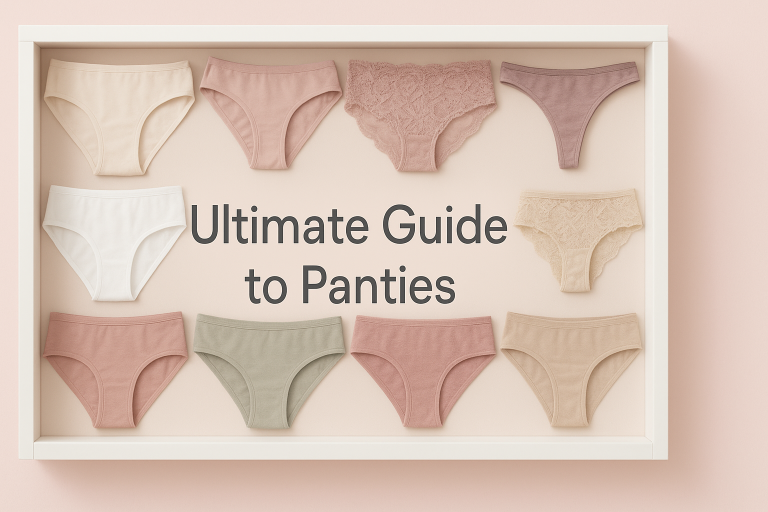
There are eight panty styles found across virtually every intimate apparel brand. Each one serves a distinct function, and understanding those functions is the fastest way to decide which styles belong in your drawer.
Brief Panties
Brief panties provide full rear coverage with a waistband that typically sits at or just above the hip bone. The leg openings are cut straight across the upper thigh, creating a clean, non-digging edge. Briefs are the most commonly recommended style for all-day wear because the full coverage distributes pressure evenly across the hip and seat without cutting into soft tissue.
Briefs work best under mid-rise and high-rise pants, skirts, and dresses. They are also the preferred style for postpartum recovery because the waistband can sit comfortably above or below a cesarean incision depending on sizing. According to fit specialists at Soma Intimates, briefs in cotton-blend fabrics with a flat waistband are the top recommendation for women who experience irritation from elasticized edges.
Key Specifications:
- Coverage: Full rear, full front
- Rise: Mid to high (typically 8 to 11 inches front rise)
- Best fabrics: Cotton, modal, cotton-spandex blend
- Leg opening: Straight cut at upper thigh
- Machine washable: Yes, cold or delicate cycle
Bikini Panties
Bikini panties sit lower on the hip than briefs, with leg openings cut higher on the thigh to expose more of the upper hip and seat. The waistband typically sits 1 to 2 inches below the natural waist. Bikinis are the best-selling panty style in the United States, according to market research published by the NPD Group, accounting for approximately 30% of all women’s underwear sales annually.
The bikini cut is versatile enough for everyday wear under most mid-rise bottoms. It performs poorly under high-rise pants because the low waistband creates a visible line or rolls down. Women with a shorter torso often find bikinis more comfortable than briefs because the lower rise reduces bunching at the waist.
Key Specifications:
- Coverage: Partial rear (approximately 50 to 60% of seat covered)
- Rise: Low to mid (typically 5 to 7 inches front rise)
- Best fabrics: Nylon, lace, cotton-spandex blend
- Leg opening: Cut high on the thigh
- Machine washable: Yes, delicate cycle recommended for lace
Thong Panties
Thong panties feature a narrow strip of fabric at the rear instead of a full back panel. This eliminates visible panty lines under fitted clothing entirely. The front panel provides full coverage while the narrow back strap sits between the cheeks, preventing fabric from showing through tight skirts, leggings, or tailored trousers.
Many women avoid thongs based on comfort concerns, but research published in a 2012 survey by the International Journal of Clothing Science and Technology found that discomfort is most often caused by incorrect sizing rather than the style itself. A properly sized thong in a soft fabric (microfiber or stretch lace) causes minimal irritation. Women prone to recurrent urinary tract infections should consult a healthcare provider before wearing thongs daily, as some gynecologists note that string-style underwear can facilitate bacterial transfer.
Key Specifications:
- Coverage: Full front, minimal rear (1/4-inch to 1/2-inch back strap)
- Rise: Low to high, depending on style
- Best fabrics: Microfiber, seamless nylon, stretch lace
- Leg opening: Cut high on the hip
- Machine washable: Yes, mesh bag recommended
Hipster Panties
Hipster panties sit lower on the hips than bikinis and feature a wider side panel that covers more of the hip bone. The waistband typically sits across the widest part of the hip rather than above or below it. Hipsters provide moderate rear coverage, approximately 70 to 75% of the seat, making them a practical middle-ground between a brief and a bikini.
Hipsters work well under low-rise jeans and shorts because the waistband aligns with the waistline of those garments, eliminating the gap that can form when a higher-rise underwear waistband sits above a low-rise pant. Women with fuller hips often prefer hipsters because the wider side panel reduces the elastic “digging” that narrower cuts can cause at the fullest point of the hip.
Key Specifications:
- Coverage: Moderate rear (approximately 70 to 75%)
- Rise: Low (typically 4 to 6 inches front rise)
- Best fabrics: Modal, cotton-modal blend, lace
- Leg opening: Moderate cut across upper hip
- Machine washable: Yes, cold water
High-Waist Panties
High-waist panties extend from the full seat to the natural waist or above it, providing complete coverage front and back. The extended waistband compresses softly across the midsection without the rigid boning of shapewear, making them a comfortable everyday option for women who prefer full coverage or light smoothing. High-waist styles have grown in popularity by approximately 40% over the past five years, according to trend data from Nordstrom’s intimate apparel category reports.
High-waist panties are the recommended style for women recovering from abdominal surgery, women in their second and third trimesters of pregnancy (when worn below the bump with a maternity design), and women who experience lower back discomfort, as the extended back panel provides mild lumbar coverage. They perform best under high-rise trousers, midi skirts, and A-line dresses.
Key Specifications:
- Coverage: Full rear and front, extends to natural waist or above
- Rise: High (typically 10 to 14 inches front rise)
- Best fabrics: Microfiber, seamless nylon, stretch cotton
- Leg opening: Straight cut at upper thigh or lower
- Machine washable: Yes, cold water, lay flat to dry
Boyshorts
Boyshorts cover the full seat and extend down the thigh by 1 to 3 inches, similar in shape to low-rise shorts. The horizontal leg hem sits below the curve of the seat rather than cutting across the upper thigh, making boyshorts one of the most chafe-resistant panty styles available. They are particularly effective for women who experience thigh friction during walking or exercise.
Boyshorts are a practical choice under dresses and skirts because they prevent thigh chafing while maintaining a smooth silhouette. They can show a visible seam under tight leggings or fitted trousers if the leg hem falls in the wrong position, so seamless styles are strongly recommended for fitted bottoms. Seamless seamless boyshorts in microfiber or bonded-edge construction eliminate the leg-hem visibility problem entirely.
Key Specifications:
- Coverage: Full rear, full front, extends 1 to 3 inches down thigh
- Rise: Mid (typically 6 to 8 inches front rise)
- Best fabrics: Cotton, microfiber, seamless nylon blend
- Leg opening: Horizontal hem at mid-thigh
- Machine washable: Yes, cold water, delicate cycle
G-String Panties
G-string panties are a more minimal version of the thong. Where a standard thong has a narrow back panel, a g-string uses a single thin string or cord at the rear waistband and a minimal front panel, reducing fabric to its absolute minimum. G-strings are chosen primarily for their complete invisibility under body-conscious clothing such as form-fitting evening wear or swimsuit cover-ups.
G-strings require precise sizing because there is no panel to adjust or reposition. A g-string that is one size too small will cause significant discomfort at the waistband and hip strings. Many intimate apparel brands, including Calvin Klein and Victoria’s Secret, size their g-strings identically to their thong lines, so your thong size is your g-string starting point. G-strings in soft silicone or soft elastic cord (rather than rigid elastic) significantly reduce irritation.
Key Specifications:
- Coverage: Minimal front panel, single rear cord
- Rise: Variable, most commonly low rise
- Best fabrics: Microfiber front panel, silicone or soft elastic cord
- Leg opening: High-cut hip
- Machine washable: Hand wash recommended, air dry
Cheekies
Cheeky panties provide partial rear coverage, exposing the lower 30 to 40% of the seat. The cut falls between a bikini and a thong in terms of coverage, making cheekies a popular choice for women who want less coverage than a bikini but more than a thong. The leg openings are cut high on the hip, creating a lifted appearance at the back.
Cheekies work well under mid-rise skirts and dresses where minimal rear fabric is preferable for line prevention, but where a full thong feels uncomfortable. They are less effective under fitted trousers because the partial rear coverage can create a subtle visible edge at the midpoint of the seat. Seamless or bonded-edge cheekies minimize this issue.
Key Specifications:
- Coverage: Partial rear (approximately 60 to 70% of seat)
- Rise: Low to mid (typically 5 to 7 inches front rise)
- Best fabrics: Lace, microfiber, stretch mesh
- Leg opening: High-cut at hip
- Machine washable: Yes, mesh laundry bag recommended
Use the table below to compare all eight panty styles by coverage level, rise height, and the outfits they work best under.
| Style | Rear Coverage | Rise | Best Under | Avoid Under |
|---|---|---|---|---|
| Brief | Full (100%) | Mid to high | All-day wear, high-rise pants, postpartum | Low-rise jeans (waistband shows) |
| Bikini | Moderate (50 to 60%) | Low to mid | Everyday pants, skirts, mid-rise bottoms | High-rise trousers (waistband rolls) |
| Thong | Minimal (0%) | Low to high | Leggings, fitted dresses, tailored trousers | Loose or wide-leg pants (unnecessary) |
| Hipster | Moderate (70 to 75%) | Low | Low-rise jeans, shorts, casual wear | High-rise bottoms (gap at waistband) |
| High-waist | Full (100%) | High | High-rise trousers, A-line skirts, postpartum | Low-rise jeans (waistband shows above) |
| Boyshorts | Full + thigh (100%+) | Mid | Dresses, skirts, chafe prevention | Tight leggings (leg hem shows, unless seamless) |
| G-string | None | Low | Evening wear, body-con dresses, swimwear cover-ups | Casual all-day wear (comfort declines over time) |
| Cheeky | Partial (60 to 70%) | Low to mid | Skirts, dresses, mid-rise bottoms | Fitted trousers (partial rear line may show) |
As shown above, briefs and high-waist styles provide the most coverage and work across the widest range of outfits, while thongs and g-strings are narrowly specialized for line elimination under fitted clothing.
The panty style that covers the widest range of everyday situations is the brief for maximum comfort and the thong for maximum line elimination, and most women benefit from having both in their drawer.
How to Match Panty Style to Outfit Type
Matching underwear to outfits eliminates visible panty lines and prevents the friction-related discomfort that comes from a style that shifts throughout the day. The decision tree is straightforward once you understand the relationship between fabric tension and visibility.
Under Fitted Pants and Leggings
Fitted pants and leggings require seamless, low-profile underwear because the fabric tension reveals any edge, seam, or panel transition. A seamless thong or seamless g-string is the most effective option. A seamless bikini with bonded edges is the second-best option for women who find thongs uncomfortable.
Lace underwear, underwear with picot edges, and any style with an external elastic waistband will show through tight leggings regardless of brand. Nylon-spandex blends with flat or fused seams (sometimes labeled as “laser-cut” or “no-show”) are the technical specification to look for. According to testing conducted by Consumer Reports on intimate apparel visibility, laser-cut microfiber underwear produced zero visible panty line in 94% of test garments compared with 41% for standard lace styles.
Under Skirts and Dresses
Skirts and dresses create two separate underwear considerations: visibility through the fabric and chafing between the thighs during walking. For sheer or lightweight dresses, a seamless thong or seamless bikini prevents visible lines. For non-sheer skirts and dresses, visibility is not a concern, and boyshorts or briefs are the better choice because they prevent thigh chafing during extended walking.
A-line and flared skirts with structured fabric can accommodate any underwear style because the skirt shape itself prevents fabric from pressing against the underwear. Body-con dresses and pencil skirts require the same seamless approach as fitted leggings.
Under High-Rise Bottoms
High-rise jeans, trousers, and shorts pair best with high-waist panties or briefs. When a low-rise or bikini-cut underwear is worn under high-rise bottoms, the waistband creates a horizontal ridge visible at the midsection where the two waistbands sit at different heights. High-waist panties eliminate this by aligning the underwear waistband with or slightly below the trouser waistband.
This pairing is especially important for women who prefer a smooth silhouette through the midsection in professional or formal settings. A high-waist seamless underwear style in microfiber is the specific product type that achieves this most effectively.
Under Activewear and Workout Clothes
Activewear requires moisture-wicking, chafe-resistant underwear that stays in position during dynamic movement. A seamless thong or seamless workout-specific brief in nylon-spandex with moisture-wicking properties is the standard recommendation from sports medicine and athletic wear experts. Cotton underwear worn under activewear retains moisture and increases friction, raising the risk of chafing by approximately 60% compared with synthetic moisture-wicking fabrics, according to research published in the Journal of Textile Science and Engineering.
Many high-quality athletic leggings and shorts include a built-in brief liner, in which case additional underwear is unnecessary and often counterproductive because it doubles the fabric layers at the crotch seam, creating pressure points.
The core matching principle is to align underwear coverage and seam type with the fabric tension of your outer garment: high tension requires seamless and minimal, low tension allows for more coverage and structure.
How Fabric Choice Affects Comfort and Function
The fabric of your panties determines breathability, moisture management, durability, and how the style performs across different activities. Four fabrics account for the majority of panties sold in the United States: cotton, microfiber, lace, and modal.
Cotton
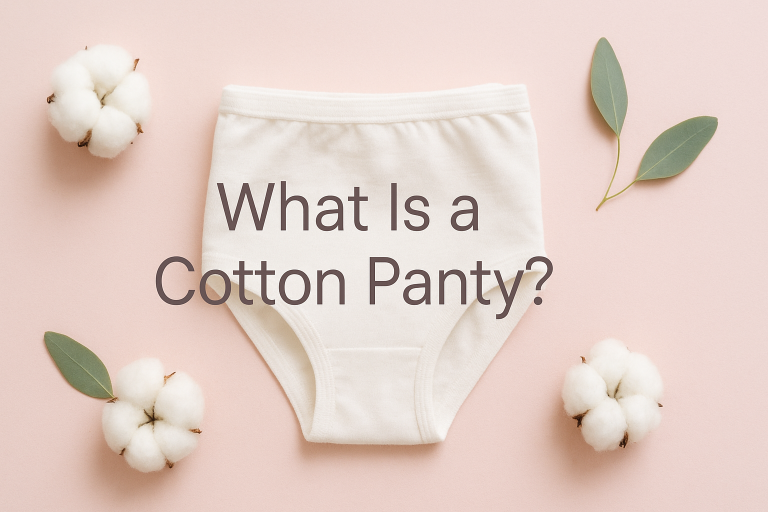
Cotton is the most breathable of the four primary underwear fabrics and is the fabric recommended by most gynecologists for everyday and overnight wear. The American College of Obstetricians and Gynecologists notes that breathable, moisture-absorbing underwear fabric reduces the risk of vaginal irritation and yeast infections compared with non-breathable synthetics. Pure cotton panties absorb moisture from the skin but release it slowly, making them less effective during intense exercise than moisture-wicking synthetics.
A cotton-spandex blend (typically 95% cotton, 5% spandex) maintains cotton’s breathability while adding enough stretch to conform to body movement without sagging. Panties labeled as “100% cotton” with no spandex will lose their shape faster than blended options, particularly in the waistband.
Microfiber
Microfiber is a tightly woven synthetic fabric, typically nylon or polyester, with individual fibers measuring less than 1 denier in diameter. The tight weave creates an exceptionally smooth surface that lies flat against the skin, making microfiber the best fabric for no-show performance under fitted clothing. Microfiber underwear dries faster than cotton (typically 2 to 4 times faster) and resists pilling through repeated washing.
The limitation of microfiber is reduced breathability compared with cotton. Women prone to vaginal irritation should limit microfiber to activities where line prevention is the priority (fitted clothing, workouts) and switch to cotton for extended wear periods.
Lace
Lace is a decorative fabric with an open, mesh-like structure that provides moderate breathability. Most lace underwear combines a lace outer layer with a cotton or microfiber gusset liner, which is the only part of the panty that makes direct contact with the vaginal area. The breathability of the gusset liner material, not the lace itself, is what matters for health. A lace panty with a cotton gusset liner provides the aesthetic of lace with the hygiene benefits of cotton at the skin contact point.
Lace has lower abrasion resistance than woven fabrics. Washing lace underwear in a mesh lingerie wash bag on a cold delicate cycle extends its lifespan by preventing snags and fiber pull.
Modal
Modal is a semi-synthetic fabric made from beech tree cellulose. It is 50% more absorbent than cotton, significantly softer, and retains its softness after repeated washing without pilling. Modal is the recommended fabric for women with sensitive skin or conditions such as eczema because the fiber surface is smooth and does not create the rough texture that irritates sensitive tissue. Modal underwear is more expensive than cotton, typically priced 20 to 40% higher per unit, but has a longer usable lifespan due to its resistance to degradation from washing.
The right fabric for you depends on your primary activity: cotton or modal for all-day comfort, microfiber for line prevention under fitted clothing, and moisture-wicking nylon blends for exercise.
How to Find the Right Panty Size
Panty sizing is not standardized across brands. A size medium from one brand may fit identically to a size large from another. Using your body measurements rather than a labeled size is the only reliable method for finding the right fit.
How to Take Your Measurements
Measure your waist and hips with a flexible tape measure. Take the waist measurement at the narrowest point of your natural waist, typically 1 to 2 inches above the navel. Take the hip measurement at the fullest point of your hips and seat, typically 7 to 9 inches below the natural waist. Both measurements should be taken while wearing no clothing or a single layer of lightweight fabric, with the tape parallel to the floor and snug but not compressing the skin.
Record both measurements in inches. Use the hip measurement as your primary sizing reference because the hip is the largest circumference point the underwear must clear when putting them on. If you fall between two sizes on a brand’s chart, size up in styles with limited stretch (woven fabrics, heavy lace) and stay at the lower size in styles with 20% or more spandex content.
Signs Your Current Size Is Wrong
Underwear that is too small will dig into the soft tissue of the hip and leave red marks at the waistband and leg openings after removal. Underwear that is too large will shift position during movement, bunch at the seat, and allow the waistband to roll or fold. Both problems are solved by measuring correctly and comparing your measurements to the brand’s specific size chart before purchasing.
Fit specialist guidance from Wacoal’s fit team indicates that approximately 65% of women wear underwear in the wrong size, with the most common error being wearing a size too small. The indicator to look for is red elastic marks remaining on your skin more than 20 minutes after removing the underwear, which signals the elastic was under too much tension during wear.
Use the table below to find your starting size using your hip measurement and match it to the common US size range.
| Hip Measurement (inches) | US Underwear Size | Numeric Size Equivalent | Best Rise Option |
|---|---|---|---|
| 33 to 34.5 | Extra Small (XS) | Size 4 to 5 | Low or mid rise |
| 35 to 36.5 | Small (S) | Size 5 to 6 | Low, mid, or high rise |
| 37 to 38.5 | Medium (M) | Size 6 to 7 | Low, mid, or high rise |
| 39 to 41 | Large (L) | Size 7 to 8 | Mid or high rise recommended |
| 42 to 44 | Extra Large (XL) | Size 8 to 9 | Mid or high rise recommended |
| 45 to 47 | 1X | Size 9 to 10 | High rise for optimal support |
| 48 to 50 | 2X | Size 10 to 11 | High rise for optimal support |
As shown above, women with hip measurements of 39 inches or more typically find mid-rise and high-rise styles more comfortable because the wider waistband distributes tension across a larger surface area, reducing pressure at any single point.
Your hip measurement is your most reliable sizing tool, and checking each brand’s specific chart rather than relying on your labeled size from another brand will eliminate the most common fit problems.
Use this interactive finder to get a personalized panty style recommendation based on your primary need and what matters most to you in everyday wear.
Interactive Tool
Find Your Best Panty Style
Answer 2 questions to get a personalized recommendation based on your needs.
Panty Styles for Specific Body Types and Needs
Body shape, hip-to-waist ratio, and specific physical needs such as postpartum recovery or sensitive skin all affect which panty styles perform best. Choosing based on body-specific criteria rather than trend or aesthetics alone produces significantly better fit outcomes.
For Fuller Hips and Thighs
Women with fuller hips and thighs benefit most from panty styles with wide side panels and moderate to full rear coverage. Narrow side panels, such as those found on string bikinis and most g-strings, concentrate elastic tension at the hip’s widest point, causing the “digging” effect that leaves red marks and feels uncomfortable after extended wear. A hipster, brief, or boyshort in a fabric with 15 to 20% spandex content stretches to accommodate a fuller hip without pulling the waistband out of position.
Avoid styles with a high leg opening if you are prone to front-thigh chafing at the panty edge. A boyshort or a lower-cut bikini with a moderate leg opening distributes the leg edge across a wider thigh surface, reducing friction at any single point.
For a Shorter Torso
Women with a shorter torso, defined as a waist-to-hip distance of less than 7 inches, often find that high-waist and mid-rise brief styles bunch or create a thick waistband stack when worn under fitted clothing. Bikini and hipster styles, with their lower rise, sit below the compressed zone of a shorter torso and tend to stay flat and comfortable. The waistband of a bikini-style panty should sit at or just below the widest point of the hip for a shorter torso to prevent rolling or shifting.
For Postpartum and Recovery Needs
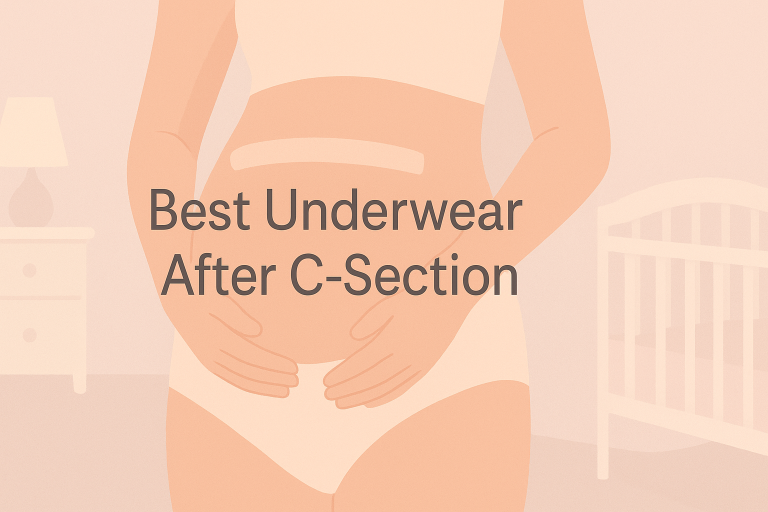
The postpartum period, from delivery through approximately 6 to 8 weeks after birth, requires underwear that accommodates pad use, avoids pressure on perineal stitches, and does not bind across the lower abdomen. Postpartum underwear in high-waist designs made from soft stretch fabric is the clinical recommendation from postoperative care guidelines at the American College of Surgeons. For cesarean delivery, the underwear waistband must sit either below the incision line (typically 3 to 4 inches below the navel) or above it.
Disposable mesh hospital-style underwear is provided for the first 24 to 48 hours postpartum, but most women benefit from transitioning to soft, washable high-waist recovery underwear within the first week. Choose styles with a completely flat waistband, no boning, and at least 20% spandex content for gentle compression support.
For Sensitive Skin
Women with sensitive skin, dermatitis, or vulvar skin conditions should prioritize underwear with a 100% cotton or modal gusset liner and minimal synthetic fabric at any point of direct skin contact. Dyes and fabric treatments are also a factor: undyed or naturally dyed underwear in OEKO-TEX Standard 100 certified fabrics has been tested for harmful substances and is the safest starting point for reactive skin.
Elastic used in waistbands can contain latex or rubber compounds that cause contact dermatitis in sensitized individuals. Latex-free underwear brands, including organic cotton options from brands like Pact and Organic Basics, use alternative waistband constructions that eliminate this irritant.
Matching your panty style to your specific body and lifestyle needs, not just your clothing, is the step most women skip, and it is the one that makes the biggest difference in long-term comfort.
How to Build a Functional Underwear Drawer
A functional underwear drawer contains a rotation of styles matched to the actual activities and outfits you wear, rather than multiples of a single favorite style. Most intimate apparel specialists recommend a drawer of 14 to 21 pairs for a standard 2-week washing cycle, based on one to two pairs per day including a backup for active days.
The Core 5 Styles Every Drawer Needs
Most women’s daily lives involve at least five distinct clothing scenarios that benefit from different underwear: fitted clothing (leggings, tailored trousers), everyday casual wear, dresses and skirts, activewear, and special occasion or eveningwear. Each scenario has a specific style that performs best, so a functional drawer covers all five rather than stocking extras of one preferred style.
Use the table below to plan your ideal underwear drawer based on the five core scenarios and how often each appears in your weekly routine.
| Scenario | Best Style | Recommended Quantity | Best Fabric |
|---|---|---|---|
| Fitted clothing, leggings, tailored trousers | Seamless thong or seamless bikini | 4 to 6 pairs | Microfiber nylon-spandex |
| Everyday casual wear | Brief or hipster | 5 to 7 pairs | Cotton or modal blend |
| Dresses and skirts | Boyshorts or seamless bikini | 3 to 4 pairs | Cotton or microfiber |
| Activewear and workouts | Seamless thong or low-profile brief | 3 to 4 pairs | Moisture-wicking nylon-spandex |
| Special occasion, eveningwear | Thong or g-string | 2 to 3 pairs | Stretch lace or microfiber |
As shown above, the everyday casual brief and the seamless thong for fitted clothing account for the majority of weekly use, making them the highest-priority purchases in any wardrobe rebuild.
When to Replace Your Underwear
Underwear elastic begins degrading after approximately 30 to 40 wash cycles, with visible signs including a stretched, limp waistband that does not return to its original size after washing, leg openings that sag or roll, and fabric that has pilled or thinned to the point of sheerness. Most intimate apparel brands and gynecologists recommend replacing everyday underwear every 6 to 12 months with regular use, replacing sooner if elastic degradation or fabric thinning is apparent.
Caring for underwear correctly extends its usable life significantly. Wash all underwear in a mesh lingerie wash bag on a cold delicate cycle using lingerie-specific detergent. Avoid tumble drying when possible: heat from a dryer degrades spandex and elastic 3 to 5 times faster than air drying, according to textile care research published by the American Association of Textile Chemists and Colorists.
A complete underwear drawer of 14 to 21 pairs across the five core style categories, maintained with proper washing and replaced annually, is the most cost-effective approach to all-day comfort and outfit versatility.
Frequently Asked Questions About How to Choose the Right Panty Style
What panty style is best for preventing visible panty lines?
Seamless thongs and seamless bikinis in laser-cut microfiber eliminate visible panty lines most effectively under fitted clothing. Consumer Reports testing found that laser-cut microfiber underwear produced zero visible panty line in 94% of test garments, compared with 41% for standard lace styles. The key specification to look for is “laser-cut,” “bonded edge,” or “no-show” on the product label, which indicates the leg and waist edges are fused rather than stitched, removing any seam that could create a ridge through fabric.
Which panty style is most comfortable for all-day wear?
Brief and hipster styles in cotton or modal fabric are most consistently rated as the most comfortable for all-day wear. The full rear coverage of a brief distributes pressure evenly across the hip and seat, preventing the localized digging that narrower cuts create at elastic edges. A cotton-spandex blend (95% cotton, 5% spandex) maintains shape through extended wear better than 100% cotton and retains cotton’s breathability advantage over synthetics.
Should I wear a thong every day?
Wearing a thong daily is safe for most women when the thong fits correctly and is made from appropriate materials. A properly sized thong in soft microfiber or stretch lace does not cause injury or infection under normal circumstances. Some gynecologists advise women prone to recurrent urinary tract infections or bacterial vaginosis to limit thong use because the narrow back strap can facilitate bacterial transfer from the rectal area to the vaginal area. Women with a history of these conditions should discuss underwear fabric and style choices with their healthcare provider before making thongs their everyday style.
What is the difference between a hipster and a bikini panty?
A bikini panty sits 1 to 2 inches below the natural waist with leg openings cut high on the thigh, covering approximately 50 to 60% of the rear. A hipster panty sits lower, at the widest point of the hip, with a wider side panel and leg openings that cut lower on the thigh, covering approximately 70 to 75% of the rear. The hipster’s wider side band distributes elastic tension across a larger hip surface, making it more comfortable for women with fuller hips. The bikini’s higher rise makes it more versatile across different trouser waist heights.
What panty style is best for wearing under high-rise jeans or trousers?
High-waist panties and full-coverage briefs are the best choices under high-rise jeans and trousers. When a low-rise bikini or hipster is worn under high-rise bottoms, the mismatched waistband heights create a visible horizontal ridge at the midsection. A high-waist seamless panty in microfiber or a cotton brief with a flat waistband aligns with the trouser waistband and creates a smooth, uninterrupted silhouette. The front rise of your panty should equal or slightly exceed the front rise of your trousers for the best result.
How do I know if my underwear is the wrong size?
Red elastic marks remaining on your skin more than 20 minutes after removing your underwear indicate the underwear is too small. A waistband that folds, rolls, or shifts out of position during the day indicates the underwear is too large. According to fit specialists at Wacoal, approximately 65% of women wear underwear in the wrong size, with the most common error being one size too small. Measure your hips at their fullest point and compare against each brand’s specific size chart, since sizing is not standardized across brands and your size can vary by 1 to 2 labels between different manufacturers.
What underwear style should I wear for exercise?
A seamless thong or seamless low-profile brief in moisture-wicking nylon-spandex is the recommended choice for exercise. Cotton underwear retains moisture during physical activity and increases friction against the skin, raising chafing risk by approximately 60% compared with moisture-wicking synthetic fabrics, according to research published in the Journal of Textile Science and Engineering. Look for underwear labeled moisture-wicking, quick-dry, or sport-specific. Many athletic leggings and shorts include a built-in liner, in which case wearing additional underwear underneath creates unnecessary fabric layering and friction.
Choosing the right panty style is a practical skill that directly improves daily comfort, eliminates visible lines under clothing, and prevents the friction and irritation that come from mismatched fit. Start by identifying the three clothing scenarios you encounter most often in a typical week and select the specific style and fabric that performs best in each. A drawer built around your actual lifestyle, not a single preferred style worn in every situation, is the most effective long-term solution.