Cotton vs Lace Underwear Which Is Healthier? Expert Tips
Cotton underwear is healthier for most women than lace underwear because it allows better airflow, wicks moisture away from the skin, and reduces the risk of bacterial and fungal infections. Lace underwear, while visually appealing, traps heat and moisture against the vulva and can irritate sensitive skin. This guide covers the key differences in breathability, infection risk, skin sensitivity, and daily comfort so you can choose the style that protects your vaginal health.
Why Fabric Choice in Underwear Affects Vaginal Health
The vulva and vaginal area maintain a precise microbiome balance, and the fabric pressed against them for 12 to 16 hours daily directly influences that balance. According to the American College of Obstetricians and Gynecologists (ACOG), synthetic and non-breathable fabrics increase moisture retention in the genital area, which creates conditions favorable for bacterial vaginosis and vulvovaginal candidiasis (yeast infections).
The vagina is a self-cleaning organ that regulates its own pH between 3.8 and 4.5, according to the National Institutes of Health (NIH). External fabric choices cannot change internal pH, but they can alter the warm, moist surface environment that supports or disrupts the Lactobacillus bacteria responsible for maintaining that balance.
Underwear fabric is one of the most controllable environmental factors affecting vulvovaginal health, and selecting the right material is a simple, low-cost way to reduce recurrent infection risk.
Cotton vs Lace Underwear: Head-to-Head Comparison
Use the table below to compare the two fabric types across the factors most relevant to vaginal health and daily comfort.
| Factor | Cotton Underwear | Lace Underwear |
|---|---|---|
| Breathability | High: open fiber structure allows air circulation | Low to moderate: dense weave traps heat |
| Moisture wicking | Absorbs up to 27x its weight in moisture | Minimal absorption; moisture sits on skin |
| Infection risk | Lower: dry environment inhibits yeast and bacteria | Higher: moisture retention promotes overgrowth |
| Skin irritation | Low: smooth surface, hypoallergenic | Moderate to high: textured weave causes friction |
| pH impact | Neutral: does not alter surface chemistry | Indirect: retained moisture shifts surface acidity |
| Typical fabric content | 95-100% cotton or organic cotton | 80-95% nylon or polyester, 5-20% spandex |
| Best for | Everyday wear, infection-prone women, sensitive skin | Occasional wear, special occasions, low-sweat settings |
| Price range | $5 to $18 per pair | $8 to $30 per pair |
Cotton consistently outperforms lace on every health-relevant metric, while lace holds an advantage only in aesthetics and occasion-specific styling.
Breathability and Moisture Control: Why Cotton Wins
Cotton is a natural cellulosic fiber with a hollow core structure that absorbs moisture at a rate of up to 27 times its own weight, according to the Textile Research Journal. This absorption capacity pulls sweat and vaginal discharge away from skin contact within seconds, keeping the vulvar surface dry.
Lace underwear is constructed from nylon, polyester, or a nylon-spandex blend with a tightly knitted mesh pattern. These synthetic fibers absorb less than 0.4% moisture by weight, according to the Journal of Industrial Textiles, meaning sweat and discharge remain on the skin surface and accumulate throughout the day.
A warm, continuously moist environment with temperatures between 98 and 104 degrees Fahrenheit, which is typical under clothing, is the optimal growth condition for Candida albicans (the fungus that causes most yeast infections), according to research published in the journal Medical Mycology. Cotton disrupts this environment by keeping the surface cooler and drier than synthetic fabrics.
Choosing cotton underwear for daily wear is the single most effective fabric-level step a woman can take to reduce heat and moisture buildup in the genital area.
Yeast Infections and Bacterial Vaginosis: The Fabric Connection
Candida albicans causes approximately 70 to 75% of all vulvovaginal yeast infections, according to the Centers for Disease Control and Prevention (CDC). The organism thrives in warm, moist environments and multiplies most rapidly when vaginal surface temperatures exceed 98 degrees Fahrenheit combined with reduced airflow.
How synthetic lace fabric raises infection risk
Synthetic lace fabric raises infection risk through three connected mechanisms. First, the material traps heat against the vulva, raising local surface temperature by 2 to 4 degrees compared to cotton, according to a 2014 study in the European Journal of Obstetrics and Gynecology. Second, it retains moisture from sweat and normal vaginal discharge rather than wicking it away. Third, it creates a barrier to airflow that would otherwise evaporate surface moisture naturally.
These three factors combined create sustained conditions that favor both Candida overgrowth and the anaerobic bacteria responsible for bacterial vaginosis (BV), including Gardnerella vaginalis and Prevotella species, according to the American Journal of Obstetrics and Gynecology.
What the research shows about cotton underwear and infection rates
A controlled clinical study published in the European Journal of Obstetrics and Gynecology found that women who switched from synthetic to cotton underwear reported a statistically significant reduction in recurrent vulvovaginal candidiasis episodes over a 6-month follow-up period. The study enrolled women with a history of three or more yeast infection episodes per year and tracked outcomes across fabric groups.
ACOG guidelines state that wearing loose-fitting, cotton underwear is a recommended preventive measure for women who experience recurrent vulvovaginal infections. This recommendation reflects the consistent association between non-breathable fabrics and elevated infection frequency seen across multiple observational studies.
Women with a history of recurrent yeast infections or BV should treat the switch to 100% cotton underwear as a first-line preventive intervention before seeking pharmacological solutions.
Skin Irritation and Contact Dermatitis from Lace Fabrics
The textured weave pattern of lace creates repetitive mechanical friction against the thin, highly vascularized skin of the vulva. The American Academy of Dermatology (AAD) classifies this type of ongoing friction as a risk factor for contact dermatitis, defined as skin inflammation caused by direct physical or chemical irritation rather than an allergic immune response.
Synthetic lace fabrics frequently contain finishing chemicals applied during manufacturing, including formaldehyde-based resins used to maintain shape and optical brighteners used for color consistency. A 2013 study in the journal Contact Dermatitis identified synthetic fabric finishing agents as a documented cause of vulvar contact dermatitis in women with sensitive skin.
Women with eczema, psoriasis, or any form of chronic vulvar dermatitis face a substantially higher risk of symptom exacerbation from lace fabrics compared to the general population, according to the British Journal of Dermatology.
Key Specifications for identifying low-irritation underwear materials:
- Fabric: 100% cotton or organic cotton preferred
- Finish: free from formaldehyde resins and optical brighteners
- Dye: reactive dyes without azo compounds
- Elastic: covered elastic waistband (not bare rubber against skin)
- Certification: OEKO-TEX Standard 100 confirms absence of harmful chemicals
Selecting underwear certified to OEKO-TEX Standard 100 is the most reliable way to avoid chemical sensitizers in both cotton and lace garments.
Who Should Avoid Lace Underwear Daily
Lace underwear worn occasionally poses minimal health risk for most women, but daily wear creates cumulative exposure to the conditions described above. The following groups face elevated health risk from routine lace underwear use, according to clinical guidance from ACOG and the AAD.
Women who experience recurrent yeast infections
Women who experience three or more yeast infection episodes per year meet the clinical definition of recurrent vulvovaginal candidiasis, according to ACOG. For this group, synthetic lace underwear worn daily can perpetuate the warm, moist microenvironment that allows Candida albicans to reestablish after antifungal treatment. Switching to breathable cotton underwear as the daily default is a standard component of recurrence prevention protocols recommended by gynecologists.
Women with sensitive skin or vulvar dermatitis
Vulvar skin is significantly thinner and more permeable than skin on other body areas, making it more susceptible to both friction injury and chemical absorption from fabric finishes. The AAD recommends that women with a history of vulvar dermatitis, lichen simplex chronicus, or contact sensitivity avoid synthetic lace fabrics directly against the vulva and choose hypoallergenic cotton underwear with minimal dye and chemical finishing instead.
Pregnant women
Hormonal changes during pregnancy increase vaginal discharge volume by 2 to 5 times compared to pre-pregnancy baseline, according to the American Pregnancy Association. This elevated moisture output increases the risk of yeast infections, which affect approximately 10% of pregnant women in the third trimester according to data from the NIH. ACOG recommends cotton underwear specifically during pregnancy to manage increased moisture and reduce infection risk during a period when antifungal treatment options are more restricted.
Women who are physically active
Physical activity raises vulvar surface temperature and increases sweat output in the groin area by 3 to 8 times resting levels, according to the Journal of Sports Sciences. Synthetic lace fabrics worn during exercise compound heat and moisture retention simultaneously, creating conditions for friction injuries and post-workout yeast infections. Moisture-wicking cotton underwear or underwear with a cotton gusset liner is the appropriate choice for women who exercise daily.
Any woman in one or more of these categories should treat daily lace underwear as an active health risk, not simply an aesthetic choice.
When Lace Underwear Is Acceptable
Lace underwear does not need to be eliminated from a woman’s wardrobe entirely. The health risks associated with lace fabric are primarily driven by duration of wear and total daily moisture exposure, not by occasional use in controlled circumstances.
Occasional and special occasion wear
Wearing lace underwear for periods of 4 to 6 hours during low-sweat activities, such as a dinner out or a special occasion, poses minimal infection or irritation risk for women without pre-existing vulvovaginal conditions. The critical variable is total cumulative moisture exposure, which remains low during short, sedentary wear periods. Removing lace underwear promptly and changing to cotton after extended wear reduces residual moisture contact time to acceptable levels.
Lace underwear with a cotton gusset
Many lace underwear styles with a cotton gusset (a cotton-lined panel sewn into the crotch area) represent a practical middle ground between aesthetics and health function. The cotton gusset creates a moisture-absorbing, breathable interface directly against the vulva while the surrounding lace provides the desired visual appearance. This design is widely recommended by gynecologists for women who prefer the look of lace but need the health properties of cotton at the critical contact point.
Sleeping without underwear as a complement to any daytime choice
Sleeping without underwear or in loose cotton sleep shorts allows 7 to 9 hours of unrestricted airflow to the vulvar area each night, partially offsetting the moisture exposure accumulated during daytime wear. The Mayo Clinic and ACOG both note that going without underwear during sleep is a reasonable hygiene and comfort practice that supports vulvovaginal health regardless of daytime fabric choices.
The practical rule is: cotton for daily and active wear, lace reserved for short durations with low moisture exposure, and cotton gusset construction as the minimum standard for any synthetic lace style worn with any regularity.
Here is the head-to-head comparison tool to help you decide which fabric type fits your daily routine and health profile.
Product Comparison
Cotton vs Lace Underwear: Health Properties Side by Side
Key health and comfort attributes compared to help you choose the right fabric for your needs.
| Health Factor | Cotton Underwear | Lace Underwear |
|---|---|---|
| Airflow | Excellent: open fiber allows circulation | Poor: dense synthetic weave blocks airflow |
| Yeast infection risk | Low: dry surface inhibits Candida growth | Elevated: moisture retention promotes overgrowth |
| Contact dermatitis risk | Minimal: smooth, hypoallergenic surface | Moderate: textured weave and dye chemicals |
| Suitable for pregnancy | Yes, ACOG recommended | Not recommended for daily use |
| Safe for active wear | Yes | No: sweat compounds moisture trapping |
| Recommended wear duration | All-day daily wear | 4 to 6 hours, low-sweat occasions only |
Health comparisons based on published guidance from ACOG, the AAD, and peer-reviewed fabric science research. Not a sponsored ranking.
How to Read Underwear Labels to Identify the Healthiest Option
Underwear fabric labels list fiber content by percentage in descending order, with the dominant fiber listed first. A label reading “95% cotton, 5% spandex” describes a garment that is almost entirely natural fiber, with a small elastane addition for stretch recovery. This composition delivers full cotton health benefits while maintaining a fitted silhouette.
Use the table below to decode common underwear fabric compositions and understand their health implications.
| Label Reads | Health Rating | Notes |
|---|---|---|
| 100% cotton | Best | Maximum breathability and moisture absorption |
| 95% cotton, 5% spandex | Excellent | Retains cotton health properties with added stretch |
| Cotton gusset, nylon body | Good | Adequate for occasional lace styles; cotton at contact point |
| 60% cotton, 40% polyester | Fair | Reduced breathability; not ideal for daily wear |
| 90% nylon, 10% spandex (no cotton gusset) | Poor for daily use | Typical lace composition; limits airflow significantly |
| 100% polyester | Avoid for vulvar contact | Zero moisture absorption; highest heat retention |
Checking the gusset composition specifically is more important than the overall garment label, since the gusset is the panel in direct contact with the vulva.
Organic Cotton vs Standard Cotton Underwear
Organic cotton underwear is grown without synthetic pesticides and processed without chlorine bleaching or formaldehyde-based fabric finishes, according to the Global Organic Textile Standard (GOTS). Standard cotton underwear may contain residual processing chemicals that cause contact irritation in women with chemical sensitivities, even though the base fiber is identical.
Organic cotton underwear certified to GOTS or OEKO-TEX Standard 100 delivers the same breathability and moisture-wicking benefits as standard cotton while eliminating the chemical exposure risk from conventional textile processing. The functional difference in breathability and moisture absorption between organic and standard cotton is negligible once both are washed free of surface finishes.
Key Specifications for evaluating organic cotton underwear:
- Fiber: 100% organic cotton (GOTS certified)
- Dye: low-impact reactive dyes, no azo compounds
- Finish: no formaldehyde resins, no chlorine bleach
- Certification: OEKO-TEX Standard 100 or GOTS label
- Gusset: full-length cotton panel extending front to back
For women with diagnosed contact dermatitis or multiple chemical sensitivities, GOTS-certified organic cotton underwear is the most conservative and clinically appropriate choice for daily wear.
Care and Washing Practices That Protect Underwear Health Properties
The health benefits of cotton underwear depend partly on proper laundering. Residual detergent, fabric softeners, and dryer sheet chemicals left in fabric can cause chemical contact irritation independent of fiber type, according to the American Contact Dermatitis Society.
Washing temperature for cotton underwear
Cotton underwear should be washed at 60 degrees Celsius (140 degrees Fahrenheit) to kill Candida albicans and common vulvovaginal bacteria that transfer to fabric during wear, according to a 2013 study in the journal Mycopathologia. A 2011 study in the Journal of Applied Microbiology found that washing at temperatures below 40 degrees Celsius (104 degrees Fahrenheit) failed to eliminate Candida spores from contaminated cotton fabrics in 35% of tested samples.
Detergent and softener choices for sensitive skin
Fragrance-free, dye-free laundry detergent formulated for sensitive skin reduces the risk of chemical contact dermatitis from laundered underwear. The AAD recommends fragrance-free detergents specifically for women with recurrent vulvar irritation, noting that synthetic fragrances are among the most common contact sensitizers identified in patch-testing studies.
Fabric softeners and dryer sheets should be avoided entirely for underwear that contacts the vulva, as these products leave hydrophobic coating residues on cotton fibers that reduce moisture-wicking capacity by up to 30%, according to the Textile Research Journal.
Using fragrance-free detergent, washing at 60 degrees Celsius, and skipping fabric softener preserves both the hygienic integrity and the moisture-wicking function of cotton underwear across hundreds of wash cycles.
Underwear Style Recommendations by Health Priority
Fabric choice is the primary health determinant in underwear selection, but cut and style also affect airflow, friction, and moisture distribution. Use the table below to match your primary health priority to the underwear style and fabric combination that best addresses it.
| Health Priority | Recommended Style | Fabric Requirement | Avoid |
|---|---|---|---|
| Recurrent yeast infections | Brief or boyshort | 100% cotton | All synthetic fabrics, thongs, lace without gusset |
| Vulvar contact dermatitis | High-cut brief | OEKO-TEX organic cotton | Synthetic lace, textured weaves, elastic directly on skin |
| Active lifestyle and exercise | Athletic brief or boyshort | 95% cotton, 5% spandex | 100% synthetic sports underwear worn all day post-workout |
| Pregnancy | Full-coverage maternity brief | 100% cotton, GOTS certified preferred | Synthetic fabrics, restrictive waistbands |
| Bacterial vaginosis history | Brief or bikini | 100% cotton | Thongs (transfer bacteria), synthetic lace |
| Occasion wear only | Lace with cotton gusset | Cotton gusset minimum | Wearing lace all day or during exercise |
Matching underwear style and fabric to your specific health priority converts a passive wardrobe choice into an active preventive health strategy.
Thongs, Bikinis, and Briefs: Does Cut Add to Lace Risk
Cut affects health risk independently of fabric, and the combination of synthetic lace with a high-friction cut multiplies both irritation and infection risk beyond what either factor causes alone. Understanding how cut interacts with fabric choice helps build a complete picture of underwear health risk.
Thong underwear and bacterial transfer
Thong underwear in any fabric (cotton or synthetic) creates a narrow fabric bridge between the vaginal opening and the anus. Natural bowel movements and body movement cause the narrow panel to shift position throughout the day, creating a pathway for fecal bacteria, including Escherichia coli, to migrate toward the urethral opening. A study published in the American Journal of Obstetrics and Gynecology identified thong-style underwear as a contributing factor in recurrent urinary tract infection (UTI) cases, particularly when made from non-cotton fabrics that retain bacteria-laden moisture against the perineum.
The health risk of a lace thong is the additive product of synthetic fabric heat retention, moisture trapping, and bacterial transfer from cut geometry. Cotton thongs reduce the fabric-related risk component while retaining some cut-related bacterial transfer risk, making them a better but not optimal choice for women with UTI or BV history.
Brief and boyshort styles as the lowest-risk options
Full-coverage cotton brief underwear and cotton boyshort underwear represent the lowest-risk combination available for daily wear. The fuller coverage distributes fabric contact across a wider surface area, reduces concentrated friction at any single point, and positions the gusset panel across the entire vulvar and perineal region. The cotton fiber wicks moisture across this larger surface area efficiently, maintaining a consistently dry contact environment throughout the day.
Choosing 100% cotton briefs or boyshorts as the daily wear default eliminates the compounding risk created by the cut-fabric combination that makes lace thongs the highest-risk underwear style available.
Frequently Asked Questions About Cotton vs Lace Underwear and Vaginal Health
Is wearing lace underwear every day bad for you?
Wearing lace underwear every day increases the risk of vulvovaginal yeast infections, bacterial vaginosis, and contact dermatitis for most women. Lace fabric is predominantly nylon or polyester, materials that absorb less than 0.4% moisture by weight according to the Journal of Industrial Textiles. This low absorption causes sweat and vaginal discharge to remain against the vulvar skin for hours, creating the warm, moist conditions that support Candida albicans overgrowth. ACOG recommends cotton underwear for daily wear as a standard preventive measure against recurrent vulvovaginal infections. Lace styles with a cotton gusset are an acceptable daily compromise if aesthetics are a priority, provided the gusset covers the full vulvar contact area.
Can lace underwear cause a yeast infection directly?
Lace underwear does not directly inject fungal organisms into the vagina, but it creates the environmental conditions that allow existing Candida albicans organisms to proliferate to symptomatic levels. Candida albicans is a commensal organism present in the vaginal microbiome of approximately 20% of asymptomatic women, according to the CDC. It causes infection only when the balance shifts in its favor, typically when sustained warmth, moisture, and restricted airflow allow it to multiply beyond the threshold at which Lactobacillus bacteria can suppress it. Daily synthetic lace wear provides exactly those conditions. The AAD notes that non-breathable fabrics are a documented contributing factor in recurrent vulvovaginal candidiasis, not a direct cause, but a reliable environmental trigger.
What is the healthiest type of underwear for women?
The healthiest underwear for women is a full-coverage brief or boyshort style made from 100% cotton or 95% cotton with 5% spandex, certified to OEKO-TEX Standard 100 to confirm absence of harmful chemical finishes. Cotton absorbs moisture at up to 27 times its own weight, according to the Textile Research Journal, and maintains the dry surface environment that supports Lactobacillus dominance in the vaginal microbiome. ACOG specifically cites loose-fitting, cotton underwear as a preventive recommendation for women prone to recurrent infections. Organic cotton certified to GOTS standards adds the additional benefit of no synthetic pesticide residues or formaldehyde-based fabric finishes, making it the most conservative choice for women with chemical sensitivities or chronic vulvar dermatitis.
Does lace underwear cause UTIs?
Lace underwear can contribute to UTI risk through two mechanisms. First, synthetic lace retains moisture near the urethral opening, creating a warm, moist environment that allows uropathogenic bacteria, including E. coli, to survive longer on external skin surfaces before ascending to the bladder. Second, lace thong styles specifically create a narrow fabric bridge between the anus and urethra that mechanical movement can position against the urethral opening repeatedly throughout the day, increasing bacterial transfer opportunity. A study in the American Journal of Obstetrics and Gynecology identified synthetic thong-style underwear as a contributing factor in women with three or more UTI episodes per year. Switching to cotton brief underwear reduced UTI frequency in the study cohort during the intervention period.
Is bamboo underwear as good as cotton for vaginal health?
Bamboo viscose underwear has moisture-wicking properties comparable to cotton, with some studies showing slightly higher moisture absorption capacity. However, the term “bamboo fabric” typically refers to bamboo viscose or bamboo rayon, which is a chemically processed fiber derived from bamboo pulp rather than a natural cellulosic fiber. The Federal Trade Commission (FTC) has issued guidance noting that bamboo rayon undergoes chemical processing that breaks down the original bamboo structure, making the resulting fiber chemically similar to other viscose rayons rather than to natural bamboo. Unprocessed mechanically produced bamboo linen is a true natural fiber with health properties similar to cotton, but it is rare in commercial underwear. For consistent health outcomes, 100% cotton remains the better-validated choice due to the larger volume of peer-reviewed research supporting its benefits for vulvovaginal health specifically.
Can you wear lace underwear if you have a yeast infection?
Wearing lace underwear during an active yeast infection is counterproductive to treatment because it maintains the warm, moist conditions that allow Candida albicans to persist and recolonize. Antifungal treatments, whether topical azole creams or oral fluconazole, eliminate the active infection but do not prevent re-inoculation from environmental conditions. ACOG recommends switching to 100% loose cotton underwear during and for at least 2 weeks after yeast infection treatment to reduce recurrence risk. Women with recurrent vulvovaginal candidiasis (three or more episodes per year) are advised to maintain cotton as their permanent daily underwear default as part of a comprehensive recurrence prevention strategy.
How many pairs of cotton underwear should I own for hygienic rotation?
Owning 7 to 10 pairs of cotton underwear supports a daily change schedule with adequate rotation time for thorough laundering and complete drying between uses. Cotton underwear should not be worn more than once before washing, as Candida albicans, uropathogenic bacteria, and fecal coliforms transfer to fabric during normal daily wear and can survive for up to 24 hours on unwashed cotton at room temperature, according to data published in the Journal of Applied Microbiology. A 7-pair minimum ensures a fresh pair is available each day of the week and allows time for washing and fully air-drying, since incomplete drying at the gusset can allow residual fungal organisms to persist in the fabric before the next wear.
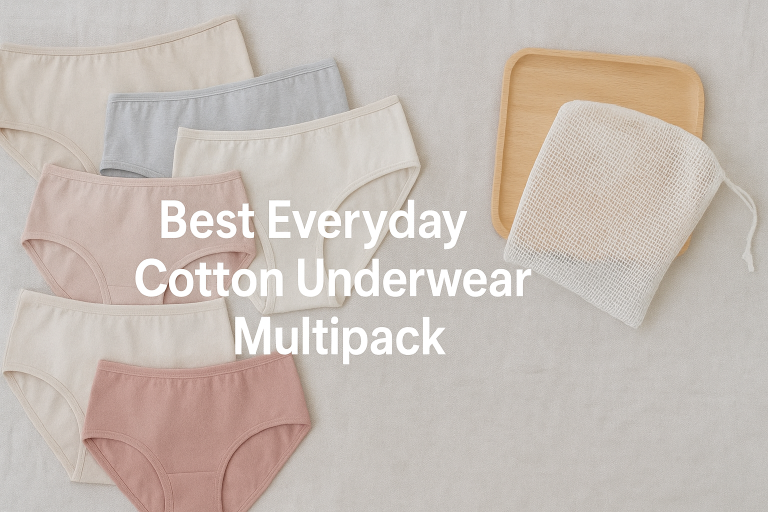
Cotton underwear is the clear health choice for daily wear, and the evidence supporting this recommendation is consistent across gynecology, dermatology, and textile science research. Reserve lace styles with a cotton gusset for occasional use, check fabric labels for cotton composition at the gusset specifically, wash at 60 degrees Celsius with fragrance-free detergent, and skip fabric softener to preserve moisture-wicking performance. Starting with a core rotation of 7 to 10 pairs of 100% cotton underwear is the simplest, most evidence-supported step toward better vulvovaginal health.