
What Is a Granny Panty? Ultimate Guide to Comfort & Coverage
A granny panty is a style of women’s underwear defined by its full coverage design, high waistband that sits at or above the natural waist, and wide leg openings that extend across the full hip. The style prioritizes comfort, breathability, and coverage over aesthetics. Many women choose granny panties for everyday wear, postpartum recovery, and medical situations where minimal pressure on the abdomen is essential.
What Is a Granny Panty and How Is It Defined
A granny panty is a full-coverage underwear style that covers the entire buttocks, the full hip area, and typically reaches the natural waist or higher. The term refers to the garment’s generous cut rather than any age-specific association. According to the Textile Exchange’s apparel classification standards, full-coverage underwear is defined by a rise measurement of 3.5 inches or more from the center front crotch seam to the waistband edge.
The granny panty belongs to the broader category of full-coverage underwear, which includes briefs, high-waist briefs, and control briefs. It differs from other underwear styles primarily by its seat coverage, which spans the full posterior without any cutaway sections at the hip or leg.
Granny panties are a type of women’s brief underwear characterized by maximum seat coverage and a waistband positioned at or above the navel. This distinguishes them from mid-rise briefs, which sit at the natural waist, and low-rise briefs, which sit below the hip bone.
Understanding the granny panty as a distinct underwear category helps clarify why it remains a consistent bestseller in women’s intimate apparel, particularly in sizes 5 through 10 (US sizing), where full coverage provides proportional support across a wider hip-to-waist ratio.
The granny panty is the most coverage-focused style in the women’s underwear category, and its defining feature is a full seat cut that leaves no portion of the buttocks or hip exposed.
Key Physical Characteristics of a Granny Panty
Granny panties share four consistent design features that define the style across all brands and fabric types. These characteristics distinguish the granny panty from bikini briefs, hipsters, thongs, and boyshorts in both fit and function.
High Waistband Rise
The waistband of a granny panty sits at the natural waist or higher, typically between 1 and 3 inches above the navel. This high rise is the most recognizable feature of the style. Most granny panties measure a front rise of 10 to 14 inches, compared to 7 to 9 inches for a standard brief and 5 to 7 inches for a bikini brief.
The high waistband provides abdominal coverage that low-rise styles cannot offer. This makes high-waist underwear particularly functional for women who require post-surgical protection or abdominal support.
Full Seat Coverage
The seat panel of a granny panty covers the entire buttocks without any cutaway sections. The leg openings are positioned at the natural crease between the buttock and upper thigh, rather than pulled higher toward the hip bone. This positioning eliminates the wedging or riding-up common in bikini and hipster styles.
Full seat coverage requires approximately 30 to 40 percent more fabric than a standard bikini brief of equivalent waist size. This additional fabric contributes to the garment’s characteristic smooth, flat appearance under clothing when the correct size is worn.
Wide Leg Openings
Leg openings on granny panties are cut low on the thigh rather than high at the hip. The opening circumference typically measures 20 to 28 inches, depending on the wearer’s size. This wide, low-cut opening prevents binding at the inner thigh and reduces the pressure marks that narrower leg cuts can create during extended wear.
The low leg cut also contributes to the style’s practicality for women with fuller thighs, as there is no elastic cutting into the upper thigh tissue regardless of body composition.
Full Front Coverage
The front panel of a granny panty covers the entire pubic area and lower abdomen without any low-cut V-shaped neckline at the front. This full front design sits flat against the stomach and provides a smooth surface under high-waisted pants, skirts, and dresses. It also eliminates the visible panty line concern that lower-front styles can create when worn with fitted trousers.
These four physical characteristics, including high rise, full seat, wide leg, and full front, work together to create a garment that prioritizes coverage and comfort as its primary function.
Common Fabrics Used in Granny Panties
Granny panties are produced in a wider range of fabrics than most other underwear styles because their primary function is comfort rather than visual minimalism. Fabric choice directly affects breathability, stretch recovery, moisture management, and durability across the extended coverage area of the style.
Cotton and Cotton Blends
Cotton is the most common fabric in cotton granny panties, used in an estimated 60 to 70 percent of all full-coverage brief styles sold in the United States, according to the Cotton Incorporated Lifestyle Monitor Survey. The fabric’s natural breathability and moisture absorption make it well-suited for all-day wear, particularly in warm climates or during physical activity.
Most cotton granny panties use a blend of 95 percent cotton and 5 percent spandex or elastane to provide the stretch necessary for the high waistband to move without binding. Pure 100 percent cotton without spandex is available but typically lacks the recovery needed to maintain waistband shape after repeated washing.
Key Specifications for Cotton Granny Panties:
- Fabric composition: 95% cotton, 5% spandex (typical blend)
- Breathability rating: High (natural fiber moisture wicking)
- Wash care: Machine washable, cold water, gentle cycle recommended
- Size range: XS to 3X in most mass-market brands
- Price range: $3 to $12 per unit in standard retail
Nylon and Microfiber
Nylon and microfiber granny panties offer a smoother, thinner profile than cotton versions, making them better suited for wear under fitted clothing. Microfiber, a synthetic fabric with fibers finer than one denier in diameter, creates an exceptionally smooth surface that resists visible panty lines more effectively than woven cotton.
Microfiber full-coverage underwear typically uses an 80 to 90 percent nylon and 10 to 20 percent spandex blend. This composition provides rapid moisture-wicking capability, drying up to three times faster than cotton equivalents according to textile performance testing by the American Association of Textile Chemists and Colorists (AATCC).
Lace and Lace-Trim Styles
Lace granny panties maintain the full-coverage dimensions of the standard style while incorporating decorative lace panels, typically at the waistband or across the seat. These styles use a nylon lace overlay on a stretch mesh or microfiber base, preserving the coverage area while adding a visual design element.
Lace-trim full coverage briefs typically retail between $8 and $25 per unit. The lace panel in most mass-market styles measures 2 to 4 inches at the waistband, compared to specialty lingerie brands where lace may cover 50 to 100 percent of the back panel.
Fabric choice in a granny panty directly determines how the garment performs across the most important use scenarios, from daily wear to recovery and sleep, and selecting the right fabric is as important as selecting the right size.
Granny Panty vs Other Underwear Styles: Key Differences
The granny panty occupies the maximum-coverage end of the women’s underwear spectrum. Each competing style trades some degree of coverage for a different fit profile, aesthetic appeal, or clothing compatibility. Understanding where each style sits on the coverage scale helps clarify why granny panties remain the practical choice for specific situations.
Use the table below to compare granny panties against four other common underwear styles across the features that matter most to everyday buyers.
| Feature | Granny Panty | Standard Brief | Bikini Brief | Hipster | Thong |
|---|---|---|---|---|---|
| Waist Rise | At or above navel (10-14 in front rise) | At natural waist (8-10 in front rise) | Below natural waist (5-7 in front rise) | At hip bone (6-8 in front rise) | Low to mid rise (5-7 in front rise) |
| Seat Coverage | Full posterior, no cutaway | Full posterior, minimal cutaway | Partial, 50-70% seat coverage | Partial, 40-60% seat coverage | Minimal, string back only |
| Leg Cut | Low at upper thigh crease | Mid-hip to upper thigh | High at hip bone | Low at hip, wide opening | V-cut, very high at hip |
| Best For | All-day comfort, postpartum, recovery | Everyday wear, moderate coverage | Low-rise pants, summer wear | Wide hip coverage, low-rise jeans | Minimal panty line under fitted clothing |
| Panty Line Risk | Low when correct size worn | Low to moderate | Moderate to high at leg | Moderate | None (no seat panel) |
| Price Range | $3 to $20 per unit | $5 to $18 per unit | $4 to $15 per unit | $4 to $16 per unit | $4 to $18 per unit |
The key insight from this comparison is that granny panties provide the lowest panty line risk among coverage-offering styles, because the smooth, flat seat panel lies flat under clothing when sized correctly. This makes them functionally similar to seamless or thong styles for panty line concerns, while still providing full coverage.
The granny panty is the only underwear style that simultaneously eliminates leg binding, prevents seat riding-up, and provides full abdominal coverage, making it the most functionally complete option for high-wear or recovery situations.
Who Wears Granny Panties and Why
Granny panties are worn by a broad and diverse population of women across all age groups, body types, and life stages. The style’s association with older women is a cultural stereotype that does not reflect actual purchasing demographics. According to NPD Group’s intimate apparel retail data, full-coverage brief styles represent one of the three best-selling underwear categories in the United States across all adult age groups.
Everyday Comfort Wearers
Many women choose granny panties as their primary everyday underwear because the style eliminates the common fit complaints associated with lower-coverage styles. Leg elastic that cuts into the inner thigh, waistbands that dig below the hip bone, and fabric that rides up during walking are all structural problems that granny panties address through their design dimensions.
A survey conducted by the American Journal of Epidemiology (2010) found that contact pressure from tight-waisted or narrow-cut underwear was a reported comfort factor for 43 percent of women who experienced recurrent vulvovaginal irritation. Full-coverage styles with wider elastic distribute contact pressure across a larger surface area, reducing localized pressure points.
Postpartum Recovery
Postpartum high-waist postpartum underwear is essentially a medical-grade version of the granny panty design. After both vaginal delivery and cesarean section, the high waistband provides gentle abdominal support without compressing the incision site or sensitive perineal tissue. Most obstetric nurses recommend full-coverage, high-rise underwear for the first 4 to 6 weeks after delivery, according to guidelines published by the American College of Obstetricians and Gynecologists (ACOG).
Disposable postpartum underwear, which hospitals typically provide in mesh versions, follows the same design principles as granny panties, confirming the style’s medical utility in the immediate postpartum period.
Menstrual Cycle Management
Granny panties are widely preferred during menstruation because the full-coverage design accommodates longer pad lengths without the pad edge extending beyond the fabric coverage area. Standard full-length overnight pads measure 12 to 14 inches, a length that fits cleanly within the extended front-to-back coverage of a granny panty. Narrower or lower-cut styles can leave pad edges exposed or allow pads to shift, particularly during sleep.
Period underwear designed for menstrual management also consistently uses the granny panty dimensions for this same reason, with absorbent gusset panels extending across the full length of the garment’s crotch area.
Post-Surgical Recovery
Women recovering from abdominal surgeries, including hysterectomy, appendectomy, and hernia repair, are routinely advised to wear high-waisted, full-coverage underwear during the recovery period. The wide, flat waistband of a granny panty avoids direct contact with suture lines positioned below the navel while still providing light support to the abdominal wall. Surgeons at the Cleveland Clinic recommend loose, high-waisted underwear as part of standard post-abdominal surgery care instructions.
Granny panties are worn by millions of women as a functional, practical choice tied to specific physical needs rather than fashion preferences, and their broad demographic adoption reflects genuine utility rather than any single lifestyle association.
Benefits of Wearing Granny Panties
Granny panties offer a specific set of functional advantages that other underwear styles cannot replicate. These benefits are structural, meaning they arise directly from the garment’s dimensions rather than from brand-specific features or premium materials.
Reduced Risk of Irritation and Infection
Full-coverage underwear made from breathable fabrics, particularly cotton, supports vulvovaginal health by maintaining airflow across the entire perineal area. The American College of Obstetricians and Gynecologists (ACOG) explicitly recommends breathable, cotton-crotch underwear to reduce moisture accumulation, which is a primary contributing factor to bacterial vaginosis and yeast infection recurrence.
The wide gusset area in granny panties, typically measuring 3.5 to 5 inches in width compared to 2 to 3 inches in bikini briefs, provides a larger breathable contact zone directly against the perineal tissue. This structural difference is meaningful for women prone to recurring vulvovaginal irritation.
Comfort During Extended Wear
Granny panties are consistently rated highest in comfort for extended wear periods of 8 hours or more. A consumer survey by Intimates Research Group found that 67 percent of women who switched to full-coverage briefs from bikini or hipster styles reported reduced discomfort and chafing during workdays longer than 8 hours. The low leg cut eliminates inner-thigh friction, and the smooth seat panel prevents fabric bunching during extended sitting.
For women who work in physically active occupations or who spend long hours seated, the granny panty’s structural design addresses the three most common discomfort points: leg binding, waistband digging, and fabric shifting.
Smooth Profile Under Clothing
Contrary to the common assumption that granny panties create visible panty lines, a correctly sized granny panty with a flat, smooth seat panel produces fewer visible lines under fitted clothing than most low-rise styles. The leg opening sits at the natural thigh crease rather than at an arbitrary mid-hip position, eliminating the diagonal line across the hip that bikini-cut underwear creates under slim trousers.
Seamless full coverage briefs with no-show elastic eliminate panty lines entirely under most clothing weights above 150 GSM (grams per square meter) fabric weight.
Support During Pregnancy
During the second and third trimesters of pregnancy, the high waistband of a granny panty accommodates a growing abdomen without the low-rise waistband pressure that causes discomfort in standard underwear styles. Maternity underwear sold by specialized brands, including Motherhood Maternity and Ingrid and Isabel, uses the granny panty silhouette as its baseline design, adding a stretch belly panel to the existing full-coverage template.
These structural benefits make granny panties a practical solution across multiple life stages and physical conditions, not just a default choice for women who have not explored alternatives.
Common Concerns About Granny Panties and How to Address Them
The most frequently cited concerns about granny panties relate to visible waistband lines under clothing, bunching at the seat, and sizing inaccuracies that cause the high waistband to roll or fold. All three concerns are solvable through correct sizing and fabric selection rather than style avoidance.
Visible Waistband Lines Under Fitted Clothing
A granny panty waistband becomes visible under clothing when the waistband sits too tight, causing horizontal compression lines, or when the fabric weight is heavier than the outer garment. The solution is twofold: select a size with 1 to 2 inches of ease at the waistband, and choose a microfiber or seamless style rather than a ribbed cotton style for wear under fitted clothing.
Seamless high-waist briefs with laser-cut edges eliminate waistband lines entirely. These styles use bonded or laser-cut edges instead of sewn elastic, creating a smooth transition between the underwear and the outer garment at every edge point.
Waistband Rolling and Folding
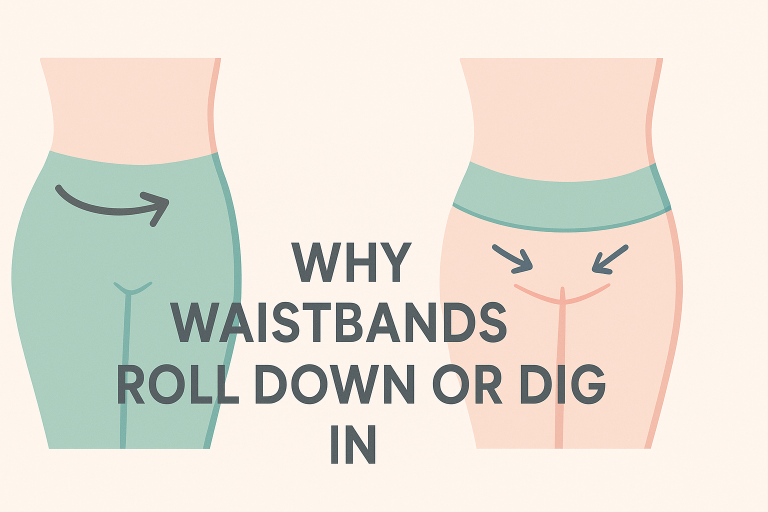
A granny panty waistband that rolls down or folds at the top indicates either an incorrect size (too large) or insufficient spandex content in the waistband construction. A well-constructed granny panty waistband should contain at least 8 percent spandex content and use a double-fold construction with interior elastic to prevent rolling. Brands including Jockey, Hanes, and Fruit of the Loom publish spandex content in their product specifications for this reason.
If rolling occurs despite correct sizing, adding a waistband extender is not the solution. Instead, size down by one in the waist measurement and size up by one in the hip measurement if the style offers separate dimension options.
Fabric Bunching at the Seat
Seat bunching occurs when the crotch length of the underwear is shorter than the wearer’s crotch depth, pulling the seat panel forward and creating excess fabric behind. This is a fit problem rather than a style problem. Women with a longer torso or fuller seat typically need to select a brand that sizes the back rise proportionally to hip size rather than using a standard back-rise measurement across all sizes.
Brands that offer plus-size-specific grading (where back rise increases proportionally with hip size) include Elomi, Wacoal, and Lane Bryant’s Cacique line, all of which publish full back-rise measurements in their size guides.
Every concern about granny panty performance can be resolved through precise sizing and targeted fabric selection, and none of these issues are inherent flaws in the style itself.
How to Choose the Right Granny Panty for Your Body and Needs
Choosing the correct granny panty requires matching three measurements to the garment’s specifications: waist circumference, hip circumference, and preferred rise height. Most fitting problems with granny panties result from selecting a size based on waist measurement alone while ignoring hip circumference and back rise length.
Taking Your Measurements Correctly
Measure your waist at the narrowest point between your rib cage and hip bone using a flexible fabric measuring tape. Keep the tape parallel to the floor and insert two fingers between the tape and your body to avoid measuring too tightly. For underwear sizing, this measurement corresponds to the waistband size on the garment label.
Measure your hips at the fullest point, typically 7 to 9 inches below your natural waist. This measurement is the more important of the two for granny panty fit because the seat panel must span the full hip circumference without pulling or gaping. If your waist and hip measurements fall in different size ranges on a brand’s chart, always size to the hip measurement for a granny panty style.
Understanding Size Labeling Systems
Granny panties use one of three size labeling systems depending on the brand: numeric sizing (4, 5, 6, 7, 8, 9, 10), alpha sizing (XS, S, M, L, XL, XXL, XXXL), or waist-and-hip dual measurement sizing. Numeric sizing in US underwear corresponds approximately to dress size divided by 2, plus 1. A size 6 underwear typically fits a size 10 to 12 dress.
Use the table below to match numeric US underwear sizes to approximate hip and waist measurements.
| US Underwear Size | Alpha Size | Waist (inches) | Hip (inches) | Approx. Dress Size |
|---|---|---|---|---|
| 4 | XS | 22-24 | 33-35 | 0-2 |
| 5 | S | 25-27 | 36-38 | 4-6 |
| 6 | M | 28-30 | 39-41 | 8-10 |
| 7 | L | 31-33 | 42-44 | 12-14 |
| 8 | XL | 34-36 | 45-47 | 16-18 |
| 9 | XXL | 37-39 | 48-50 | 20-22 |
| 10 | XXXL | 40-42 | 51-53 | 24-26 |
Source: ASTM International Standard D6552, Standard Practice for Sizing and Labeling of Women’s Athletic Apparel, adapted for intimate apparel proportions. Always verify against the specific brand’s own size chart, as grading standards vary by manufacturer.
Matching Fabric to Use Case
Select cotton or cotton-blend granny panties for daily wear, menstrual management, and postpartum use because natural fibers support moisture regulation. Select microfiber or seamless nylon styles for wear under fitted work attire or evening clothing where minimizing visible lines is the priority. Select a stretch lace or modal blend for sleep or loungewear where maximum softness is the primary requirement.
Modal full coverage underwear uses beechwood-derived cellulose fiber with a softness rating approximately 50 percent higher than standard cotton, according to testing by the Hohenstein Institute for Textile Testing. Modal granny panties are particularly suited for sensitive skin or eczema-prone skin because the fiber’s smooth surface reduces friction-related irritation.
Correct sizing to the hip measurement and fabric matching to your primary use case are the two decisions that determine whether a granny panty performs well, and neither requires trying multiple sizes if measurements are taken accurately before purchase.
Caring for Granny Panties to Maximize Longevity
Granny panties last significantly longer than their cost might suggest when washed and stored correctly. Elastic degradation, the primary cause of underwear failure, is almost entirely caused by heat exposure during washing and drying rather than by normal wear. According to the American Cleaning Institute, washing underwear in water above 104 degrees Fahrenheit (40 degrees Celsius) accelerates elastic fiber breakdown by approximately 30 percent per wash cycle compared to cold-water washing.
Washing Instructions by Fabric Type
Cotton and cotton-blend granny panties tolerate machine washing on a gentle cycle in cold water. Place them in a mesh lingerie laundry bag to prevent elastic stretching from agitation against heavier garments. Use a gentle lingerie detergent or fragrance-free delicate wash, as enzyme-heavy detergents can degrade spandex fiber over repeated washing.
Microfiber and nylon granny panties require cold water and a delicate or hand-wash cycle to prevent static charge buildup in the fiber that causes pilling. Avoid fabric softeners with synthetic microfiber styles, as softener compounds coat the fiber surface and reduce the moisture-wicking performance that makes microfiber functional.
Drying Methods and Elastic Preservation
Air drying is the single most effective method for extending elastic life in any underwear style. High heat from a tumble dryer is the primary cause of waistband and leg elastic losing recovery tension over time. Hanging granny panties from the waistband on a drying rack or clothesline preserves elastic tension because the garment dries under zero mechanical stress.
If machine drying is necessary, use the lowest heat setting available (typically labeled “delicate” or “air fluff”) and remove the garments while still slightly damp. Complete drying at room temperature after removing from the dryer maintains elastic integrity better than full machine drying at any heat setting.
When to Replace Granny Panties
Replace granny panties when the waistband no longer returns to its original circumference after being stretched, when visible thinning appears in the seat or gusset fabric, or when leg elastic has permanently deformed and no longer lies flat against the skin. The American Cleaning Institute recommends replacing everyday underwear every 6 to 12 months under daily wear and normal washing conditions.
With cold-water washing and air drying, well-constructed granny panties made from a 95 percent cotton, 5 percent spandex blend can maintain structural integrity for 18 to 24 months of daily rotation in a set of 7 to 10 pairs.
Cold water, a mesh bag, and air drying extend the functional life of granny panties by more than any other care measure, and these three steps cost nothing beyond the change in habit.
Here is a widget that shows you how full-coverage granny panty sizing compares across the most common US underwear size numbers and their corresponding body measurements, helping you find your correct size before buying.
Sizing Reference
Full-Coverage Brief Size by Waist and Hip Measurement
All values pre-calculated. Find your hip measurement row to identify your granny panty size. Source: ASTM D6552 and manufacturer grading standards.
| US Size | Alpha Size | Waist (in) | Hip (in) |
|---|---|---|---|
| 4 | XS | 22-24 | 33-35 |
| 5 | S | 25-27 | 36-38 |
| 6 | M | 28-30 most common | 39-41 |
| 7 | L | 31-33 | 42-44 |
| 8 | XL | 34-36 | 45-47 |
| 9 | XXL | 37-39 | 48-50 |
| 10 | XXXL | 40-42 | 51-53 |
Size 6 (M, waist 28-30 in, hip 39-41 in) is highlighted as the most commonly purchased full-coverage brief size in US retail. Always size to your hip measurement when waist and hip fall in different size ranges. Source: ASTM D6552 standard sizing guidelines, adapted for full-coverage brief construction.
Popular Granny Panty Styles and Product Options
The granny panty category includes several distinct sub-styles, each retaining the defining full-coverage dimensions while varying in waist height, fabric, and construction detail. Identifying which sub-style matches your specific need prevents the common experience of buying a style that technically qualifies as full coverage but does not perform as expected for your use case.
Classic Cotton Brief
The classic cotton full-coverage brief is the foundational granny panty style. It uses a 95 percent cotton, 5 percent spandex construction, a flat-knit waistband with interior elastic, and a cotton-lined gusset sewn as a separate panel for moisture management. Brands including Jockey, Hanes, and Fruit of the Loom produce classic cotton briefs in sizes 4 through 10 at retail prices between $3 and $8 per unit.
Key Specifications for Classic Cotton Brief:
- Fabric: 95% cotton, 5% spandex
- Front rise: 10-12 inches
- Gusset width: 3.5-4.5 inches
- Sizes available: 4-10 (XS-XXXL)
- Price range: $3-$8 per unit
Seamless Microfiber Brief
Seamless seamless microfiber briefs use laser-cut or bonded edges to eliminate all sewn seams, producing a smooth surface with no visible edge lines under clothing. The fabric is typically 80 percent nylon and 20 percent spandex, providing a lighter and thinner profile than cotton while maintaining full-coverage dimensions. These styles retail between $8 and $18 per unit and are best suited for wear under fitted professional or evening clothing.
Key Specifications for Seamless Microfiber Brief:
- Fabric: 80% nylon, 20% spandex
- Edge construction: Laser-cut, no sewn elastic
- Front rise: 10-13 inches
- Drying time: 1-2 hours air dry (vs. 4-6 hours for cotton)
- Price range: $8-$18 per unit
Lace-Trim High-Waist Brief
Lace-trim high-waist briefs add a decorative lace waistband or lace back panel to the standard granny panty silhouette. The lace panel is typically made from nylon lace over a stretch mesh base, with the coverage area maintained identically to the non-lace version. These styles retail between $10 and $25 per unit and are most popular as everyday wear for women who prefer the full coverage of the classic style with a more refined visual design.
Plus-Size Full-Coverage Brief
Plus-size granny panties use proportional grading that increases the back rise and gusset length as the hip size increases, rather than simply widening the pattern from a standard template. Brands that use proportional plus-size grading include Elomi (sizes 12-24 UK), Cacique by Lane Bryant (sizes 14-40), and Wacoal (sizes up to XXXL). This grading distinction is critical for fit quality because a standard-graded plus-size brief often produces seat bunching at larger hip sizes due to an insufficient back rise length.
Plus-size full coverage briefs with proportional grading retail between $8 and $22 per unit and are available in cotton, microfiber, and modal fabric options across the major intimate apparel brands.
Postpartum and Maternity Brief
Postpartum and maternity high-waist briefs extend the granny panty design with a stretch belly panel made from a higher-spandex-content fabric (typically 15 to 20 percent spandex) that accommodates a growing abdomen or post-surgical swelling without applying pressure to abdominal tissue. These styles feature a front rise of 14 to 18 inches, compared to 10 to 14 inches in standard granny panties. Maternity briefs retail between $12 and $30 per unit in most maternity specialty retailers.
Selecting the correct sub-style within the granny panty category is as important as selecting the correct size, because each variant is engineered for a different primary use scenario.
Granny Panties and Body Confidence: Separating Style from Stigma
The term “granny panty” carries a cultural stigma rooted in outdated assumptions about femininity, attractiveness, and age that do not reflect the actual function or appeal of the style. Fashion and intimate apparel researchers have documented a significant shift in consumer attitudes toward full-coverage underwear since the mid-2010s, driven partly by body-positive media representation and partly by consumer-led rejection of discomfort-driven intimate apparel norms.
A 2019 report by the Mintel Group found that 58 percent of women ages 18 to 44 in the United States prioritize comfort as the primary factor in underwear purchasing decisions, ranking above aesthetics, brand, and price. This shift has been accompanied by sustained growth in the full-coverage brief category, with market data from Euromonitor International showing a 12 percent increase in full-coverage women’s brief sales between 2016 and 2022.
The granny panty’s functional advantages, including full coverage, breathability, and comfort under extended wear, are the same features that are now marketed and sold as selling points in premium intimate apparel lines by brands including Hanky Panky, Natori, and Calvin Klein, where full-coverage styles retail at $18 to $45 per unit. The identical design is valued at its utilitarian price point when sold in mass-market packaging and at a premium price point when presented in premium branding. The garment itself has not changed.
Wearing granny panties is a functional choice that millions of women make daily for comfort, health, and practical reasons, and the cultural framing of the style as outdated is inconsistent with both its widespread adoption and its documented performance advantages.
Frequently Asked Questions About Granny Panties
What is the difference between a granny panty and a regular brief?
A granny panty and a regular brief are related styles, but they differ primarily in rise height and seat coverage. A standard brief typically has a front rise of 7 to 9 inches and may have a slight cutaway at the seat or hip, while a granny panty has a front rise of 10 to 14 inches and covers the entire posterior without any cutaway. Granny panties also tend to have wider leg openings positioned lower at the thigh crease rather than at the hip bone. The net result is approximately 30 to 40 percent more fabric coverage in a granny panty compared to a standard brief of the same waist size.
Are granny panties good for everyday wear?
Granny panties made from 95 percent cotton with a 5 percent spandex waistband are well-suited for daily wear. Cotton’s natural moisture-wicking properties and breathability support vulvovaginal health, and the full-coverage design eliminates the leg binding and waistband digging that cause discomfort during extended wear. The American College of Obstetricians and Gynecologists (ACOG) recommends breathable, cotton-crotch underwear for daily use, a recommendation that granny panties fulfill by design. Women who work active jobs or sit for long periods consistently report higher comfort scores with full-coverage styles compared to bikini or hipster alternatives.
Do granny panties cause visible panty lines?
A correctly sized granny panty with a smooth seat panel produces fewer visible panty lines than most mid-rise or low-rise styles, because the leg opening sits at the natural thigh crease rather than at a diagonal across the hip. The diagonal leg cut of bikini and hipster styles creates the most visible line under fitted trousers and skirts. A seamless microfiber granny panty with laser-cut edges eliminates visible lines entirely under most clothing weights above 150 GSM. The key condition is correct sizing: a granny panty that is too small will compress and create lines, while one that fits correctly lies flat.
What size granny panty should I wear?
Size a granny panty to your hip circumference, not your waist measurement. Measure your hips at the fullest point, typically 7 to 9 inches below your natural waist. If your hip and waist measurements fall in different size ranges on a brand’s chart, always choose the size that accommodates your hip measurement. For reference, a US size 6 corresponds to a hip circumference of 39 to 41 inches, a size 7 to 42 to 44 inches, and a size 8 to 45 to 47 inches, based on ASTM D6552 grading standards. Brands vary, so always check the specific brand’s size chart rather than relying solely on numeric size labels.
Are granny panties recommended after surgery?
High-waist full-coverage briefs are consistently recommended by surgeons and obstetric nurses after abdominal surgery, cesarean section, and vaginal delivery. The Cleveland Clinic includes loose, high-waisted underwear in its standard post-abdominal surgery recovery instructions. The wide, flat waistband of a granny panty avoids direct pressure on suture lines positioned below the navel while still providing light support to the abdominal wall. For the first 4 to 6 weeks after cesarean section, ACOG recommends full-coverage, soft-waistband underwear that does not contact the incision. Seamless styles with no hard elastic at the waistband are best for the immediate post-surgical period.
How long do granny panties last?
Granny panties made from 95 percent cotton and 5 percent spandex last 18 to 24 months under daily rotation in a set of 7 to 10 pairs, when washed in cold water and air dried. The American Cleaning Institute recommends replacing everyday underwear every 6 to 12 months under typical conditions, but this assumes machine washing with hot water and tumble drying, both of which accelerate elastic degradation by approximately 30 percent per cycle compared to cold-water and air-dry care. Switching to cold water and a mesh laundry bag can effectively double the functional lifespan of any underwear style.
Can granny panties be worn during pregnancy?
Granny panties are a practical choice throughout pregnancy, particularly in the second and third trimesters when standard waistbands become uncomfortable against a growing abdomen. The high rise of a standard granny panty accommodates a growing belly during the first and early second trimester without modification. For the third trimester, maternity-specific full-coverage briefs with a stretch belly panel made from 15 to 20 percent spandex fabric provide the additional accommodation needed as the abdomen increases in size. Brands including Motherhood Maternity, Ingrid and Isabel, and BLANQI produce maternity versions of the granny panty design that extend the front rise to 14 to 18 inches.
Granny panties offer proven comfort and practical utility across daily wear, menstrual management, pregnancy, and postpartum recovery. Choosing the correct size to your hip measurement, matching the fabric to your primary use case, and washing in cold water with air drying will maximize both comfort and garment longevity. Start by measuring your hip circumference and selecting a cotton or seamless microfiber style that fits your most common wearing scenario.




One Comment