What Is a Low Rise Panty? Discover Styles & Fabrics
A low rise panty sits across the hip bones rather than at the natural waist, with a waistband that typically rests 1 to 3 inches below the navel. This style became a mainstream underwear category in the late 1990s and remains a popular choice for wearing under low-rise jeans, hip-hugging skirts, and cropped tops where a standard-rise waistband would show above the clothing.
What Is a Low Rise Panty and How Does It Differ from Other Rise Styles
A low rise panty is a underwear style with a waistband that sits at or just below the hip bones, generally 1 to 3 inches below the navel. This distinguishes it from mid-rise styles (which sit at or near the navel) and high-rise styles (which rise above the navel toward the natural waist).
The rise measurement refers to the distance from the crotch seam to the top of the waistband at the front of the garment. Low rise panties typically have a front rise of 5 to 7 inches, compared to 7 to 9 inches for mid-rise and 9 to 12 inches for high-rise styles, according to standard intimate apparel sizing references.
Low rise panties cover less of the abdomen and hip area than mid or high-rise alternatives. This reduced coverage is both their functional purpose and their primary limitation depending on the wearer’s body type and outfit needs.
Knowing your rise preference before buying underwear prevents the most common fit complaint: visible waistbands above low-cut bottoms.
Types of Low Rise Panties and Their Key Differences
Low rise panties come in several distinct silhouettes, each offering a different coverage level at the back and leg openings. Understanding these silhouettes helps you match the panty to both your body and your outfit.
Low Rise Bikini Panty
The low rise bikini panty sits at hip level with moderate back coverage and straight-cut leg openings. The back panel covers approximately 50 to 70 percent of the seat, making it the most versatile low rise silhouette for everyday wear.
This style works well under straight-leg jeans, casual trousers, and fitted skirts. It provides enough back coverage to prevent visible panty lines in most medium-weight fabrics.
Low Rise Hipster Panty
The low rise hipster panty features the same hip-level waistband as the bikini but with a wider back panel that sits lower on the seat. The leg openings are cut horizontally rather than at an angle, which creates fuller seat coverage than the bikini.
Hipsters are considered the most comfortable low rise option for all-day wear because the wider back panel reduces fabric bunching. They work particularly well under bootcut and wide-leg trousers.
Low Rise Thong
The low rise thong combines the hip-level waistband with a narrow back strip that eliminates visible panty lines entirely. This makes it the preferred choice for wearing under bodycon dresses, fitted activewear, and slim-cut trousers.
Low rise thongs sit below the natural waist to match low-rise clothing, preventing the waistband from appearing above the garment. The front triangle panel is typically narrower than on a mid-rise thong.
Low Rise Boy Short
The low rise boy short offers the most coverage of all low rise styles, with a waistband at the hip and leg openings that extend down the upper thigh. The full seat coverage makes this style popular for lounging, sleeping, and wearing under loose-fit clothing.
Boy shorts in a low rise cut sit lower than traditional boy shorts, which helps prevent them from riding up under fitted jeans. Coverage on the seat is typically 80 to 90 percent, similar to brief-style panties.
Low Rise Cheeky Panty
The low rise cheeky panty sits at hip level with a back panel cut to expose the lower 20 to 40 percent of the seat. This places it between the full-coverage hipster and the minimal thong in terms of back coverage.
Cheeky styles are popular for activewear and swimsuit-adjacent dressing. They pair well with athleisure bottoms and low-rise athletic shorts.
The right low rise silhouette depends on what you are wearing over it, since coverage needs change between fitted and flowing fabrics.
Low Rise vs Mid Rise vs High Rise Panties: Side by Side Comparison
Use the table below to choose the rise height that matches your most common outfits and coverage preferences.
| Feature | Low Rise | Mid Rise | High Rise |
|---|---|---|---|
| Waistband placement | At or just below hip bones, 1 to 3 inches below navel | At or near navel | Above navel, at natural waist or higher |
| Typical front rise | 5 to 7 inches | 7 to 9 inches | 9 to 12 inches |
| Abdominal coverage | None below navel | Covers lower abdomen | Full abdomen coverage |
| Best outfits | Low-rise jeans, hip-skirts, cropped tops | Mid-rise trousers, most everyday clothing | High-waist trousers, tucked-in tops, postpartum wear |
| Tummy support | None | Light to moderate depending on fabric | Moderate to firm depending on fabric |
| Visible waistband risk | Low under low-rise clothing | Can show under low-rise styles | Highly visible under low-rise clothing |
| Price range | $8 to $30 per pair | $8 to $35 per pair | $10 to $40 per pair |
As shown above, low rise panties exist specifically to prevent waistband visibility under low-cut bottoms, while high-rise styles prioritize tummy coverage and support rather than concealment.
Matching your panty rise to your clothing rise is the single most effective way to eliminate waistband show-through without switching to shapewear.
What Fabrics Are Low Rise Panties Made From
Low rise panties are constructed from four primary fabric types, each suited to different activities and comfort needs. Fabric composition directly affects breathability, durability, and stretch recovery after repeated washing.
Cotton Low Rise Panties
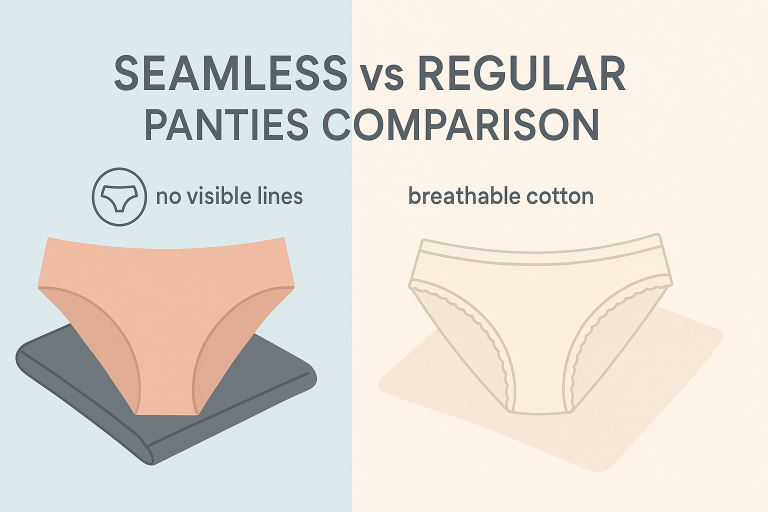
Cotton low rise panties are made from 95 to 100 percent cotton with a small percentage of elastane (typically 3 to 5 percent) added to the waistband for stretch retention. Cotton is the most breathable natural fiber for underwear, with moisture-wicking properties that make it the dermatologist-recommended fabric for everyday wear.
According to the American Academy of Dermatology, cotton underwear is particularly recommended for individuals prone to yeast infections or contact dermatitis because the fiber does not trap moisture against the skin. Cotton low rise panties are best for daytime wear, lounging, and sleeping.
Key Specifications:
- Fabric: 95% cotton, 5% elastane (typical)
- Moisture retention: higher than synthetic after washing, dries slower
- Elasticity recovery: moderate, degrades faster than nylon after 50+ washes
- Care: machine washable, cold water recommended to preserve elastane
- Price range: $8 to $18 per pair
Nylon and Microfiber Low Rise Panties
Nylon and microfiber low rise panties are constructed from 85 to 95 percent nylon with 5 to 15 percent spandex. Nylon is lighter and thinner than cotton, which makes it the preferred choice for wearing under fitted or lightweight clothing where bulk is a concern.
Nylon fibers dry faster than cotton (typically within 1 to 2 hours versus 4 to 6 hours for cotton) and maintain their elasticity significantly longer through repeated washing cycles. Microfiber versions have an ultra-soft surface texture that reduces chafing under activewear.
Key Specifications:
- Fabric: 88% nylon, 12% spandex (typical)
- Drying time: 1 to 2 hours (versus 4 to 6 hours for cotton)
- Elasticity retention: excellent, maintains stretch through 100+ washes
- Care: hand wash or machine wash on delicate cycle
- Price range: $10 to $28 per pair
Lace Low Rise Panties
Lace low rise panties use a stretch lace construction across the front panel, waistband, or both. The open weave structure of lace provides ventilation comparable to cotton while achieving a visually minimal appearance under clothing.
Lace panties typically combine lace with a cotton or microfiber gusset lining (the fabric panel at the crotch area) to maintain hygiene and comfort at the contact point. Full-lace construction without a lined gusset is common in fashion lingerie but is less practical for all-day wear.
Seamless Low Rise Panties
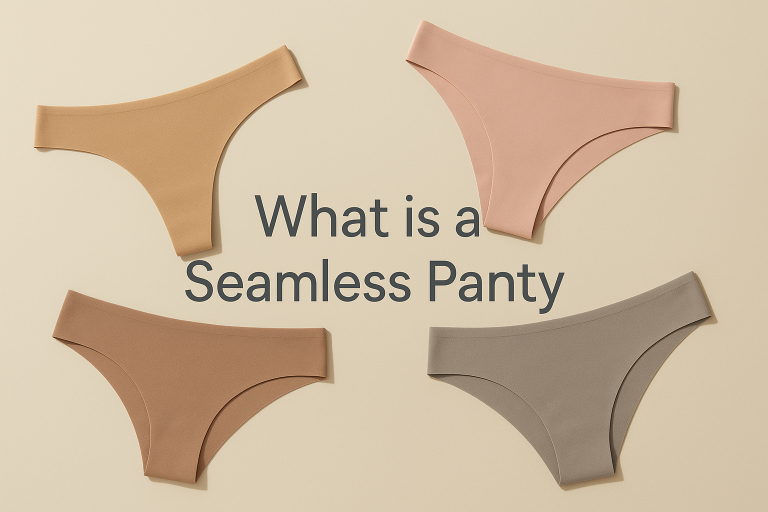
Seamless low rise panties are knitted from a single piece of nylon-spandex blend using circular knitting machines that eliminate side seams entirely. The absence of sewn seams is what creates the smooth, invisible appearance under fitted clothing.
Seamless construction typically involves 82 percent nylon and 18 percent spandex, a ratio that provides enough stretch for a body-conforming fit while maintaining enough recovery to hold the garment’s shape through daily wear. These are the most effective low rise panties for preventing visible panty lines (VPL).
Fabric choice in low rise panties determines both comfort and visibility under clothing, and seamless nylon-spandex options remain the best choice for VPL elimination.
How to Choose the Right Low Rise Panty for Your Body Type
Choosing a low rise panty involves matching the cut and rise depth to both your body proportions and your most common clothing choices. Three body-specific factors determine which low rise silhouette will fit most comfortably.
Hip-to-Waist Ratio and Rise Depth
Women with a larger differential between hip and waist measurements (typically 10 or more inches between the two) may find that low rise waistbands roll down when worn under snug-fitting jeans. This occurs because the waistband sits at the widest part of the hip rather than at a narrower waist point that would anchor it in place.
A silicone-grip strip along the interior of the waistband, a feature included in many low rise panties from brands such as Hanky Panky and Wacoal, prevents rolling in these cases. Look for this feature specifically if waistband roll is a recurring problem.
Torso Length and Rise Fit
Women with a shorter torso (the measurement from the top of the hip bone to the navel is typically less than 3 inches in shorter torsos) may find that standard low rise panties sit closer to the navel than expected. This is because the front rise measurement remains constant regardless of torso length.
In this case, a string bikini or low rise thong with a front rise of 5 inches or less creates a more proportionate fit and better aligns with the wearer’s natural hip curve.
Seat Coverage Needs
The amount of back coverage needed depends on the fabric weight of the clothing worn over the panty. Lightweight or sheer fabrics (such as ponte knits or polyester blends under 150 GSM) require either seamless construction or a thong to prevent VPL.
Heavier fabrics such as denim, structured wool, or thick cotton conceal panty lines regardless of silhouette, so full-coverage hipster or boy short styles work equally well without the discomfort some wearers experience with minimal-coverage options.
Pairing your back coverage needs to your most common fabric weights gives you a practical starting point for choosing between a low rise bikini, hipster, cheeky, or thong.
How Low Rise Panties Are Sized and How to Find Your Correct Size
Low rise panties use standard underwear sizing (XS through 3X or numeric sizes 0 through 18 depending on the brand), but the fit check for low rise styles differs from mid or high rise sizing because the waistband placement is the primary fit indicator rather than the waist measurement alone.
Taking Your Hip Measurement for Low Rise Fit
To find your correct low rise panty size, measure your hip circumference at the fullest point, typically 7 to 9 inches below the natural waist. This is the measurement that most directly corresponds to low rise sizing charts because the waistband sits at or near this measurement point.
Measure with a soft measuring tape held parallel to the floor, pulled snug but not tight. Add 0 to 1 inch to this measurement when checking against a brand’s size chart to allow for comfortable stretch.
Understanding Rise Variation Between Brands
Rise measurements are not standardized across the intimate apparel industry. A “low rise” panty from one brand may have a front rise of 5.5 inches, while another brand’s low rise style may measure 7 inches, which would place the waistband closer to the navel on most bodies.
According to Nordstrom’s intimate apparel fit guide, a true low rise front measurement should be 6 inches or less to sit below the hip bone on most body types. When shopping a new brand, check the product’s specific rise measurement in the size guide rather than relying on the style name alone.
Always check the specific front rise measurement in the size guide before purchasing from a new brand, since “low rise” can mean very different things across manufacturers.
Benefits and Drawbacks of Low Rise Panties
Low rise panties offer a specific functional benefit (waistband invisibility under low-cut clothing) but come with tradeoffs that make them a poor choice for some body types and outfit categories.
Use the table below to weigh the practical advantages and limitations before deciding whether low rise is right for your wardrobe.
| Advantages | Disadvantages |
|---|---|
| Hidden waistband under low-rise jeans, hip-skirts, and cropped tops | No abdominal coverage or tummy support |
| Seamless styles eliminate visible panty lines under fitted clothing | Waistband can roll down on fuller hip-to-waist ratios without a grip strip |
| Available in all silhouettes (bikini, thong, hipster, boy short, cheeky) | Not suitable under high-waist trousers or skirts (waistband sits below garment rise) |
| Lower fabric content means lighter weight and less bulk under clothing | Reduced front panel means less breathable coverage in summer heat |
| Wide variety of fabrics including cotton, nylon, lace, and seamless options | May shift position during high-intensity physical activity |
The single greatest advantage of low rise panties is waistband invisibility under low-cut clothing, and the single greatest limitation is the complete absence of abdominal coverage, which makes them unsuitable for high-waist outfit categories.
Here is a tool to help you identify exactly which low rise silhouette fits your outfit and coverage needs before you buy.
Interactive Finder
Find the Right Low Rise Panty Style for You
Answer 2 questions to get a personalized low rise style recommendation.
How to Wear Low Rise Panties Without Waistband Show-Through
The primary functional purpose of low rise panties is to stay hidden under low-cut clothing, and this requires matching the panty’s exact front rise measurement to the rise of the garment worn over it. A low rise panty with a 7-inch front rise will show above a pair of jeans with a 6.5-inch front rise.
Matching Panty Rise to Garment Rise
To check whether a panty rise matches your jeans or skirt, put on the bottom garment and mark where the waistband sits on your body. Then check the panty’s front rise measurement (listed in product specifications) against your hip-to-waistband measurement at that point.
The panty’s front rise should be equal to or shorter than the distance from your crotch to the top of the garment’s waistband. A panty with a front rise 0.5 to 1 inch shorter than this measurement provides a comfortable margin that prevents show-through even when sitting or bending.
Preventing Waistband Roll-Down
Waistband roll-down in low rise panties most commonly occurs when the hip-to-waist differential is 10 or more inches, because the waistband sits at the fullest point of the hip with no narrower waist measurement above it to anchor the fabric.
Three construction features prevent this: a silicone grip strip on the inside of the waistband, a slightly wider waistband (0.75 to 1 inch rather than 0.5 inch), or a fabric blend with higher elastane content (15 percent spandex rather than the standard 5 to 8 percent). Brands including Soma, Aerie, and ThirdLove offer low rise styles with grip-strip waistbands specifically designed for fuller hip profiles.
Checking the front rise measurement against your own hip-to-waistband distance before purchasing is the most reliable way to ensure a low rise panty stays hidden under your clothing.
How to Care for Low Rise Panties to Extend Their Lifespan
Proper care directly affects how long low rise panties maintain their elasticity, shape, and waistband stretch. According to the Textile Care Alliance, elastic fibers (spandex and elastane) degrade fastest when exposed to high heat, harsh detergents, and agitation during machine washing.
Washing Low Rise Panties Correctly
Wash low rise panties in cool or cold water (below 86 degrees Fahrenheit) to preserve elastane fibers in the waistband and leg openings. Use a lingerie-specific detergent rather than standard laundry detergent, since lingerie wash formulas have a lower pH that is gentler on nylon and spandex fibers.
Place panties in a mesh lingerie bag before machine washing to prevent the elastic from snagging on agitator components or other garments. Wash on the delicate or gentle cycle at a maximum spin speed of 600 RPM.
Drying Low Rise Panties
Air drying is the single most effective way to extend the life of low rise panties. Heat from tumble dryers degrades elastane at a rate approximately three times faster than air drying, according to fiber testing data published by the American Association of Textile Chemists and Colorists (AATCC).
Lay panties flat or hang them from the waistband on a drying rack, away from direct sunlight. UV exposure causes color fading in dyed nylon fabrics and can cause the fiber to become brittle over time.
When to Replace Low Rise Panties
Most intimate apparel experts, including fit specialists at Nordstrom and ThirdLove, recommend replacing everyday panties every 6 to 12 months with daily wear and washing. Signs that a low rise panty needs replacement include a waistband that no longer returns to its original circumference after stretching, visible fabric pilling, thinning in the gusset lining, or permanent staining that persists after proper washing.
Air drying low rise panties instead of tumble drying them approximately triples the useful life of the elastane in the waistband and leg openings.
Popular Low Rise Panty Brands and What Sets Them Apart
Several brands have built their reputations specifically on low rise panty construction quality, sizing range, or specialized features. Understanding what each does best helps narrow the choice before purchasing.
Use the table below to compare the key differences between leading low rise panty brands by their strongest features and target fit profile.
| Brand | Strongest Feature | Size Range | Best Silhouette | Price Range (per pair) |
|---|---|---|---|---|
| Hanky Panky | One-size stretch lace construction fits XS to XL | One size fits most (fits US 2 to 14 typically) | Low rise thong and bikini in lace | $22 to $32 |
| Aerie (American Eagle) | Softcore seamless construction with grip-strip waistband | XXS to 3XL | Low rise bikini and hipster in seamless | $10 to $18 |
| Calvin Klein | Branded elastic waistband, consistent sizing across decades | XS to 3X | Low rise bikini and thong in cotton and microfiber | $14 to $28 |
| Commando | True seamless bonded-edge construction with zero waistband bulk | XS to XL (limited plus sizing) | Low rise thong and bikini in seamless nylon | $22 to $38 |
| Warners | Blissful Benefits no-show collection with tagless construction | S to 3XL | Low rise hipster and bikini for everyday wear | $8 to $16 |
| Soma | Vanishing Edge collection with silicone grip on all edges | XS to 3XL | Low rise hipster and boy short for fuller hip profiles | $18 to $26 |
Commando and Soma represent opposite ends of the low rise panty market: Commando excels at seamless invisibility under fitted clothing, while Soma prioritizes grip and stability for fuller hip-to-waist differentials where other low rise styles tend to roll.
Choosing a brand based on its specific construction strength rather than price alone gives you a significantly better chance of finding a low rise panty that performs as intended for your particular body and outfit needs.
Low Rise Panties for Specific Situations
Certain activities and clothing categories have specific low rise panty requirements that standard everyday styles may not meet. Understanding these distinctions prevents the most common fit and comfort failures in context-specific dressing.
Low Rise Panties for Maternity Wear
Low rise panties are one of the most recommended underwear styles during pregnancy specifically because they sit below the growing uterus rather than pressing against the lower abdomen. The American College of Obstetricians and Gynecologists (ACOG) notes that waistband pressure on the lower abdomen is a common comfort complaint in pregnancy, and low rise styles eliminate this entirely.
Maternity low rise underwear is constructed with a wider gusset (typically 3 to 4 inches versus the standard 2 to 2.5 inches) and a softer, more elastic waistband fabric to accommodate hip expansion through the second and third trimesters. Look for a nylon-spandex blend with at least 15 to 20 percent spandex for maximum stretch accommodation.
Low Rise Panties for Post-Surgical Recovery
Low rise panties are frequently recommended after abdominal surgeries including cesarean sections, appendectomies, and hysterectomies because the waistband sits entirely below the incision site. A surgical incision from a cesarean section is typically made 1 to 2 inches above the pubic bone, which places it at or below the waistband level of a true low rise panty.
For post-surgical use, choose a cotton low rise bikini or hipster (cotton is recommended by dermatologists for wound-site adjacency due to its breathability) with a smooth, non-lace waistband to prevent any texture from contacting healing tissue. Avoid elastic that creates compression at the hip level during the first 6 weeks of recovery.
Low Rise Panties for Formal and Event Dressing
Formal wear, including structured gowns, fitted cocktail dresses, and high-slit skirts, requires a low rise panty that provides zero visible lines from any angle. A seamless or bonded-edge seamless low rise thong in a nude-to-skin tone shade is the standard recommendation from wardrobe stylists for formal dressing.
Nude shades for underwear are defined relative to individual skin tone rather than a universal beige. According to research published by fashion fit experts, the most effective “invisible” underwear shade is one that matches the wearer’s inner wrist skin tone rather than an assumed universal nude. Many brands, including ThirdLove, Nubian Skin, and Negative Underwear, offer expanded nude ranges across five or more shade levels.
Low rise panties serve distinctly different functions in maternity, post-surgical, and formal contexts, and the construction requirements differ enough in each situation that a single style will not perform equally well across all three.
Frequently Asked Questions About Low Rise Panties
What is the difference between a low rise panty and a hipster panty?
A low rise panty refers to the waistband placement (at the hip bones, 1 to 3 inches below the navel), while a hipster refers to the silhouette (a wide, horizontally-cut back panel with full seat coverage). All hipster panties have a low or mid-rise waistband, but not all low rise panties are hipsters. A low rise thong, for example, combines a low rise waistband with minimal back coverage, which is the opposite of the hipster silhouette.
Are low rise panties good for plus size bodies?
Low rise panties work well for plus size bodies when the waistband includes a silicone grip strip or higher-spandex construction (15 to 20 percent spandex) to prevent rolling. Brands such as Soma, Aerie (XXS to 3XL), and Lane Bryant offer low rise styles engineered for fuller hip-to-waist differentials. The hipster and boy short silhouettes provide the most stable fit in plus sizes because the wider back panel distributes tension more evenly than narrow bikini or cheeky cuts.
Can you wear low rise panties with high-waist jeans or skirts?
Low rise panties are not recommended under high-waist clothing because the waistband (sitting at the hip, 1 to 3 inches below the navel) will be fully visible above the clothing’s rise. High-waist jeans and skirts with a front rise of 10 to 13 inches require a mid-rise or high-rise panty with a front rise of 8 to 12 inches to stay hidden. Wearing a low rise panty under high-waist bottoms exposes the entire front panel above the garment’s waistband.
What size low rise panty should I buy?
Low rise panty sizing is based primarily on hip circumference measured at the fullest point, typically 7 to 9 inches below the natural waist. Measure your hip in inches and match to the brand’s hip measurement range on its size chart, not the generic S/M/L label. Size charts vary significantly between brands: a size Medium at Calvin Klein corresponds to a hip of 36 to 38 inches, while a Medium at Hanky Panky fits hips from 34 to 42 inches due to the stretch-lace construction. Always consult the specific brand’s chart.
Do low rise panties cause visible panty lines?
Low rise panties can cause visible panty lines (VPL) depending on the construction type and the fabric worn over them. Panties with sewn seams at the leg openings and waistband create the most visible lines under fitted fabrics. Seamless low rise panties in nylon-spandex blends eliminate seam-based VPL entirely. Low rise thongs eliminate back-panel VPL. The most effective low rise option for VPL prevention is a seamless bonded-edge thong or bikini in a shade that matches the wearer’s skin tone.
How low does a low rise panty actually sit on the body?
A low rise panty waistband sits at the hip bones, which is 1 to 3 inches below the navel on most bodies. The exact position varies with torso length and the specific front rise measurement of the panty. A panty with a 5-inch front rise sits lower on the body (closer to the pubic bone) than a panty labeled “low rise” with a 7-inch front rise. Most bodies experience the waistband at approximately the level of the upper hip curve, where the jeans waistband sits in a standard low-rise cut jean.
A low rise panty is one of the most outfit-specific underwear investments in a wardrobe, and understanding its exact placement, silhouette options, and fabric choices makes it significantly easier to build a collection that works invisibly under your most-worn low-cut clothing.
Start by measuring your hip circumference and checking the front rise measurement of any panty you are considering, then match the silhouette to your most common fabric weight and back coverage preference. Building a foundation of two or three well-chosen low rise styles in cotton for everyday use, seamless nylon for fitted clothing, and a seamless thong for event dressing covers the full range of situations where this style performs best.