
What Underwear To Wear With Sheer Or Thin Fabric Pants: Tips
Sheer and thin fabric pants look stunning, but they reveal everything underneath. The right underwear choice eliminates visible panty lines, prevents color show-through, and keeps the outfit looking intentional rather than accidental. This guide covers every fabric type, pant style, and body consideration so you can wear your sheer trousers, linen wide-legs, and chiffon pants with complete confidence.
Why Underwear Choice Matters More with Sheer and Thin Fabrics
Sheer and thin fabrics transmit light differently than opaque materials, making underwear construction, color, and texture visible to varying degrees. According to textile research from the American Association of Textile Chemists and Colorists, fabrics with a thread count below 80 threads per inch or a weave openness above 15% allow significant light transmission, which makes seams, lace edges, and waistband lines visible through the fabric.
Visible panty lines (VPL) occur when the edge of an underwear panel creates a ridge against the outer fabric. Seam thickness, fabric weight, and elastic construction all contribute to VPL severity, regardless of how well a pant fits.
The second issue specific to sheer fabrics is color contrast. A white or ivory sheer pant worn over dark underwear creates a direct shadow visible to anyone nearby. A nude-to-you tone worn underneath neutralizes this effect by matching the optical density of your skin rather than contrasting with the pant fabric.
Fabric texture also matters. Lace panels, embroidered edges, and thick waistbands all create surface relief that telegraphs through thin fabrics. Smooth, flat construction is the single most important feature to prioritize when selecting underwear for sheer or thin pants.
Getting this right means understanding four variables: pant opacity, your skin tone, the cut of the underwear, and the construction quality. The sections below address each of these systematically.
The core principle is simple: match the underwear’s visual weight to the fabric’s transparency, and you will never see it through the pants.
The Best Underwear Styles for Sheer and Thin Pants
Laser-cut seamless panties are the most effective underwear style for sheer and thin fabric pants because they have no sewn seams, no lace edges, and no fabric overlap at the leg openings. The laser-cut edge lies completely flat against skin, creating zero ridge through the outer fabric.
Seamless and Laser-Cut Styles
Laser-cut seamless underwear eliminates the three main causes of VPL: side seams, leg seam edges, and waistband thickness. According to Spanx’s technical design documentation, laser cutting removes material rather than folding and stitching it, reducing edge thickness from approximately 3mm for a standard sewn seam to less than 0.5mm for a laser-cut finish.
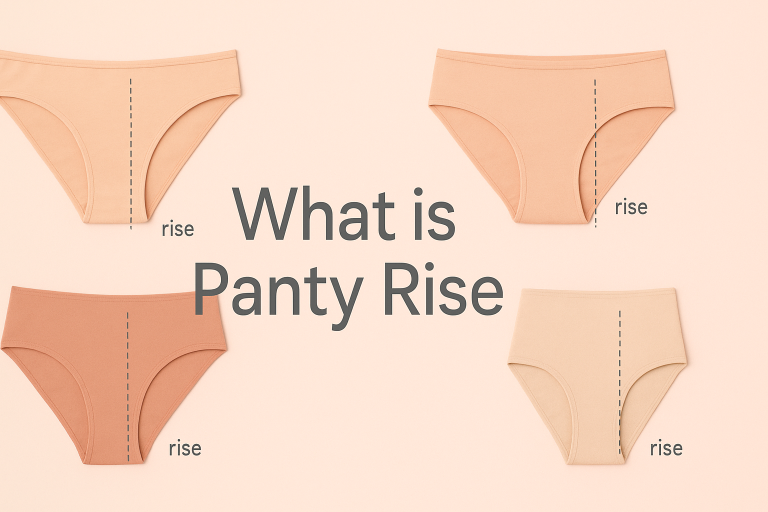
The best seamless options for sheer pants are mid-rise to high-rise cuts that cover the widest part of the hip without creating a visible horizontal line. Low-rise seamless styles can create a visible line across the upper hip bone if the pant rise is higher than the underwear waistband.
Key Specifications for seamless laser-cut panties:
- Fabric: typically 87-92% nylon, 8-13% spandex
- Edge finish: laser-cut (no folded hem)
- Seams: zero side seams, bonded center seam only
- Sizes: XS to 3X depending on brand
- Care: machine wash cold, lay flat to dry
Brands including Commando, Spanx, and Hanky Panky offer laser-cut no-show styles specifically designed for sheer outer garments. Commando’s Classic Seamless Bikini is constructed entirely without seams and is sized XS through XL with a bonded waistband that is 1.2 inches wide.
Thong Underwear
Thong underwear eliminates rear panty lines entirely by replacing the back panel with a narrow strip of fabric. This makes it the most effective option specifically for straight-leg, wide-leg, or fitted trousers in thin fabrics where rear VPL is the primary concern.
The front panel of a thong does create a visible seam line if it extends above the pant waistband, particularly in low-rise sheer trousers. A low-rise seamless thong paired with a mid-rise or high-rise sheer pant solves this completely.
Microfiber thongs with flat-knit waistbands are more invisible under thin fabrics than lace thongs. Lace fabric has a textured surface that creates a visible relief pattern through sheer materials, even when the color is well matched to skin tone.
Key Specifications for seamless thong underwear:
- Fabric: 85-90% nylon or microfiber, 10-15% elastane
- Waistband: flat-knit or bonded, typically 0.75-1 inch wide
- Back: T-back or string back, no rear panel fabric
- Sizes: XS to 2X in seamless constructions
- Best for: fitted and wide-leg trousers in georgette, chiffon, or crepe
Hipster and Bikini-Cut Styles
Hipster panties and bikini-cut underwear in seamless microfiber construction offer moderate VPL reduction with more coverage than a thong. These styles work well under wide-leg or relaxed-fit thin fabric pants where the extra fabric drape disguises minor seam lines.
The leg opening placement determines how visible these styles are. A hipster cut sits lower on the hip, creating a leg seam line approximately at the widest hip point. A bikini cut sits higher, creating the seam line at the mid-thigh, which is less visible through most pant legs.
Both styles should be selected in seamless or laser-cut construction for sheer pant use. Standard sewn-seam versions in cotton create visible ridges through all lightweight fabrics including linen, chiffon, and gauze.
Boy Shorts: When They Work and When They Do Not
Boy shorts provide full rear coverage and are comfortable for all-day wear, but their leg band creates a visible horizontal line across the mid-thigh that shows clearly through fitted thin-fabric pants. They are not recommended for straight-leg or slim-cut sheer trousers.
Boy shorts work acceptably under wide-leg palazzo pants or very full-cut trousers in thin fabrics because the extra fabric volume conceals the leg band line. In linen wide-leg pants with a relaxed 24-inch leg opening, the drape of the fabric prevents the boy short leg line from pressing against the outer layer.
If coverage is the priority and boy shorts are preferred, choose seamless microfiber construction and size up by one size to minimize the leg band impression against the skin and outer fabric.
The most versatile choice for the widest range of sheer and thin fabric pants is a seamless laser-cut style in either thong or mid-rise bikini cut, paired with a nude-to-you color.
Color Matching: How to Choose the Right Shade
The single most important color rule for underwear under sheer pants is to match your underwear to your skin tone, not to the color of your pants. A shade that closely matches your skin tone becomes optically invisible under sheer fabric because it blends into the skin layer rather than creating contrast between skin and fabric.
Why Nude Means Your Skin Tone, Not Beige
The term “nude” in underwear refers to skin-tone matching, which spans a spectrum from very light ivory to deep espresso. Wearing beige underwear under a white sheer pant with medium or dark skin creates the same visibility problem as wearing black underwear because both create contrast against the skin.
Brands including Nubian Skin, ThirdLove, and Natori offer underwear in four to six distinct nude shades specifically designed to cover the full skin-tone spectrum. Nubian Skin’s nude range spans from Cafe Au Lait (very light) to Cocoa (deep medium-dark), and all shades are designed to disappear under sheer fabrics rather than stand out against skin.
To find your best match, hold candidate underwear against the inside of your forearm in natural light. The shade that visually blends with your skin at that location will be closest to invisible under sheer fabric.
How to Match Underwear Color to Different Pant Colors
Use the table below to match your pant color and fabric opacity to the underwear color that creates the least visibility.
| Pant Color | Pant Opacity Level | Best Underwear Color | Why It Works |
|---|---|---|---|
| White or ivory | Fully sheer | Nude-to-you skin tone | Skin-tone match eliminates shadow contrast through white fabric |
| White or ivory | Semi-sheer | Nude-to-you or pale blush | Low contrast with both skin and white fabric layer |
| Beige or tan | Sheer or thin | Nude-to-you skin tone | Matches skin better than matching pant color |
| Black | Semi-sheer (georgette, crepe) | Black or very dark charcoal | Matches pant color to minimize shadow contrast |
| Navy or dark blue | Semi-sheer | Navy or black | Dark-on-dark prevents lighter underwear from showing through |
| Red or bright color | Sheer or thin | Nude-to-you skin tone | Skin tone disappears under most saturated fabric colors better than white does |
| Floral or printed | Semi-sheer | Dominant print color or nude-to-you | Either approach blends into print pattern and reduces visibility |
The dominant color rule for dark pants is important: white underwear under black sheer pants is the worst possible combination because the white creates a bright visible area wherever light passes through the fabric.
For any pant lighter than medium gray, a nude-to-you skin tone match outperforms every other color option for visibility reduction.
When to Use Color-Matching Instead of Skin-Tone Matching
For pants that are semi-sheer rather than fully sheer, meaning fabrics like thick georgette, opaque linen, or heavy crepe that allow some light transmission but do not fully reveal the underwear layer, color-matching to the pant can be more effective than skin-tone matching.
A dark navy pant in semi-sheer fabric will show a skin-tone nude underwear as a lighter area against the dark fabric. Matching the underwear color to the pant color minimizes the contrast difference and keeps the underwear from drawing attention.
The practical test is to hold your pant fabric up to a window in daylight and look through it. If you can see your hand clearly, treat it as fully sheer and use skin-tone matching. If the silhouette is blurry and indistinct, semi-sheer color-matching is also a valid approach.
Color is the easiest variable to optimize, costs nothing to change, and makes a larger visible difference than switching underwear styles in most cases.
Fabric and Construction Features That Prevent Show-Through
Beyond style and color, the specific fabric and construction features of underwear determine how invisible it is under sheer pants. Four construction details matter most: fabric weight, seam type, waistband design, and gusset construction.
Best Fabrics for No-Show Underwear
Microfiber nylon is the gold standard fabric for underwear worn under sheer pants because it is thin (typically 0.3-0.5mm), smooth-surfaced, and lies flat against skin without bunching or rolling. The smooth surface creates no texture relief through the outer fabric.
Use the table below to compare fabric options by show-through risk and comfort level.
| Fabric | Thickness | Surface Texture | Show-Through Risk | Best For |
|---|---|---|---|---|
| Microfiber nylon | 0.3-0.5mm | Completely smooth | Very low | All sheer and thin pants |
| Modal or bamboo | 0.5-0.8mm | Smooth with slight drape | Low to moderate | Semi-sheer pants, relaxed fits |
| Cotton (standard) | 0.8-1.5mm | Visible weave texture | High | Not recommended for sheer fabrics |
| Lace (all-over) | 1.0-2.0mm | Raised pattern, very visible | Very high | Not recommended for sheer fabrics |
| Silk charmeuse | 0.3-0.4mm | Smooth, high-sheen | Very low | Formal sheer pants, occasion wear |
| Seamless knit (nylon blend) | 0.4-0.6mm | Fine knit, smooth face | Low | Everyday sheer and thin pants |
Cotton underwear specifically is the most common cause of visible panty lines under thin fabric pants because cotton fabric has a raised weave texture, typically 0.8-1.5mm thick, that creates a clear visible edge through lightweight outer fabrics.
Waistband Construction and Its Visibility Impact
The waistband is the second most visible underwear element after the seam edges, because it is the thickest part of any underwear construction. A standard folded-over elastic waistband is approximately 6-8mm thick and creates a clear raised ridge through thin fabric pants.
Bonded or knit-in waistbands reduce this thickness to approximately 1-2mm, which is below the threshold visible through most semi-sheer and thin fabrics. Commando, Hanky Panky, and Lively all produce underwear with bonded waistbands specifically for this purpose.
Silicone-grip waistbands, which are used in many athleisure styles to prevent rolling, are 3-5mm thick and highly visible through thin fabrics. Avoid these for any sheer pant pairing.
The waistband placement relative to the pant waistline also matters. A waistband that sits exactly at the same height as the pant waistband creates a double-layer ridge. Wearing underwear that sits 0.5-1 inch lower than the pant waistband eliminates this.
Gusset Design Considerations
The cotton gusset panel used in most underwear styles creates a small area of fabric thickness at the crotch seam. For most thin-fabric pants, this is not visible because it is hidden by the pant rise construction.
For very sheer pants with a light-colored or white lining, the gusset seam can show as a shadow in the inner thigh area. In these cases, choosing underwear with a flat-knit seamless gusset rather than a sewn-in cotton patch reduces this visibility.
Seamless underwear from brands including Commando and Barely There uses a flat-knit moisture-wicking gusset that lies completely flat and is undetectable through thin fabrics at normal viewing distances.
Fabric, waistband construction, and gusset design work together, and the weakest element in any one of these three areas determines how visible the underwear will be through sheer fabric.
Matching Underwear Style to Specific Pant Types
Different pant silhouettes have different opacity, drape, and construction characteristics that change which underwear style works best. A recommendation that works for wide-leg linen trousers may not work for fitted chiffon cigarette pants.
Wide-Leg and Palazzo Pants
Wide-leg and palazzo pants in thin fabrics have the most forgiving underwear requirements because the large volume of fabric creates drape and movement that disguises minor seam lines. The distance between the inner pant layer and the outer observer also increases with wider leg openings.
For wide-leg linen, gauze, or chiffon pants, seamless hipster panties or bikini-cut underwear in microfiber nylon work well. Full coverage is more comfortable for all-day wear in these wider silhouettes.
Boy shorts also become a viable option in very wide-leg styles with a leg opening of 20 inches or more, because the extra fabric volume prevents the leg band line from pressing against the outer layer.
Fitted and Straight-Leg Thin Pants
Fitted straight-leg pants in sheer fabrics like chiffon, georgette, or thin crepe have the highest visibility requirement because the fabric sits close to the underwear surface with minimal air gap. Every seam, edge, and texture transfers directly to the outer surface.
For these styles, a seamless laser-cut thong or seamless bikini in microfiber nylon is the only construction that reliably prevents VPL. Seam thickness greater than 1mm will show through fitted georgette or chiffon at normal indoor lighting distances.
No-show panties specifically marketed for fitted outer garments are designed with these fabric types in mind. Commando’s Butter line and Spanx’s Thinstincts both use multi-layer flat bonding at every seam junction to eliminate all VPL under fitted sheer and thin fabrics.
High-Waisted Thin Fabric Trousers
High-waisted thin fabric trousers require underwear that extends to or above the pant waistline without creating a visible horizontal line at the waistband. Two approaches work: a full-panel high-waisted seamless brief that reaches the natural waist, or a mid-rise seamless bikini that sits well below the pant waistband.
High-waisted underwear in bonded seamless construction provides smooth coverage from the waistband down through the hip, eliminating both the waistband ridge and the hip-seam line. This is the most effective choice for high-waisted linen or silk-blend trousers where the entire torso area is visible through the fabric.
A mid-rise underwear worn with high-waisted pants creates a visible horizontal line at approximately the mid-hip where the underwear waistband sits below the pant waistband. The gap between the two waistbands shows as a slight ridge or color change through the pant fabric.
Linen Pants
Linen has a characteristic loose weave that makes it semi-transparent even in heavier weights. A 100% linen pant in white or natural undyed color transmits significant light and shows underwear color clearly. A mid-weight linen in navy or olive is less transparent but still shows underwear seam lines under direct light.
For white or natural linen, nude-to-you seamless underwear is mandatory. For dark or medium-colored linen, a color-matched seamless option prevents the seam-line visibility that occurs when light hits the fabric at an angle.
Linen also wrinkles around underwear edges with movement, which embeds the seam line into the outer fabric over the course of a day. Lower-profile seams in thinner microfiber constructions wrinkle less than thicker sewn-seam options because less fabric height is present to catch and hold wrinkle lines.
Chiffon and Georgette Pants
Chiffon and georgette are the most transparent of the common pant fabrics, with weave openness values of 20-30% that allow direct visual transmission of underwear color, texture, and construction. These fabrics require the most careful underwear selection of any pants category.
For chiffon pants, a silk or microfiber seamless thong in a perfect skin-tone nude is the benchmark recommendation. The silk surface creates the lowest surface friction against chiffon, preventing the static cling that pulls thin fabrics against the underwear surface and increases visibility.
Georgette, which has a crinkled surface texture compared to chiffon’s smooth surface, conceals seam lines slightly better than chiffon because the crinkle pattern breaks up the visual outline of underwear edges. However, color contrast still shows clearly through georgette, making nude-to-you color selection equally critical.
The pant style and fabric type determine the minimum construction standard for underwear, and meeting that minimum is the starting point, not the ceiling.
Here is a quick reference tool to match your specific pant type to the underwear style that eliminates the most visible panty line and show-through.
Interactive Finder
Find the Right Underwear for Your Sheer or Thin Pants
Answer 2 questions to get a personalized no-show underwear recommendation.
The Role of Shapewear and Lined Pants as Underwear Alternatives
Shapewear briefs and full-panel shaping shorts serve as a combined underwear and smoothing layer for sheer pants, eliminating the need to find a perfectly invisible conventional underwear option. Shaping shorts that extend to the mid-thigh cover the entire visible underwear area and create a single smooth surface through the pant fabric.
When Shapewear Makes Sense for Sheer Pants
Shapewear is the most practical solution for fully lined sheer pants in formal or occasion wear where the lining handles breathability but the outer sheer layer still shows any underwear worn outside the lining. Wearing seamless shaping shorts under the lining but over the body eliminates this problem entirely.
Seamless shaping shorts that reach the mid-thigh in a nude-to-you tone provide an uninterrupted smooth surface through sheer fabric. The length eliminates the leg hem line that shorter brief-style shapewear creates at the upper thigh.
Key Specifications for seamless shaping shorts:
- Length: mid-thigh (approximately 10-12 inches from waistband)
- Fabric: 78-85% nylon, 15-22% spandex for shaping compression
- Waistband: wide flat bonded panel, typically 3-4 inches
- Compression level: light to moderate (not high, which creates visible compression lines)
- Sizes: XS to 3X in most seamless shapewear lines
Lining Sheer Pants Instead of Managing Underwear
Sewing or basting a fabric lining into sheer pants removes the underwear visibility problem entirely by creating an opaque layer that blocks all visual transmission through the outer fabric. A cotton voile or silk habotai lining cut to the same dimensions as the pant creates a fully opaque inner layer while preserving the drape of the outer sheer fabric.
This approach is most practical for frequently worn sheer pants where the lining investment is worthwhile. A tailor can add a lining to most trouser styles for approximately $25-$50, which is often less expensive than repeatedly purchasing specialty no-show underwear.
For self-lining at home, lining fabric in a nude shade cut to the pant pattern and hand-basted into the waistband seam allowance creates a functional solution without permanent alteration.
Shapewear and lining solve the root problem rather than managing it, and either approach gives more flexibility in underwear choice going forward.
Common Underwear Mistakes to Avoid with Sheer Pants
The most common mistake is wearing standard cotton underwear under thin fabric pants. Cotton underwear has a raised weave texture 0.8-1.5mm thick, a sewn seam at both leg openings typically 3-4mm thick, and a folded elastic waistband 6-8mm thick. All three elements create clear visible ridges through any fabric lighter than medium-weight denim.
Wearing the Wrong Color
White underwear under white or light-colored sheer pants is the second most common mistake and one that counterintuitively creates high visibility. White fabric reflects more light than skin tone does, creating a bright area wherever the underwear sits under the pant. According to a color theory principle documented in the Textile Research Journal (2019), an optical brightness differential of 20 luminance units or more between two fabric layers creates visible contrast even when both are technically the same hue.
Nude-to-you skin-tone matching eliminates this brightness differential by bringing the underwear luminance level into alignment with the skin layer rather than the fabric layer.
Choosing Lace or Embroidered Styles
Lace underwear creates a textured surface relief of 1-2mm that is clearly visible through sheer fabrics at distances of 3-6 feet under indoor lighting. Even when lace underwear is perfectly color-matched to skin tone, the raised lace pattern creates shadow and light variations that are readable through sheer fabric.
All-lace bralettes and lace-trimmed underwear should be reserved for opaque outer garments. For sheer pants, the maximum acceptable texture is a fine smooth knit with no raised surface elements.
Ignoring Waistband Placement
Wearing underwear whose waistband sits at the same height as the pant waistband creates a double-layer ridge at the waistline. This is visible even through heavier semi-sheer fabrics because two fabric layers at the same location create a measurable increase in thickness and opacity at that point.
The solution is to intentionally choose underwear that either reaches above the pant waistband (high-waisted brief) or sits at least 1 inch below it (mid-rise or low-rise styles). Either approach eliminates the double-waistband ridge.
Using Panty Liners as a Substitute
Panty liners worn inside sheer pants without underwear are a common workaround, but the liner adhesive strip, liner edges, and liner thickness all create visible marks through thin fabric. Liners are not a substitute for correctly selected underwear under sheer pants.
If freshness or protection is needed alongside sheer pants, wearing seamless microfiber underwear with a thin panty liner inside is the correct approach. The underwear layer conceals the liner from view through the outer fabric.
Every mistake on this list is avoidable with one change, and addressing color first eliminates the most visible problem at no cost.
How to Test Underwear Visibility Before Wearing
Testing underwear visibility before committing to an outfit requires one window and two minutes. Hold the pant fabric up to natural daylight and look through it from the outside while the underwear rests behind it. This replicates the conditions under which others see your outfit and reveals any visibility issues before you leave the house.
The Window Light Test
Natural daylight is significantly brighter than indoor artificial light and represents the worst-case visibility scenario. If an underwear and pant combination passes the window light test, it will be invisible under indoor lighting, office fluorescents, and most outdoor conditions.
The test requires placing the pant fabric flat against a well-lit window and positioning the underwear 2-3 inches behind the fabric at arm’s length. Look at the combination from approximately 3 feet away. Any color difference, seam line, waistband edge, or texture pattern visible at this distance will be visible to observers in normal social settings.
The Movement Test
Static visibility testing does not capture visibility during movement. Thin and sheer fabrics cling differently in motion than at rest, and some combinations that pass a static test fail when the wearer walks or sits.
After passing the window light test, put on the complete outfit and walk past a full-length mirror in natural light. Sit, stand, and turn to assess the rear view. Fabric that drapes away from the body at rest may press against the underwear surface during forward movement, changing the visibility profile.
A combination that passes both the static window test and the movement mirror test will be reliably invisible in normal wear conditions.
Testing Nude Shade Accuracy
Nude shade accuracy can be tested by comparing the underwear color to the inside of the forearm in natural light. The forearm inner surface is a consistent reference point for skin tone assessment because it receives minimal sun exposure and represents the base skin tone most similar to the area the underwear covers.
If the underwear color is within 10 luminance units of the forearm skin tone in natural light, it will be effectively invisible under sheer white and light-colored fabrics. If the difference is larger, try one shade darker or lighter until the match is within range.
Two minutes of testing before leaving prevents an entire day of visible underwear under sheer pants, making it one of the highest-value preparation steps in outfit construction.
Recommended Underwear Products for Sheer and Thin Pants
The underwear styles below are selected specifically for sheer and thin fabric pant compatibility based on construction, fabric specifications, and color range availability. All meet the minimum threshold of seamless or laser-cut construction, smooth microfiber or nylon fabric, and availability in multiple nude shades.
Best Overall: Commando Classic Seamless Bikini
The Commando Classic Seamless Bikini is constructed with zero side seams, a laser-cut leg opening with a 0.4mm edge, and a bonded flat waistband measuring 1.2 inches wide. It is available in seven nude shades spanning light ivory to deep mocha, covering the full skin-tone spectrum for sheer pant use.
Key Specifications:
- Fabric: 84% nylon, 16% elastane
- Construction: seamless knit with laser-cut edges
- Waistband: bonded flat, 1.2 inches wide
- Rise: mid-rise
- Sizes: XS to XL
- Color range: seven nude shades
The Commando seamless bikini is consistently cited in fashion publications including InStyle and Vogue as the benchmark no-show underwear for sheer fabrics.
Best Thong Option: Spanx Thinstincts Thong
The Spanx Thinstincts Thong uses a bonded waistband and flat-seam construction throughout the front panel, with a T-back design that eliminates all rear panel fabric. The front panel uses triple-layer bonded seam junctions that reduce seam thickness to under 0.5mm at all junction points.
Key Specifications:
- Fabric: 79% nylon, 21% elastane
- Construction: seamless with bonded seam junctions
- Waistband: bonded flat panel, under 2mm thick
- Rise: mid-rise to low-rise depending on size
- Sizes: XS to XL (limited extended sizes)
- Color range: five nude and neutral shades
The Spanx Thinstincts thong is the recommended option for fitted chiffon and georgette pants where rear VPL elimination is the primary requirement.
Best High-Waisted Option: Hanky Panky Eco Rx High Rise Thong
For high-waisted sheer pants, the Hanky Panky Eco Rx High Rise Thong extends to the natural waist with a flat-knit waistband that matches the waistband height of most high-waisted trouser styles. The high rise eliminates the mid-hip waistband ridge that lower-rise styles create under high-waisted pants.
Key Specifications:
- Fabric: 80% recycled nylon, 20% elastane
- Construction: seamless knit, high-rise waistband
- Waistband: flat-knit, approximately 1.5 inches wide at natural waist
- Rise: high-rise (to natural waist)
- Sizes: XS to XL
- Color range: four nude and neutral shades
Pairing a high-rise seamless option with high-waisted thin fabric pants eliminates both the waistband ridge and the hip seam line in a single product choice.
Best Budget Option: Fruit of the Loom Seamless Bikini Underwear
The Fruit of the Loom Seamless Bikini Underwear provides seamless construction with laser-cut edges at a price point of approximately $5-$8 per pair in multipacks. The construction does not match Commando or Spanx in seam-edge thinness, but it performs adequately for semi-sheer and mid-weight thin fabrics where perfect zero-visibility is not required.
Key Specifications:
- Fabric: 82% nylon, 18% spandex
- Construction: seamless with laser-cut leg edges
- Waistband: flat-knit bonded, approximately 1.5 inches wide
- Rise: mid-rise
- Sizes: XS to 3X
- Color range: three nude shades plus fashion colors
The seamless bikini underwear multipack from Fruit of the Loom is the best entry-level option for readers building a no-show underwear wardrobe across multiple sheer pant colors and styles.
Having two to three seamless pairs in your correct nude shade removes the underwear decision entirely on any day you reach for sheer or thin fabric pants.
Frequently Asked Questions About Underwear for Sheer and Thin Pants
What color underwear should you wear under white sheer pants?
Nude-to-you skin-tone matching is the correct color for underwear under white or ivory sheer pants. White underwear reflects more light than skin does and creates a visible bright area through white fabric, according to color contrast principles documented in the Textile Research Journal (2019). A shade that matches the inner arm skin tone becomes optically close to invisible under white sheer fabric because it blends into the skin layer rather than contrasting with the white pant fabric.
Can you wear cotton underwear under sheer pants?
Cotton underwear is not recommended under sheer or thin fabric pants. Standard cotton underwear has a raised weave texture 0.8-1.5mm thick, sewn seam edges 3-4mm thick at the leg openings, and a folded elastic waistband 6-8mm thick. All three of these construction elements create visible ridges through lightweight outer fabrics including chiffon, georgette, linen, and thin crepe.
What is the difference between seamless and laser-cut underwear?
Seamless underwear is knit in a single continuous piece without sewn side seams, reducing the seam count but typically retaining a knit edge at the leg openings approximately 1-2mm thick. Laser-cut underwear is cut after knitting using a laser that seals the edge without folding, producing a leg opening edge under 0.5mm thick. Laser-cut construction is thinner at the leg edge and produces less visible panty line under fitted sheer fabrics than standard seamless knit edges.
Is a thong always the best choice for sheer pants?
A thong is the best choice for rear VPL elimination under fitted sheer pants, but it is not always the best choice for all sheer pant styles. For wide-leg or relaxed-fit thin pants, a seamless hipster or bikini in microfiber nylon provides comfortable all-day coverage without significant VPL because the fabric drape conceals moderate seam lines. A thong is most necessary for fitted straight-leg and slim-cut styles where the fabric sits close to the underwear surface.
What underwear works best under white linen pants?
White and natural linen pants require a nude-to-you seamless microfiber underwear in either a bikini or thong cut with a bonded flat waistband. Linen has a characteristic loose weave that transmits significant light even in heavier weights, making color matching as important as construction. A seamless thong in a perfect skin-tone nude is the most invisible option. A seamless bikini in the same shade is the best option for those who prefer more coverage.
How do you prevent underwear lines when wearing chiffon pants?
Preventing underwear lines under chiffon pants requires a laser-cut seamless thong or bikini in microfiber nylon or silk with a bonded waistband under 2mm thick, worn in a nude-to-you skin tone. Chiffon has a weave openness of 20-30% that allows direct visual transmission of underwear construction, color, and texture. The laser-cut edge at 0.5mm or less is the minimum construction standard that reliably prevents visible seam lines through chiffon at normal indoor lighting distances.
Does wearing a slip under sheer pants solve the underwear visibility problem?
A slip or pant liner worn under sheer pants creates a fully opaque coverage layer that eliminates all underwear visibility. A half-slip cut to the pant length in a nude or fabric-matching shade prevents light transmission through the sheer outer layer completely. This approach is particularly effective for occasion or formal wear in fully sheer fabrics where no single underwear style reliably eliminates all visibility. Silk and satin nude half slips are the standard solution for red-carpet and formalwear sheer pant styling.
Wearing the right underwear under sheer and thin pants comes down to three decisions: choose seamless or laser-cut construction, match the color to your skin tone rather than the pant color, and verify the combination with a window light test before wearing. Start with one pair of seamless microfiber underwear in your correct nude shade and use the window test to confirm the match. Once you find the shade and style that disappears under your sheer pants, every thin-fabric outfit becomes effortless.


2 Comments