
What Underwear to Wear With Leggings for Seamless Comfort
The right underwear to wear with leggings is a seamless, laser-cut brief or thong cut from a thin, smooth fabric like nylon-spandex or microfiber. Visible panty lines, fabric bunching, and waistband roll are all avoidable problems once you match the underwear style to your legging type and activity. This guide covers every scenario, from everyday errands to high-intensity workouts, so you leave with a clear answer for each situation in your wardrobe.
Why the Wrong Underwear Ruins Your Leggings Look
Leggings are form-fitting by design, which means any seam, thick waistband, or excess fabric underneath becomes immediately visible through the fabric. According to a fit study published in the Journal of the Textile Institute, fabric compression garments with less than 0.5 mm of surface texture variation show significantly less visible outline than those with seamed edges, confirming what most legging wearers already notice firsthand.
The three most common underwear-related problems with leggings are visible panty lines (VPL), waistband roll, and fabric bunching at the seat. Each problem has a different root cause and a different underwear solution.
Visible Panty Lines happen when a thick or raised leg seam presses through the legging fabric. The fix is a laser-cut or seamless edge, not simply a thinner fabric overall.
Waistband Roll happens when an underwear waistband sits lower than the legging waistband and has nowhere to stay flat. The fix is matching or exceeding the rise height of your leggings with your underwear.
Fabric Bunching happens when the seat panel of the underwear has more fabric than the legging has room for. The fix is choosing a lower-coverage cut or a fabric with high four-way stretch.
Matching your underwear choice to the specific problem you experience is faster than trial and error across dozens of styles.
The Best Underwear Styles to Wear with Leggings
Five underwear styles consistently perform well under leggings across different body types and legging fabrics. Each has a specific strength and a specific limitation.
Seamless Thongs
Seamless thongs are the most universally recommended underwear for leggings because they eliminate the rear leg seam entirely. With no fabric panel at the back, there is nothing to bunch, bunch through, or create an outline. A seamless thong with a laser-cut waistband eliminates all three VPL problem points at once.
Key Specifications: Fabric: 88-92% nylon, 8-12% spandex. Construction: laser-cut or bonded edges, no woven seams. Rise: low to mid-rise. Best for: fitted leggings, workout leggings, white or light-colored leggings. Price range: $8-$22 per pair.
The one limitation is comfort preference. A thong does not suit everyone for long-wear or high-impact activity, and comfort is non-negotiable for a full workout session.
Seamless Bikini-Cut Underwear
Seamless bikini-cut underwear offers a balance of coverage and invisibility. The leg opening sits at the natural bikini line, which typically lands below the legging’s highest-compression zone, reducing friction and ride-up. Laser-cut bikini styles with flat-locked construction perform as well as thongs for VPL under mid-weight leggings.
Key Specifications: Fabric: 90% nylon, 10% spandex or 85% microfiber polyester, 15% elastane. Construction: seamless knit or laser-cut. Rise: mid-rise, typically 3-4 inches from leg opening to waistband. Best for: everyday leggings, athleisure leggings, yoga pants. Price range: $10-$28 per pair.
Bikini-cut underwear works less well under very thin or compression-tight leggings, where even a seamless waistband can telegraph a faint line across the hip.
No-Show Hipster Underwear
No-show hipster underwear provides more rear coverage than a thong while remaining thin enough to wear under leggings. The cut covers more of the seat than a bikini but uses a low-profile silicone-grip leg band instead of a traditional seam. Hipsters work especially well for women who want fuller coverage without switching to boyshorts, which carry a higher bunching risk.
Key Specifications: Fabric: 85% nylon, 15% spandex. Construction: silicone grip leg band, bonded waistband. Rise: low to mid-rise. Coverage: full seat, high-cut leg. Best for: everyday leggings, casual leggings, looser-knit fabrics. Price range: $12-$26 per pair.
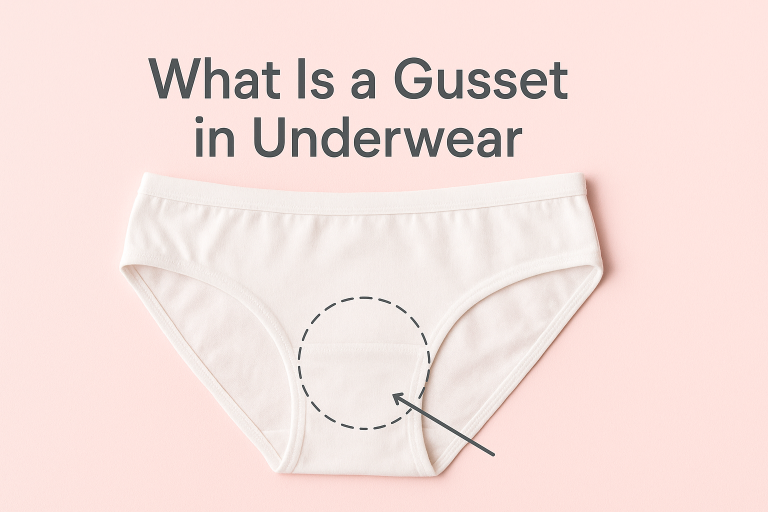
Hipster styles with a wide rear panel can still bunch under very tight compression leggings, so check the gusset width before committing to a full set.
Low-Rise Seamless Boyshorts
Seamless boyshorts are not the default recommendation for most legging wearers, but they solve a specific problem: chafing at the inner thigh during long-wear or walking. Women who experience thigh rubbing in thin leggings often find that a low-rise, thin-fabric boyshort prevents skin-on-skin friction while still keeping VPL minimal under looser or thicker legging fabrics.
Key Specifications: Fabric: 92% modal, 8% spandex or 90% nylon, 10% elastane. Construction: seamless knit, wide flat waistband. Rise: low to mid-rise. Leg length: 2.5-3.5 inches from crotch seam. Best for: loose leggings, thicker knit leggings, anti-chafe protection. Price range: $14-$30 per pair.
Boyshorts show visible lines under fitted or thin leggings, so they are best reserved for thicker, more opaque legging fabrics where the extra coverage stays hidden.
Commando-Style Laser-Cut Briefs
Laser-cut briefs are the highest-coverage option that still qualifies as a no-show underwear style. The laser cutting removes any raised edge at the leg and waist openings, leaving a flat micro-edge that does not telegraph through even thin legging fabric. Full-coverage briefs in this construction work well for women who want complete seat coverage with zero seam outline.
Key Specifications: Fabric: 88% nylon, 12% spandex. Construction: laser-cut leg and waist opening, seamless body knit. Rise: mid to high-rise. Coverage: full seat, moderate leg cut. Best for: high-waisted leggings, wide-waistband leggings, everyday coverage preference. Price range: $16-$38 per pair.
The higher the rise on this style, the more likely it is to interact with a high-waisted legging waistband, so size carefully and confirm the waistband sits below the legging’s top edge.
Use the table below to match your legging type and coverage preference to the underwear style that eliminates the most common problems.
| Legging Type | Best Underwear Style | Why It Works | Avoid |
|---|---|---|---|
| Thin or sheer workout leggings | Seamless thong | No rear seam or panel to show through | Bikini with waistband, boyshorts |
| Mid-weight yoga or athleisure leggings | Seamless bikini or no-show hipster | Laser-cut edge disappears under moderate compression | Thick cotton briefs |
| High-waisted compression leggings | Laser-cut brief or seamless thong | Flat edge does not bunch under wide waistband zone | Low-rise underwear that peeks above waistband |
| Thick or opaque casual leggings | Seamless boyshorts or hipster | More coverage hidden by thicker fabric | Nothing; most styles work with thick fabric |
| White or light-colored leggings | Nude seamless thong | Nude fabric matches skin tone, not legging fabric | White underwear, which shows more than nude |
The table above confirms that thin, light-colored, or high-waisted leggings narrow the field significantly, while thick or opaque leggings give you the most underwear flexibility.
What Fabric to Look for in Underwear for Leggings
The underwear fabric matters as much as the cut. Thick fabrics, textured knits, and rigid waistbands all create visible outlines and friction under leggings regardless of the style you choose.
Nylon-Spandex Blends
Nylon-spandex underwear in an 88-92% nylon, 8-12% spandex ratio is the most compatible fabric with athletic and fitted leggings. Nylon has a smooth, flat surface that slides against the inner legging fabric rather than gripping it, which reduces bunching during movement. The spandex content ensures the underwear recovers its shape after stretching with the body during squats, lunges, or walking.
According to fabric performance data published by the American Association of Textile Chemists and Colorists (AATCC), nylon fabrics maintain lower surface friction coefficients against themselves than cotton-polyester blends, which directly translates to less underwear movement during wear.
Microfiber Polyester
Microfiber polyester underwear offers a slightly softer hand than nylon while maintaining the flat, smooth surface needed for no-show wear under leggings. A 90% microfiber, 10% elastane blend is the most common construction for no-show panties in this category. Microfiber is also faster-drying than modal or cotton, making it a practical option for all-day wear that includes exercise.
The limitation of microfiber is breathability. Polyester microfiber holds moisture closer to the skin than natural fibers, which matters for prolonged high-intensity workouts where moisture management is a priority.
Modal and Bamboo Blends
Modal-spandex and bamboo-spandex underwear in a 90-92% natural fiber, 8-10% spandex ratio is softer than nylon but slightly thicker in hand. These fabrics work best under medium-weight or thicker leggings where the added surface texture is hidden by the legging fabric. Modal and bamboo are also more breathable than nylon or polyester, which makes them preferable for everyday wear in warmer climates or during low-intensity activity.
Modal fabric has a natural drape that reduces static cling against legging fabric. This matters for synthetic leggings that accumulate static during movement and cause underwear to ride up or shift.
What to Avoid
Cotton underwear is the most common cause of visible panty lines under leggings. Cotton does not stretch four-way, so the seams stay rigid and press into the legging fabric. A 100% cotton brief shows through even opaque mid-weight leggings in most body positions, particularly when bending or sitting.
Lace underwear creates raised surface texture that telegraphs clearly through fitted legging fabric. Even low-profile lace trims at the leg opening leave a scalloped edge visible under thin or light-colored leggings.
Woven or embroidered fabric panels add surface height that exceeds the flat-fabric threshold needed for no-show wear. These details are better reserved for non-legging days.
Fabric selection is the second most important decision after cut, and choosing any fabric that lacks four-way stretch or has a raised surface construction will cancel the benefit of even a perfectly chosen seamless style.
How to Match Underwear Rise Height to Your Leggings
Rise height mismatch is the most overlooked cause of discomfort and visible lines in leggings. When the underwear waistband sits lower than the legging waistband, the underwear has no anchor point and rolls or folds during movement.
Low-Rise Leggings
Low-rise leggings sit 2-3 inches below the navel. A low-rise thong or bikini with a waistband at 2-3 inches above the hip bone matches this legging and stays concealed. High-rise underwear worn with low-rise leggings creates a double-waistband effect where the underwear waistband is visible above the legging waistband, which is one of the most common styling errors in this category.
Mid-Rise Leggings
Mid-rise leggings sit at the natural waist, approximately 3-4 inches above the hip bone. A mid-rise seamless bikini or no-show hipster with a waistband at the same height as the legging stays flat and does not shift during movement. Mid-rise underwear also prevents the underwear from rolling down into the legging’s compression zone, which creates a visible horizontal ridge across the lower abdomen.
High-Rise Leggings
High-rise leggings sit at or above the navel, typically 5-7 inches above the hip bone. High-waisted underwear or a seamless thong works best here. A high-waisted brief with a waistband that extends to the same height as the legging waistband eliminates the fold-over problem entirely by giving the underwear a surface to press flat against rather than a free edge to roll under. A seamless thong works because there is no waistband competing with the legging’s wide top band.
Matching Rise Height in Practice
The practical rule is simple: the underwear waistband must either match the legging waistband height or be lower than it. A waistband that sits higher than the legging waistband is always visible. A waistband that sits 0.5-1.5 inches lower than the legging waistband stays hidden under the legging’s compression zone.
Rise matching solves the majority of waistband-related comfort and appearance problems without requiring a change in underwear style, so check this variable before buying new underwear for a legging that has already failed.
Best Underwear for Different Legging Activities
The activity determines the performance priorities of your underwear. A style that works perfectly for yoga may be the wrong choice for running, and a style that works for errands may shift constantly during spin class.
Workout and High-Intensity Exercise
High-intensity exercise requires underwear that stays in place without riding up, manages moisture, and does not chafe during repetitive movement. A seamless thong in 88-92% nylon-spandex is the strongest performer in this scenario. The absence of rear fabric means there is nothing to bunch, ride up, or trap heat in the seat area during jumping, cycling, or running.
For women who cannot wear a thong during high-impact activity, a seamless, laser-cut bikini in the same nylon-spandex construction is the next best option. The key specification to verify is the gusset: a full-coverage, moisture-wicking gusset in a 100% cotton or moisture-wicking nylon lining is necessary for hygiene during extended workout sessions.
Moisture-wicking underwear specifically labeled for athletic use differs from everyday seamless underwear in gusset construction and fabric weight. Athletic versions typically use 150-180 gsm (grams per square meter) fabric rather than the 80-120 gsm used in everyday seamless styles, providing more durability through repeated machine washing at higher temperatures.
Yoga and Low-Impact Movement
Yoga requires four-way stretch compatibility and stability during static holds and deep flexion positions. A seamless thong or low-rise seamless bikini with a wide, flat waistband performs consistently across downward dog, pigeon pose, and seated forward folds without shifting. The underwear’s stretch-recovery rate should match or exceed the legging’s recovery rate to prevent the underwear from becoming loose relative to the legging during poses.
A seamless sport underwear style rated for low-impact movement in modal-spandex is also appropriate for yoga, pilates, and barre, where breathability is more important than the aggressive moisture management needed for high-intensity cardio.
Everyday Wear and Errands
Everyday legging wear prioritizes all-day comfort, breathability, and invisibility over performance features. A no-show bikini or hipster in microfiber or modal-spandex covers this scenario well. These styles offer more coverage than a thong while remaining thin enough to disappear under casual leggings worn for walking, errands, or light activity.
For everyday wear, a cotton-lined gusset is preferred over a fully synthetic lining, as gynecologists including those at the American College of Obstetricians and Gynecologists (ACOG) recommend breathable natural fiber against the vulval area for general vaginal health during prolonged daily wear.
Lounge and Casual Home Wear
Lounge leggings worn at home have lower visibility requirements, so comfort becomes the primary driver. Cotton underwear or modal briefs are appropriate here because the legging fabric is typically thicker and the activity level lower. The VPL that would be unacceptable under fitted workout leggings becomes irrelevant under a loose-knit lounge fabric worn around the house.
Choose your underwear by the activity first, because a style optimized for workout performance is not the same as a style optimized for an 8-hour workday in leggings.
No-Show Underwear for White and Light-Colored Leggings
White, light grey, blush, and pale-colored leggings require a specific approach that differs from the advice for dark leggings. Many women default to white underwear with white leggings, which is the most common mistake in this category.
Why Nude Outperforms White
White underwear under white leggings creates a high-contrast zone where the underwear is opaque and the surrounding legging fabric is translucent under light. This makes the underwear more visible under white leggings than nude or skin-tone underwear, which blends with the skin beneath and registers as a continuous tone rather than a distinct shape.
The correct choice is underwear in a shade 0-2 tones darker than the wearer’s skin tone, not a shade that matches the legging. Nude seamless underwear in shades from pale beige to deep brown matches the skin rather than the clothing, which is the principle used in professional costume and dance industries where undergarments must be invisible under pale stage-wear.
Fabric Opacity Considerations for Light Leggings
Light-colored leggings vary significantly in opacity. A white legging in a 250 gsm or heavier cotton-polyester blend may be fully opaque, while a white legging in a 120-150 gsm nylon fabric may be partially see-through in direct light or during bending. Before buying underwear for light leggings, check the fabric weight and opacity by holding the legging up to a light source while flat.
If the legging is semi-transparent, a seamless thong in a skin-matched nude shade is the only reliable no-show solution. If the legging is fully opaque even in a bending position, a nude seamless bikini or hipster provides enough invisibility while offering more coverage.
The nude-over-white rule applies to all light colors, not just white. Light grey, blush, and lavender leggings all show white underwear more clearly than nude, so apply the skin-tone matching principle across any pale legging color.
Going Commando in Leggings: When It Works and When It Does Not
Going commando under leggings is a legitimate choice for many women, and some legging brands including Lululemon and Athleta design specific styles with built-in gusset liners specifically intended for underwear-free wear. Whether this option works depends on the legging’s construction, not just personal preference.
Leggings Designed for Commando Wear
Leggings with an integrated gusset lining in 100% cotton or moisture-wicking fabric provide the hygiene and coverage function that underwear would otherwise serve. These leggings are labeled “underwear optional” or “built-in liner” and include a sewn-in panel from the crotch seam extending 3-5 inches front and back. This construction is structurally equivalent to wearing a thong gusset with the legging fabric serving as the outer coverage layer.
Key Specifications for commando-appropriate leggings: Lining material: 100% cotton or moisture-wicking nylon gusset. Gusset coverage: minimum 3 inches front, 3 inches rear from crotch seam. Fabric opacity: 200 gsm or higher for full opacity in all positions. Construction: flat-lock seams at inner thigh for chafe prevention.
When Going Commando Is Not Appropriate
Leggings without a built-in gusset liner are not designed for commando wear regardless of the brand’s general quality. Without a liner, the single layer of synthetic legging fabric against the vulval area lacks the absorbency and breathability needed for prolonged contact, and ACOG specifically recommends natural fiber or breathable material against this area for general health.
Sheer, thin, or light-colored leggings are also not appropriate for commando wear from a coverage standpoint. A legging that is partially transparent with underwear underneath becomes fully transparent without it, which creates both a coverage problem and a hygiene-adjacent appearance issue.
Commando is a viable, comfortable option specifically for leggings built with an integrated liner, and a poor choice for any legging without that construction feature.
How to Stop Underwear from Rolling and Riding Up in Leggings
Underwear that rolls down at the waist or rides up in the seat during legging wear is caused by a mismatch between the underwear’s elastic recovery and the legging’s compression level, not simply by the wrong style choice.
Waistband Roll Fixes
Waistband roll happens when the underwear waistband has less stretch-recovery than the legging fabric pressing against it. The legging compresses the underwear waistband downward with each movement, and a waistband with insufficient recovery does not return to its original position. The result is a slow, progressive roll during a workout or long wear day.
The fix is a silicone-grip interior waistband, which is a thin band of silicone printed or bonded to the inside of the underwear waistband. This grip adheres lightly to the skin and prevents the downward migration caused by legging compression. Many no-show underwear styles include this feature and label it as “stay-put” or “grip waistband” construction.
No-roll waistband underwear with silicone grip is the most direct solution for this specific problem and does not require switching to a different cut or rise height.
Ride-Up Fixes
Underwear that rides up in the seat is caused by a leg opening that is wider or less elasticized than the legging fabric presses it to be, creating upward migration of the fabric panel. The typical solution is a narrower leg cut (moving from hipster to bikini, or from bikini to thong), but a silicone-grip leg band provides the same anti-migration benefit without changing the coverage level.
A slightly smaller underwear size in the same style also reduces ride-up by increasing the elastic tension at the leg opening. Many women wear their regular clothing size in underwear when a half-size down would provide better grip without discomfort.
Both roll and ride-up are mechanical problems with mechanical solutions, so diagnosing which specific failure is happening (waistband or leg opening) determines which fix to apply.
Underwear for Plus-Size Legging Wearers
Plus-size legging wearers face the same fundamental principles but with specific sizing and construction considerations that differ from standard sizing recommendations.
A seamless thong or bikini in plus-size seamless underwear (sizes 1X-4X) uses proportionally wider gusset panels and longer rise measurements than standard sizes to ensure the same no-show coverage. Standard-sized seamless underwear worn at too small a size increases fabric tension at the leg opening and creates a deeper groove into the thigh, which is more visible through leggings than correctly sized underwear would be.
The hip-to-waist measurement differential matters more in plus sizing than in standard sizing. Women with a significant hip-to-waist ratio difference (more than 12 inches) often need to size by hip measurement for the seat fit and accept a looser waistband, or look for brands offering extended-fit underwear with adjustable or graduated waistband tension.
Brands including Skims, Savage X Fenty, ThirdLove, and Torrid offer seamless legging-compatible underwear through size 4X with proportional gusset and rise scaling. Verify that any seamless thong or bikini purchased in a plus size includes a full-coverage cotton or moisture-wicking gusset, as budget seamless styles sometimes reduce the gusset panel in larger sizes to cut costs, reducing both hygiene and comfort.
Correct sizing in plus-size underwear eliminates more visible panty line problems than any style switch, so measuring hip circumference and comparing it to the brand’s size chart before purchasing is the highest-impact step for this category.
How Many Pairs of Legging-Compatible Underwear You Need
A functional underwear rotation for regular legging wearers requires a minimum of 7-10 pairs of legging-compatible styles to allow for laundry cycles without repeating unwashed pairs.
Underwear worn during exercise should be washed after each use, which means workout-specific pairs cycle through the laundry faster than everyday pairs. A realistic split for a woman who wears leggings 4-5 days per week is 4-5 athletic seamless thongs or bikinis and 4-5 everyday no-show bikinis or hipsters, totaling 8-10 pairs.
Elastic degradation in nylon-spandex underwear begins after approximately 30-40 wash cycles, according to textile performance testing standards cited by the AATCC. At one wash per day for workout pairs, this means replacing athletic underwear every 1-2 months at high wear frequency. Everyday pairs washed 3-4 times per week last 3-6 months before elastic recovery declines enough to cause waistband roll or leg ride-up.
Use the table below to calculate a practical replacement schedule based on your weekly legging-wear frequency.
| Weekly Legging Days | Workout Pairs Needed | Everyday Pairs Needed | Replace Workout Pairs Every | Replace Everyday Pairs Every |
|---|---|---|---|---|
| 1-2 days | 2-3 pairs | 4-5 pairs | 4-6 months | 9-12 months |
| 3-4 days | 4-5 pairs | 4-5 pairs | 2-3 months | 6-9 months |
| 5-7 days | 5-7 pairs | 3-4 pairs | 1-2 months | 4-6 months |
The table above shows that high-frequency legging wearers need a larger workout-specific rotation and a faster replacement cycle than occasional wearers, which changes the cost-per-year calculation for underwear significantly.
How to Care for Underwear Worn with Leggings
Seamless nylon-spandex underwear requires gentler care than standard cotton underwear because the elastic fibers degrade faster under high-heat washing and machine agitation.
Hand-wash athletic and seamless underwear in cool water with a lingerie-specific detergent rated for synthetic fabrics after every workout use. If machine washing, place underwear in a mesh laundry bag on a cold, delicate cycle. Avoid hot water, which degrades spandex elastic, and avoid fabric softener, which coats nylon fibers and reduces their moisture-wicking performance over time.
Air-dry all seamless and nylon-spandex underwear flat or hung on a line. Machine drying on any heat setting shortens the elastic life by approximately 30-40% per wash cycle compared to air-drying, based on textile elasticity testing data published by the American Textile Manufacturers Institute.
Mesh washing bags prevent underwear straps and waistbands from tangling around other garments in the washing machine, which physically stresses the elastic and causes premature distortion. A basic mesh bag set costs $8-$15 and extends the useful life of a set of seamless underwear significantly when used consistently.
Caring for seamless underwear correctly costs no additional money beyond a mesh bag and a suitable detergent, and it doubles or triples the useful life of your legging-compatible pairs.
Frequently Asked Questions About Underwear to Wear with Leggings
What is the best underwear to wear with leggings to avoid visible panty lines?
The best underwear to avoid visible panty lines under leggings is a seamless, laser-cut thong or bikini in 88-92% nylon, 8-12% spandex fabric. Laser-cut edges remove the raised woven seam that creates an outline through legging fabric. A seamless thong eliminates all rear-panel bulk. For white or light-colored leggings, choose a nude shade that matches your skin tone rather than white, which shows more contrast under translucent fabric.
Is it better to wear a thong or go commando under leggings?
A seamless thong is preferable to going commando for leggings without a built-in gusset liner. Without underwear, a single layer of synthetic legging fabric provides no moisture absorption or breathability against the vulval area, which ACOG recommends against for prolonged daily wear. A seamless thong adds a cotton-lined gusset with full hygiene function while adding zero visible outline. Going commando is appropriate only under leggings specifically constructed with an integrated cotton or moisture-wicking liner panel.
Should underwear match the color of leggings or the color of your skin?
Underwear should match your skin tone, not your legging color. For dark or opaque leggings, any seamless style in any color works because the legging fabric is fully opaque. For light, white, or sheer-ish leggings, underwear in a shade matching or 1-2 tones darker than your skin tone is less visible than white underwear, which creates a high-contrast panel under partially transparent fabric. Nude underwear across the skin-tone spectrum is designed specifically for this purpose and performs more reliably than color-matching the garment.
Can you wear cotton underwear under leggings?
Cotton underwear creates visible panty lines under most fitted leggings because cotton does not have four-way stretch and its woven seams remain rigid under the legging’s compression. A cotton brief pressed against fitted legging fabric shows the full seam outline in a bent or seated position. Cotton underwear is appropriate under thick, loose-knit casual leggings worn at home where VPL is not a concern. For any fitted, workout, or light-colored legging, a seamless nylon-spandex or microfiber style performs significantly better than cotton.
What underwear do you wear under white leggings?
Wear nude seamless underwear under white leggings. Nude underwear in a shade matching your skin tone blends with the skin beneath the semi-transparent fabric and registers as a single continuous tone rather than a distinct underwear shape. White underwear under white leggings is the most common mistake and creates more visible contrast than nude because the underwear appears bright against the legging fabric in light. A seamless laser-cut thong or bikini in your closest skin-tone nude shade is the most reliable no-show option under any light-colored legging.
How do you stop underwear from rolling down in leggings?
Underwear rolls down in leggings when the waistband’s elastic recovery is weaker than the legging compression pressing against it. The most effective fix is underwear with a silicone-grip interior waistband, which adheres lightly to the skin and prevents downward migration. A second fix is choosing underwear with a rise height that matches the legging waistband height, so the underwear has a surface to press flat against rather than a free edge to fold under. If the underwear elastic has degraded from repeated washing, replacing the pair solves the problem more reliably than adjusting placement.
What is the best underwear for high-waisted leggings?
The best underwear for high-waisted leggings is either a seamless thong or a high-waisted laser-cut brief that matches the rise of the legging. High-waisted leggings typically sit 5-7 inches above the hip bone, and any underwear waistband sitting lower than that point risks rolling or creating a visible horizontal line across the mid-section. A seamless thong avoids this entirely because the minimal waistband does not interact with the legging’s wide top band. A high-waisted seamless brief worn at the same rise as the legging creates a smooth, layered compression that stays flat all day.
Choosing the right underwear for leggings comes down to three variables: cut, fabric, and rise height. A seamless, laser-cut style in nylon-spandex or microfiber at the correct rise height for your specific legging eliminates visible panty lines, waistband roll, and bunching in a single decision. Start with a seamless thong or bikini in your skin-tone nude shade, verify the rise height matches your most-worn leggings, and replace athletic pairs every 1-3 months depending on how frequently you exercise to maintain the no-show performance these styles are designed to deliver.
Use this interactive finder to get a personalized underwear recommendation based on your specific legging situation and top priority.
Interactive Tool
Find the Right Underwear for Your Leggings
Answer 2 questions to get a personalized recommendation based on your legging type and main priority.


One Comment