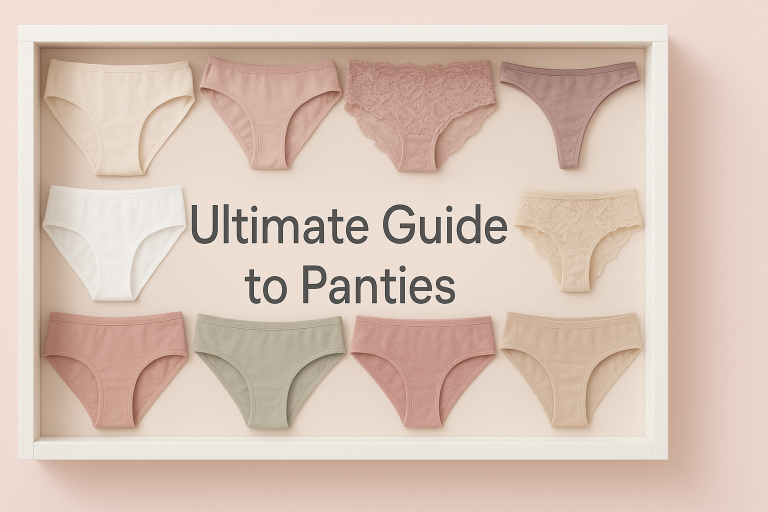
Women’s Undergarments Types Guide For Perfect Fit & Comfort
Women’s undergarments are the foundation of every outfit, and choosing the right type for each occasion, body shape, and activity makes a measurable difference in comfort, silhouette, and confidence. This guide covers every major category of women’s undergarments, from wireless bras and bralettes to shapewear and specialty intimates, with specific details on fit, fabric, and function so you can build a wardrobe that works for your real life.
Types of Bras: The Complete Breakdown
Bras are the most varied category in women’s undergarments, with each style engineered for a specific combination of support level, coverage, and outfit compatibility. Understanding the structural differences between bra types helps you match each one to the right situation rather than defaulting to a single style for everything.
T-Shirt Bra
A t-shirt bra is a smooth, molded-cup underwire bra designed to disappear under fitted clothing without showing seams or texture through the fabric. It is the most purchased bra style globally, according to the Intimate Apparel Association, because it works under the widest range of tops.
Key Specifications: Band sizes: 30-44. Cup sizes: A-G. Fabric: typically 88-92% nylon, 8-12% elastane. Molded foam cups (usually 2-part or 3-part construction). Underwire channel reinforced at center front.
Wireless Bra
A wireless bra omits the underwire frame entirely, relying on structured fabric, elastic channels, and panel construction to provide shape and support without rigid components pressing against the ribcage. A 2021 survey by ThirdLove found that 68% of women switching to wireless styles reported reduced underbust irritation within four weeks.
Key Specifications: Band sizes: 30-44. Cup sizes: A-F. Fabric: often 90% modal or microfiber blends. No underwire channel. Wide underbust band (typically 2.5-3.5 inches) for structural support.
Balconette Bra
A balconette bra features a wide, horizontal cup opening and wide-set straps that sit closer to the shoulder’s edge, creating a lifted, rounded silhouette that works especially well for square necklines and wide-cut tops. The cup construction lifts from below rather than enclosing from the sides, which suits lower-fullness and even-fullness bust shapes most effectively.
Key Specifications: Band sizes: 30-40. Cup sizes: A-G. Strap placement: 2-3 inches from center front. Cup height: lower than full-coverage styles by approximately 0.75-1 inch. Underwire typically shorter and wider than T-shirt bra underwire.
Push-Up Bra
A push-up bra uses angled padding at the outer-lower cup to redirect breast tissue upward and toward the center, increasing the appearance of cleavage by 1-2 cup sizes without altering actual size. Padding levels range from Level 1 (light enhancement) to Level 3 (maximum padding), with Level 2 being the most commonly purchased, according to Victoria’s Secret product data.
Key Specifications: Band sizes: 30-40. Cup sizes: A-DD. Padding levels: 1-3. Underwire angle: steeper than standard bras to direct lift centrally. Often includes a plunge center front (gore height typically 0.5-0.75 inches).
Full-Coverage Bra
A full-coverage bra encloses the entire breast within the cup with no spillage at the top or sides, making it the preferred style for D cup and above, as well as for women with upper-fullness bust shapes who experience overflow in lower-cut styles. The American Society of Plastic Surgeons notes that full-coverage styles are the most recommended post-augmentation garment because they stabilize implant position during healing.
Key Specifications: Band sizes: 32-54. Cup sizes: B-N (extended sizing). Cup height: covers full breast tissue including upper pole. Gore height: typically 1-1.5 inches. Usually includes 3 or 4 hook-and-eye closures in larger sizes.
Sports Bra
A sports bra is engineered to reduce breast movement during physical activity through one of two mechanisms: compression (pressing breast tissue flat against the chest) or encapsulation (surrounding each breast in a separate molded cup). A 2013 biomechanics study published in the Journal of Sports Sciences found that unsupported breasts move up to 8 centimeters during running, while a high-impact encapsulation sports bra reduces that movement to under 2 centimeters.
Key Specifications: Support levels: low (yoga, walking), medium (cycling, hiking), high (running, HIIT). Fabric: 80-92% nylon or polyester with 8-20% spandex for moisture-wicking. Wide underband and racerback or cross-back construction in high-impact styles. Band sizes: 28-52 (encapsulation styles); XS-3XL (compression styles).
Strapless Bra
A strapless bra relies entirely on a wide, silicone-grip underbust band and reinforced side panels to remain in place without shoulder straps, making it essential for off-shoulder, strapless, and halter necklines. The grip band typically measures 3.5-5 inches wide and uses a silicone-lined interior that creates friction against the skin to prevent slipping.
Key Specifications: Band sizes: 30-44. Cup sizes: A-G. Underbust band width: 3.5-5 inches. Silicone grip strip: 0.25-0.5 inch interior lining. Removable straps included in most styles for convertible wear.
Minimizer Bra
A minimizer bra redistributes breast tissue horizontally across the chest rather than projecting it forward, reducing the visual projection of the bust by 1-1.5 inches without compression, according to Wacoal’s fit research. This makes clothing fit more smoothly across the chest without the pulling and gaping that occurs with standard bra styles in larger cup sizes.
Key Specifications: Band sizes: 34-48. Cup sizes: C-I. Cup construction: wide, shallow design redistributes rather than compresses. Underwire: wider set than standard to accommodate horizontal redistribution. Typically full-coverage cup height.
Nursing Bra
A nursing bra includes drop-down cups or pull-aside panels that allow breastfeeding access without removing the bra, and it accommodates the 1-3 cup size increase that most women experience during lactation. The American College of Obstetricians and Gynecologists recommends wireless nursing bras during the first 6-8 weeks postpartum to avoid restricting milk ducts, which can contribute to mastitis.
Key Specifications: Band sizes: 28-48. Cup sizes: A-K (extended sizing for engorgement fluctuation). Drop-down clip mechanism: front-opening or side-opening. Fabric: cotton or bamboo preferred (moisture-wicking and breathable). No underwire in postpartum styles; underwire versions available after milk supply stabilizes (typically 8-12 weeks).
Bralette
A bralette is a soft, unstructured wireless bra without molded cups, padding, or underwire, providing light coverage and minimal support suited to A-C cup sizes and low-impact daily wear. Bralettes are constructed primarily from lace, ribbed jersey, or stretch mesh, and they are the fastest-growing bra segment by unit sales in the US intimate apparel market, according to NPD Group retail data.
Key Specifications: Sizing: XS-3XL (not band-and-cup sized). Fabric: lace, modal, ribbed cotton, or stretch mesh. No underwire, no padding, no molded cup. Support level: light. Best suited for A-C cup (limited side support for D cup and above).
Adhesive Bra
An adhesive bra attaches directly to the skin using medical-grade silicone or fabric adhesive, leaving the back, sides, and straps completely bare for backless, plunging, and open-back garments. Adhesive bras provide light to moderate support, and most styles are reusable up to 30-50 times with proper cleaning, according to NuBra manufacturer specifications.
Key Specifications: Sizing: A-F cup (wing-style); A-DD (petal/nipple cover style). Material: silicone or fabric-backed adhesive. Reuse cycles: 30-50 with gentle hand washing. Support level: light to moderate. Not recommended for extended wear beyond 8-12 hours or in high heat.
Choosing the right bra type comes down to matching cup support architecture to your bust shape and the structural demands of your outfit, not just picking the style you have always worn.
Use this interactive finder to match your primary need and outfit type to the bra style that fits both.
Interactive Finder
Find the Right Bra Style for Your Situation
Answer 2 questions to get a personalized bra style recommendation.
Types of Underwear and Panties
Women’s underwear varies more in cut, coverage, and construction than most shoppers realize, and each style serves a distinct functional purpose related to outfit type, activity level, and personal comfort preference. Getting the right panty style for each outfit eliminates visible panty lines, prevents ride-up, and improves all-day comfort.
Bikini Panty
A bikini panty sits at the natural hip with moderate front and back coverage, making it the most versatile everyday underwear style and the top-selling panty cut in the US, according to NPD Group’s intimate apparel retail data. The waistband sits 1-2 inches below the natural waist, and the leg opening follows a slight curve without cutting high on the hip.
Key Specifications: Waistband placement: 1-2 inches below natural waist. Back coverage: moderate (50-60% coverage). Fabric: cotton, microfiber, or lace. Leg cut: low curved opening. Available in standard sizing (XS-3XL) and band-and-hip sizing in some brands.
Brief Panty
A brief panty provides full front and back coverage with a waistband at or near the natural waist and a straight or slightly curved leg opening, offering the most coverage and comfort of any standard panty cut. Briefs are the recommended post-surgical underwear style by most gynecologists because the high waistband does not sit on incision sites.
Key Specifications: Waistband placement: at or near natural waist (1 inch below navel). Back coverage: full (80-95%). Leg opening: straight horizontal cut. Fabric: cotton preferred for everyday wear. Best for: post-surgical recovery, high-waisted pants, all-day seated wear.
Thong
A thong eliminates back coverage entirely with a narrow fabric strip running between the buttocks, making it the only panty style with zero visible panty lines under fitted pants, skirts, and leggings. The International Journal of Nursing Practice published a 2018 study noting that wearing synthetic-fabric thongs for extended periods increases the risk of bacterial transfer, and recommending cotton-gusset styles for daily wear.
Key Specifications: Back coverage: none (T-bar or V-string construction). Front coverage: low to moderate. Waistband placement: hip to low-rise. Fabric: microfiber (most common) or cotton gusset with microfiber body. Best for: fitted pants, bodycon skirts, athletic leggings.
G-String
A G-string is the most minimal underwear construction available, with a waistband connected by narrow side strings to a small front triangle and a single narrow back string, providing zero coverage and zero fabric bulk under form-fitting clothing. G-strings differ from thongs in that the side panels are strings rather than fabric bands, reducing fabric contact by approximately 70% compared to a standard bikini panty.
Key Specifications: Coverage: minimal front triangle, string sides and back. Waistband type: string or narrow elastic. Fabric: microfiber, lace, or stretch mesh. Best for: maximum no-show performance under fitted garments. Not recommended for extended activity wear due to limited stability.
Boyshort
A boyshort panty extends the leg coverage horizontally across the upper thigh, providing full front and back coverage with a straight leg cut that sits at the upper thigh rather than curving high toward the hip, making it the most comfortable option for thigh-chafing prevention and active loungewear wear. Boyshorts reduce inner-thigh fabric friction by covering the area where thigh skin contacts thigh skin during walking.
Key Specifications: Leg coverage: extends 1-3 inches below the hip crease. Waistband placement: low to natural hip. Back coverage: full. Fabric: cotton, modal, or stretch mesh. Best for: under dresses (anti-chafe), loungewear, sleep wear.
Read our full explainer on the long-leg underwear style for more details.
Hipster Panty
A hipster panty sits lower on the hip than a bikini cut (at the widest point of the hip rather than above it) and provides moderate front and back coverage with a curved leg opening that follows the natural hip contour. Hipsters are the preferred everyday style for low-rise jeans and low-rise bottoms because the waistband sits below the pants waistband without showing.
Key Specifications: Waistband placement: at the widest hip point (2-3 inches below natural waist). Back coverage: moderate to full. Leg opening: curved, following hip contour. Fabric: microfiber, cotton, or lace. Best for: low-rise pants, mid-rise jeans, hip-level skirts.
High-Waist Panty
A high-waist panty extends the waistband to at or above the navel, providing a smooth, flat abdominal panel that prevents muffin top at the waistband and creates a smooth base under high-waisted skirts and trousers. High-waist styles without compression fabric are categorized as underwear; those with compression panels cross into shapewear territory (covered in the shapewear section).
Key Specifications: Waistband placement: at or above navel (2-4 inches above hip). Front panel height: 4-6 inches of abdominal coverage. Back coverage: full. Fabric: cotton, microfiber, or modal. Best for: high-waisted bottoms, tucked shirts, smooth silhouette under fitted dresses.
The cut and waistband height of your underwear matters as much as your bra choice for achieving a smooth silhouette under fitted clothing.
Types of Shapewear
Shapewear is a category of undergarments constructed with compression fabrics (typically 80-82% nylon, 18-20% spandex at medium compression or higher spandex content at high compression) to smooth, lift, or reshape specific body areas under clothing. The global shapewear market was valued at $2.6 billion in a report by Grand View Research, driven primarily by demand for bodysuits, waist cinchers, and smoothing shorts.
Shaping Shorts
Shaping shorts (also called bike-short shapewear) extend from the waist to mid-thigh and compress the abdomen, hips, and upper thighs simultaneously, making them the most versatile shapewear piece for skirts, dresses, and wide-leg pants. The Lycra Company’s fabric performance data shows that compression fabrics at 18-20% spandex content reduce apparent circumference by 1-2 inches at the abdomen and upper thigh with consistent wear.
Key Specifications: Coverage: waist to mid-thigh (typically 10-12 inches of thigh coverage). Compression level: light (15% spandex), medium (18% spandex), firm (22% spandex). Fabric: nylon-spandex. Waistband: usually 2-3 inch high-waist band. Best for: dresses, skirts, wide-leg pants.
Waist Cincher and Waist Trainer
A waist cincher is a short, firm compression band worn at the natural waist to reduce waist circumference by 1-3 inches visually under clothing, while a waist trainer uses steel boning and high-compression fabric intended for extended daily wear. The American Board of Cosmetic Surgery notes that waist trainers do not permanently reshape the waist, but they do provide temporary visual reduction of 2-4 inches when worn correctly.
Key Specifications: Cincher length: 8-12 inches (waist-focused). Trainer length: 9-14 inches. Boning: spiral steel (flexible) or flat steel (rigid). Compression: high (22-26% spandex or latex). Closure: hook-and-eye (3 rows of 2-3 hooks) or busk front. Not recommended for extended wear beyond 8 hours daily.
Bodysuit Shapewear
A shapewear bodysuit extends compression from the bust to the upper thigh in a single garment, creating a unified smooth surface under form-fitting dresses and jumpsuits without any waistband seam showing at the midsection. Open-gusset and snap-gusset designs allow restroom use without removing the garment, which is the most frequently cited feature in consumer reviews, according to Nordstrom’s product feedback data.
Key Specifications: Coverage: bust to upper thigh. Compression zones: usually graded (firmer at abdomen, lighter at bust). Closure: open gusset (most common) or snap-gusset. Fabric: nylon-spandex, typically 18-22% spandex for medium compression. Built-in bra: light shelf bra or molded cup in most styles.
Thigh Slimmer and Slip Shorts
Thigh slimmers and slip shorts are lightweight shapewear focused specifically on the hip-to-mid-thigh zone, primarily serving as anti-chafing garments for skirt and dress wear rather than high-compression shaping tools. They differ from full shaping shorts in compression level (typically 12-15% spandex) and are designed for comfort during extended activity rather than figure modification.
Key Specifications: Coverage: hip to mid-thigh (8-10 inches). Compression: light (12-15% spandex). Fabric: nylon, modal, or microfiber. Primary purpose: anti-chafe, not compression shaping. Available in: skin-tone shades and black. Best for: dresses and skirts in warm weather.
Shapewear works best when chosen for a specific body zone rather than selecting the most compressive garment available, since over-compression above your comfort threshold creates visible rolling and discomfort rather than a smooth appearance.
Specialty and Functional Undergarments
Beyond standard bras and panties, a complete women’s undergarment wardrobe includes specialty pieces engineered for specific outfit demands, life stages, or physical needs. These items solve problems that standard underwear categories cannot address.
Camisole with Built-In Shelf Bra
A camisole with a built-in shelf bra includes a sewn-in elastic band and light fabric cup beneath the outer layer, providing modest coverage and shape without a separate bra for A-C cup sizes or for use as a layering piece under open-front tops and blazers. According to Hanes’ consumer data, the built-in shelf bra camisole is the third most purchased intimate apparel item in the US behind T-shirt bras and basic briefs.
Key Specifications: Shelf bra construction: sewn-in elastic band with fabric pocket cups. Support level: light (A-C cup). Strap style: fixed spaghetti strap or wide strap. Fabric: cotton, modal, or stretch jersey. Length: standard (hip-length) or long-line (thigh-length). Best for: layering, low-demand daily wear, sleep.
Longline Bra
A longline bra extends the underbust band downward 3-6 inches below the standard band height, distributing support across a broader surface area of the torso and creating a corset-like foundation that is particularly effective for D cup and above because it reduces the leverage load on the shoulder straps. The extended band improves bra stability by anchoring the garment to a wider ribcage surface, which is why longline styles are common in bridal undergarments worn under structured gowns.
Key Specifications: Band extension: 3-6 inches below standard underbust. Cup sizes: B-H (most styles). Hook-and-eye rows: typically 5-8 rows. Boning: optional (some styles include flexible boning for shaping). Best for: structured gowns, corset dresses, D cup and above seeking reduced strap tension.
Period Underwear
Period underwear is constructed with 3-4 absorbent layers (typically a moisture-wicking top layer, an absorbent middle layer, and a leak-resistant outer layer) built into standard panty cuts to absorb menstrual flow without additional products, holding the equivalent of 2-6 tampons depending on the absorbency level. Thinx and Modibodi, the category’s two largest brands, publish independent laboratory test results confirming their advertised absorbency rates, which range from 5ml (light) to 50ml (overnight).
Key Specifications: Absorbency levels: light (5-10ml), medium (15-20ml), heavy (25-35ml), overnight (40-50ml). Layer construction: 3-4 layers. Top layer: antimicrobial moisture-wicking fabric. Middle layer: absorbent cellulose or bamboo. Outer layer: leak-resistant PUL or Tencel. Machine washable. Lifespan: approximately 2 years with proper care (cold wash, air dry).
Postpartum Recovery Underwear
Postpartum recovery underwear uses a mid-rise to high-rise soft waistband, breathable cotton or bamboo fabric, and a smooth gusset to accommodate hospital mesh underwear replacement, maternity pad use, and healing perineal tissue in the 0-12 week postpartum period. The American College of Nurse-Midwives recommends against any underwear with tight elastic waistbands in the first 6 weeks postpartum for women who have had cesarean sections, making soft-waistband or fold-down styles the safest option.
Key Specifications: Waistband: soft, non-restrictive (fold-down option for C-section recovery). Fabric: organic cotton or bamboo (breathable, gentle on sensitive tissue). Gusset width: wide (accommodates full-size maternity pad). Rise: mid to high. Sizing: sized up from pre-pregnancy size to accommodate postpartum body changes. Machine washable, dark colors recommended.
Maternity Underwear
Maternity underwear is designed with either an over-bump panel (stretchy fabric that extends to cover the entire belly) or an under-bump cut (sits below the growing abdomen) to accommodate the expanding belly throughout pregnancy without a cutting waistband. A 2019 survey by What to Expect found that 71% of pregnant women switched to dedicated maternity underwear by the second trimester due to discomfort from standard waistbands pressing against the uterus.
Key Specifications: Over-bump panel height: extends to navel or above (6-10 inches of belly coverage). Under-bump cut: sits 2-4 inches below navel. Fabric: cotton-spandex blend (95% cotton, 5% spandex minimum for stretch). Sizing: sized by pre-pregnancy hip measurement. Coverage: full back and moderate to full front. Available in bikini and brief cuts.
Specialty undergarments solve real functional problems that standard styles cannot, and investing in the right piece for each specific situation is more effective than trying to adapt a standard garment to a purpose it was not designed for.
How to Choose the Right Undergarment for Each Outfit
Outfit-to-undergarment matching requires evaluating three variables simultaneously: the neckline and back coverage of the garment, the fabric weight and stretch of the outer layer, and the body zone the outer garment will visually emphasize. Getting all three right eliminates visible lines, straps, and seams from the final appearance.
Matching Bra Style to Neckline
Each neckline category has a corresponding bra architecture that either disappears beneath it or provides the right structural support for the garment’s design. Use the table below to match your neckline to the bra style that performs best with it.
| Neckline Type | Best Bra Style | Why It Works |
|---|---|---|
| Crew neck / T-shirt | Seamless T-shirt bra | Molded cup eliminates all seam show-through |
| V-neck | Plunge bra or balconette | Low center front (gore) stays inside neckline |
| Strapless / off-shoulder | Strapless bra | Silicone grip band holds without straps showing |
| Backless / open-back | Adhesive backless bra | No back strap to show; attaches directly to skin |
| Square neck | Balconette bra | Wide cup opening matches square neckline geometry |
| Halter | Strapless or convertible halter bra | Halter conversion strap configuration matches neckline |
| Racerback | Racerback bra or bra with strap clips | Straps converge at center back, hidden under racerback cut |
The neckline-to-bra match table above resolves the most common strap-visibility and coverage problems without requiring any additional accessories.
Matching Panty Style to Pants and Skirts
The waistband height and leg cut of your underwear determines whether panty lines appear under fitted pants, skirts, and leggings. Use the table below to match your bottom garment to the underwear cut that eliminates visible panty lines.
| Garment Type | Best Panty Style | Key Reason |
|---|---|---|
| Fitted leggings | Thong or seamless bikini | Eliminates leg seam lines visible through stretch fabric |
| Pencil skirt | Thong or seamless hipster | No back seam creates smooth posterior line |
| High-waist pants | High-waist brief or high-waist bikini | Waistband aligns with pant waistband; no roll-down |
| A-line dress | Boyshort or bikini | Full thigh coverage prevents chafing; skirt fabric not tight enough to show lines |
| Low-rise jeans | Hipster or low-rise thong | Waistband sits below pant waistband; no visible overhang |
| Wide-leg trousers | Any style; brief preferred | Non-fitted fabric does not reveal panty shape; brief most comfortable |
Smooth, invisible underwear under fitted clothing is primarily a function of choosing the right leg cut and waistband height, not the brand or price point.
Compare all the major women’s underwear styles in our complete guide.
Fabric Guide for Women’s Undergarments
The fabric composition of an undergarment determines its moisture management, durability, skin-compatibility, and care requirements more than any other single factor. Dermatologists and textile scientists classify underwear fabrics into three functional categories based on their behavior against skin during extended wear.
Natural Fiber Fabrics
Cotton is the most skin-compatible fabric for everyday underwear wear, with a moisture absorption rate of 27 times its own weight, according to the Cotton Incorporated Fiber Characteristics Guide. Cotton underwear is recommended by the American College of Obstetricians and Gynecologists for women prone to yeast infections and bacterial vaginosis because cotton does not trap moisture against the vulva the way synthetic fabrics do.
Bamboo fabric (technically bamboo viscose or bamboo lyocell) offers 40% better moisture-wicking than cotton and has a naturally soft hand feel that is comparable to cashmere at a fraction of the cost, making it a popular option for postpartum and sensitive-skin underwear. Modal (a type of beech wood pulp viscose) is 50% more moisture-absorbent than cotton, according to Lenzing AG’s technical data sheet, and retains its softness and shape after repeated washing better than standard cotton.
Synthetic Fiber Fabrics
Microfiber (woven from polyester or nylon filaments less than 1 denier in diameter) is the dominant fabric in seamless underwear and smooth shapewear because its fine weave creates a flat, even surface without texture that could show through clothing. Nylon-spandex blends at 80-90% nylon and 10-20% spandex are the standard construction for sports bras and shapewear, providing the combination of shape retention, moisture-wicking, and stretch recovery that natural fibers cannot match.
Lace is typically constructed from nylon, polyester, or a nylon-cotton blend, and it functions primarily as a decorative outer fabric over an inner cotton or microfiber gusset layer rather than as a structural support fabric. A separate cotton or moisture-wicking inner layer in lace underwear is what the dermatology community considers the hygienically important component, not the lace overlay itself.
Performance and Technical Fabrics
Moisture-wicking polyester in sports underwear and athletic bras uses capillary action to pull sweat away from the skin surface and toward the fabric exterior, where it evaporates, reducing the risk of chafing and heat rash during physical activity. Anti-microbial silver ion treatments in athletic undergarments (common in brands like ExOfficio and Smartwool) inhibit odor-causing bacterial growth by up to 99.9%, according to independent testing by the American Association of Textile Chemists and Colorists (AATCC) test method 100.
The fabric against your skin in the gusset and cup lining matters more for long-term skin health than the outer fabric layer, and choosing cotton or moisture-wicking synthetic in those zones reduces irritation risk regardless of what the outer fabric is made from.
How to Find Your Correct Bra Size
Approximately 80% of women wear the wrong bra size, according to a fitting study by lingerie retailer Intimacy (now Chantelle), with the most common error being a band size that is too large paired with a cup size that is too small. A correctly sized bra places 80% of the support burden on the band and only 20% on the straps, which is why proper band sizing is the single most important measurement in bra fitting.
Measuring Band Size
To measure band size, wrap a flexible measuring tape firmly around your ribcage directly under the bust, keeping the tape parallel to the floor and snug but not compressing the tissue. Record the measurement in inches; if the result is an odd number, round up to the nearest even number to find your band size (for example, a 33-inch measurement becomes a 34 band).
Key Specifications: Measuring tape position: directly under breast tissue, not over it. Tape tension: firm contact with skin without compressing tissue. Round-up rule: odd measurements round to next even number. Standard band sizes: 28-54 (in 2-inch increments). Most common US band size: 34-38, according to Wacoal fitting data.
Measuring Cup Size
Cup size is determined by the difference in inches between the fullest part of the bust measurement and the band measurement, with each inch of difference corresponding to one cup letter (1 inch = A, 2 inches = B, 3 inches = C, 4 inches = D, 5 inches = DD/E). Measure the fullest part of the bust by wrapping the tape around the body at nipple level while standing upright, and record the measurement while wearing a non-padded bra.
Key Specifications: Bust measurement position: at nipple level, tape parallel to floor. Tension: light (tape rests against skin without compressing). Difference-to-cup formula: 1″ = A, 2″ = B, 3″ = C, 4″ = D, 5″ = DD/E, 6″ = DDD/F, 7″ = G, 8″ = H. Measure both band and bust on the same day, at the same time, without PMS-related breast swelling.
Once you have your band and cup measurement, you can also explore sister sizes, which are alternate size combinations that contain the same cup volume in a different band size, for styles that run larger or smaller than standard.
The sister size calculator below lets you enter your current size and instantly see the two adjacent sister sizes for when a style runs tight or loose in the band.
Sizing Tool
Sister Size Calculator
Enter your current band and cup size to find sister sizes with the same cup volume.
Sister sizes share the same cup volume but fit differently around the ribcage. Try both if your current size runs tight or loose in the band.
Sister sizing moves band size by 2 inches and cup size by one letter in the opposite direction to preserve cup volume. Cup letter sequence: A, B, C, D, DD/E, DDD/F, G, H.
Undergarment Care and Replacement Guidelines
The lifespan of a bra is determined primarily by how it is washed and how frequently it is worn in rotation, not just by calendar time. Bra elastic degrades by approximately 40% of its original recovery strength after 30-40 machine wash cycles, according to a fabric durability study published in the International Journal of Clothing Science and Technology, while hand-washing extends elastic lifespan to 150-200 wash cycles under the same conditions.
Washing Bras and Delicate Undergarments
Hand-washing bras in cool water with a lingerie-specific detergent is the most effective method for preserving elastic recovery and cup shape, taking approximately 3-5 minutes per garment. If machine washing is necessary, place bras in a mesh lingerie wash bag on a delicate cycle with cool water (maximum 30 degrees Celsius) and fasten all hooks to prevent wire ends from puncturing other garments or the bag itself.
Key Specifications: Water temperature: maximum 30 degrees Celsius (86 degrees Fahrenheit) for all elastic-containing garments. Detergent: pH-neutral, fragrance-free lingerie wash (avoid standard laundry detergents with enzymes that degrade elastic fibers). Drying: lay flat or hang by center gore; never tumble dry (heat causes elastic breakdown at 60 degrees Celsius). Never wring underwire bras; press gently between two towels to remove excess water.
When to Replace Undergarments
A bra should be replaced when the band no longer provides firm resistance on the loosest hook-and-eye closure, since the band, not the straps, provides 80% of support. The average bra lifespan with regular rotation and proper care is 6-12 months for a garment worn 2-3 times per week, according to the Intimate Apparel Association’s care guidelines.
Underwear should be replaced every 6-12 months for daily-wear items, or when the fabric becomes pilled, the elastic loses its snap, or the waistband stretches beyond recovery. Period underwear should be replaced every 18-24 months, or when the absorbent layer begins to leak at lower volumes than the garment’s rated absorbency, which signals that the middle absorbent layer has degraded.
Replacing undergarments on a rotation schedule rather than waiting until visible failure ensures consistent support, hygiene, and fit throughout the year.
Frequently Asked Questions About Women’s Undergarments
What is the difference between a bralette and a bra?
A bralette is an unstructured, wireless, unpadded garment made from soft stretch fabrics such as lace, modal, or ribbed jersey, providing light coverage suited to A-C cup sizes without underwire support architecture. A traditional bra includes at minimum a structured underbust band and typically underwire, molded cups, or padding to provide graduated levels of support from light to high-impact. Bralettes are sized by XS-XL rather than band-and-cup, which is the key structural and sizing distinction between the two categories.
How many bras should a woman own?
A functional everyday bra wardrobe requires a minimum of 3-4 bras in rotation, which allows each garment to rest 24-48 hours between wears so the elastic can fully recover its shape. Wearing the same bra daily accelerates elastic degradation by approximately 30% compared to a 3-bra rotation, according to Rigby and Peller’s professional fitting guidelines. A complete wardrobe typically includes 1-2 everyday T-shirt bras, 1 sports bra matched to your primary activity level, and 1 specialty style (strapless, adhesive, or nursing) suited to your specific lifestyle.
What type of underwear is best for everyday wear?
Cotton-gusset underwear in a bikini or brief cut is recommended by the American College of Obstetricians and Gynecologists for everyday wear because cotton absorbs moisture and allows airflow that reduces the risk of yeast overgrowth and bacterial vaginosis. The specific cut is a personal preference, but the gusset fabric should be 100% cotton regardless of the outer fabric construction. Women prone to recurrent vaginal infections are specifically advised to avoid synthetic-only gussets by OB-GYN clinical guidance.
What is a sister size in bras?
A sister size is an alternate bra size that contains the same cup volume as your current size but uses a different band and cup letter combination. Moving down one band size (for example, from 36 to 34) requires moving up one cup letter (from C to D) to preserve the same cup volume. Moving up one band size (from 36 to 38) requires moving down one cup letter (from C to B). Sister sizes are useful when a specific style runs large or small in the band because they allow you to find a fitting size without changing the garment’s cup volume capacity.
Can you wear underwire bras during pregnancy?
Underwire bras are generally safe to wear during pregnancy as long as the underwire sits completely below the breast tissue and does not press against the sides or top of the developing breast tissue. The American College of Obstetricians and Gynecologists does not prohibit underwire bras during pregnancy but recommends switching to wireless styles or maternity bras when the band or underwire begins to feel uncomfortable, which most women experience between 12-20 weeks of pregnancy as the ribcage expands. Maternity bras in wireless styles accommodate both rib expansion and the 1-3 cup size increase most women experience during pregnancy.
What is shapewear and how does it work?
Shapewear is a category of undergarments constructed from high-spandex-content compression fabrics (typically 18-26% spandex compared to 5-10% in standard underwear) that physically reduce the circumference of the body area they cover through inward radial pressure. A medium-compression waist shaper at 20% spandex content reduces apparent waist circumference by 1-2 inches while worn, according to Spanx’s published fit research. Shapewear does not permanently alter body shape; its effects are entirely present only while the garment is worn.
How do you stop bra straps from slipping off your shoulders?
Bra straps slip primarily because the band is too large, forcing the straps to compensate for lost support by tightening until they slide off rounded shoulders. The correct fix is reducing the band size (moving from 36 to 34, for example) rather than tightening the straps further, since over-tightened straps create shoulder grooves without actually improving band hold. If the band size is correct but straps still slip, strap clips that connect the two straps in a racerback configuration at the center back prevent slipping by changing the strap angle on rounded shoulders.
Women’s undergarments work best when you treat each category as a functional tool matched to a specific outfit, activity, or life stage rather than a one-size-fits-all daily default. Start by measuring your band and cup size correctly, match your bra to your neckline, choose cotton-gusset underwear for everyday comfort, and replace bras on a 6-12 month rotation for consistent support and fit.