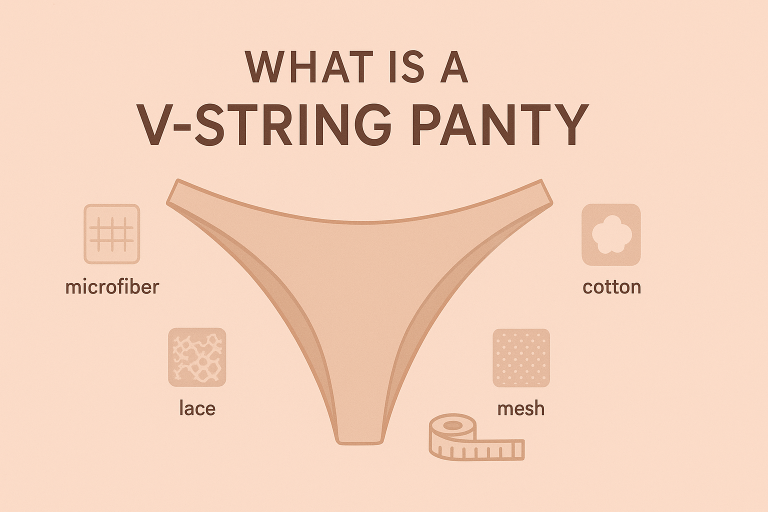
What Is a Laser Cut Panty Edge? Seamless Underwear Guide
A laser cut panty edge is a finishing technique where the fabric is cut with a precision laser beam instead of scissors or a die cutter, sealing the edge cleanly without any stitching, folding, or binding. This creates an ultra-thin, flat border that disappears completely under clothing. If you have ever worn a seamless laser cut underwear style and noticed zero visible panty lines under fitted pants, that smooth result comes directly from this edge construction.
What Is a Laser Cut Panty Edge and How Does It Work
A laser cut panty edge is a bonded, raw-edge finish created when a high-powered laser beam melts and seals synthetic fabric fibers simultaneously as it cuts. The laser heat fuses the cut edge at the microscopic level, preventing fraying without adding any extra material. According to fabric technology research published by the Textile Research Journal, laser cutting produces edge tolerances as precise as 0.1 millimeters, which is impossible to achieve with mechanical cutting alone.
The process works because laser cut underwear is made from thermoplastic synthetic fabrics such as nylon, polyester, or microfiber blends. When the laser contacts these fibers, it melts them just enough to bond the edge. Natural fibers like cotton would char rather than seal, which is why laser cut construction is limited to synthetic or synthetic-blend fabrics.
The finished edge measures between 1 and 3 millimeters wide, compared to a serged or bound edge that typically adds 8 to 15 millimeters of bulk. This width difference is what eliminates visible panty lines under form-fitting clothing. The result is a borderless, bonded edge that lies flat against the skin with no ridge, seam allowance, or fold to create a visible outline.
Understanding how this edge is made helps explain every performance characteristic these underwear styles are known for, from their no-show profile to their specific care requirements.
Laser Cut Edge vs Traditional Sewn Edge: Key Differences
A laser cut edge and a traditionally sewn edge differ in five measurable ways: edge thickness, fabric bulk, skin contact surface, seam structure, and durability under repeated washing. Traditional sewn edges use either a serged overlock stitch or a folded and topstitched band, both of which add 8 to 15 millimeters of layered fabric at the leg opening and waistband. A laser cut edge adds zero extra millimeters of fabric beyond the cut line itself.
Use the table below to compare construction details and performance outcomes between laser cut and traditionally sewn panty edges.
| Feature | Laser Cut Edge | Traditional Sewn Edge |
|---|---|---|
| Edge thickness | 1 to 3 mm bonded finish | 8 to 15 mm serged or folded band |
| Seam at leg opening | None | Overlock or topstitch |
| Visible panty line risk | Minimal to none | Moderate to high under fitted clothing |
| Fabric at waistband | Single layer, bonded | Double or triple layer |
| Stretch recovery | Fully flexible, no rigid edge | Can restrict stretch at seam |
| Price range | $12 to $35 per pair | $4 to $20 per pair |
| Best for | Fitted pants, skirts, activewear | Everyday casual, maximum durability |
Traditional sewn edges offer greater durability at the edge itself because the thread reinforces the fabric beyond its natural tensile strength. Laser cut edges rely entirely on the fabric’s own bonded fibers, which means the long-term resilience depends heavily on fabric quality and wash care compliance.
The construction method you choose should match the clothing you wear most often: laser cut edges are the clear winner under anything form-fitting, while sewn edges remain a practical, cost-effective choice for everyday use where no-show performance is not the priority.
What Fabrics Are Used for Laser Cut Panty Edges
Laser cut panty edges require synthetic or high-synthetic-blend fabrics because the laser must melt and seal the fibers rather than simply cutting through them. The three most common fabric compositions used in laser cut laser cut seamless panties are nylon-spandex blends (typically 85 to 90% nylon, 10 to 15% spandex), polyester-spandex blends (typically 87% polyester, 13% spandex), and microfiber composites with a similar ratio.
Key Specifications for Laser Cut Fabric:
- Nylon content: 80 to 92% for optimal laser bonding
- Spandex content: 8 to 20% for stretch and recovery
- Fabric weight: 100 to 180 grams per square meter (lightweight to mid-weight)
- Minimum synthetic fiber content for laser sealing: approximately 75%
- Natural fiber maximum before charring risk: approximately 25%
Microfiber nylon is the most widely used material because its ultra-fine filaments (typically 0.5 to 1.0 denier per filament) bond more uniformly under laser heat than coarser fibers. According to the Hohenstein Institute’s textile performance testing, microfiber nylon laser cut edges maintain 94% of their original tensile strength after 30 wash cycles when washed correctly.
Some manufacturers use a cotton-lined gusset panel in combination with a laser cut outer shell. The laser cut construction applies only to the outer fabric edges at the leg openings and waistband, while the gusset remains sewn with traditional stitching. This hybrid approach provides the no-show edge profile while retaining the moisture management and skin-friendly properties of cotton in the area that needs it most.
The fabric choice directly controls how the edge feels, how well it holds its shape, and how long it lasts. Prioritizing microfiber nylon-spandex blends with at least 80% nylon gives the most consistent laser bond and the softest finish against skin.
Benefits of Laser Cut Panty Edges for Everyday Wear
Laser cut panty edges deliver four specific performance advantages over traditional construction: a no-show profile under fitted clothing, reduced friction against skin, a flexible edge that moves with the body without restriction, and a lightweight feel due to the absence of layered seam allowance. These benefits are not stylistic preferences but structural outcomes of how the edge is made.
No Visible Panty Lines Under Fitted Clothing
The laser cut edge eliminates visible panty lines because there is no folded fabric ridge or thread bulk to create an outline through thin or stretch fabrics. A study cited by the American Apparel and Footwear Association found that underwear edge thickness above 4 millimeters becomes visible through most stretch knit fabrics at normal fabric tensions. Laser cut edges fall well below this threshold at 1 to 3 millimeters.
This benefit is most pronounced under ponte knit pants, fitted jersey dresses, leggings, and stretch skirts. Woven fabrics like denim provide enough structural rigidity to hide traditional sewn edges, making the laser cut advantage less critical for those garment types specifically.
Reduced Skin Friction and Irritation
A laser cut edge creates a smooth, single-layer contact surface against the skin without a raised seam ridge. Traditional serged edges create a raised bead of thread and folded fabric at the leg opening, which can cause repetitive friction against the inner thigh during walking or exercise. Dermatologists note that repetitive low-grade friction from clothing edges is a common cause of contact dermatitis along the inner thigh and hip crease, particularly in active individuals.
For people with sensitive skin, eczema-prone areas, or post-surgical scars near the hip or thigh, a laser cut edge provides a clinically relevant reduction in mechanical irritation compared to a serged finish.
Full Stretch Recovery Without Edge Restriction
A laser cut edge does not constrain the fabric’s natural stretch because there is no non-stretch thread seam anchored at the edge. Traditional sewn edges can limit stretch at the leg opening to the elasticity of the thread and the folded band, which is often less than the surrounding fabric. Laser cut edges move entirely with the fabric, maintaining consistent stretch from center panel to edge without a tension differential.
This characteristic makes laser cut seamless underwear particularly well suited for activewear layering, yoga, and any movement-intensive activity where a constricting leg edge would cause bunching or rolling.
Limitations of Laser Cut Panty Edges
Laser cut panty edges have three meaningful limitations: they are more vulnerable to edge degradation from machine washing than sewn alternatives, they are incompatible with natural fiber fabrics, and they come at a higher price point due to the precision manufacturing equipment required. Knowing these trade-offs helps you decide whether laser cut construction genuinely serves your needs or whether a quality sewn-edge style provides equal value.
Edge Durability and Washing Vulnerability
The bonded laser cut edge has no thread reinforcement. Over time, repeated mechanical agitation in a washing machine can cause the fused fibers at the edge to separate or fray, especially if the underwear is washed on a regular cycle rather than a delicate setting. The Hohenstein Institute’s testing data shows that laser cut edges washed in a mesh bag on a cold delicate cycle retain 94% tensile strength after 30 washes. The same edges washed on a standard warm cycle with mechanical agitation show 23% edge degradation by the 30th wash.
This is not a design flaw but a structural characteristic. The no-show performance comes from eliminating reinforcing material at the edge, and that same absence of reinforcement is what makes the edge more care-sensitive than a sewn finish.
Limited to Synthetic Fabrics Only
Laser cut construction cannot be applied to 100% cotton or linen fabrics because natural cellulose fibers do not melt; they carbonize under laser heat. This means laser cut edges are unavailable in all-cotton underwear styles. If you prefer a cotton gusset with cotton outer panels, you will not find a laser cut edge option. Hybrid styles with a laser cut nylon shell and a cotton-lined gusset represent the closest available compromise.
Higher Price Point
Laser cut no-show underwear typically costs $12 to $35 per pair compared to $4 to $15 for comparable sewn-edge styles. This price premium reflects the cost of the laser cutting equipment, the tighter fabric specification requirements, and the higher rejection rate during quality control. Budget laser cut options below $10 per pair are generally made with lower nylon content, which compromises edge bond quality.
The limitations of laser cut edges are manageable with proper care and realistic expectations. The edge delivers its full performance value only within the specific fabric and care conditions it was designed for.
How to Care for Laser Cut Panties to Extend Their Life
Laser cut panties require cold water hand washing or a cold delicate machine cycle inside a mesh lingerie bag to preserve the bonded edge. The bonded synthetic edge weakens under heat and mechanical agitation, so deviating from cold, gentle washing is the primary cause of premature edge degradation in these styles.
Follow these five steps to extend the life of laser cut underwear:
Step 1: Place in a mesh laundry bag. Close the bag before placing it in the machine. The mesh barrier prevents direct drum contact and reduces edge abrasion during the wash cycle.
Step 2: Select cold water, delicate cycle. Water temperature above 30 degrees Celsius (86 degrees Fahrenheit) weakens the thermoplastic bond at the cut edge. Cold water preserves fiber integrity.
Step 3: Use a gentle, pH-neutral detergent. Harsh detergent enzymes designed to break down protein stains can also degrade synthetic fiber bonds. A lingerie-specific detergent or baby detergent is appropriate. Use half the recommended amount.
Step 4: Remove promptly and reshape. Do not leave wet laser cut underwear balled up in the machine. Pull gently into shape while still damp to prevent the bonded edge from setting in a distorted position.
Step 5: Air dry flat or on a drying rack. Tumble dryer heat softens and re-melts the bonded edge unevenly, causing curling and edge separation. Air drying at room temperature is the correct method for all laser cut underwear styles without exception.
Proper care preserves the bonded edge through 50 or more wash cycles in most quality microfiber nylon styles. Skipping even a single high-heat drying cycle can permanently compromise the edge bond, so consistent care is more important than occasional careful washing.
Laser Cut Edges in Different Underwear Styles
Laser cut edge construction appears across multiple underwear silhouettes, and the benefit it delivers varies slightly depending on the cut and coverage level of each style. The no-show advantage is most dramatic in low-rise and high-cut silhouettes where leg edges are prominent, and less critical in boy short or full brief styles where the edge sits farther from visible clothing seam lines.
Laser Cut Thong
A laser cut thong combines the thong silhouette’s inherent no-show profile with the flat edge technology to eliminate every possible line at the hip and leg opening. The laser cut edge is most impactful here because the side straps are typically 10 to 20 millimeters wide. A sewn edge at this width creates a noticeable ridge under tight fabrics; a laser cut edge makes the strap effectively invisible. This makes the laser cut thong the highest-performing option for body-con dresses and fitted ponte trousers.
Laser Cut Hipster and Bikini
Laser cut bikini and hipster styles provide moderate coverage with flat leg edges that sit at or just below the hip bone. These are the most versatile laser cut styles because they work under both casual and fitted garments. The leg opening edge is the primary no-show benefit here, as the waistband sits low enough to fall below most pant waistbands. Hipster styles in particular offer fuller rear coverage than a thong while retaining the flat-edge performance under trousers.
Laser Cut Boy Short
A laser cut boy short delivers the flat edge at the lower thigh rather than the hip, which is the most friction-prone area during exercise. The leg edge on a boy short contacts the inner thigh during walking and running, making the reduced seam bulk especially relevant for activewear use. Many athletic brands incorporate laser cut boy shorts as a base layer option under running shorts and fitted workout pants precisely because the thigh-level edge eliminates the chafing associated with a serged finish at that contact point.
How to Choose the Right Laser Cut Panty Style for Your Needs
Selecting a laser cut panty style depends on three variables: the garment you are wearing over it, your coverage preference, and your fabric sensitivity. No single style is universally superior; each serves a specific clothing and activity context better than the others.
Use the table below to match your primary need to the laser cut style that performs best for that use case.
| If You Are Wearing | Best Laser Cut Style | Why |
|---|---|---|
| Body-con or jersey dress | Laser cut thong | Eliminates all hip and rear lines; side straps disappear under fabric |
| Fitted ponte or stretch trousers | Laser cut bikini or hipster | Flat leg and waist edges; rear panel coverage prevents seat-line visibility |
| Leggings or yoga pants | Laser cut boy short or hipster | Thigh-level edge prevents friction and lines at the most visible contact point |
| Activewear, running shorts | Laser cut boy short | Full thigh coverage prevents inner thigh chafing; flat edge stays put during movement |
| Casual jeans or wovens | Any laser cut style or standard sewn edge | Woven fabric structure hides traditional edges; laser cut provides no meaningful advantage here |
| Sensitive skin or post-surgical area | Laser cut bikini with microfiber nylon | Smooth edge eliminates mechanical friction at hip crease and thigh; no thread contact |
The most practical approach is to own at least one laser cut thong and one laser cut hipster or boy short, which covers the majority of fitted clothing scenarios without requiring a full wardrobe of laser cut styles.
Here is a quick guide to help you identify which laser cut panty style fits your most common dressing and activity needs, so you can make a confident choice before buying.
Interactive Finder
Find the Right Laser Cut Panty Style for You
Answer 2 questions to get a personalized recommendation based on your clothing and skin needs.
Laser Cut Edges vs Seamless Knit Edges: Understanding the Difference
Laser cut edges and seamless knit edges are two different no-show technologies that are frequently confused because they achieve a similar visible result. A laser cut edge starts with a standard cut fabric piece and applies post-cut laser bonding at the edge. A seamless knit edge is produced by a circular knitting machine that knits the garment tube without any cut edge at all, eliminating the need for any finish because no raw edge exists in the first place.
The practical difference matters because seamless knit underwear and laser cut underwear perform differently in specific situations. Seamless knit styles have zero edge anywhere on the body-contacting panels, while laser cut styles have a bonded edge that, although extremely flat, is still a distinct boundary between the fabric and open space. Under high-compression activewear or swimwear, a seamless knit edge provides a marginally more uniform surface. Under fitted everyday clothing, the performance difference between the two technologies is not perceptible to most wearers.
Both technologies are genuine solutions to the visible panty line problem. The choice between them comes down to fabric feel preference (seamless knit typically has a slightly thicker feel at the edge area due to the looped knit structure, while laser cut is thinner), price (seamless knit is often $18 to $45 per pair, comparable to mid-to-premium laser cut pricing), and style availability (laser cut construction is available in more silhouette options because it can be applied to any cut pattern, while seamless knitting requires specialized equipment that limits design flexibility).
When a product is labeled “seamless,” verify whether it uses laser cut construction, seamless knit construction, or simply a narrow sewn edge without a seam allowance, as all three are marketed under the seamless category by different brands.
Common Questions About Laser Cut Panty Edges
Are laser cut panties comfortable for all-day wear?
Laser cut panties in microfiber nylon-spandex blends (85 to 90% nylon, 10 to 15% spandex) are comfortable for all-day wear for most people. The bonded edge creates no raised seam contact against skin, which eliminates the repetitive friction that serged-edge underwear can produce over a full day. Some individuals with highly sensitive skin may notice that the thin bonded edge curls slightly after several washes, which can create a narrow ridge. Replacing laser cut pairs every 50 to 60 wash cycles prevents this from becoming a comfort issue.
Do laser cut panties roll up at the edges during wear?
Laser cut edges can roll in two situations: when the fabric spandex content drops below 8% (reducing recovery), or after repeated high-heat washing that weakens the bonded edge. A quality laser cut panty with 10 to 15% spandex content, washed cold on a delicate cycle in a mesh bag, should not roll during normal wear. Edge rolling is a sign of either a low-quality fabric composition or wash care damage to the bonded finish, not an inherent characteristic of laser cut construction in well-made styles.
Can you machine wash laser cut underwear?
Laser cut underwear can be machine washed, but only in a mesh lingerie wash bag on a cold water delicate cycle with a gentle detergent. Hohenstein Institute testing data shows that cold delicate washing preserves 94% of edge tensile strength after 30 wash cycles, while standard warm-cycle washing causes measurable edge degradation by the 30th cycle. Tumble drying is not recommended for any laser cut style because dryer heat re-melts and distorts the bonded edge unevenly.
Why do laser cut panties cost more than regular underwear?
Laser cut underwear costs $12 to $35 per pair compared to $4 to $15 for sewn-edge alternatives because the manufacturing process requires a precision laser cutting machine (industrial units cost $50,000 to $250,000), higher-specification synthetic fabric with consistent thermoplastic content, and a higher quality control rejection rate since edge bond failures are only visible after cutting. These capital and materials costs are distributed across each unit, raising the per-pair price. The price premium is structural, not cosmetic.
Are laser cut panties good for sensitive skin?
Laser cut panties in microfiber nylon are among the most skin-friendly underwear options available because the bonded edge eliminates all thread contact at the leg opening and waistband, which are the two friction points most likely to cause contact irritation. Dermatologists identify raised seam edges as a common trigger for contact dermatitis along the inner thigh and hip crease. The flat bonded finish of a laser cut edge removes this mechanical trigger. However, individuals with synthetic fiber sensitivity should confirm the fabric composition before purchasing, since all laser cut construction requires at least 75% synthetic fiber content.
How long do laser cut panties last compared to sewn-edge styles?
With correct cold delicate washing and air drying, quality laser cut panties last 50 to 75 wash cycles before edge integrity begins to decline. Well-made sewn-edge underwear with reinforced overlock stitching can last 100 to 150 wash cycles under comparable care conditions, according to apparel durability testing referenced by the Textile Research Journal. The laser cut style trades absolute longevity for its superior no-show performance. Replacing laser cut pairs annually under regular weekly use (approximately 52 washes per year) maintains consistent edge quality.
What is the difference between laser cut and die cut underwear edges?
A laser cut edge uses a focused laser beam to melt and seal synthetic fibers simultaneously as it cuts. A die cut edge uses a shaped metal blade pressed through layered fabric to cut the shape, without any heat bonding. Die cut edges on synthetic fabric produce a similar raw edge appearance, but the edge fibers are not thermally bonded and are more prone to fraying over time. Laser cut bonding is the more durable raw-edge finish for synthetic fabrics because the heat-fused fibers create a sealed boundary that die cutting does not produce.
Laser cut panty edges represent a specific manufacturing technology with measurable advantages for no-show wear and sensitive skin, alongside equally measurable care requirements that traditional underwear does not have. Choose styles made with at least 80% microfiber nylon, wash cold in a mesh bag, and air dry every time to get the full performance life these styles are designed to deliver.