How to Know If Underwear Is Too Loose: Find Perfect Fit
Underwear that is too loose causes discomfort, visible bunching under clothing, and inconsistent coverage throughout the day. Recognizing the signs early saves you from wardrobe frustration and helps you find the right fit the first time. This guide covers every physical sign, measurement check, and fabric behavior test you need to identify loose underwear with confidence.
Why Underwear Fit Matters More Than You Think
Loose underwear creates friction, excess fabric movement, and rolling waistbands that disrupt your daily routine. A 2018 study published in the Journal of Textile Science and Engineering found that poorly fitting undergarments increased skin irritation risk by 34% compared to properly sized garments.
Underwear is a foundational garment, meaning every other layer you wear sits on top of it. When the foundation shifts, twists, or bunches, it affects the fit and appearance of your pants, skirts, and dresses.
The right fit keeps the waistband flat against your skin, the leg openings smooth without cutting in or gaping, and the seat panel fully covering without sagging. Any deviation from these three markers signals a sizing or fit problem worth addressing.
Getting this right matters regardless of underwear style. Whether you wear briefs, bikinis, boyshorts, or thongs, the same fit principles apply across all cuts.
Properly fitted underwear stays in place during walking, sitting, bending, and exercise without requiring manual adjustment. If you adjust your underwear more than once or twice per day, the fit is almost certainly off.
The Most Common Physical Signs Your Underwear Is Too Loose
The clearest indicator of loose underwear is visible fabric excess, either bunching at the seat, gaping at the leg openings, or a waistband that folds over or slides down during movement. Each sign points to a different fit failure and a different solution.
The Waistband Rolls, Folds, or Slides Down
A waistband that folds over itself or slides below your natural waist is too large for your body. The waistband on properly fitting underwear sits flat, stays level, and does not require pulling up throughout the day.
Rolling occurs when the elastic circumference exceeds your hip or waist measurement by more than 1 to 2 inches. Sliding happens when the waistband diameter is large enough to travel downward under clothing friction during movement.
Run one finger along the inside of the waistband. If you can fit more than two fingers comfortably without stretching, the band is too loose. One finger with slight stretch is the correct fit standard used by most seamless underwear manufacturers.
The Seat Panel Sags or Bunches Behind You
A sagging seat is one of the most reliable signs that underwear is too large overall. The seat panel should sit smoothly against your body with no excess fabric between the garment and your skin.
Pinch the fabric at the center back. If you can gather more than half an inch of fabric without stretching the garment, the seat is too large. This excess fabric causes visible lines under fitted clothing and bunches during sitting.
Sagging also creates chafing because the extra fabric rubs against itself and against your skin. According to fit guidelines published by the American Apparel and Footwear Association, no more than 0.25 to 0.5 inches of ease should exist at the seat panel of fitted underwear.
Leg Openings Gap Away From Your Body
Leg openings that gap, fall away from your thigh, or create a visible pocket of space between the elastic and your skin are too large. Correctly sized leg elastics lie flat against the thigh without digging in or floating away.
Stand in front of a mirror and check whether the leg elastic maintains contact with your skin at all points of the circumference. A gap of any size at the inner thigh or side hip indicates the leg opening circumference is too large for your measurements.
Gaping leg openings allow underwear to shift inward during walking, which creates the bunching and wedging sensation many people mistakenly attribute to the wrong cut rather than the wrong size.
You Constantly Pull Your Underwear Up or Adjust It
Needing to adjust your underwear more than once per day is a direct sign of poor fit. Properly fitted underwear stays in position through a full day of normal activity including sitting, walking, and bending, without manual repositioning.
Track how many times you adjust over one day. If the number exceeds two adjustments, the fit is not correct. Adjustments are required when the garment has more material than your body needs to fill it, causing it to drift from its intended position.
Frequent adjustment is also a sign that the underwear fabric has stretched beyond its original dimensions from repeated washing, which means the garment has reached the end of its functional life even if it shows no visible damage.
How to Measure Yourself to Confirm the Fit Problem
Measuring your body and comparing the result to the garment’s actual dimensions confirms whether the looseness is a sizing issue or a fabric stretch issue. Use a flexible fabric measuring tape and measure in the morning before dressing for the most accurate baseline numbers.
How to Measure Your Hip Circumference for Underwear Sizing
Stand with your feet together and wrap the measuring tape around the fullest part of your hips, typically 7 to 9 inches below your natural waist. Keep the tape parallel to the floor and snug without compressing the skin.
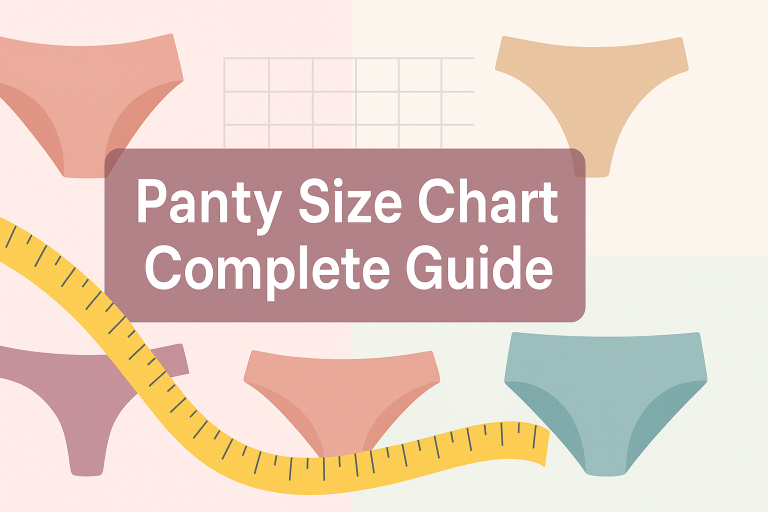
Record the measurement in inches. Most underwear brands size their hip range as follows: XS covers 33 to 35 inches, S covers 35 to 37 inches, M covers 37 to 39 inches, L covers 39 to 42 inches, and XL covers 42 to 45 inches. These ranges vary by brand, so always check the specific size chart for the brand you are wearing.
If your hip measurement falls at the lower end of your size range or below it, the underwear will have excess room. Sizing down one size is often the correct adjustment for hip measurements that fall more than one inch below the range midpoint.
How to Measure Your Natural Waist for Waistband Fit
Measure your natural waist at the narrowest point of your torso, typically just above your belly button. Keep the tape snug but not tight, with room to insert one finger between the tape and your skin.
Compare this number to the waistband measurement of your underwear. Lay the underwear flat without stretching and measure the unstretched waistband from one side to the other, then double that number for the full circumference.
The unstretched waistband circumference should be 3 to 5 inches smaller than your natural waist measurement for woven-blend fabrics, and 4 to 6 inches smaller for high-stretch fabrics like modal, nylon, and spandex blends. If the gap is smaller than this, the waistband has insufficient recovery tension to stay in place.
How to Test the Garment’s Actual Elastic Stretch and Recovery
Stretch the waistband to its maximum without forcing it, then release it and watch how quickly it returns to its original length. This is the elastic recovery test, and it tells you whether the problem is a size issue or an elastic degradation issue.
Elastic that returns immediately to its original length within one second of release is in good condition. Elastic that takes two or more seconds to recover, or that does not fully return to its original length, has degraded and will no longer hold the garment in position regardless of your size.
According to textile durability standards published by ASTM International, intimate apparel elastic should maintain at least 90% of its original recovery force after 50 wash cycles. Elastic below this threshold creates the same symptoms as a too-large garment even when the size is technically correct.
Style-by-Style Fit Checks for Different Underwear Cuts
Each underwear cut has its own specific fit markers because the geometry of each style distributes fabric differently across the body. Use the style-specific check that matches what you are wearing before concluding that a garment is the wrong size.
Briefs and High-Waist Underwear Fit Checks
High-waist briefs should sit at or above the belly button with a flat waistband that does not roll or pinch. The side panels should lie flat with no horizontal lines from excess fabric pulling inward.
For full brief styles, the front rise, which is the distance from the center front waistband to the crotch seam, should not bag or create a pouch of extra fabric. A front rise that creates visible excess indicates the overall size is too large for your torso length and hip width combination.
Key Specifications for full brief underwear: Waistband sit point at or above belly button. Side panel width 2.5 to 4 inches. Front rise 9 to 11 inches (standard), 10 to 13 inches (high-waist). Stretch fabric (modal or cotton-spandex blend). Seat panel fully covering without sagging below the lowest point of the buttocks.
Bikini and Low-Rise Underwear Fit Checks
Bikini underwear sits 1 to 3 inches below the natural waist, and the side bands should remain parallel to the floor without riding up or sliding down during movement. Side bands that twist or fold indicate the hip-to-waist ratio of the garment does not match your body’s proportions.
The leg openings on bikini cuts sit higher on the hip than brief cuts, so gaping is more common at the inner thigh junction. Check this specific point when evaluating whether the leg elastic is the correct size.
If the leg opening lies flat at the outer hip but gaps at the inner thigh, the problem is often cup size proportioning rather than overall size, and a style with a shorter crotch panel or a different leg angle may solve the issue without changing the numeric size.
Boyshort Underwear Fit Checks
Boyshort underwear has the largest fabric surface area of any underwear cut, which makes loose fit more immediately visible. The leg bands should grip the upper thigh without rolling inward or gaping outward at any point along their circumference.
Boyshorts that are too large create a pronounced bunching effect at the inner thigh because the excess fabric has nowhere to lie flat. This bunching is often mistaken for the wrong cut rather than the wrong size, causing people to abandon the style rather than simply sizing down.
The waistband on boyshorts should also stay above the hip curve without creeping downward. Because boyshorts have a longer torso-to-leg ratio than other cuts, the waistband has more distance to travel if the elastic tension is insufficient, making waistband sliding more pronounced in loose boyshorts than in any other style.
Thong Underwear Fit Checks
A thong that is too large creates visible side band bunching and a front panel that gathers rather than lying flat. The waistband check is identical to other styles: no more than two fingers of slack without stretching.
The back strap on a thong should sit centered in the body’s midline without shifting left or right during movement. A strap that consistently drifts to one side may indicate the waistband is too large and is rotating around the body due to insufficient grip.
Front triangle panels that create a visible pouch or excess fold indicate the gusset length is too long for your torso, which is a separate fit issue from circumference sizing and is best addressed by trying a low-rise version of the same style.
The Fabric Test: How Material Type Affects Loose Fit Symptoms
Different fabric compositions show loose fit symptoms differently. Knowing which material you are dealing with helps you interpret the fit signs correctly and determine whether the issue is size, elastic condition, or fabric behavior.
Cotton Underwear and Fit Degradation
Cotton underwear is the most prone to size growth over time because cotton fibers absorb water during washing and then relax slightly larger than their original dimension after drying. This effect compounds with each wash cycle.
Cotton underwear typically grows 5 to 10% in circumference over 30 to 50 wash cycles, according to fabric behavior data published by the Textile Research Journal in 2017. This growth is permanent and cannot be reversed by washing in cold water or air drying alone.
If your cotton underwear fits correctly when new but becomes loose after several months of regular use, the fabric has stretched beyond its functional range and replacement is the correct solution rather than a different size.
Modal, Nylon, and Spandex Blend Underwear
Synthetic and semi-synthetic blends, including modal, nylon, and spandex blend underwear, are more dimensionally stable than pure cotton but degrade differently. High heat from machine drying breaks down the spandex fibers, which reduces elastic recovery without visibly changing the fabric appearance.
Underwear made from 85 to 92% modal or nylon with 8 to 15% spandex maintains its original dimensions for approximately 40 to 60 wash cycles when machine washed in cold water and air dried. Machine drying on medium or high heat reduces this lifespan to 20 to 35 cycles.
The symptom of heat-degraded spandex is a garment that stretches easily but does not spring back, which creates a loose feel even though the garment dimensions have not changed significantly. This is different from a size problem and is identifiable by the elastic recovery test described in the measurement section above.
Lace Underwear Fit Specifics
Lace underwear uses lace waistbands and panels that behave differently from knit elastic bands. Lace waistbands have less inherent stretch than knit elastic, so the fit tolerance is tighter, meaning a half-inch difference in waistband circumference is more noticeable in lace than in cotton-spandex.
Lace panels also show loose fit symptoms as visible horizontal wrinkling or puckering across the front panel. This wrinkling does not occur in correctly sized lace underwear because the panel is engineered to lie flat under its specific tension at the labeled size.
Use the table below to match your fabric type to the most diagnostic fit test for that material.
| Fabric Type | Primary Loose Fit Symptom | Best Diagnostic Test | Typical Lifespan |
|---|---|---|---|
| 100% Cotton | Seat sagging after washing | Fabric pinch at center back | 30 to 50 wash cycles |
| Cotton-Spandex Blend | Waistband rolling | Two-finger waistband test | 50 to 75 wash cycles |
| Modal-Spandex Blend | Slow elastic recovery | Elastic recovery test | 40 to 60 wash cycles |
| Nylon-Spandex Blend | Leg opening gaping | Standing mirror leg check | 50 to 80 wash cycles |
| Lace | Front panel horizontal wrinkling | Mirror front panel inspection | 25 to 40 wash cycles |
Matching your fabric type to the correct diagnostic test gives you a clearer answer about whether you need to size down or replace the garment entirely.
Loose Underwear vs. Wrong Cut: How to Tell the Difference
Many fit problems that appear to be a size issue are actually a cut issue, meaning the underwear style’s geometry does not match your body’s proportions regardless of the numeric size. Distinguishing between these two causes determines whether you need to size down or switch styles.
A size problem produces the same symptom (excess fabric) consistently at the same location, such as always at the waistband or always at the seat. A cut problem produces fit issues that shift depending on your body position, such as a leg opening that fits correctly while standing but gaps while sitting.
Use the table below to match your symptom location to its most likely cause.
| Symptom Location | Most Likely Cause | Recommended Fix |
|---|---|---|
| Waistband rolls or slides all day | Waistband circumference too large | Size down one size |
| Seat sags constantly | Overall size too large | Size down one size |
| Leg opening gaps only while sitting | Wrong leg angle for your hip shape | Try a different cut at the same size |
| Front panel bunches after washing | Fabric has stretched from washing | Replace garment, use cold wash |
| Side bands roll inward at waist | Hip-to-waist ratio mismatch | Try a style with wider side bands |
| Gaping at all points simultaneously | Elastic fully degraded | Replace garment |
Identifying whether the issue is size, cut, or elastic degradation before purchasing a replacement prevents repeating the same fit problem.
Here is a simple tool to help you identify which specific fit problem you are experiencing and what to do about it.
Interactive Tool
Find Out Why Your Underwear Feels Too Loose
Answer 2 questions to get a specific diagnosis and fix.
How Washing and Care Habits Cause Underwear to Become Loose Over Time
Incorrect washing is the leading preventable cause of underwear becoming loose before it should. The American Textile Manufacturers Institute notes that heat and mechanical action from machine washing are the two primary factors that degrade elastic fibers in intimate apparel.
Washing underwear in hot water (above 104 degrees Fahrenheit) accelerates spandex and elastane fiber breakdown by a factor of two to three compared to cold water washing, according to textile care research published in the International Journal of Fashion Design in 2019.
Machine drying on any heat setting compounds this effect. The combination of hot water washing followed by machine drying reduces functional elastic life from an expected 50 to 75 wash cycles to 20 to 30 cycles in spandex-blend fabrics. Air drying at room temperature is the single most effective care step for extending underwear lifespan.
Use a mesh lingerie wash bag when machine washing to reduce mechanical friction against the waistband and leg elastics. Wash underwear with a delicate-formula detergent formulated for fine fabrics, as standard detergents with optical brighteners can degrade elastic fibers over time.
Correct washing habits extend the lifespan of properly fitting underwear and prevent the elastic degradation that mimics a loose-size problem.
When to Size Down vs. When to Replace Your Underwear
The decision to size down or replace depends entirely on whether the looseness is a sizing issue or a fabric degradation issue. Sizing down on a degraded garment will not resolve the fit problem because the elastic will continue to lose recovery regardless of the size label.
Size down when the garment is newer than 6 months, passes the elastic recovery test (returns to original length within 1 second), and shows excess fabric at the waistband or seat that was present from the first time you wore it.
Replace the garment when it is older than 6 to 12 months, fails the elastic recovery test, or became loose gradually over time rather than fitting poorly from the start. A garment that fit correctly when new and has since become loose is a replacement candidate, not a size-down candidate.
Use the table below to match your situation to the correct action.
| Situation | Garment Age | Elastic Recovery | Correct Action |
|---|---|---|---|
| Loose from first wear | New | Good (under 1 second) | Size down one size |
| Became loose after 3 to 6 months | Moderate | Slow (1 to 2 seconds) | Replace, adjust wash routine |
| Became loose after 6 to 12 months | Older | Poor (over 2 seconds) | Replace immediately |
| Loose and fabric is visibly thin | Any | Any | Replace immediately |
| Loose only after a weight change | Any | Good (under 1 second) | Re-measure and size down |
Matching your situation to the right action prevents the frustration of purchasing the wrong solution and ensures your next pair fits correctly from day one.
How Body Changes Affect Underwear Fit
Body weight fluctuations, hormonal changes, and postpartum recovery all change the measurements that determine underwear sizing. A pair that fit correctly at one point in your life may become loose without any change in garment condition if your hip or waist measurements have decreased.
A change of 5 to 8 pounds in body weight typically corresponds to a 0.5 to 1 inch change in hip circumference, according to body composition research published in the Obesity Research journal. This measurement shift can move your sizing out of the labeled range and into the size below.
Postpartum body changes also affect underwear fit in non-linear ways. Hip bones may narrow in the months following delivery while abdominal skin remains loose, creating a situation where a smaller waist size coexists with temporarily different soft-tissue volume at the seat. This is why many postpartum women find that their pre-pregnancy size either fits at the waist but sags at the seat, or fits at the seat but is too tight at the waist.
Re-measure your hip and waist circumference any time you notice underwear that previously fit well has become loose. Do not assume the garment has stretched if you have not taken new measurements, as body measurement changes and elastic degradation produce identical symptoms but require different solutions.
A flexible body measuring tape costs under five dollars and removes all guesswork from the process of identifying whether loose fit is a body change issue or a garment condition issue.
Step-by-Step Process: How to Diagnose Loose Underwear Fit in 5 Minutes
Use this five-step process to identify the specific cause of your loose fit and determine the correct solution before purchasing a replacement.
Here is a step-by-step process you can use to diagnose loose underwear fit in under five minutes.
Step-by-Step Guide
How to Diagnose Loose Underwear Fit
5 steps. Takes approximately 5 minutes. No tools needed except a measuring tape for Step 3.
Perform the two-finger waistband test
Insert two fingers into the waistband without stretching it. If both fingers fit comfortably with room to spare, the waistband is too large. One finger with slight stretch is the correct tension.
Pinch the center back seat panel
Pinch the fabric at the center back without stretching. If you gather more than half an inch of fabric, the seat is too large. Less than half an inch of ease is the correct amount at the seat panel.
Perform the elastic recovery test
Stretch the waistband to its maximum and release. Time the return to original length. Under 1 second means the elastic is in good condition. Over 1 second means elastic degradation, and replacement is needed regardless of size.
Check leg opening contact in a mirror
Stand in front of a mirror and check that the leg elastic maintains full contact with your thigh at all points. Any gap greater than a pencil’s width confirms the leg opening is too large or the cut angle does not match your hip shape.
Measure your hip circumference and compare to the size chart
Using a flexible measuring tape, measure your hip circumference at the fullest point. Compare this number to the brand’s size chart. If your measurement falls below the midpoint of your labeled size range, size down one size for the replacement garment.
Running through all five steps takes under five minutes and gives you a specific, actionable answer rather than a general sense that something is wrong.
Frequently Asked Questions About How to Know If Underwear Is Too Loose
How many times a day is it normal to adjust your underwear?
Adjusting underwear more than once or twice per day indicates a fit problem. Properly fitted underwear stays in position through a full day of normal activity, including sitting, walking, bending, and light exercise, without requiring manual repositioning. If you are adjusting more than twice per day, the waistband circumference is too large, the elastic has degraded, or the cut geometry does not match your body proportions.
Can underwear that fits correctly in the store become too loose at home?
Underwear can feel looser at home than in a fitting room for two reasons. First, retail environments are climate-controlled and stable, while body measurements fluctuate by up to 0.5 to 1 inch throughout the day due to fluid retention and activity level. Second, cotton-blend underwear stretches slightly when body-warmed over several hours of wear. The two-finger waistband test and elastic recovery test performed after 2 to 4 hours of wear give a more accurate assessment of fit than a brief fitting room check.
Does all-day sitting make underwear feel looser than it actually is?
Extended sitting redistributes body mass and changes the geometry of how underwear sits on the body. A garment that fits correctly while standing may feel slightly looser in the seat while sitting because the fabric is no longer in full contact with the skin when the buttocks flatten against a chair. This is normal and does not indicate a fit problem unless the garment also fails the two-finger waistband test and the seat pinch test while standing.
Is there a standard industry test for underwear elastic tension?
ASTM International, the global standards organization, publishes Test Method D4964, which covers the tension and elongation properties of elastic fabrics used in intimate apparel. According to ASTM D4964, intimate apparel elastic should maintain at least 90% of its original recovery force after 50 wash cycles under standard conditions. Consumer-level testing, such as the at-home elastic recovery test described above, is a practical approximation of this standard and gives reliable results for everyday garment assessment.
What is the correct number of underwear pairs to own to extend each pair’s lifespan?
Rotating between 7 to 14 pairs of underwear distributes wash cycles evenly and extends each garment’s functional lifespan significantly. A single pair worn daily and washed after each wear accumulates 52 wash cycles per year. Rotating across 14 pairs reduces each garment to approximately 26 cycles per year, which nearly doubles the time before elastic degradation becomes noticeable. The American Association of Textile Chemists and Colorists recommends rotating intimate apparel across a sufficient wardrobe to keep any single garment below 30 wash cycles per year for maximum elastic longevity.
Does fabric softener help underwear that has become loose from washing?
Fabric softener does not restore elastic tension to degraded underwear and will not correct a loose fit caused by elastic breakdown. Fabric softener coats fibers with a lubricating layer that makes fabric feel softer and reduces static, but it does not repair broken or over-stretched spandex fibers. In fact, silicone-based fabric softeners used on nylon-spandex blends can accelerate elastic degradation over time by coating the fiber surface and trapping heat during machine drying. If your underwear has become loose from washing, replacement is the correct solution, not fabric softener.
How does plus-size underwear sizing work differently for fit assessment?
Plus-size underwear uses the same fit principles as standard sizing. The two-finger waistband test, the seat pinch test, and the elastic recovery test apply identically regardless of size range. The key difference is that extended-size garments use longer elastic lengths that must maintain proportionally greater tension to achieve the same fit result. According to fit standards published by the American Apparel and Footwear Association, the ratio of unstretched waistband circumference to body measurement should remain constant (4 to 6 inches smaller than hip circumference) across all size ranges, including sizes 1X through 5X.
Knowing exactly which test to use and what result indicates a fit problem removes all uncertainty from the process of identifying loose underwear and finding the right replacement.
Loose underwear is identifiable through five specific, testable signs: a waistband that fails the two-finger test, a seat that fails the fabric pinch test, leg openings that gap in a mirror check, elastic that fails the recovery test, and a garment that requires adjustment more than twice per day. Match your test results to the correct cause (wrong size, wrong cut, or elastic degradation) before purchasing a replacement to ensure the new garment solves the actual problem. Start with the two-finger waistband test today, as it is the fastest single indicator of whether your current underwear fits correctly or needs to be replaced.