Panty Size vs Bra Size Relationship: Find the Perfect Fit
Your panty size and bra size are connected through your overall body measurements, but they follow completely different sizing systems that do not convert directly from one to the other. Understanding how these two sizing systems relate helps you build a coordinated lingerie wardrobe without guessing. This guide explains the relationship between panty sizing and bra sizing, how to measure accurately for both, and how to match sets correctly.
How Panty Sizing and Bra Sizing Systems Work Differently
Panty sizes are based on hip circumference, waist circumference, or a numerical clothing size scale, depending on the brand. Bra sizes combine two separate measurements: the band size (ribcage circumference in inches) and the cup size (the difference between the bust measurement and the band measurement, expressed as a letter).
These two systems measure different parts of the body using different frameworks. A woman with a 34-inch ribcage and a 38-inch hip wears a 34-band bra but a size medium or large panty, depending on the brand’s specific size chart.
According to the Textile Sizing Standards published by ASTM International, no universal formula converts bra band size directly into a standard panty size. Each measurement must be taken and applied independently to its own size chart.
The key takeaway is that your bra size and panty size are both rooted in your body measurements, but they require separate calculations from different reference points on your body.
What Body Measurements Drive Each Sizing System
Measurements That Determine Bra Size
Bra size is determined by two specific measurements taken around the torso. The band size comes from measuring directly under the bust at the ribcage, typically expressed in even numbers from 28 to 46 in the US system. The cup size comes from measuring around the fullest part of the bust and subtracting the band measurement, with each inch of difference corresponding to one cup letter (1 inch = A, 2 inches = B, 3 inches = C, 4 inches = D, and so on).
According to fit research published by lingerie brand ThirdLove, approximately 80% of women are wearing the wrong bra size, with the majority wearing a band that is too large and a cup that is too small. Accurate measurement at the ribcage and fullest bust point is the only reliable starting point.
Measurements That Determine Panty Size
Panty size is based primarily on hip circumference, measured at the widest point of the hips and seat, typically 7 to 9 inches below the natural waist. Many brands also factor in waist circumference as a secondary measurement. The resulting size is expressed either as a numerical clothing size (4, 6, 8, 10) or as a letter size (XS, S, M, L, XL).
Waist measurement becomes the primary reference point for high-waisted panty styles such as high-cut briefs or control-top underwear. For low-rise styles, the hip measurement carries more weight in fit accuracy.
The General Pattern Between Band Size and Panty Size
While no exact formula converts bra band size to panty size, a general pattern exists because both measurements are taken from the same torso. Women with smaller band sizes (28 to 32) tend to wear smaller panty sizes (XS to S), and women with larger band sizes (38 to 44) tend to wear larger panty sizes (L to XL or 2X).
This pattern reflects the correlation between overall body frame size and both measurements. However, the relationship is not consistent across all women because body proportions vary. A woman with a 34-inch ribcage may have 36-inch hips (suggesting a small-medium panty) or 42-inch hips (suggesting a large-XL panty), making the band size alone an unreliable predictor of panty size.
Use the table below to see the general alignment between common bra band sizes and typical panty sizes by hip measurement, as a starting reference rather than a conversion formula.
| Bra Band Size | Typical Ribcage (inches) | Common Hip Range (inches) | Typical US Panty Size | Typical Letter Size |
|---|---|---|---|---|
| 28-30 | 27-31 | 33-36 | 0-2 | XS |
| 32 | 31-33 | 35-38 | 4-6 | S |
| 34 | 33-35 | 37-40 | 6-8 | S-M |
| 36 | 35-37 | 39-42 | 8-10 | M-L |
| 38 | 37-39 | 41-44 | 10-12 | L |
| 40 | 39-41 | 43-46 | 12-14 | XL |
| 42-44 | 41-45 | 45-50+ | 14-18 | XL-2X |
The hip range column shows why panty size cannot be derived from band size alone. A 36-inch band may correspond to hip measurements spanning a full 3 inches, which can cross two different panty sizes depending on the brand.
The general pattern between band size and panty size is useful as a first estimate, but your actual hip measurement must always be the final reference when choosing panties.
Why Cup Size Has No Relationship to Panty Size
Cup size measures the volume difference between your bust circumference and your ribcage circumference. It has no anatomical connection to hip size, waist size, or any measurement that determines panty fit. A woman wearing a 34A and a woman wearing a 34G both have the same ribcage circumference, yet their cup sizes differ by six full letters. Their panty sizes are determined entirely by their hip and waist measurements, which are independent of cup volume.
This is one of the most common misconceptions in lingerie shopping: assuming that a larger cup size corresponds to a larger panty size. According to fit guides published by Wacoal America, cup size and panty size are measured from entirely different body reference points and share no sizing correlation.
Cup size reflects bust volume above the band, while panty size reflects circumference at the hips and seat. These are separate measurements on separate parts of the body.
How to Measure Yourself Accurately for Both Sizes
Accurate measurement is the only reliable way to determine both your bra size and your panty size. Taking all measurements while wearing no clothing, or only a thin unpadded bra, produces the most accurate results. A flexible fabric measuring tape (available as a fabric measuring tape) gives more accurate readings than a rigid ruler.
Here is a step-by-step guide to measuring for both sizes in one session.
Step-by-Step Guide
How to Measure for Bra Size and Panty Size in One Session
6 steps. Takes approximately 5 minutes. No special tools required beyond a flexible measuring tape.
Measure your ribcage (band size)
Wrap the measuring tape directly under your bust, around your ribcage. Keep the tape parallel to the floor and snug but not tight. Round up to the nearest even number. This is your bra band size.
Measure your bust (cup size calculation)
Measure around the fullest part of your bust, keeping the tape parallel to the floor. Do not compress the tissue. Subtract your band measurement from this number. Each inch of difference equals one cup size (1 inch = A, 2 = B, 3 = C, 4 = D, 5 = DD/E).
Measure your natural waist
Measure at the narrowest part of your torso, typically 1 to 2 inches above your navel. This measurement is used for high-waisted panty styles and some sizing charts that list both waist and hip measurements.
Measure your hips (panty size)
Stand with your feet together. Measure around the fullest part of your hips and seat, typically 7 to 9 inches below your natural waist. Keep the tape parallel to the floor. This is your primary panty size reference measurement.
Cross-reference both measurements with brand size charts
Do not use generic conversion tables as your final reference. Go to the specific brand’s size chart and enter your hip measurement (and waist, if listed) to find your panty size. Then enter your band and cup measurements to confirm your bra size with that same brand.
Record and update your measurements every 6 months
Body measurements change with weight fluctuations, hormonal shifts, and age. Refreshing your measurements every 6 months ensures your bra and panty sizes remain accurate. Remeasure immediately after pregnancy, significant weight changes, or any change in how your current lingerie fits.
Taking all six measurements in a single session gives you everything needed to find both your bra size and your panty size accurately from any brand’s chart.
How Lingerie Sets Use Both Sizes Together
Coordinated lingerie sets are sold as matching bra and panty pairs, but the two pieces are sized independently. A set sold as “34C / Medium” means the bra is a 34C and the panty is a size medium. These two designations come from separate measurements and are simply packaged together by the brand based on their own internal data about what combinations sell most frequently together.
Brands like Victoria’s Secret, Soma, and Wacoal use their own customer measurement data to determine which bra size is most commonly paired with which panty size in their customer base. This means a “matching set” sizing suggestion reflects statistical averages, not a biological rule. Your individual proportions may differ from the average pairing.
Always verify both pieces independently using your measurements when purchasing a coordinated set. Buying the set based on one size alone (for example, choosing a set because the bra size is correct and assuming the panty will fit) is the most common cause of poor panty fit in matched lingerie.
Lingerie sets offer a starting size suggestion, but your individual hip and band measurements are the only accurate guides to whether both pieces will fit correctly.
How Body Shape Affects the Relationship Between the Two Sizes
Hourglass and Balanced Proportions
Women with a hip measurement that is approximately 10 inches larger than their ribcage measurement tend to find the closest alignment between their bra band size and their panty size in standard sizing charts. For example, a woman with a 34-inch ribcage and a 44-inch hip would wear a 34-band bra and typically a size large or XL panty, depending on the brand.
This body proportion pattern is the one most lingerie brand size charts are calibrated around, according to size development guidelines published by the American Apparel and Footwear Association. Women who fall into this general proportion pattern experience the least difficulty matching bra and panty sizes from the same brand.
Petite or Slim Hip Proportions
Women with a smaller hip-to-ribcage ratio (hips less than 8 inches larger than the ribcage) will often find their panty size runs smaller relative to what the band-size general alignment chart suggests. A woman with a 34-inch ribcage and a 36-inch hip, for example, would wear a size small or extra-small panty, even though the general pattern table would associate a 34-inch band with a medium panty size.
In these cases, using the hip measurement directly on the brand’s panty size chart produces a more accurate fit than relying on any bra-to-panty size pattern.
Full Hip or Pear-Shaped Proportions
Women with a larger hip-to-ribcage ratio (hips more than 14 inches larger than the ribcage) will often need a significantly larger panty size than the general band-size alignment would suggest. A woman with a 34-inch ribcage and a 48-inch hip wears a 34-band bra but would need a 2X or 3X panty, not the medium that the general pattern associates with a 34-inch band.
Brands such as Elomi, Torrid, and Cacique specialize in extended hip-to-band ratios and offer panty sizing that runs independently of bra band sizing to accommodate this proportion. Their individual size charts are the most accurate reference for this body type.
Matching Bra and Panty Sets Across Different Brands
Buying a matching bra from one brand and a matching panty from another brand is common and completely workable, provided each piece is sized independently using that brand’s own size chart. The panty sizing from one brand does not automatically translate to the same letter or number size at a different brand.
Use the table below to understand how the same hip measurement maps to different panty size labels across five major lingerie brands, illustrating why brand-specific size charts must always be the reference.
| Hip Measurement | Victoria’s Secret | Soma | Wacoal | Elomi | Aerie |
|---|---|---|---|---|---|
| 34-35 inches | XS | XS | 5 / S | S | XS |
| 36-37 inches | S | S | 6 / M | S-M | S |
| 38-40 inches | M | M | 7 / M-L | M | M |
| 41-43 inches | L | L | 8 / L | L | L |
| 44-46 inches | XL | XL | 9 / XL | XL | XL |
| 47-50 inches | 2X | 1X-2X | 10 / 2X | 2XL | 2X |
The same 40-inch hip can read as a medium at Wacoal and a large at Soma depending on the brand’s specific grading. This is why checking the individual brand’s size chart for each purchase is non-negotiable for accurate fit.
Cross-brand panty shopping requires treating each brand’s size chart as its own independent system, using your hip measurement as the single consistent input.
Panty Style Affects Fit Independently of Size Label
Different panty styles sit at different points on the body, which changes how the size label relates to your measurements. A hipster panty sits lower on the hip and is sized from a measurement point approximately 2 to 3 inches below the natural waist. A high-waisted brief or control panty is sized from the natural waist and upper hip simultaneously. A thong is typically sized from the lower hip and waist together.
This means a woman may wear a medium in a hipster cut but need a large in a high-waisted style from the same brand, simply because the measurement reference point changes. When shopping for a specific panty style, always check whether the brand’s size chart specifies measurements for that cut, rather than using a generic size from a previous purchase in a different cut.
The following panty styles are available in the size ranges discussed in this guide:
- Hipster panties: Low-rise style sized from the lower hip, typically 1 to 2 sizes more generous through the seat than bikini cuts.
- High-waisted briefs: Sized from both waist and hip, providing full coverage and smoothing through the midsection.
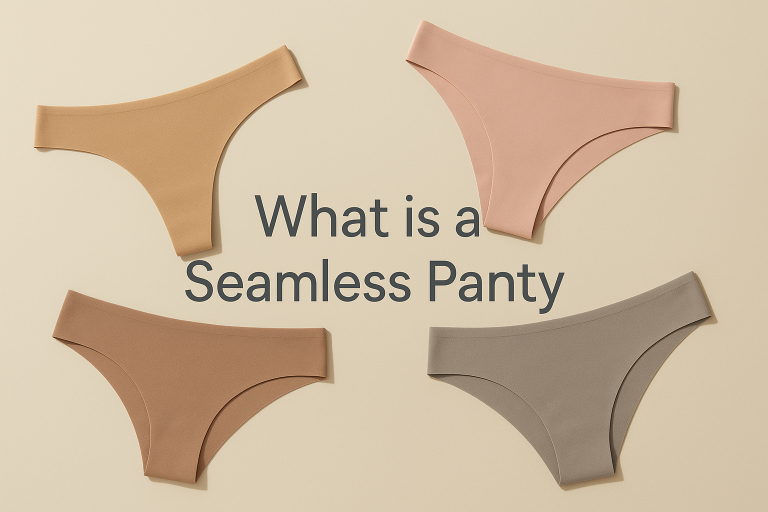
- Bikini panties: Standard sizing based on hip measurement, the most commonly consistent style across brands.
- Boyshort underwear: Extended leg coverage means these often size up one compared to bikini styles from the same brand.
- Thong underwear: Sized from a combination of waist and lower hip; most consistent when sized from the smaller waist measurement.
Knowing which measurement point applies to each panty style allows you to size accurately across different cuts without needing to try each one before buying.
How Pregnancy and Postpartum Body Changes Affect Both Sizes
Pregnancy changes both the ribcage measurement and the hip measurement, which means both bra size and panty size shift during and after pregnancy. The ribcage typically expands by 2 to 4 inches during pregnancy as the uterus grows and pushes the lower ribs outward, according to the American College of Obstetricians and Gynecologists (ACOG). This changes the bra band size, often requiring women to size up one or two band sizes by the third trimester.
Hip and waist measurements also expand during pregnancy, typically increasing panty size by one to three sizes over the course of the pregnancy. Maternity underwear is specifically designed to accommodate the growing abdomen without referencing standard hip sizing, using stretchy fabrics and adjustable waistbands rather than fixed size gradations.
Postpartum, most women return toward their pre-pregnancy measurements within 6 to 12 months, but ribcage expansion and hip width changes may be permanent for some women, according to research published in the Journal of Anatomy. Remeasuring both band and hip measurements at 6 weeks postpartum and again at 6 months postpartum provides the most accurate sizing reference for returning to standard wireless bras and regular underwear.
Pregnancy and postpartum are the two life stages where the general pattern between bra band size and panty size is least reliable, making direct measurement the essential approach at both stages.
Sister Sizing and Whether It Affects Panty Size
Sister sizing is a bra-specific concept where the same cup volume can be achieved across different band and cup combinations. For example, a 34C, a 32D, and a 36B all contain the same cup volume, differing only in how that volume distributes across a wider or narrower band. Sister sizing is used when a specific style runs tight or loose in the band while fitting correctly in the cup.
Sister sizing has no effect on panty size. Moving from a 34C to a 32D does not change your hip measurement or waist measurement in any way. Your panty size remains entirely determined by your body measurements, regardless of which bra band and cup combination you wear on any given day.
The interactive sister size calculator below helps you find adjacent bra sizes when a style runs differently in the band, without affecting your panty size determination at all.
Sizing Tool
Sister Size Calculator
Enter your current band and cup size to find sister sizes with the same cup volume. Note: sister sizing applies only to bra fit and has no effect on panty size.
Sister sizes share the same cup volume but fit differently around the ribcage. Try both if your current size runs tight or loose in the band.
Sister sizing moves band size by 2 inches and cup size by one letter in the opposite direction to preserve cup volume. Cup letter sequence: A, B, C, D, DD/E, DDD/F, G, H.
Sister sizing helps you find an alternative bra fit when your size is unavailable or a style runs inconsistently, but it leaves your panty size entirely unchanged.
Practical Tips for Buying Matching Lingerie Sets That Fit Both Pieces
When buying a coordinated set, measure your hip and band independently before searching. Write down your hip measurement in inches alongside your bra size (band number and cup letter), and bring both numbers to the brand’s size chart rather than relying on the set’s general size description.
If your proportions fall outside the standard combinations offered by a set (for example, your bra size is a 32DDD and your hip is 44 inches, making you a size XL in panties), buy the two pieces separately in the correct sizes. Brands including Torrid, Cacique, and Elomi offer extended cup and extended hip sizes separately, allowing for a coordinated look in sizes that are rarely available as a pre-packaged set.
A few practical tools and products that help with accurate sizing and set coordination:
- A fabric body measuring tape for regular remeasurement.
- A full coverage bra in your band and cup size as a fit reference when trying new styles.
- A seamless bikini underwear in your hip-determined size as a baseline panty fit reference.
- A bra extender for band fluctuations that change your bra size without changing your panty size.
- A mesh lingerie wash bag to protect both pieces during laundering and preserve elastic life in both garments.
Buying each piece of a set based on its own measurement system, rather than trusting the pre-packaged size combination, is the single most reliable way to ensure both pieces fit correctly.
Common Sizing Mistakes That Create Confusion Between the Two Systems
The most frequent mistake is assuming that a bra size change also signals a panty size change. Weight loss or gain affects both the ribcage and the hips, but not always in the same proportion. A woman who loses 15 pounds may drop a full bra band size (from 36 to 34) but only half a panty size, or vice versa, depending on where her body loses and gains volume preferentially.
A second common mistake is using the bra cup letter as a proxy for body size. Cup letters indicate volume relative to the band, not overall body size. A woman wearing a 28G and a woman wearing a 40G have radically different body sizes despite sharing the same cup letter. According to Bravissimo’s fit guide for fuller-busted sizing, larger cup letters at smaller band sizes are among the most misunderstood size combinations in lingerie retail.
A third mistake is buying panties based on clothing size rather than hip measurement. Clothing sizes vary significantly across brands and countries. Your hip measurement in inches is the only universal reference point that works reliably across all lingerie brands.
Avoiding these three mistakes eliminates most cases of poor fit in both bra and panty sizing, without requiring any special knowledge of sizing systems.
Frequently Asked Questions About Panty Size vs Bra Size Relationship
Does my bra size tell me my panty size?
Bra size does not directly tell you your panty size. Bra size is based on ribcage circumference (band) and bust-to-ribcage difference (cup). Panty size is based on hip circumference. These are separate body measurements that must be taken independently. The only exception is that women with larger bra band sizes tend, on average, to also have larger hip measurements, creating a loose general pattern but not a usable formula.
If I wear a 34 band bra, what panty size do I wear?
A 34-inch ribcage does not correspond to a single panty size. Women with a 34-inch ribcage may have hip measurements ranging from 35 inches to 48 inches or more, which could place them in panty sizes from small to 2X depending on their individual proportions. The correct approach is to measure your hips directly and apply that measurement to the brand’s specific panty size chart.
Why does my panty size seem larger than my bra band size would suggest?
Panty size is determined by hip circumference, which is typically 8 to 14 inches larger than the ribcage circumference in most women. A woman with a 34-inch ribcage may have hips of 44 inches or more, placing her in a size large or XL panty. This discrepancy is normal and reflects natural body proportions where the hips are wider than the torso. It does not indicate any sizing problem with either garment.
Do bra cup size and panty size have any connection?
Bra cup size and panty size have no direct connection. Cup size is a measurement of bust volume relative to the ribcage, expressed as a letter. Panty size is based on hip and waist circumference. These two measurements are taken from different anatomical locations and use different measurement frameworks. A larger cup size does not indicate a larger panty size in any reliable way.
How do I find matching lingerie sets if my bra and panty sizes do not align with standard set pairings?
When your bra size and panty size fall outside standard set combinations, the most practical approach is to purchase the bra and panties separately. Brands such as Elomi, Cacique, Torrid, and Bravissimo specialize in extended cup sizing alongside independent panty sizing, allowing you to find matching styles in the correct individual sizes. Using your measured hip size for panties and your measured band-plus-cup for bras produces the best fit regardless of whether the two pieces come pre-packaged as a set.
Does losing or gaining weight change my bra and panty sizes in the same way?
Weight changes affect bra size and panty size independently, and not always in the same proportion. Body composition changes determine where volume is lost or gained. Some women lose ribcage width faster than hip width, changing their bra band size more than their panty size. Others experience the reverse. According to research in the Journal of Human Kinetics on body composition and circumference measurements, no universal ratio predicts how weight change distributes between the ribcage and hip. Remeasuring both after any weight change of 10 pounds or more produces the most accurate updated sizing.
Are panty sizes the same across all countries, the way bra band sizes can be converted internationally?
Panty sizes are not standardized internationally. US letter sizes (XS, S, M, L, XL) do not correspond directly to EU numerical sizes or UK sizes. For example, a US size medium typically corresponds to an EU 40-42 and a UK size 12-14, but this varies by brand. When shopping internationally for panties, always use the brand’s hip measurement chart in centimeters or inches rather than converting between size labels. Bra band sizes can be converted between US, UK, EU, and French systems using established conversion charts, but panty size labels require direct measurement comparison.
Your bra size and panty size are both grounded in your unique body measurements, measured at different points on your body using separate sizing systems. Measuring your ribcage and bust for your bra, and your hips and waist for your panties, gives you the two independent data points needed to find accurate fits in both garments from any brand. Keep both measurements current, check each brand’s individual size chart every time you shop, and buy each piece in the size that fits your specific measurement, regardless of whether the two sizes seem to “match” intuitively.