
Ultimate Guide to Panties: Styles, Fabrics & Perfect Fit
Panties are the foundation of every woman’s wardrobe, yet most women own the wrong types for their actual needs. This guide covers every panty style, fabric, fit consideration, and care method so you can build a drawer that works for your body, your clothing, and your life.
What Are the Main Types of Panties
Panties are a category of women’s underwear that includes at least eight distinct silhouettes, each engineered for a different coverage level, waistline placement, and functional purpose. Understanding the differences between styles prevents the most common buying mistake: choosing a style by appearance alone rather than by how it performs under specific clothing and during specific activities.
Brief Panties
A brief panty sits at or just below the natural waist and provides full coverage across the seat and front. The leg openings cut straight across the upper thigh, which makes briefs the most secure and coverage-forward option in the category.
Briefs are the preferred choice for moderate to heavy menstrual days, high-waisted bottoms, and postpartum recovery because the full back panel provides consistent coverage without shifting. According to a fit survey published by the Intimate Apparel Association, briefs remain the single most purchased panty silhouette across all age groups, accounting for approximately 34% of total women’s underwear unit sales.
Key Specifications:
- Rise: Natural waist (approximately 1 to 2 inches above the hip bone)
- Back coverage: Full seat, no exposure
- Leg cut: Straight across the upper thigh
- Common fabrics: Cotton, nylon, modal, microfiber
- Size range: XS to 5X across most major brands
Briefs deliver the most consistent coverage of any panty style, making them the practical anchor of a functional underwear wardrobe.
Bikini Panties
A bikini panty sits between the hip bone and the natural waist, with leg openings that cut higher on the hip than briefs. This mid-rise position balances coverage with a lower waistband profile that works under mid-rise jeans and casual pants.
Bikini panties are the second most purchased style in the United States, popular because they avoid both the full-waist profile of briefs and the minimal coverage of thongs. The higher leg cut can create a slight hip-lengthening visual effect, which many wearers find flattering with shorts and swimwear.
Key Specifications:
- Rise: Between hip bone and natural waist
- Back coverage: Moderate, approximately 60 to 70% of the seat
- Leg cut: Angular, higher on the outer hip
- Common fabrics: Cotton, lace, nylon blend, microfiber
- Size range: XS to 3X across most retailers
Bikini panties offer the most versatile everyday fit for mid-rise clothing and are the entry point for women transitioning away from full briefs.
Hipster Panties
A hipster panty sits at the widest point of the hips, below the hip bone, with a straight horizontal waistband and moderate to full back coverage. The low, flat waistband and wider side panels make hipsters the best panty choice for low-rise jeans and shorts.
The hipster’s distinguishing feature is the wide side panel, typically 2 to 3 inches wide, compared to the narrow strap-like side of a bikini. This wider side panel reduces the chance of the panty rolling or shifting during movement, making hipsters a popular choice for active days that do not require a sports-specific garment.
Key Specifications:
- Rise: At or just below the widest hip point
- Back coverage: Moderate to full, depending on cut
- Side panel width: 2 to 3 inches (wider than bikini)
- Common fabrics: Cotton, modal, lace, seamless nylon
- Size range: XS to 3X
Hipsters are the go-to silhouette for low-rise bottoms and for women who want moderate coverage with a flat, non-visible waistband profile.
Thong Panties
A thong panty features a narrow back panel or string that sits in the natural crease of the body, eliminating visible panty lines under fitted clothing. The front panel varies from minimal coverage to a full bikini-style front depending on the cut.
Thongs are the primary solution for visible panty lines under fitted dresses, leggings, and structured trousers. The American College of Obstetricians and Gynecologists notes that healthy women with no current vaginal infections can wear thongs without increased clinical risk, provided the garment fits correctly and is made from breathable fabric such as cotton or modal in the gusset lining.
Key Specifications:
- Back coverage: Minimal strip or string, designed for no VPL (visible panty line)
- Front coverage: Varies from minimal to full bikini coverage
- Gusset material: Cotton-lined recommended for daily wear
- Common fabrics: Microfiber, lace, seamless nylon, cotton blend
- Size range: XS to 3X
A properly fitted thong from a breathable fabric is the most effective solution for eliminating visible panty lines under form-fitting clothing.
G-String Panties
A G-string is a more minimal version of the thong, with a true string-width back and a very narrow front panel. G-strings provide less front coverage than a standard thong and are used primarily for special occasion wear or under garments where even a thong’s front panel might create a visible outline.
G-strings are not recommended for extended daily wear because the extremely narrow front panel provides less moisture-wicking coverage than a standard gusset-lined panty. They are best reserved for specific outfits where coverage is not the primary concern.
Boyshort Panties
A boyshort panty extends coverage down the upper thigh, similar to a pair of shorts, with a full-coverage back and a straight leg hem. Boyshorts sit at the natural waist or hip depending on the style and are the preferred choice for active wear under skirts, for sleeping, and for preventing inner thigh chafing.
Boyshorts are particularly effective for preventing thigh chafing during warm weather because the extended leg coverage creates a barrier between skin surfaces. Runners and cyclists often choose boyshorts with a smooth, flat leg hem over other panty styles for this reason.
Key Specifications:
- Rise: Natural waist to hip-level depending on cut
- Back coverage: Full seat
- Leg coverage: Extends 2 to 4 inches down the upper thigh
- Common fabrics: Cotton, modal, seamless nylon, microfiber
- Size range: XS to 4X
Boyshorts are the best panty style for chafe prevention, sleep comfort, and under-skirt coverage during warm months.
High-Waist Panties
A high-waist panty extends above the natural waist, typically reaching 2 to 4 inches above the belly button. This extended rise provides abdominal coverage and mild compression, which makes high-waist panties popular for postpartum recovery, under high-waist bottoms, and as a light-smoothing alternative to shapewear.
High-waist panties are a non-shapewear alternative for women who want mild midsection coverage without the compression level of dedicated shapewear garments. Many postpartum healthcare providers recommend high-waist cotton panties as a comfortable recovery option in the first four to six weeks after delivery.
Key Specifications:
- Rise: 2 to 4 inches above the natural waist
- Back coverage: Full seat
- Compression level: Light smoothing (not medical-grade compression)
- Common fabrics: Cotton, modal, nylon-spandex blend
- Size range: XS to 5X
High-waist panties bridge the gap between standard briefs and shapewear for women seeking mild abdominal coverage without a compression garment.
Cheeky Panties
A cheeky panty provides approximately 50% seat coverage, with the leg opening cut higher on the back than a bikini but lower than a thong. The cheeky style intentionally exposes the lower portion of the seat and is popular for its balance between the full coverage of a brief and the minimal coverage of a thong.
Cheeky panties are the fastest-growing sub-category in the women’s underwear segment, driven by their compatibility with high-cut leggings and athletic shorts. The exposed-leg design also reduces the chance of a visible underwear line at the lower thigh when wearing form-fitting athletic bottoms.
Key Specifications:
- Back coverage: Approximately 50%, lower cheeks exposed
- Leg cut: Higher than bikini, lower than thong
- Common fabrics: Seamless nylon, lace, microfiber, cotton blend
- Size range: XS to 3X
Cheeky panties offer the midpoint between coverage and a minimal profile, making them the natural choice for women who find thongs uncomfortable but want to avoid full-coverage visible lines under fitted leggings.
Product Comparison
Panty Styles Compared by Coverage, Rise, and Best Use
Use the table below to match your clothing type and comfort preference to the panty style that fits both.
| Style | Rise | Back Coverage | VPL Risk | Best For |
|---|---|---|---|---|
| Brief | Natural waist | Full (100%) | Moderate | High-waist bottoms, period days |
| Bikini | Between hip and waist | Moderate (65%) | Low to moderate | Mid-rise pants, everyday wear |
| Hipster | At hip bone | Moderate to full | Low | Low-rise jeans, casual bottoms |
| Thong | Varies | Minimal | None | Fitted dresses, leggings, trousers |
| Cheeky | Hip to waist | Partial (50%) | Very low | Athletic leggings, shorts |
| Boyshort | Natural waist or hip | Full (100%) | Moderate at thigh hem | Skirts, chafe prevention, sleep |
| High-waist | 2 to 4 in above waist | Full (100%) | Low under high-waist | Postpartum, high-waist bottoms |
Coverage percentages are approximate and vary by brand. VPL risk is assessed for smooth, form-fitting outerwear.
The thong and brief cover opposite ends of the coverage spectrum, so owning at least one of each ensures a solution for any outfit in your wardrobe.
What Fabrics Are Panties Made From and Which Is Best
Panty fabric determines breathability, moisture management, stretch recovery, and how the garment feels after repeated washing. The most common panty fabrics are cotton, modal, microfiber, nylon, lace, and bamboo-derived rayon, each with measurably different performance characteristics for different activities and skin sensitivities.
Cotton Panties
Cotton panties are the most breathable option for everyday wear because the natural fiber allows air circulation and absorbs up to 27 times its weight in moisture before feeling damp. The gusset lining of any panty style should be cotton or cotton-lined regardless of the outer fabric, according to gynecologist recommendations published by the Cleveland Clinic.
Cotton does not stretch as elastically as synthetic fabrics, which means cotton panties may lose shape faster with heavy washing at high temperatures. Washing cotton underwear in cold water on a gentle cycle preserves the fiber structure and extends the garment’s functional life by approximately 30 to 40 wash cycles compared to hot-water washing, according to textile care research from the American Cleaning Institute.
Key Specifications:
- Breathability: High (natural fiber, open weave structure)
- Moisture absorption: Up to 27 times fiber weight
- Stretch recovery: Moderate (lower than synthetics)
- Drying time: Slow (absorbs moisture, slower to release)
- Best for: Everyday wear, sensitive skin, vaginal health maintenance
Cotton is the clinically preferred gusset fabric and the most appropriate daily-wear choice for women with skin sensitivity or recurring vaginal irritation.
Modal Panties
Modal is a semi-synthetic fabric made from beechwood cellulose, classified as a type of rayon. Modal is 50% more absorbent than cotton by weight and retains a softer hand feel after repeated washing, making it a preferred fabric for everyday panties among women with sensitive skin.
Modal panties stretch in multiple directions and snap back to their original shape more reliably than pure cotton, which reduces sagging and elastic fatigue. The fabric’s smooth surface also produces less friction against skin compared to woven cotton, which benefits women prone to inner thigh or vulvar irritation.
Key Specifications:
- Breathability: High (semi-synthetic with natural cellulose base)
- Moisture absorption: 50% higher than cotton by fiber weight
- Stretch recovery: High (bi-directional stretch)
- Softness after washing: Maintains softness through 50 or more wash cycles
- Best for: Sensitive skin, everyday luxury, long-wear days
Modal is the best fabric for women who want cotton-level breathability with improved softness, stretch recovery, and durability over time.
Microfiber and Nylon Panties
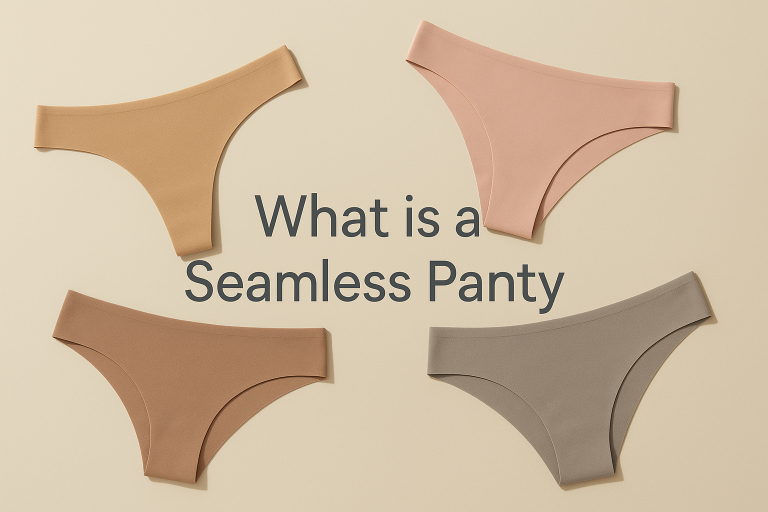
Microfiber panties are made from ultra-fine synthetic fibers, typically nylon or polyester, woven densely enough to create a smooth, near-seamless surface. This surface creates zero texture under clothing, which is why microfiber is the dominant fabric in seamless panties and no-show styles.
Microfiber and nylon dry significantly faster than cotton or modal, which makes them practical for travel and athletic use, but their lower breathability means they are not recommended for extended wear by women prone to yeast infections or bacterial vaginosis, according to dermatology guidance from the American Academy of Dermatology.
Key Specifications:
- Breathability: Low to moderate (synthetic fiber, dense weave)
- Moisture wicking: High (moves moisture away from skin rapidly)
- Drying time: Fast (30 to 60 minutes air dry)
- Surface texture: Ultra-smooth, near-invisible under clothing
- Best for: Fitted outfits, travel, low VPL priority, short-duration wear
Microfiber and nylon panties are the correct choice for eliminating fabric texture under clothing, but should be limited to shorter wear durations for women with recurring vaginal health concerns.
Lace Panties
Lace panties use an open-mesh fabric structure that provides visual texture and a decorative appearance. Modern lace blends, typically 90% nylon with 10% spandex or elastane, are softer and more stretch-tolerant than historical all-cotton lace, but lace remains lower in absorbency and breathability than woven fabrics with a solid gusset construction.
Lace is best used as the outer fabric paired with a separate cotton or modal gusset lining rather than as the primary fabric touching the vulvar area. Lace panties without a cotton-lined gusset are not appropriate for all-day wear for women with any active vaginal sensitivity or history of contact dermatitis.
Key Specifications:
- Breathability: Moderate (open mesh structure provides air flow)
- Moisture management: Low (open structure does not wick effectively)
- Gusset recommendation: Cotton-lined gusset required for daily wear
- Stretch recovery: High when spandex-blended
- Best for: Special occasion, intimate wear, shorter-duration outings
Lace panties perform best as occasional-wear garments with a cotton-lined gusset, not as a high-frequency daily fabric.
Bamboo Panties
Bamboo-derived rayon panties are made from bamboo cellulose processed into a viscose fiber. Bamboo rayon is marketed as a sustainable alternative to modal or cotton and offers comparable softness with slightly higher moisture-wicking performance than traditional cotton.
Bamboo rayon is naturally antimicrobial at the fiber level before processing, but most commercially processed bamboo fabrics do not retain significant antimicrobial properties in the final garment, according to testing conducted by the Federal Trade Commission’s textile division. The softness and breathability of bamboo rayon are genuine and well-documented, but antimicrobial claims should be evaluated skeptically unless independently lab-tested.
Key Specifications:
- Breathability: High (similar to modal)
- Moisture management: Moderate to high
- Softness: High, comparable to modal
- Antimicrobial performance: Varies by processing method
- Best for: Sensitive skin, everyday comfort, eco-conscious purchasing
Bamboo panties are a legitimate cotton alternative for breathability and softness, but fabric-level antimicrobial claims require independent verification before being used as a primary purchasing criterion.
Use the table below to compare panty fabrics across the performance factors that matter most for daily wear decisions.
| Fabric | Breathability | Moisture Wicking | Stretch Recovery | Best For |
|---|---|---|---|---|
| Cotton | High | Absorbs, slow release | Moderate | Sensitive skin, everyday |
| Modal | High | High absorption | High | Long-wear days, sensitive skin |
| Microfiber/Nylon | Low to moderate | Fast moisture transfer | Very high | No VPL, travel, short wear |
| Lace | Moderate | Low | High (if spandex blend) | Special occasion, short wear |
| Bamboo Rayon | High | Moderate to high | High | Everyday, eco-conscious |
Cotton and modal are the most appropriate fabrics for high-frequency daily wear, while microfiber and nylon serve specific outfitting needs where breathability can be temporarily traded for a smooth surface.
How to Choose the Right Panty Size
Panty sizing is based on hip circumference measured at the fullest point of the hips and seat, typically 7 to 9 inches below the natural waistline. An incorrectly sized panty is the primary cause of both visible panty lines and elastic discomfort, and the fit issues are always resolved by size correction rather than style substitution.
How to Measure for Panties
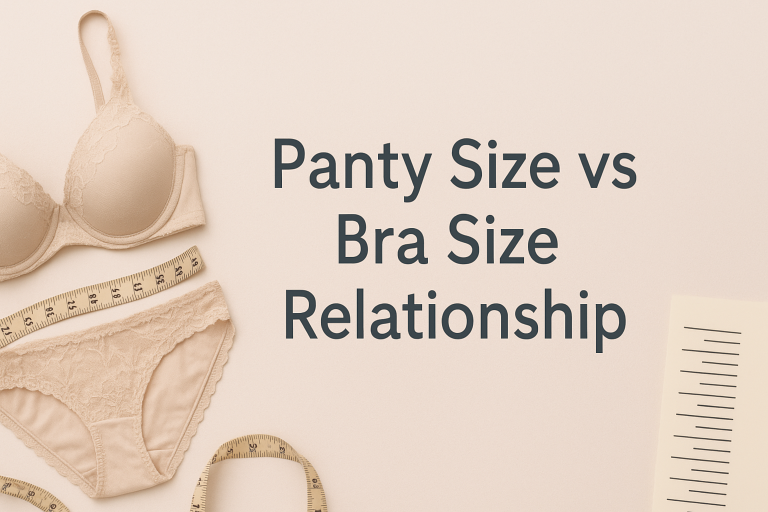
Measuring for panties requires a flexible measuring tape, a mirror, and a standing position with feet hip-width apart. The correct measurement point is the fullest circumference of the hips and buttocks combined, not the waist measurement used for pants sizing.
Wrap the tape around the widest point of the hips and seat without pulling it tight or allowing it to droop at the back. The tape should rest flat against the body with enough tension to stay in place but not enough to create an indentation. Record the measurement in inches to the nearest half-inch, then compare to the brand’s specific size chart, since panty sizing varies by up to one full size between brands at the same hip measurement.
Panty sizing steps:
- Stand upright with feet hip-width apart on a flat surface.
- Locate the fullest point of your hips and seat (usually 7 to 9 inches below the belly button).
- Wrap the tape horizontally around this point, keeping it level all the way around.
- Take the measurement while exhaling naturally (not holding your breath).
- Compare your measurement to the specific brand’s size chart, not a generic chart.
- If between sizes, size up for styles with narrower side panels (thong, bikini) and stay true to size for full-coverage styles (brief, boyshort).
Understanding Panty Size Charts
Panty sizes in the United States are labeled as XS, S, M, L, XL, and extended sizes (1X to 5X depending on brand). Standard US sizing correlates to hip measurements as follows: XS covers 32 to 34 inches, S covers 34 to 36 inches, M covers 36 to 38 inches, L covers 38 to 40 inches, XL covers 40 to 42 inches, and 1X covers 44 to 46 inches.
Extended size panties (1X to 5X) follow a different measurement interval per size step compared to standard sizing, and the step between extended sizes is typically 2 to 3 inches of hip circumference rather than the 2-inch step common in XS through XL sizing. Women who wear extended sizes should always consult the individual brand’s extended size chart rather than applying standard size conversion formulas.
Use the table below to match your hip measurement to the corresponding US panty size across standard and extended ranges.
| US Size | Hip Measurement (inches) | Hip Measurement (cm) | Notes |
|---|---|---|---|
| XS | 32 to 34 | 81 to 86 | Size up for thongs/cheeky |
| S | 34 to 36 | 86 to 91 | Standard starting point |
| M | 36 to 38 | 91 to 97 | Most common US size |
| L | 38 to 40 | 97 to 102 | Standard |
| XL | 40 to 42 | 102 to 107 | Standard |
| 1X | 44 to 46 | 112 to 117 | Check brand extended chart |
| 2X to 5X | 48 to 64+ | 122 to 162+ | Brand-specific sizing applies |
Always measure at the hip’s widest point and compare to the specific brand’s chart, since sizing can vary by a full size or more between brands at identical hip measurements.
How to Choose Panties for Different Outfits
Panty selection for specific outfits is a function of three variables: the outerwear’s fabric weight, the fit through the hip and seat, and the rise of the bottom or dress. Matching these three variables to the right panty style eliminates visible panty lines, waistband show-through, and discomfort caused by mismatched coverage.
Panties for Leggings and Fitted Athletic Wear
Leggings and compression athletic bottoms are the most demanding outerwear category for panty selection because the thin, form-conforming fabric transmits any texture, seam, or edge directly to the surface. The correct panty choices for leggings are a seamless thong, a seamless cheeky, or a seamless bikini with flat-edge bonded hems.
Standard-cut panties with sewn seams and a defined waistband are visible under most legging fabrics. A seamless microfiber or nylon thong at 0.3 to 0.5mm of fabric thickness is the most technically invisible option under performance leggings with fabric weights under 200 grams per square meter (gsm).
Panties for Dresses and Skirts
Fitted bodycon dresses require a thong or seamless cheeky to prevent rear-panel seam lines from showing through the dress fabric. A-line and structured dresses with lining can accommodate a bikini or hipster without visible lines because the lining layer creates a barrier between the panty and the dress surface.
Flared and midi skirts offer the most forgiving environment and can accommodate briefs, boyshorts, or bikini styles without VPL concerns. For short skirts, boyshorts are preferable over briefs or bikinis because the extended leg coverage prevents accidental exposure during movement.
Panties for Pants and Jeans
High-waist pants and jeans pair best with high-waist panties or full briefs that rise to the same level as the pant waistband. A panty that ends below the pant waistband creates a horizontal ridge visible through fitted fabric at the hip.
Mid-rise pants work with bikini, hipster, and moderate-rise brief styles. Low-rise jeans require a hipster or low-rise bikini that sits fully below the jean waistband to prevent panty show-through at the back when bending or sitting.
If your panty waistband shows above your pants, the panty rise is too high for the specific pant cut, and the solution is choosing a lower-rise panty style rather than trying to fold or tuck the existing panty.
Panties for Special Occasions and Specific Needs
Specific occasions and physical needs require panty styles that go beyond standard everyday categories. Period underwear, maternity panties, postpartum recovery styles, and shapewear-integrated panties each address a distinct functional requirement that standard panty styles cannot fulfill.
Period Panties
Period underwear is a category of absorbent panty designed to replace or supplement menstrual products by incorporating multiple sewn-in absorbent layers within the gusset area. The construction typically includes a moisture-wicking surface layer, an absorbent core of 200 to 400 gsm absorbent material, and a leak-resistant outer layer, all sewn into the gusset without adding significant bulk.
Period underwear absorbency is measured in tampon equivalents, with light-absorbency styles holding the equivalent of 1 to 2 tampons and heavy-absorbency styles holding 4 to 6 tampons. Published independent testing by Consumer Reports confirmed that leading period underwear brands including Thinx, Knix, and Saalt held their stated absorbency levels in standardized leak testing.
Key Specifications:
- Absorbency range: 1 to 6 tampon equivalents depending on style
- Gusset construction: 3 to 4 sewn absorbent layers
- Outer leak layer: Moisture-resistant, not fully waterproof
- Care: Cold rinse before washing, machine wash cold, air dry
- Lifespan: Approximately 2 to 3 years with proper care (manufacturers’ guidance)
Period underwear is a clinically recognized menstrual management option and is most effective when matched to actual flow volume rather than a style chosen for appearance alone.
Maternity Panties
Maternity panties are designed with an expandable front panel or a fold-over waistband that accommodates a growing abdomen without creating pressure on the uterus or lower abdominal wall. The American College of Obstetricians and Gynecologists recommends that pregnant women choose underwear with a waistband that does not dig into the lower abdomen, particularly during the second and third trimesters.
Over-the-bump maternity panties extend above the navel and support the lower belly with gentle, non-compressive fabric. Under-the-bump maternity panties sit below the belly and use a low-cut front panel with an extended stretch gusset to accommodate the abdomen’s forward projection without a high waistband.
Key Specifications:
- Over-the-bump rise: Extends 2 to 4 inches above the belly button
- Under-the-bump rise: Sits below the belly, typically at the hip bone
- Fabric: Cotton or modal with 8 to 12% spandex for stretch
- Waistband: Fold-over or seamless design without rigid elastic
- Size range: Most brands size by pre-pregnancy size, not gestational size
Maternity panties should be sized using pre-pregnancy measurements and bought in a fabric that maintains stretch without compression across the growing abdomen.
Postpartum and Recovery Panties
Postpartum recovery panties serve two distinct functions: providing comfort during vaginal recovery in the immediate postpartum period (0 to 6 weeks) and supporting mild abdominal recovery after cesarean delivery. The immediate postpartum period requires high-waist, full-coverage cotton or disposable panties with enough room to accommodate postpartum pads without compression near the perineum.
Many postpartum care providers recommend disposable mesh panties provided in the hospital for the first 24 to 72 hours, followed by high-waist cotton briefs for the remainder of the 6-week recovery period. For cesarean recovery, a high-waist panty that sits above the incision line (typically 4 to 6 inches below the navel) prevents friction against the healing scar tissue.
Shapewear-Integrated Panties
Shapewear panties incorporate graduated compression fabric into the panty construction to smooth and reshape the abdomen, hips, thighs, or seat depending on the design. Compression levels in shapewear panties are measured in millimeters of mercury (mmHg) for medical-grade designs or labeled as light (8 to 15 mmHg equivalent), medium (15 to 20 mmHg equivalent), and firm (20 to 30 mmHg equivalent) for fashion shapewear.
The Mayo Clinic notes that light-compression shapewear is generally safe for healthy adults, but women with circulation issues, pregnancy, or recent abdominal surgery should consult a physician before wearing compression garments in the torso area.
Key Specifications:
- Light control: Smooths without restricting movement or breathing
- Medium control: Noticeable compression, appropriate for special occasions (2 to 4 hours maximum)
- Firm control: Medical-grade range, not appropriate without medical indication
- Size range: XS to 5X, size up by one if between sizes for compression garments
- Fabric: Nylon-spandex blend, typically 70 to 80% nylon, 20 to 30% elastane
The right shapewear panty provides its stated smoothing effect without restricting circulation or requiring you to size down, both of which indicate the garment is too tight for safe extended wear.
How to Care for Panties and How Long They Last
Panty lifespan is primarily determined by washing method, storage, and elastic quality. A standard cotton or modal panty washed correctly on a gentle cycle lasts 6 to 12 months with daily wear, while the same panty washed on a hot cycle with a spin-dry cycle degrades the elastic and fabric structure within 3 to 4 months, according to textile care research from the Hohenstein Institute.
How to Wash Panties Correctly
The single most damaging washing practice for panties is high-temperature machine washing, because heat above 104 degrees Fahrenheit (40 degrees Celsius) degrades elastic fiber (elastane or Lycra) at a measurably accelerated rate. The elastic in a panty’s waistband and leg openings degrades 60% faster when washed at 140 degrees Fahrenheit compared to cold water, according to testing published by the American Cleaning Institute.
Hand washing with a delicate lingerie detergent in cool water is the most protective care method and extends panty lifespan by approximately 30 to 50% compared to machine washing. Machine washing on cold, delicate cycle inside a mesh lingerie laundry bag is the practical alternative for women who prefer machine washing.
Washing steps for maximum panty lifespan:
- Turn panties inside out before placing them in the wash or bag to reduce surface abrasion.
- Use a mesh laundry bag to prevent elastic snag and stretching during machine agitation.
- Select cold water and a delicate or gentle cycle on the machine.
- Use a pH-neutral, dye-free detergent designed for delicates to preserve fabric integrity.
- Never use fabric softener on moisture-wicking or performance fabrics because it coats fibers and reduces absorbency.
- Air dry flat or hang to dry rather than using a tumble dryer, which degrades elastic at the same rate as hot water washing.
How Often to Replace Panties
Panty replacement is indicated by specific physical signs rather than a fixed calendar schedule. A panty should be replaced when the elastic at the waistband or leg openings no longer snaps back after stretching, when fabric shows pilling that creates friction against skin, or when the gusset lining shows permanent discoloration that does not wash out.
For cotton and modal panties worn daily and washed every 1 to 2 wears, replacement at 6 to 12 months is standard. For panties worn less frequently (2 to 3 times per week), a 12 to 18 month replacement cycle is appropriate. The elastic quality in budget panties under $5 per unit typically fails at 60 to 80 wash cycles, while mid-range panties ($12 to $25 per unit) typically maintain elastic integrity for 100 to 150 wash cycles.
The most reliable replacement indicator is elastic function, not calendar time: if the waistband no longer stays in place during a full day of wear, the panty has exceeded its functional lifespan regardless of how it looks.
How to Build a Panty Wardrobe That Actually Works
A functional panty wardrobe covers three distinct use categories: daily comfort wear, outfitting-specific no-VPL options, and special occasion or intimate wear. The minimum functional wardrobe for most women is 10 to 14 pairs, distributed across these categories to allow proper washing rotation without wearing any individual panty more than twice before washing.
The Core Panty Wardrobe Formula
A well-structured panty wardrobe contains five to seven everyday wear pairs, three to four no-VPL options for fitted outfitting, and two to three special occasion or intimate styles. The everyday wear category should be 100% cotton or modal in the style that fits your most common daily clothing (brief, bikini, or hipster depending on your typical waist rise).
The no-VPL category should include at least one seamless thong and one seamless cheeky or bikini with flat bonded hems. The special occasion category can include lace-detail styles or coordinated sets, but these should be treated as wear-and-care-carefully items rather than high-frequency daily wear.
Use the table below to match your clothing wardrobe type to the recommended panty mix for each category.
| If Your Wardrobe Is Mostly… | Core Everyday Style | No-VPL Pick | Quantity Suggestion |
|---|---|---|---|
| High-waist jeans and trousers | High-waist brief | Seamless thong | 7 briefs, 3 thongs |
| Leggings and athletic wear | Seamless cheeky or bikini | Seamless thong | 5 cheeky, 4 thongs |
| Dresses and skirts | Bikini or hipster | Seamless thong or cheeky | 5 bikini/hipster, 3 thongs |
| Mix of all types | Bikini (most versatile) | Seamless thong | 5 bikini, 2 briefs, 3 thongs |
| Postpartum or recovery period | High-waist cotton brief | High-waist seamless brief | 8 to 10 high-waist briefs |
Build the core everyday category first with cotton or modal styles, then add no-VPL options for your most commonly worn fitted outfits, and treat special occasion pieces as additions rather than substitutes for functional daily wear.
How to Store Panties
Panty storage method affects elastic longevity and fabric condition between wears. Folding panties flat and stacking them in a drawer is the standard method, but rolling panties into a compact roll and storing them vertically in a drawer organizer keeps the fabric flat with less edge creasing and makes individual pairs easier to see without unfolding the stack.
A drawer organizer specifically sized for underwear prevents panties from becoming tangled or compressed at the bottom of a deep drawer, which can stretch the waistband elastic over time when weight accumulates on top of folded pairs. Hanging storage is not recommended for panties because gravity stretches elastic waistbands within 24 to 48 hours of hanging under the weight of the garment.
Store panties in a cool, dry environment away from direct sunlight because UV exposure degrades elastic fibers and causes fading in colored fabrics over a period of weeks to months of consistent exposure.
Common Panty Fit Problems and How to Fix Them
The four most common panty fit problems are rolling waistbands, leg elastic that digs into the thigh crease, visible panty lines under clothing, and bunching fabric in the seat. Each of these problems has a specific cause and a specific solution that does not involve wearing an uncomfortable panty.
Rolling Waistband
A rolling waistband is caused by one of two problems: the panty is too large in the hip circumference, allowing excess fabric to fold over, or the waistband’s elastic has stretched beyond its functional recovery point after extended wear or incorrect washing. A rolling waistband is never a fit problem that resolves itself with more wearing time.
If the waistband rolls immediately on a new panty, the panty is too large and needs to be replaced with the next size down. If the waistband began rolling after several months of wear, the elastic has degraded and the panty should be replaced.
Leg Elastic Digging In
Leg elastic that digs into the inner thigh or groin crease is caused by the panty being too small in the hip circumference or by a narrow leg opening diameter relative to the wearer’s thigh circumference. The solution is sizing up by one size, which increases both the hip circumference and the leg opening diameter in standard sizing systems.
Choosing a panty style with a wider leg opening, such as a brief or boyshort compared to a bikini or hipster, also reduces leg elastic pressure at the same size because the wider leg hem distributes tension across a greater surface area.
Visible Panty Lines (VPL)
Visible panty lines appear under outerwear when the panty’s edges, seams, or fabric panels create raised ridges that show through the outer fabric. The solution depends on where the VPL appears. A rear VPL is solved by switching to a thong, cheeky, or seamless bikini. A waistband VPL is solved by choosing a panty whose rise matches the outerwear’s rise level. A leg-hem VPL is solved by choosing a seamless style with bonded flat edges rather than sewn hems.
Seamless no-show panties made from laser-cut microfiber eliminate VPL at all three problem points simultaneously and are the most comprehensive solution for outerwear where any panty edge is likely to show.
Seat Bunching
Seat bunching occurs when excess fabric accumulates in the back panel during movement, indicating the seat panel is cut too large relative to the wearer’s actual seat circumference. This is most common in styles purchased based on waist measurement alone when the seat is proportionally smaller than the waist.
The solution is to try a style with a contoured seat panel (a cut designed to follow the curve of the seat rather than a flat back panel) or to size down in the specific style while verifying that the leg openings do not become too tight at the smaller size.
Interactive Finder
Find the Right Panty Style for You
Answer 2 questions to get a personalized panty recommendation.
Solving the four most common fit problems requires identifying the correct cause first (size, elastic degradation, or style mismatch) before replacing the panty, because buying the same style in a different color does not fix a structural fit issue.
Panty Shopping Guide by Budget
Panty pricing spans from under $5 per unit at mass-market retailers to over $40 per unit for luxury or performance-specialized styles. The performance difference between budget and mid-range panties is most apparent in elastic recovery after washing and gusset construction quality, not in visible fabric appearance.
Budget Panties Under $8 per Pair
Budget panties in the $3 to $8 range are typically constructed from a polyester-cotton blend with a basic elastic waistband and a sewn-in gusset lining. These garments perform adequately for the first 60 to 80 wash cycles, after which elastic degradation becomes functionally noticeable.
The most cost-effective way to purchase in this price range is to buy multipacks of identical styles in your measured size. Multipacks from brands including Hanes, Fruit of the Loom, and Gildan provide consistent sizing and cotton content at approximately $3 to $5 per pair. Key Specifications for this tier: fabric is typically 60% cotton, 40% polyester; elastic width is 0.5 to 0.75 inches at the waistband; gusset is cotton-lined; size range runs XS to 3X in most standard styles.
Mid-Range Panties $10 to $25 per Pair
Mid-range panties in the $10 to $25 range use higher-quality fabric blends (modal, better-grade nylon, or superior cotton) with wider, more durable elastic waistbands and improved gusset construction. The elastic in this price tier is typically 0.75 to 1.25 inches wide with a higher thread count that maintains recovery for 100 to 150 wash cycles.
Brands operating reliably in this range include Aerie, Soma, Calvin Klein, Natori, and ThirdLove. Seamless styles from this tier use laser-cutting technology for flat edges rather than the folded-over sewn hems common in budget panties. This construction difference is the primary reason mid-range seamless panties perform better under leggings and fitted clothing than budget seamless options.
Premium Panties Over $25 per Pair
Premium panties over $25 per pair differentiate primarily through fabric sourcing (Lenzing-certified TENCEL modal, organic cotton certifications, recycled nylon), specialized construction for a specific function (period underwear, shapewear integration, post-surgical comfort), or luxury lace and embroidery details that increase production cost.
For functional everyday panties without a specialized purpose, the performance difference between a $20 mid-range option and a $40 premium option is marginal. The premium price tier provides genuine value in period underwear (where absorbent technology justifies $25 to $45 per pair), performance athletic styles, and postpartum recovery designs with specific construction for healing comfort.
Value Analysis
When Premium Panties Are Worth the Price and When They Are Not
Performance gap between premium and budget panties by category
Premium wins significantly
Premium usually wins


6 Comments