
Panty Sizing Mistakes to Avoid for Your Perfect Fit
Getting your panty size wrong is one of the most common and most uncomfortable mistakes in a woman’s wardrobe. The wrong size causes visible lines under clothing, digging elastic, and constant adjusting throughout the day. This guide covers every panty sizing mistake to avoid so you can find the fit that actually works for your body.
Why Panty Sizing Is More Complicated Than It Looks
Panty sizing varies significantly across brands, countries, and styles, making a consistent fit harder to achieve than most women expect. A size Medium in one brand can measure up to 2 inches wider in the waist than a size Medium in another, according to fit testing data published by the American Apparel and Footwear Association.
Sizing systems also differ by region. US brands typically use Small through 3X or numeric sizing (4 through 10), while European brands use centimeter-based measurements. UK sizing runs parallel to US numeric sizing but with different cut proportions, particularly in the rise height.
Panty styles add another layer of complexity. A size Large in a bikini cut sits differently on the body than a size Large in a full-coverage brief, even from the same brand. The cut affects where the waistband sits, how much hip coverage exists, and how leg openings interact with your thigh.
Knowing exactly what drives fit variation before you shop saves you from the trial-and-error cycle that leads to a drawer full of uncomfortable underwear.
Mistake 1: Relying on Your Clothing Size to Pick Panties
Clothing size and panty size are not interchangeable measurements, and using your jeans or dress size to buy underwear is one of the most common panty sizing mistakes women make. Pants are sized by waist and inseam measurements calibrated for fabric drape and cut, while panties are sized by hip circumference and waist circumference with minimal ease allowance.
A woman who wears a size 12 pant may take a size Large in one panty brand and a size Extra Large in another. The discrepancy happens because clothing brands use vanity sizing, where numeric labels have shifted larger over the decades, while intimate apparel brands have not followed the same pattern.
The Intimate Apparel Square Circle, a trade organization for the lingerie industry, notes that sizing inconsistency across brands remains one of the top fit complaints among underwear consumers. Their fit studies show that over 60% of women who buy underwear based on clothing size end up in the wrong size at least half the time.
The correct approach is to take your own measurements and compare them directly to the specific brand’s size chart before every purchase, not to assume your clothing size translates.
Mistake 2: Measuring Incorrectly or Not Measuring at All
Skipping measurements entirely or measuring with poor technique produces inaccurate numbers that lead directly to the wrong size. Two measurements determine panty fit: the natural waist (the narrowest point of the torso, typically 1 to 2 inches above the navel) and the full hip (the widest point around the hips and seat, typically 7 to 9 inches below the waist).
How to Measure Your Waist for Panty Sizing
Stand relaxed and wrap a flexible measuring tape around your natural waist, keeping it parallel to the floor. The tape should sit snug against the skin without compressing it, meaning you can slip one finger underneath comfortably. Exhale normally before reading the measurement.
Measuring while holding your breath in or sucking in your stomach adds false inches in the wrong direction and produces a waist number that is too small, causing you to order a size that digs in.
How to Measure Your Hips for Panty Sizing
Stand with your feet together and wrap the measuring tape around the fullest part of your hips and seat. Keep the tape parallel to the floor and ensure it passes over the largest part of your buttocks. Do not pull the tape tight against the body.
Hip measurements taken with the feet apart tend to run smaller because the hip flexors shift the measurement point. The American Society for Testing and Materials (ASTM) specifies the feet-together position as the standard for intimate apparel sizing measurements.
The Right Time of Month to Measure
Hormonal fluctuations cause waist and hip measurements to shift by up to 1 inch across a menstrual cycle, according to research published in the journal Ergonomics. Measuring during premenstrual bloating, which typically peaks in the 3 to 5 days before menstruation, produces inflated numbers.
Measure mid-cycle, roughly 10 to 14 days after the start of menstruation, for the most stable and representative measurements. If your measurements fall between two sizes, sizing up in the hip measurement is almost always more comfortable than sizing down.
Taking accurate measurements once every 6 months accounts for natural body changes and ensures your size selection stays current.
Mistake 3: Ignoring the Size Chart and Buying by Label Alone
Panty size labels like Small, Medium, and Large mean different things to different brands. A size Medium at Victoria’s Secret covers a hip range of 37 to 39 inches, while a size Medium at Soma covers 38 to 40 inches, based on the published size charts of both brands. Buying by label without checking the chart means a 1 to 2 inch difference in actual fit.
Numeric sizing (4, 5, 6, 7) is equally inconsistent across brands. In some legacy sizing systems, a size 6 corresponds to a hip measurement of approximately 38 to 40 inches. In others, the same numeric 6 corresponds to 36 to 38 inches.
Use the table below to understand how Small, Medium, Large, and numeric sizing typically translate to body measurements across common sizing systems.
| Label Size | US Numeric Equivalent | Typical Waist Range (inches) | Typical Hip Range (inches) | Best For |
|---|---|---|---|---|
| XSmall | 4 | 23 to 25 | 33 to 35 | Petite frames, narrow hips |
| Small | 5 | 25 to 27 | 35 to 37 | Slim to average build |
| Medium | 6 | 27 to 29 | 37 to 39 | Average build |
| Large | 7 | 29 to 31 | 39 to 41 | Curvier build, wider hips |
| XLarge | 8 | 31 to 34 | 41 to 43 | Fuller hip-to-waist ratio |
| 2XL | 9 | 34 to 37 | 43 to 46 | Plus range, extended coverage |
| 3XL | 10 | 37 to 40 | 46 to 49 | Full plus range |
These ranges reflect general industry averages, not any single brand’s chart. Always compare your actual measurements to the specific brand’s published chart, not to this table, before ordering.
Checking the size chart every single time you buy from a new brand is not optional if you want consistent fit.
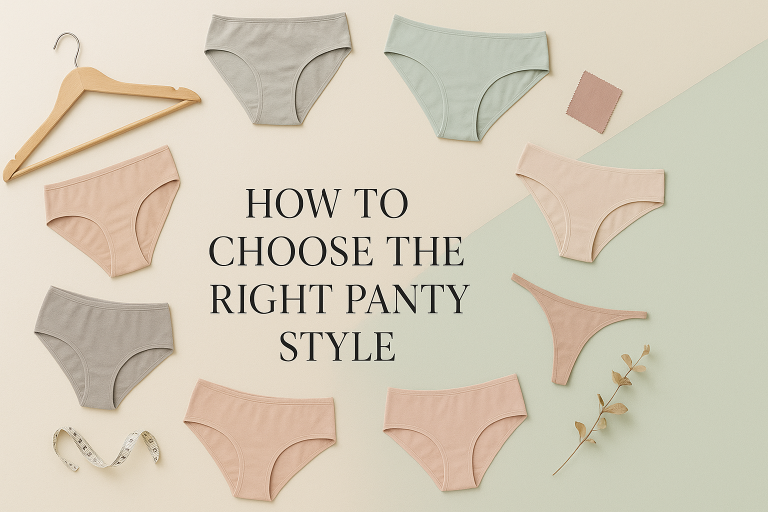
Mistake 4: Choosing the Wrong Style for Your Body Type
Panty style affects fit as much as size does. Each cut is engineered to sit at specific points on the body, and choosing a style that conflicts with your proportions creates discomfort regardless of whether the size number is technically correct.
Bikini Cut Panties
Bikini cut panties sit at or just below the natural hip bone with leg openings that follow the curve of the upper thigh. They work well for straight-to-moderate hip-to-waist ratios where the waistband does not need to stretch significantly to move from waist to hip.
Women with a hip-to-waist difference greater than 12 inches often find bikini cuts roll down or dig into the hip because the fabric cannot span that ratio without the waistband shifting.
High-Waist and Full Brief Panties
High-waist briefs sit at or above the natural waist and provide the most coverage and the widest fabric panel across the abdomen and seat. They accommodate larger hip-to-waist differences more comfortably because the longer side panel distributes tension across more fabric.
The ASTM D4910 standard for women’s hosiery and intimate apparel sizing notes that full-coverage briefs should be sized primarily to hip measurement because the hip is the binding constraint for this style.
Thong and G-String Panties
Thong panties carry the highest rate of sizing error because buyers frequently size down to minimize fabric, creating a waistband that is too tight for the hip measurement. The waistband of a thong must clear both the waist and the hip on the way down, so sizing to the hip measurement is essential even if the waist measurement suggests a smaller size.
A thong sized to the waist but not the hip will roll, snap against the skin, and cause the back panel to narrow past the point of comfort.
Boy Short Panties
Boy shorts extend coverage down the upper thigh and are sized primarily to hip and thigh circumference. Women with fuller thighs relative to their waist should size to the thigh measurement when it falls in a higher size bracket than the hip measurement.
Boy short leg openings that are too small cut into the thigh regardless of how well the waistband fits, so thigh circumference is the priority measurement for this style.
Matching your panty style to where your body carries its fullest measurements, not just your waist or a general size label, eliminates the most common fit failures by style.
Mistake 5: Not Accounting for Fabric Differences
Fabric composition changes how a panty fits because different materials stretch by different amounts in different directions. A size Medium in a 100% cotton brief fits smaller and less forgivingly than a size Medium in a nylon-spandex blend because cotton has lower elasticity and less recovery after stretching.
Common panty fabric compositions and their stretch behavior:
- 100% cotton: Minimal lateral stretch (approximately 10 to 15%), low recovery, prone to sagging after washing, sizes tighter than labeled
- Cotton-spandex blend (typically 95% cotton, 5% spandex): Moderate stretch (30 to 40%), good recovery, more forgiving across size transitions
- Nylon-spandex blend (typically 85 to 90% nylon, 10 to 15% spandex): High stretch (50 to 70% lateral), excellent recovery, sizes more generously than labeled
- Microfiber (polyester-spandex): High stretch with smooth surface, sizes generously, particularly forgiving at the waistband
- Lace (nylon or polyester with elastic threading): Variable stretch depending on lace construction, tends to size smaller due to reduced elasticity compared to knit fabrics
The practical consequence is that you may need to size up when buying cotton panties compared to your size in a stretch-fabric style from the same brand. Checking the fabric composition listed on the product page before buying, not just the size number, closes this gap.
Fabric stretch percentage determines fit tolerance as much as size does, and ignoring it is one of the more overlooked panty sizing mistakes.
Mistake 6: Assuming Your Size Is the Same After Body Changes
Body measurements change with pregnancy, postpartum recovery, significant weight changes, hormonal shifts, and aging, and panty sizes must be remeasured after any major change. The American College of Obstetricians and Gynecologists (ACOG) notes that hip and waist measurements shift throughout pregnancy and again during postpartum recovery, sometimes settling at different proportions than pre-pregnancy.
Weight changes of 10 pounds or more typically shift panty size by at least one label size. A 10-pound gain or loss changes hip circumference by roughly 1 to 1.5 inches on average, which crosses the size boundary on most brand size charts.
Menopause also alters body fat distribution, often shifting weight from the waist to the hips and thighs. Women who have worn the same panty size for decades may find that their waist-to-hip ratio has changed enough to require both a different size and a different cut.
Remeasuring every 6 to 12 months, or after any body change of 8 pounds or more, keeps your size selection accurate and prevents the gradual drift toward ill-fitting underwear that happens when women assume their size is permanent.
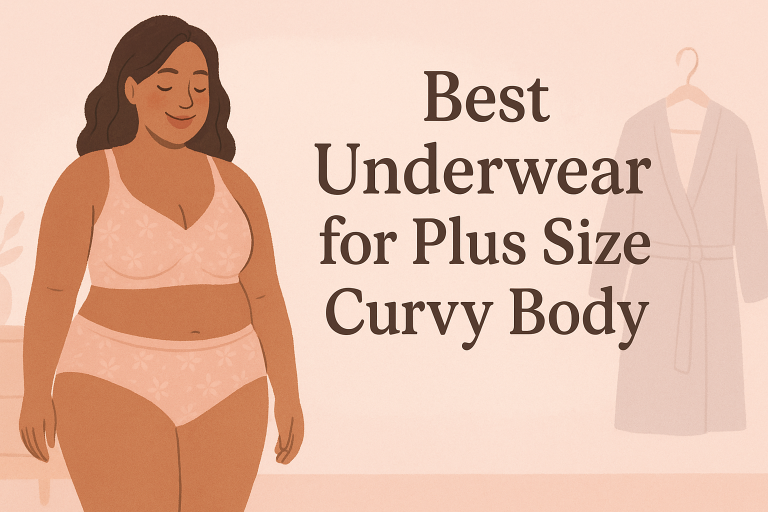
Mistake 7: Buying Extended Sizes Without Checking Extended Size Charts
Standard sizing and extended (plus) sizing do not follow identical measurement progressions. Standard sizes often use a 2-inch increment between sizes, while extended sizes may use 3-inch increments, meaning there are larger gaps between available sizes in the extended range.
A woman whose measurements fall between two extended sizes, such as a 1X and a 2X, faces a wider gap to navigate than a woman between a Small and a Medium. Sizing up in the hip measurement is the correct approach when measurements fall between extended sizes, because the seat seam and leg opening are the hardest points to adjust.
Many brands also cut their plus-size panties with proportionally narrower seat panels than the hip measurement suggests, a known fit issue documented by plus-size fit advocates and brands like Cacique, which publishes separate fit notes for their extended range. Checking reviews specifically from customers in your size range for comments on seat coverage provides better fit guidance than the size chart alone.
Extended sizing deserves the same specific measurement verification as standard sizing, not just a scaled-up version of the standard approach.
Mistake 8: Overlooking Waistband Stretch and Elastic Quality
Waistband construction determines long-term fit as much as the initial size. A seamless panty with a wide, flat waistband distributes pressure across a larger surface area and tolerates a broader range of waist measurements without digging. A narrow, folded-over elastic waistband concentrates pressure at a single point and has less tolerance for measurement variation.
Elastic quality degrades with washing. A waistband that fits correctly when new may sit loose or roll after 20 to 30 wash cycles if the elastic uses lower-grade materials. The journal Textile Research Journal has published findings showing that standard elastic loses 15 to 25% of its original tension after repeated thermal washing cycles at 104 degrees Fahrenheit or higher.
Buying panties one size smaller than your measurement to compensate for expected elastic stretch is not a reliable strategy. The better approach is to choose panties with high-quality elastic construction and wash in cool water in a mesh laundry bag to extend elastic life.
Waistband quality and construction style are fit variables that sizing charts never capture but that determine how long your panties continue to fit correctly.
Mistake 9: Not Trying Different Brands When One Does Not Fit
No single brand’s sizing will work for every body, and staying loyal to a brand that consistently produces the wrong fit is one of the more avoidable panty sizing mistakes. Brands cut their patterns based on a fit model whose proportions may or may not match yours, and the differences in cut angle, rise height, and seam placement vary meaningfully between manufacturers.
Use the table below to compare how four major factors differ across three common brand categories so you can identify which type is most likely to fit your measurements.
| Factor | Mass Market (e.g., Hanes, Fruit of the Loom) | Mid-Range (e.g., Soma, ThirdLove) | Specialty/Luxury (e.g., Hanky Panky, Cosabella) |
|---|---|---|---|
| Size increment | 2-inch hip increment per size | 2-inch hip increment per size | Variable, often 1.5-inch increment |
| Rise height | Mid-rise standard | Multiple rise options documented on chart | Often lower rise, cut for specific silhouette |
| Fabric stretch | Cotton or cotton-blend, lower stretch | Nylon-spandex blends, moderate to high stretch | Lace or specialty fabrics, variable stretch |
| Extended sizing | Wide extended range (up to 3X or 4X) | Moderate extended range (up to 2X or 3X) | Limited extended sizing in most lines |
Women with a hip-to-waist difference above 12 inches, or a full hip above 42 inches, often find better fit in mid-range brands with documented multi-rise options because these brands design for greater proportion variation.
Treating panty shopping as brand-agnostic and measurement-driven rather than brand-loyal produces consistently better fit results.
Mistake 10: Buying in Bulk Before Testing Fit
Buying a multipack of underwear before confirming the fit of a single pair wastes money and creates a drawer full of uncomfortable garments. Multipacks are economical, but they multiply the cost of a sizing mistake.
The correct process is to buy one to two pairs of a new style or brand, wash them once according to the care instructions, and wear them for a full day before ordering more. Washing before the first wear reveals how much the fabric shrinks and how the waistband responds to heat, two factors that change fit from what you experience in the store or immediately after opening the package.
Cotton panties, in particular, shrink by 3 to 5% in length and width after the first wash, according to textile industry laundering standards published by ASTM International. For a size Medium with a labeled 38-inch hip, a 4% shrink reduces the effective hip opening to approximately 36.5 inches, which crosses into the Small size range on most charts.
Testing one pair through a full wash-and-wear cycle before buying in bulk is the single most cost-effective panty sizing practice you can adopt.
Here is a quick-reference guide showing the most common panty sizing mistakes and the simple fix for each one.
Fit Guide
Common Panty Sizing Mistakes and How to Fix Them
Ten mistakes ranked by how often they cause fit problems, with the correction for each. Source: intimate apparel fit studies and brand sizing documentation.
Mistake 1
Using clothing size instead of measurements
Fix: Measure waist and full hip in inches, then compare to the brand’s own size chart.
Mistake 2
Measuring during premenstrual bloating
Fix: Measure mid-cycle, 10 to 14 days after the start of menstruation for stable numbers.
Mistake 3
Ignoring the brand’s size chart
Fix: Check the specific brand’s chart every time, not a generic size guide.
Mistake 4
Choosing the wrong cut for your hip-to-waist ratio
Fix: Size to your fullest measurement (hip, thigh, or seat depending on the cut).
Mistake 5
Not accounting for fabric stretch
Fix: Size up in cotton styles, size to measurement in nylon-spandex blends.
Mistake 6
Keeping the same size after body changes
Fix: Remeasure every 6 to 12 months, or after any weight change of 8 pounds or more.
Mistake 7
Assuming extended sizes follow the same increments
Fix: Size to the hip in the extended range; read reviews from customers in your size.
Mistake 8
Ignoring waistband elastic quality
Fix: Choose wide, flat waistbands and wash in cool water in a mesh bag to preserve elastic.
Mistake 9
Brand loyalty over fit evidence
Fix: Try different brands when consistent fit problems occur; cut patterns vary by brand.
Mistake 10
Buying multipacks without testing first
Fix: Buy one to two pairs, wash once, wear a full day, then buy in bulk if fit is correct.
How to Read a Panty Size Chart Correctly
A panty size chart maps body measurements in inches or centimeters to size labels. To use it correctly, locate your hip measurement first, then confirm your waist measurement falls within the same row. When hip and waist measurements fall in different rows, size to the hip.
Some brands publish separate charts for each panty style (thong, brief, boyshort) because different cuts require different size logic. Always use the style-specific chart if one is available, not the brand’s general size chart.
Charts that list measurements as ranges (for example, 37 to 39 inches for a Medium) mean the style is designed to fit any measurement within that range. If your measurement falls at the top of a range, consider sizing up to avoid a tight fit that worsens after washing.
Brands with “vanity sizing” in their ready-to-wear lines sometimes do not apply the same shift to their intimate apparel, which means your intimate apparel size may genuinely differ from your clothing size even within the same brand’s full product line.
Reading size charts by measurement rather than by label removes the single biggest source of panty sizing error.
Signs Your Panties Are the Wrong Size
Visible panty lines under fitted clothing indicate either the wrong size or the wrong cut, not always the wrong brand. A size that is too large creates excess fabric that bunches and shows through clothing. A size that is too small pulls the fabric taut, which also creates a visible outline.
Common signs that your current panty size is incorrect:
- Waistband rolls or folds down: Usually indicates the size is too large at the waist or the rise is too high for your torso length
- Leg openings leave red marks: The hip circumference is too small, causing the elastic to compress the thigh
- Back fabric gathers or bunches: The seat panel is too large or the hip measurement is too small for the coverage panel
- Waistband digs into the abdomen: The waist measurement is too small or the elastic tension is too high for a flat-front style
- Constant readjusting throughout the day: Typically a combination of wrong size and wrong cut rather than just a size problem
- Thong back panel shifts forward: Almost always indicates the waist measurement is correct but the hip measurement is too small
Each of these signs points to a specific measurement mismatch that a correct size would eliminate, and recognizing which sign you experience narrows down whether the fix is a size change, a style change, or both.
Panty Sizing for Special Circumstances
Panty Sizing During Pregnancy
Maternity panties are sized differently from standard panties because they must accommodate a growing abdomen without compressing it. Most maternity panty sizing uses pre-pregnancy measurements as the starting point, then adds ease allowance of 4 to 6 inches at the waist to allow for belly growth.
ACOG recommends that pregnant women choose underwear with a soft, wide waistband that sits either below the bump (under-bump style) or fully over it (over-bump style), with no elastic that contacts the abdomen at mid-bump height where it can constrict. Over-bump styles typically require sizing up by one to two sizes from pre-pregnancy to accommodate the full belly circumference in the third trimester.
Panty Sizing Postpartum
Postpartum waist and hip measurements often differ from both pre-pregnancy and late-pregnancy measurements. The uterus returns to close to its pre-pregnancy size within 6 to 8 weeks of delivery, according to ACOG, but fat distribution and hip width may settle differently than before pregnancy.
Many women find they need high-waist postpartum underwear in the first 6 to 8 weeks after delivery for comfort at the C-section incision site or for abdominal support after vaginal delivery. Remeasuring at 6 weeks postpartum and again at 3 months provides accurate size data for each recovery stage rather than guessing based on pre-pregnancy size.
Panty Sizing for Shapewear and Compression Styles
Shaping underwear and compression panties are intentionally sized to compress the body, so they follow different sizing logic than standard underwear. These styles are typically sized to the hip measurement at the upper end of a size range rather than the midpoint, because the compression panel must be large enough to cover the hip fully before compressing it.
Buying shaping underwear one size smaller than your hip measurement, a common mistake, creates painful compression at the hip bones and a visible roll of tissue above the waistband rather than the smooth silhouette the style is designed to produce.
Sizing correctly for your specific circumstance, whether pregnant, postpartum, or wearing compression styles, requires applying size-appropriate measurement logic rather than standard sizing rules.
Frequently Asked Questions About Panty Sizing Mistakes
How do I know what panty size I am if I have never measured myself?
Measure your natural waist (the narrowest point of your torso, approximately 1 to 2 inches above your navel) and your full hip (the widest point around your hips and seat) using a flexible measuring tape in inches. Compare both numbers to the size chart published by the specific brand you are buying from. When the two measurements fall in different size rows, size to the hip. This single step eliminates the most common source of panty sizing error across all body types and brands.
Why do I wear a different size in different brands of panties?
Panty brands do not follow a universal sizing standard. Each brand creates its own size chart based on the proportions of its fit model and its target customer. A size Medium at one brand may correspond to a hip range of 37 to 39 inches, while another brand’s Medium covers 38 to 40 inches. Fabric composition also varies, meaning a high-stretch nylon blend fits more generously than a lower-stretch cotton at the same labeled size. The only consistent approach is to measure your body and check each brand’s chart individually rather than assuming any size label carries the same meaning across brands.
Should I size up or size down when my measurements fall between two panty sizes?
Size up when your hip measurement falls between two sizes on a brand’s chart. The hip is the binding constraint for most panty styles because the waistband must clear the hip during dressing, and the seat panel must cover the fullest part of the body. Sizing down to the waist measurement when the hip falls in the next size up creates a panty that is difficult to pull on and uncomfortable at the hip once on. The only exception is compression or shaping styles, where the brand’s chart may specifically instruct you to size to your waist measurement because the compression panel is engineered to reduce.
Why does my panty size change even when my weight stays the same?
Body measurements shift with hormonal changes, particularly across the menstrual cycle (by up to 1 inch), with menopause (which redistributes fat from the waist to the hips and thighs), and with changes in muscle mass from exercise. A woman who maintains a stable weight but increases lower body muscle mass through exercise may find her hip circumference increases by 1 to 2 inches, moving her into the next panty size. Remeasuring every 6 to 12 months captures these changes accurately. Hormonal contraceptives can also affect water retention and fat distribution in ways that shift panty size independent of scale weight.
How much do panties shrink after washing, and should I size up to account for it?
Cotton panties shrink by approximately 3 to 5% in both length and width after the first wash in warm water, according to ASTM International laundering standards. For a pair with a labeled hip measurement of 38 inches, a 4% shrink reduces the effective measurement to approximately 36.5 inches. Washing in cool water and air drying rather than using a dryer reduces shrinkage to approximately 1 to 2%. For cotton styles, sizing up by one size and washing in cool water produces a more accurate long-term fit than buying your exact measurement size and washing in warm water. Nylon-spandex blends shrink far less, typically under 1%, and do not require a size adjustment for expected shrinkage.
Is there a standard panty size that fits most women?
No single panty size fits most women because hip and waist measurements vary widely across the adult female population. According to the US Size Survey (SizeUSA), the average American woman has a hip measurement of approximately 41 to 42 inches, which corresponds to a size Large or Extra Large in most brand size charts. However, “average” does not mean “most common,” and the distribution of measurements across the population is broad enough that no single size accommodates a majority of women. The only reliable approach is individual measurement against a specific brand’s size chart, not relying on population averages or general size guidance.
Getting your panty size right comes down to three consistent habits: measuring your waist and hip accurately at mid-cycle, checking each brand’s specific size chart before every purchase, and testing a single pair through a full wash-and-wear cycle before committing to a multipack. Apply these three steps and the most common panty sizing mistakes become avoidable rather than inevitable.


One Comment